
Secrets to Successfully Growing Vanilla Fraise Hydrangea
Content
History of selection and description of the shrub
The Vanilla Fraise hydrangea variety was developed by a group of French breeders from the Pepinières Renault nursery, led by Eric Renault, president of the international company Sapo. Breeding work to develop a new hybrid form began in 1989. It was only in 2003 that the final selection, named Vanille Fraise, was presented.
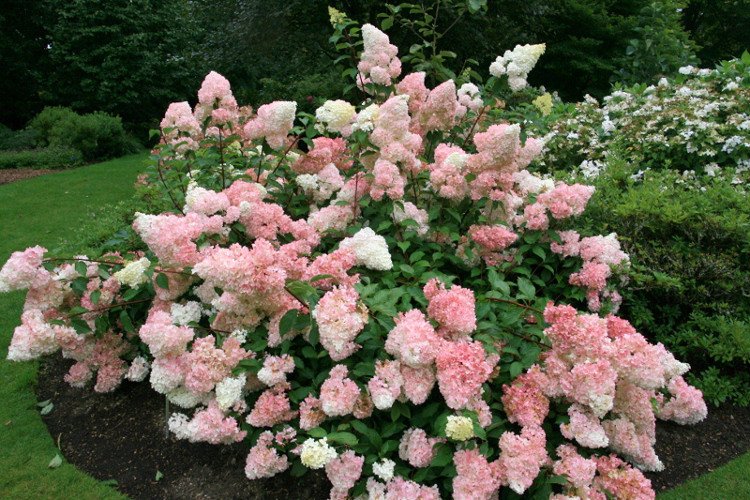
A shrub with a spectacular appearance
This beautifully flowering shrub can grow up to 1.5–2 m in height, with a crown diameter of 2–2.5 m. Young plants are characterized by upright, reddish-brown shoots that begin to bend under the weight of the buds. As the bush grows, it takes on a spherical or hemispherical shape. With appropriate pruning, it can be grown as a standard tree.
The leaves are characterized by a dense texture and an oblong shape. The leaf blades are uniformly dark green in color. The outer surface of the leaflet is slightly pubescent, reminiscent of velvet.
Features of flowering
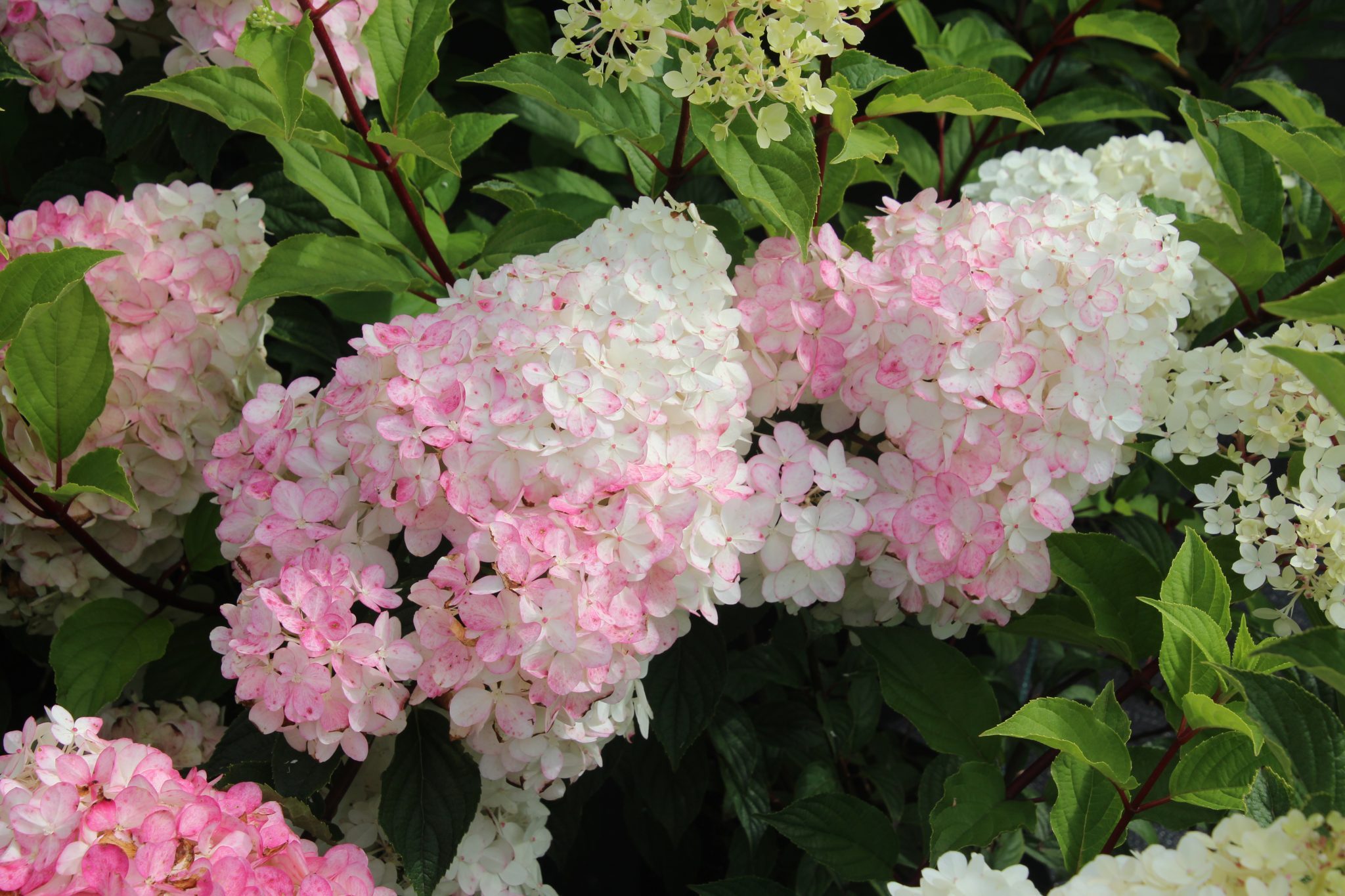
The plant blooms in June. Under favorable weather conditions, the flowering period can extend until mid-autumn. A characteristic feature of the panicle hydrangea Vanilla Fraise is its beautiful white and pink pyramidal-shaped inflorescences. The average length of the inflorescence is 30 cm.
This variety is unique in its ability to change the color of its inflorescences as the bloom progresses. Initially, the petals are white, then they take on shades of vanilla and unripe strawberry. By the end of the flowering period, the buds turn pinkish-burgundy.
Winter hardiness and drought resistance
The plant's drought tolerance is very weak. If moisture is insufficient, the flowers become smaller and lose their delicate colors. Therefore, it's important to carefully monitor the frequency and amount of watering.
The variety's winter hardiness, on the other hand, is high. The variety specifications indicate that Vanilla Fries is resistant to temperatures as low as -29°C. However, gardeners themselves claim that these frost resistance figures are somewhat exaggerated. In the absence of snow, shoots tend to freeze in winter.
Video: "Introducing the Vanilla Fraise Hydrangea"
This video provides a detailed description and varietal characteristics of this beautiful flowering shrub.
Planting and caring for Vanilla Fraise hydrangea
The Vanilla Fraise paniculata hydrangea is an easy-to-grow garden plant. However, poor site selection and poor agricultural practices can lead to a decline in the shrub's decorative qualities.
Preparatory stage
Growing a shrub begins with choosing a suitable location for planting the seedling. For example, in southern regions, it's best to choose a garden spot with partial shade.
In northern and central regions, the shrub can be grown in well-drained areas. Here, the sun is not so scorching as to harm the plant.
Vanilla Fraise thrives in a nutrient-rich environment. Fertile loam with a neutral pH is ideal for planting. Sandy and chalky soils should be avoided.
Work order
It's best to buy seedlings from specialized gardening nurseries. This reduces the risk of purchasing low-quality planting material.
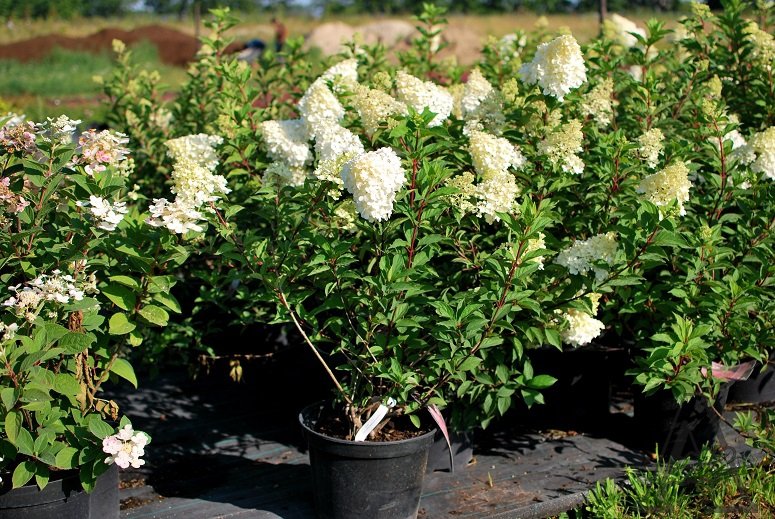
The optimal time for planting seedlings is mid-spring. In some regions where early frosts are not typical, hydrangea bushes can be planted outdoors in September or early October.
The planting hole is prepared several weeks in advance. Its size should be 1.5–2 times larger than the seedling's root system. The bottom of the hole is lined with drainage materials, and the soil is mixed with peat, compost, sand, superphosphates, and potassium sulfate. The added nutrients promote better plant survival.
When planting the seedling, be careful to keep the root collar above the soil surface. After planting, water the bush generously and mulch with peat or hay.
Optimal watering regime
Vanilla Fraise thrives on moisture. During hot periods, water the plant 2-3 times a week. If there's little sun or heavy rainfall, the interval between waterings can be extended. Avoid overwatering the soil! Incorrect watering can cause the plant to rot.
How and when to apply fertilizer
Many novice gardeners wonder whether hydrangeas need fertilizer. As is well known, almost all flowering ornamental plants require nutrients. Therefore, the Vanilla Fraise hydrangea variety is recommended to be fertilized according to the following schedule:
- when buds are swelling - organic matter diluted with water (1:15);
- during the formation of the first buds and during active flowering – complex mineral compositions for flowering shrubs;
- when preparing for winter – potassium sulfate and superphosphates.
Rules for pruning shrubs
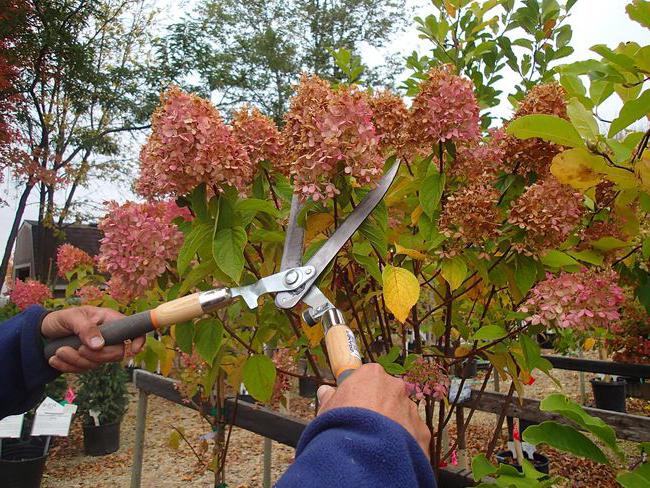
Paniculata hydrangea is pruned every spring. First, remove dead and damaged branches. Then, rejuvenate the crown, shortening each shoot to 6-8 buds. On average, no more than 5-10 healthy shoots ready for growth are left per bush.
During the summer, the shrub is not pruned. However, faded inflorescences are removed, as new flowers appear in their place.
Do I need to cover it for the winter?
The Vanilla Fraise variety is frost-resistant. In southern and central regions, the bush is not covered for the winter, with the exception of seedlings planted this year and those damaged by disease or insects. Burlap, white polypropylene bags, and agrofibre are used as covering materials.
Hydrangeas grown in northern regions are best protected. The lower part of the bush is sprinkled with dry fallen leaves and peat, and the upper part with spruce and pine branches.
Resistance to diseases and pests
One of the variety's significant drawbacks is its poor resistance to fungal infections. The plant most often becomes ill due to improper watering and excessive soil moisture. It can also be affected by powdery mildew, chlorosis, and various types of rot. Without treatment, the ornamental shrub stops producing buds and gradually dies. To save the plant, it is recommended to carry out a series of treatments using fungicides such as Fitosporin, Fundazol, Topaz, Topsin-M, Horus, and others.
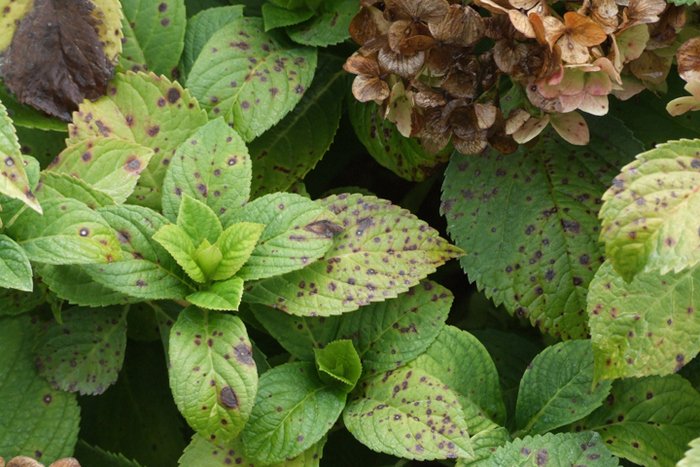
Vanilla Fraise suffers from infestations of snails, slugs, aphids, and spider mites. To prevent pests, periodically spray the crown with garlic infusion, onion peel decoction, or soapy water. In case of widespread infestation, use insecticides such as Tanrek, Akarin, Actellic, or Aktara.
Hydrangea Vanilla Fraise in landscape design
The distinctive and striking appearance of this ornamental shrub has caught the eye of landscape designers. The Vanilla Fraise paniculata hydrangea is widely used for landscaping gardens and beautifying city parks. The plant can be used to decorate:
- hedges;
- garden paths;
- recreation areas;
- artificial and natural reservoirs;
- mixborders of various types;
- decorative installations.
Vanilla Fraise looks stunning in both compositional and solitary plantings. When planted in groups, it can be combined with conifers, deciduous trees, and other flowering plants.
-
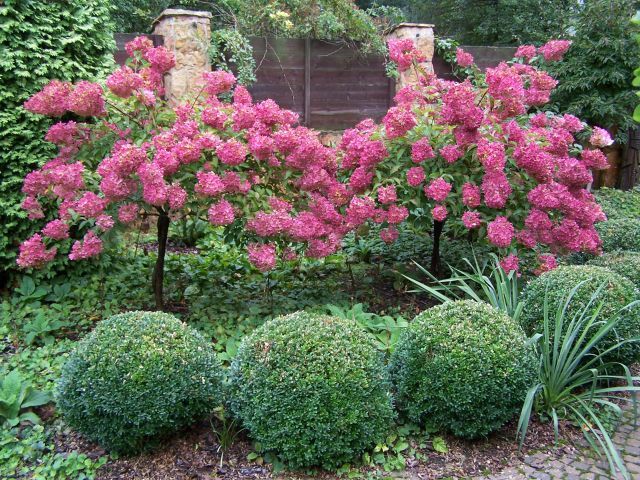
- Standard tree
-
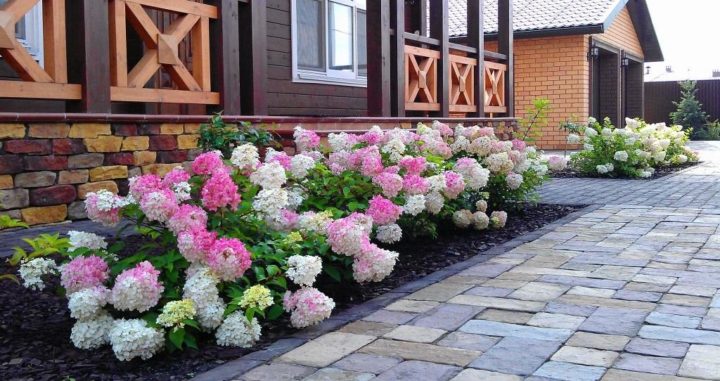
- Landscaping a garden path
-
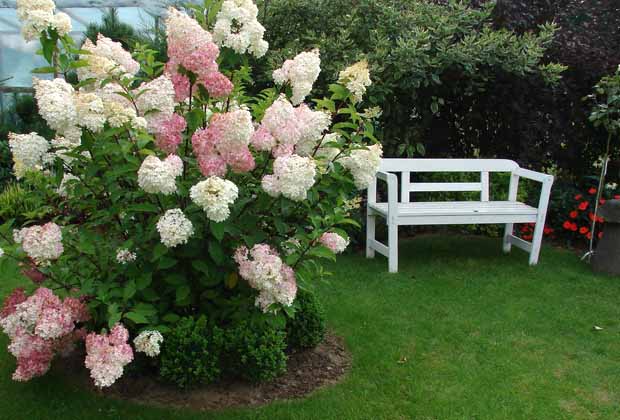
- Design of the recreation area
-
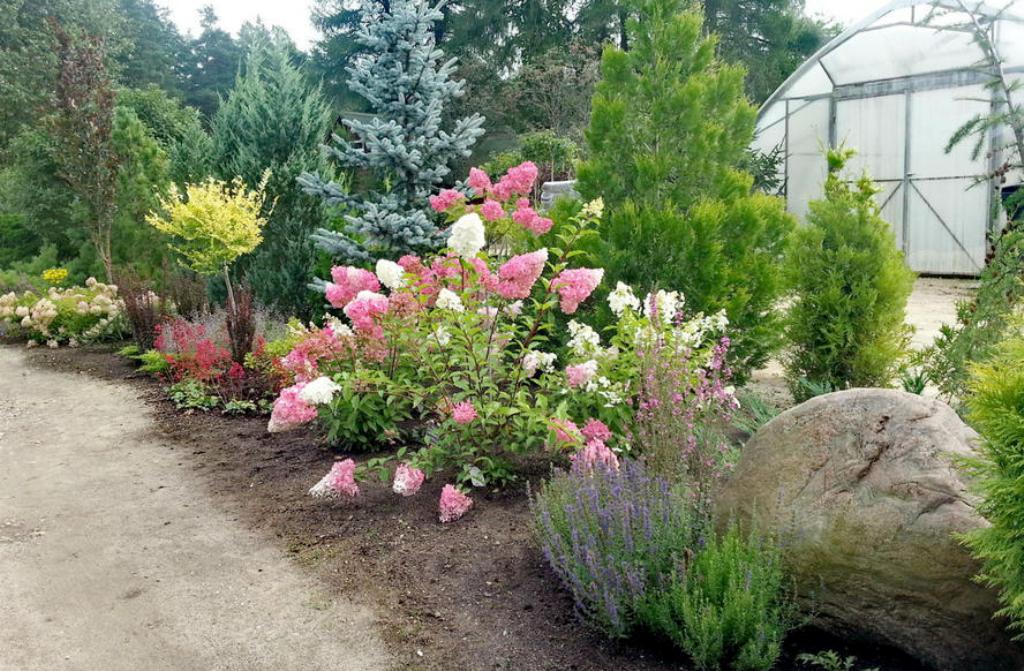
- Group planting
-
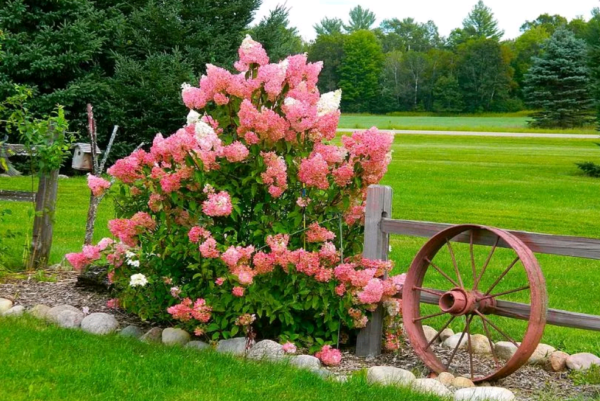
- Solitaire planting
-
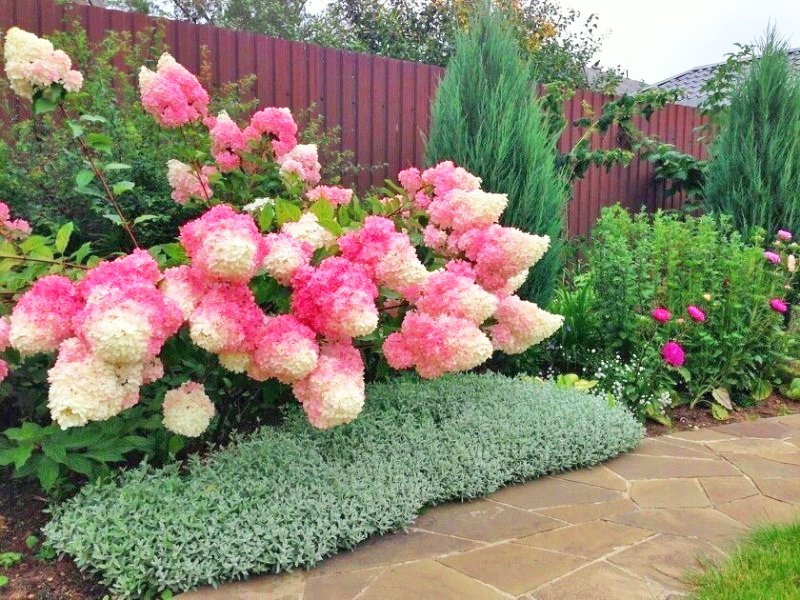
- Mixed type mixborder
Reviews from gardeners
"We spend almost the entire summer at our dacha, where we have a beautiful Vanilla Fraise hydrangea bush. Words cannot describe the shrub's decorative qualities. I highly recommend this panicle hydrangea variety."
"A couple of years ago, I planted a small Vanilla Fraise hydrangea bush in the garden. Now we have a gorgeous, beautifully flowering shrub that, what's more, doesn't require much time or care."
The Vanilla Fraise paniculata hydrangea is highly prized for its decorative qualities and rapid adaptation to growing conditions. Most importantly, even novice gardeners can manage this ornamental shrub.