
How to properly plant and grow Limelight panicle hydrangea in your garden
Content
- 1 History and description of the Limelight hydrangea
- 2 Advantages and disadvantages of the variety
- 3 Video "Limelight Paniculata Hydrangea"
- 4 Planting and caring for Limelight hydrangea
- 5 Diseases and pests, methods of control and prevention
- 6 Hydrangea Limelight in landscape design
- 7 Reviews from gardeners
History and description of the Limelight hydrangea
The panicle hydrangea Limelight (Hydrangea paniculata Limelight) was developed by Dutch breeders. Unfortunately, the variety description does not indicate which hydrangea varieties were used in the breeding experiment to develop the new variety. In 2006, the Limelight variety received positive reviews from the Pennsylvania Horticultural Society (USA), and in 2008, it received a prestigious award from the Royal Horticultural Society in the UK.
Description of the bush
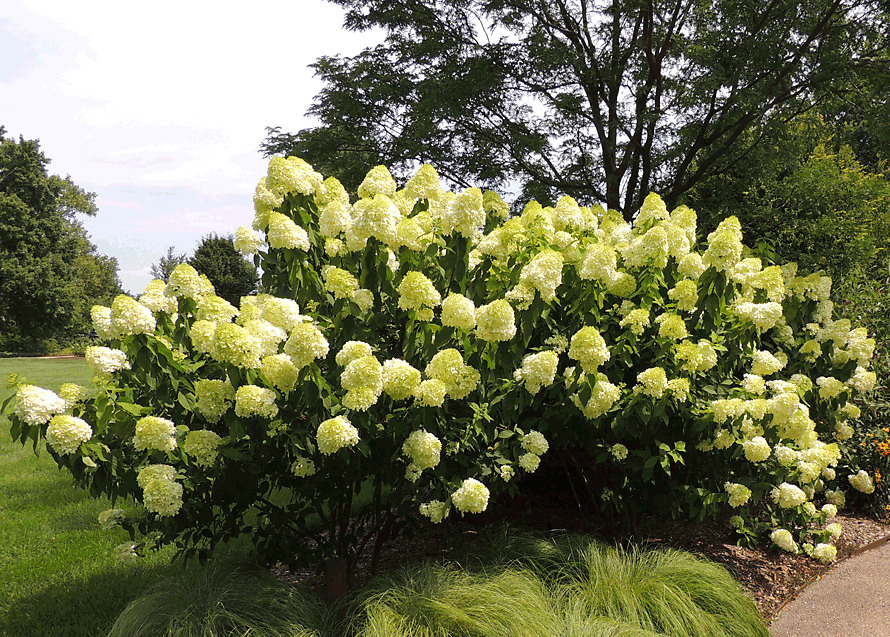
Lemon hydrangea, as this flowering shrub is often called, is a tall, ornamental plant. Depending on the crown's shape, the bush can reach 1.5–2.5 m in height. This variety is characterized by a massive, spreading crown. The average diameter of the shrub is 1.8 m. Annual shoot growth is at least 25 cm.
The shoots are erect, stiff, and dark brown. Unlike other subspecies, Limelight does not require trellising or support. The branches do not droop under the weight of the inflorescences. The ovoid leaf blades have a velvety texture. The color is a rich dark green during the growing season, turning purple-green at the end of the season.
Description of inflorescences
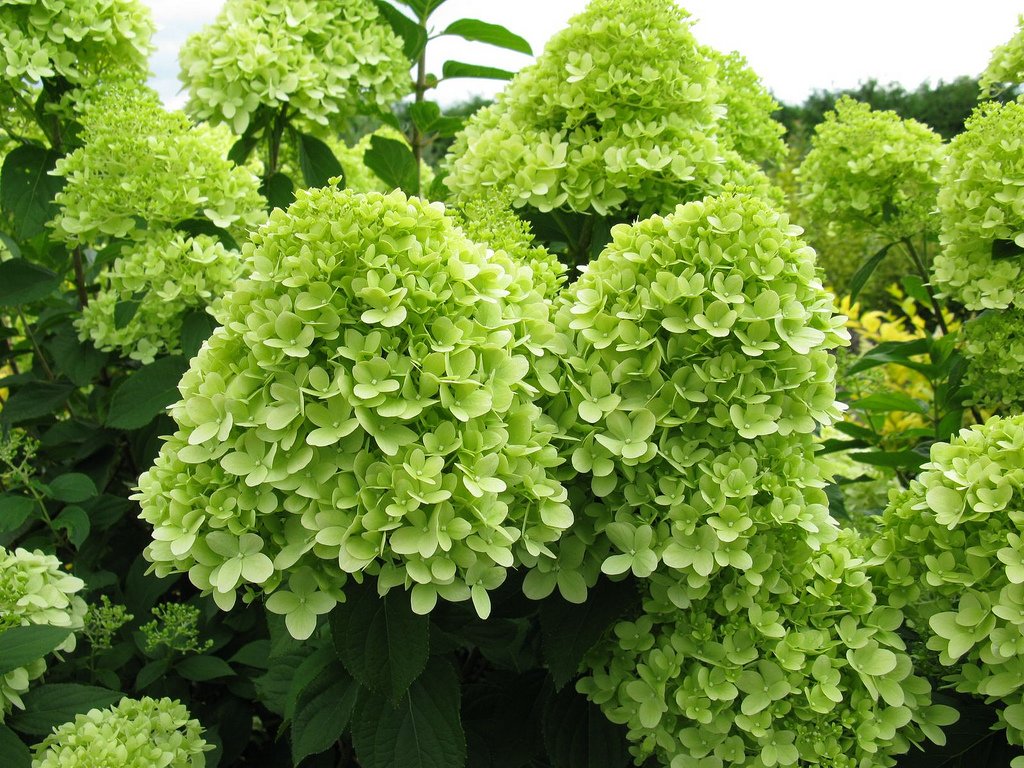
The first buds appear in late June. Flowering lasts until early October. This variety is characterized by large, cone-shaped inflorescences. The average flower length is 30 cm. Initially, the flowers are snow-white or soft lemon. As they mature, the petals turn pale pink or light purple. The shrubs growing in the shade are distinguished by the shade of their inflorescences: the tips of the white petals are tinted lime-colored.
Frost resistance, drought resistance
The Latin name for this flowering deciduous shrub, Hydrangea, comes from the Greek word "hydor," which literally means "water." Clearly, the plant thrives on moisture. The hydrangea bush is characterized by low drought tolerance.
The variety's winter hardiness is -29°C. Gardeners note that the plant tolerates snowy winters well. However, a lack of snow and fluctuating temperatures can lead to the freezing of young root shoots and current year's shoots.
Advantages and disadvantages of the variety
Thanks to its many positive characteristics, the Limelight variety is in high demand among gardeners. However, it's important to remember that every plant has its drawbacks.
- high decorative value of the bush;
- changing color of inflorescences;
- possibility of growing as a bush or on a standard;
- no difficulties with planting and care;
- resistance of shoots to winds;
- high winter hardiness.
- difficulties with propagation by layering;
- need for frequent pruning.
Video "Limelight Paniculata Hydrangea"
This video shows what an ornamental shrub looks like when it is in active bloom.
Planting and caring for Limelight hydrangea
Many novice gardeners, having spotted this spectacular flowering deciduous shrub, are curious about the planting and growing techniques. So, let's look at the basic growing techniques for Limelight hydrangea.
Planting recommendations
The best time to plant hydrangea seedlings outdoors is the first ten days of May. Fall planting is only permitted in regions with a temperate climate characterized by mild and warm winters.
This spreading shrub can grow in partial shade, but prefers full sun. When grown in a sunny spot in the garden, hydrangea delights with more lush and abundant blooms.
Sandy and calcareous soils are not suitable for growing Limelight. The best option is slightly acidic or acidic black soil. You can increase the soil acidity by adding peat. A pre-prepared planting hole measuring 40 x 60 cm is lined with drainage material and filled with a nutrient mixture. The first pre-planting feeding is as follows:
- river sand;
- peat;
- humus;
- coniferous soil;
- black soil.
All components are mixed in equal quantities, then a handful of superphosphate is added.
Selection and preparation of planting material
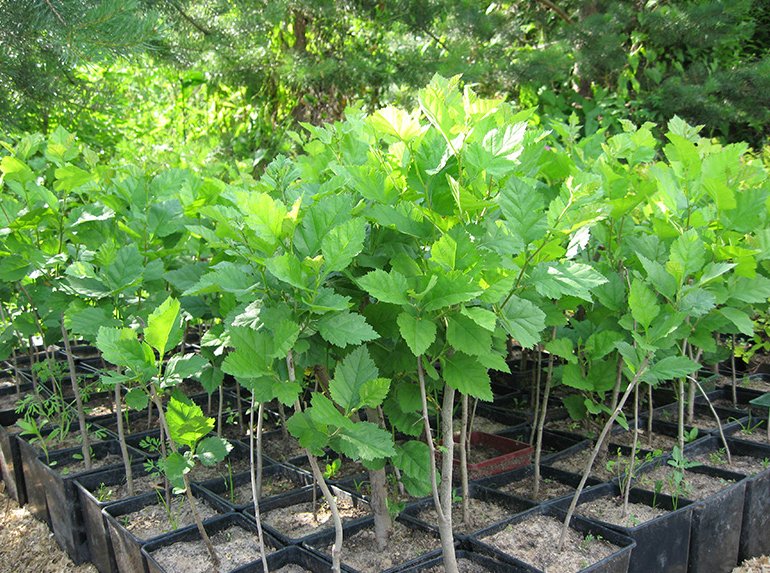
Selecting the right planting material is equally important. It's best to purchase a seedling from a specialized horticultural nursery. When inspecting it, pay attention to the condition of the bark, leaves, buds, and roots. High-quality planting material has a healthy appearance. The root system should be well-branched, the bark and leaves should be free of damage, and the buds should be swollen.
Subsequent care of the bush
The moisture-loving Limelight hydrangea doesn't tolerate drought well. Insufficient soil moisture causes the blooms to become smaller and lose color. The soil around the trunk should always be moderately moist. Water this deciduous shrub every 3-4 days.
The next stage of care is fertilizing. The first portion of fertilizer (nitrogen-containing substances) is applied in May. During this period, the plant actively grows green mass. Flowering shrubs are fertilized with potassium and phosphorus compounds. In the fall, when the last buds have dried, the hydrangea can be fed with superphosphates.
Trim options
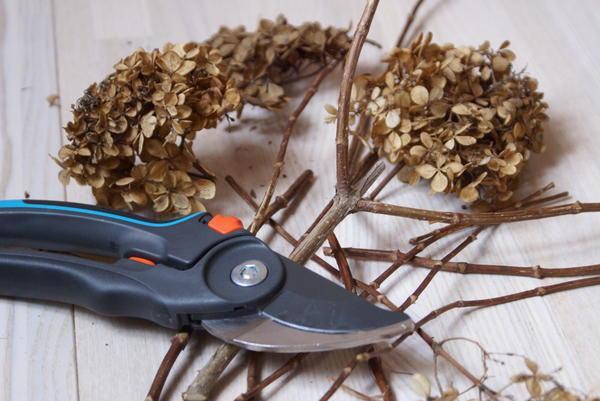
The plant's tendency to grow vigorously requires frequent pruning. Formative pruning is performed in the spring. All shoots, except those from the previous year, should be cut back by half. Inward-growing branches are always removed. Older shrubs are pruned differently: all branches are removed at the root, leaving only four or five of the strongest and healthiest shoots. This type of pruning is called rejuvenation pruning.
Sanitary pruning is performed in the fall, cutting off dried and damaged shoots at the base. During the growing season, faded inflorescences should be removed, allowing the plant to form new buds.
Shelter for the winter
Limelight has a high winter hardiness threshold, so the shrub does not require winter insulation. The exceptions are seedlings planted this year and plants weakened by transplantation or disease. Hydrangea branches should be gathered into bundles and wrapped with thick agrofibre.
Please note that flowering deciduous crops grown in regions with little snow are best insulated for the winter.
Diseases and pests, methods of control and prevention
Common diseases of this variety include chlorosis, powdery mildew, and spotting. Preventing chlorosis can be achieved by treating the soil around the trunk with a solution of ferrous sulfate. Spotting and powdery mildew can be treated with the fungicides "Skor," "Maxim," and "Horus."
If agricultural practices are not followed, the bush may be infested with spider mites and aphids. At the first sign of pest presence, spray the crown with insecticides such as Aktara, Actellic, Enzhio, and Fitoverm.
Hydrangea Limelight in landscape design
The spectacular Limelight hydrangea is a must-have for landscape design. This spreading shrub is used to create hedges and interesting compositional plantings. Grown on a standard, it can be planted as a standalone plant or along garden paths. Hydrangea looks stunning near buildings, fences, garden gazebos, and ponds.
Daffodils, hyacinths, tulips, and other bulbous plants are considered the best companions for panicle hydrangea. The snow-white and lime-colored blooms create an attractive combination with conifers and evergreens.
-
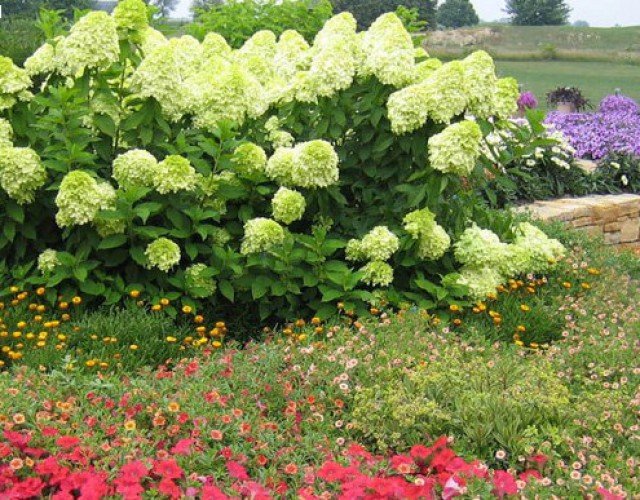
- Group planting
-
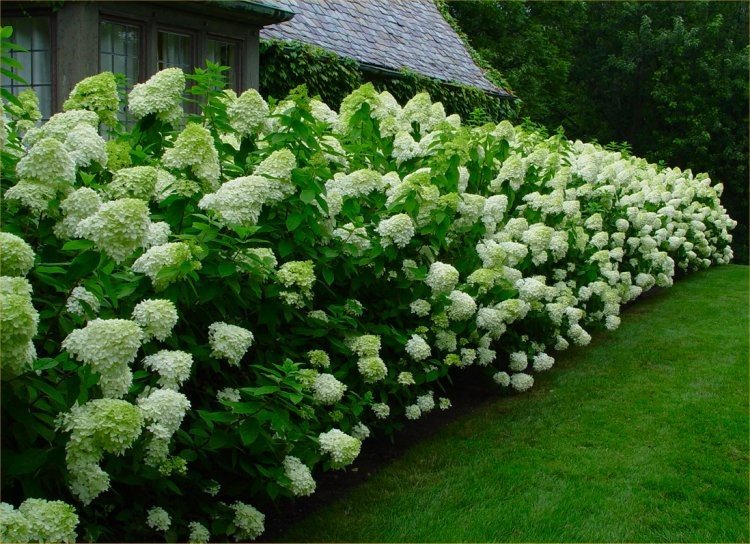
- Hedge
-
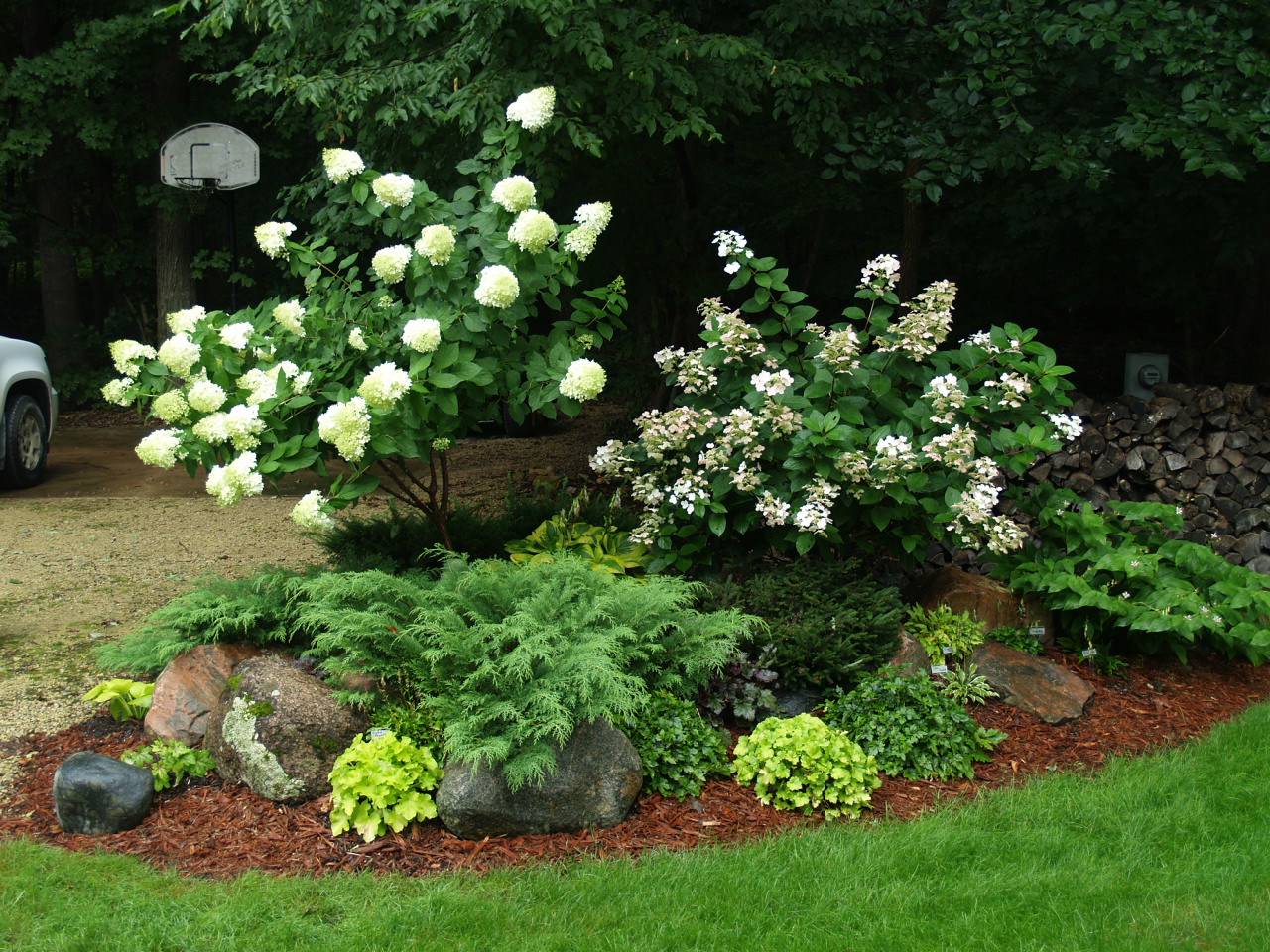
- Alpine slide
-
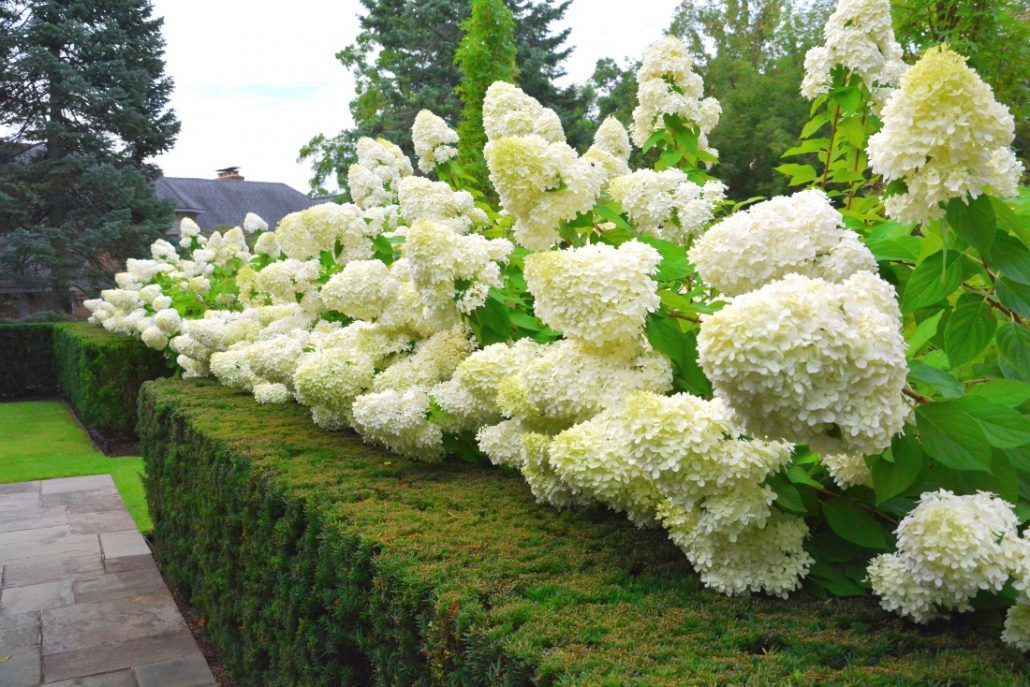
- Garden path design
-
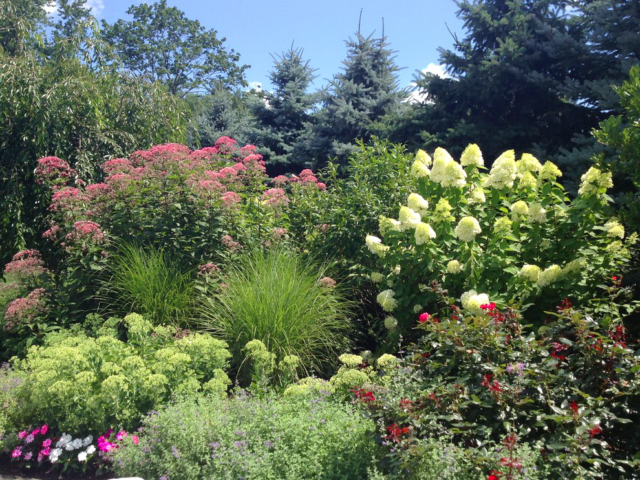
- Compositional group
-
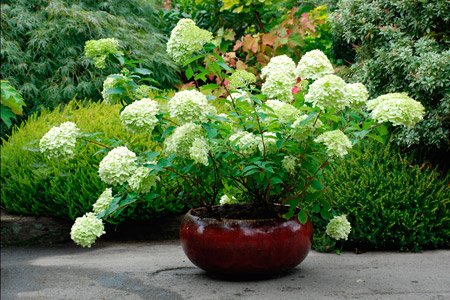
- Solitaire cultivation
-
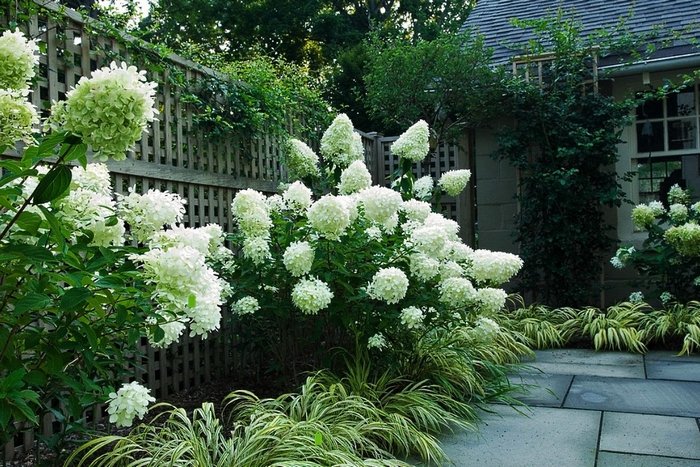
- Decorating the fence
-
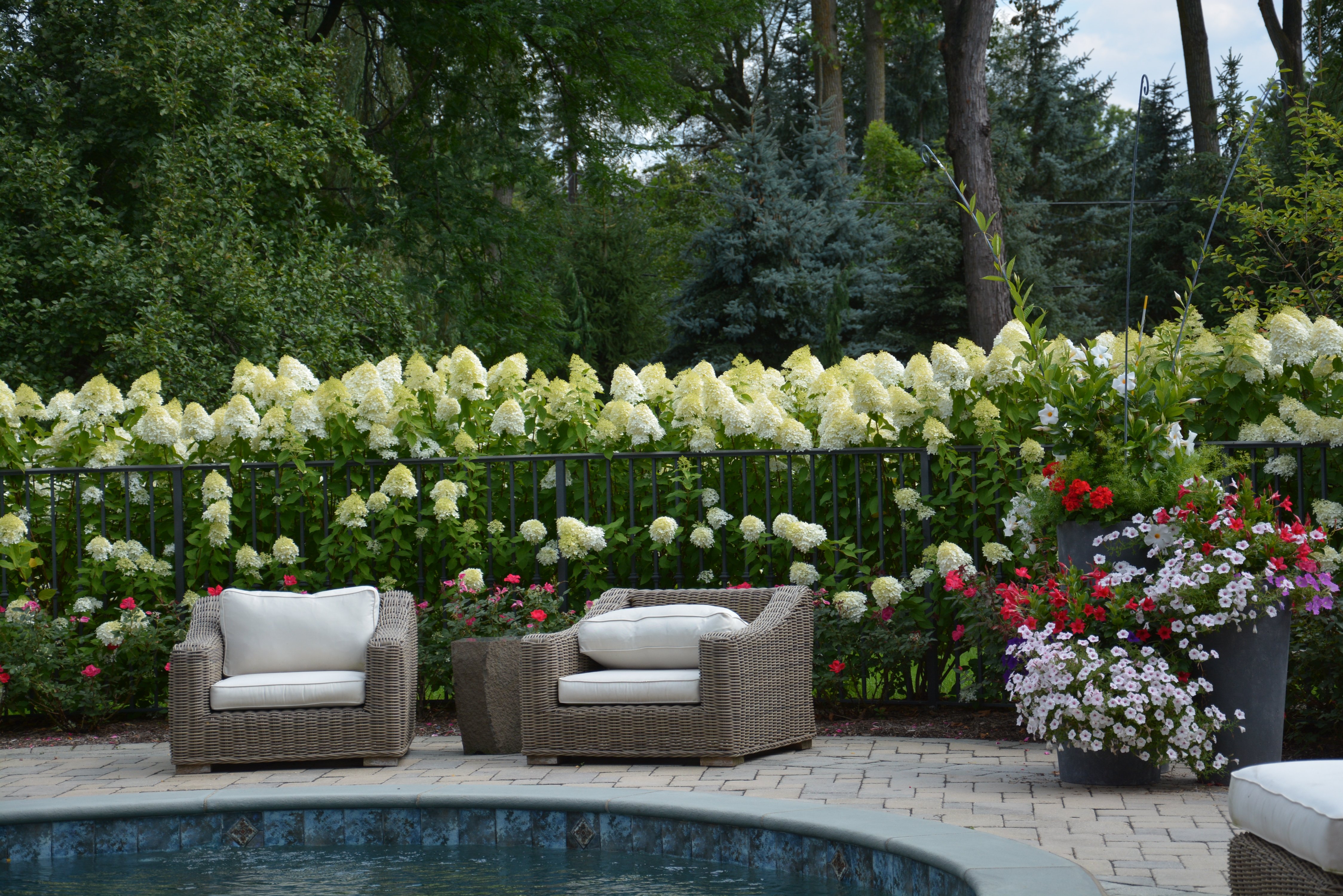
- Design of the recreation area
-
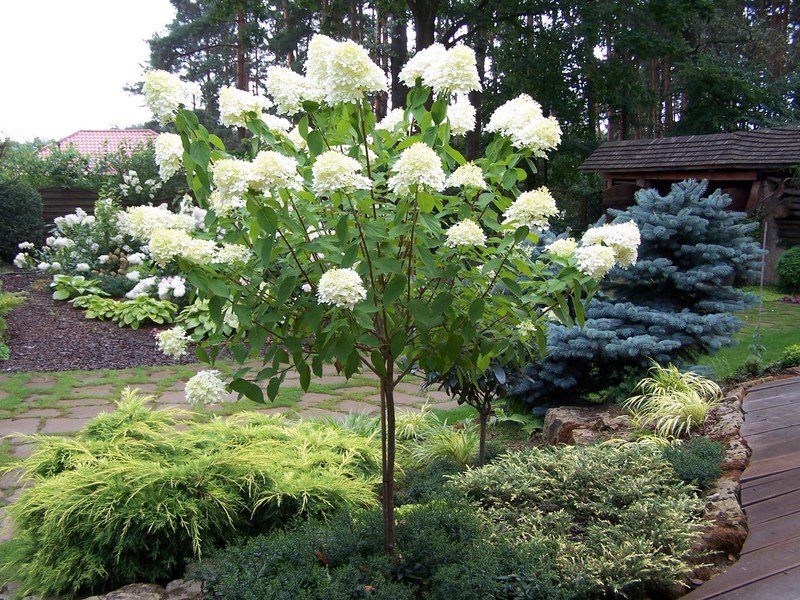
- Standard tree
Reviews from gardeners
"Limelight is my favorite hydrangea variety. The delicate lime-white blooms look stunning against the rest of the garden."
"We have a variety of flowering deciduous shrubs in our garden. However, the most low-maintenance variety I'd say is the Limelight panicle hydrangea. Even with minimal care, this variety will reward you with abundant blooms."
Limelight hydrangea is ideal for beginning gardeners. This low-maintenance ornamental plant will make an attractive addition to any garden.