
A "Blooming Cloud" in the Garden: The Subtleties of Growing Perennial Gypsophila
Content
Description of perennial gypsophila
Gypsophila is a genus of herbaceous plants in the Caryophyllaceae family. They occur as subshrubs or shoots, ranging in height from 20 to 120 cm, depending on the species and variety. The flower's Latin name translates as "lime-loving," a reference to its natural habitat—limestone, rocky, and stony terrain.
The plant resembles a floating cloud. Slender, branching, and nearly leafless shoots form a lush, spherical bush, covered in white or pinkish inflorescences. Small, grayish-green, lanceolate leaves are arranged in a basal rosette. The shrub blooms in early summer. The flowers are very small, gathered in loose clusters. The fruit is a small seed capsule that ripens in late summer.
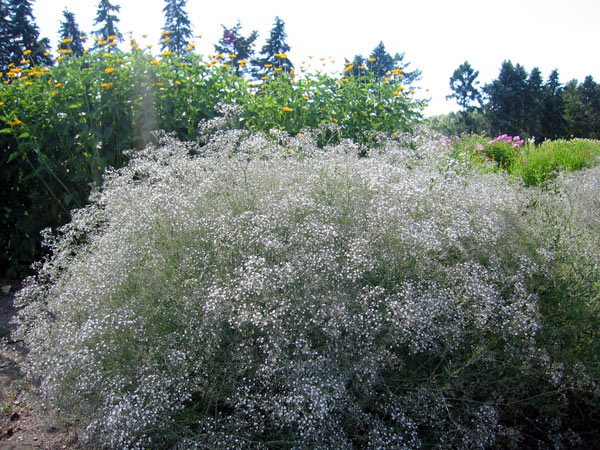
Common species and varieties
There are more than 100 species in the genus Gypsophila, and almost every one has decorative varieties used in garden culture.
Paniculata
The most extensive and well-known member of the genus, it includes both wild and garden varieties. It is a perennial plant, with spherical bushes that grow to a fairly large size (0.8-1.2 m in height). The stems are grayish-green, thin, and branched, with small leaves. Flowering continues throughout the summer. The flowers are small (5-6 mm in diameter), and can be single or double, white or pinkish.
Popular varieties of this species:
- Pink Star – double flowers of a dark pink shade;
- Flamingo – double pink flowers;
- Bristol Fairy – white, double flowers.
Terry
This is not a species, but rather a form of garden gypsophila. It is often used in floral arrangements. It is distinguished by large flowers with double petals, predominantly white. However, almost every species has pink hybrids, such as Pink Star. The double varieties have graceful, spreading, and delicate bushes during flowering.
Graceful
A low-growing annual plant that can be grown in both flowerbeds and pots. The stems are graceful, highly branched, and covered with miniature gray-green leaves. The bush is lacy, 30-50 cm tall, and blooms profusely but briefly. The flowers are small, white, pinkish, or carmine-red. Popular varieties include Carmine (red flowers) and Rosa (pinkish inflorescences).
Cerastium
This low-growing plant (up to 15 cm tall) is native to the Himalayas. It is common in the wild and used in garden design to decorate rock gardens and borders. The herbaceous undergrowth quickly spreads and covers the surface. The flowers are simple, 5- or 6-petaled, delicate white with pinkish or lilac veins. It blooms from May to late June.
Pacific
A perennial shrub with highly branched stems and broad, lanceolate, gray-green leaves. Flowering lasts from August to September. The flowers are about 7 mm in diameter and light pinkish in color. It prefers loose, calcareous soils and does not tolerate waterlogging. It blooms profusely for 3-4 years, after which it needs to be reseeded.
-
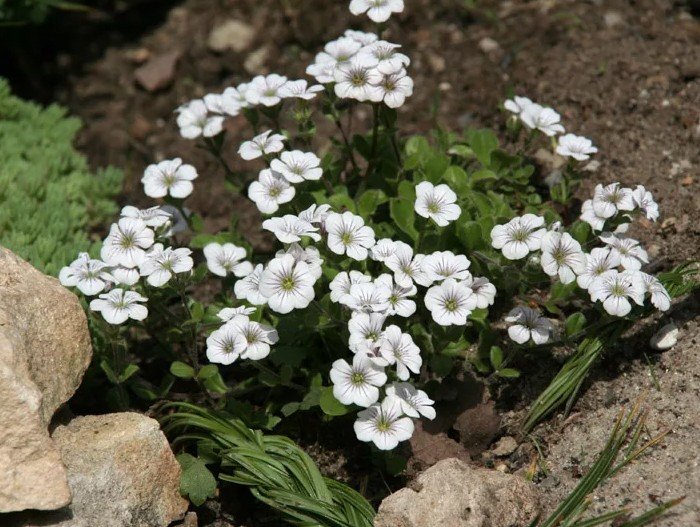
- Cerastium
-
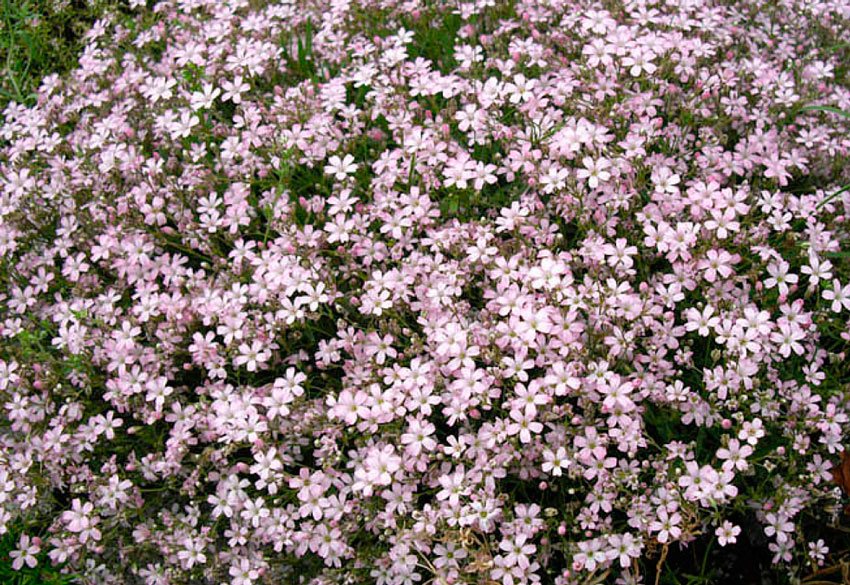
- Pacific
-
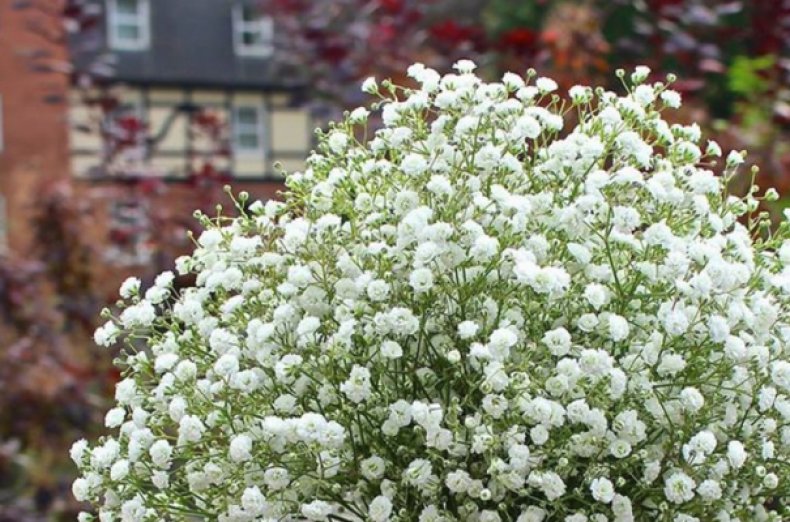
- Paniculata
-
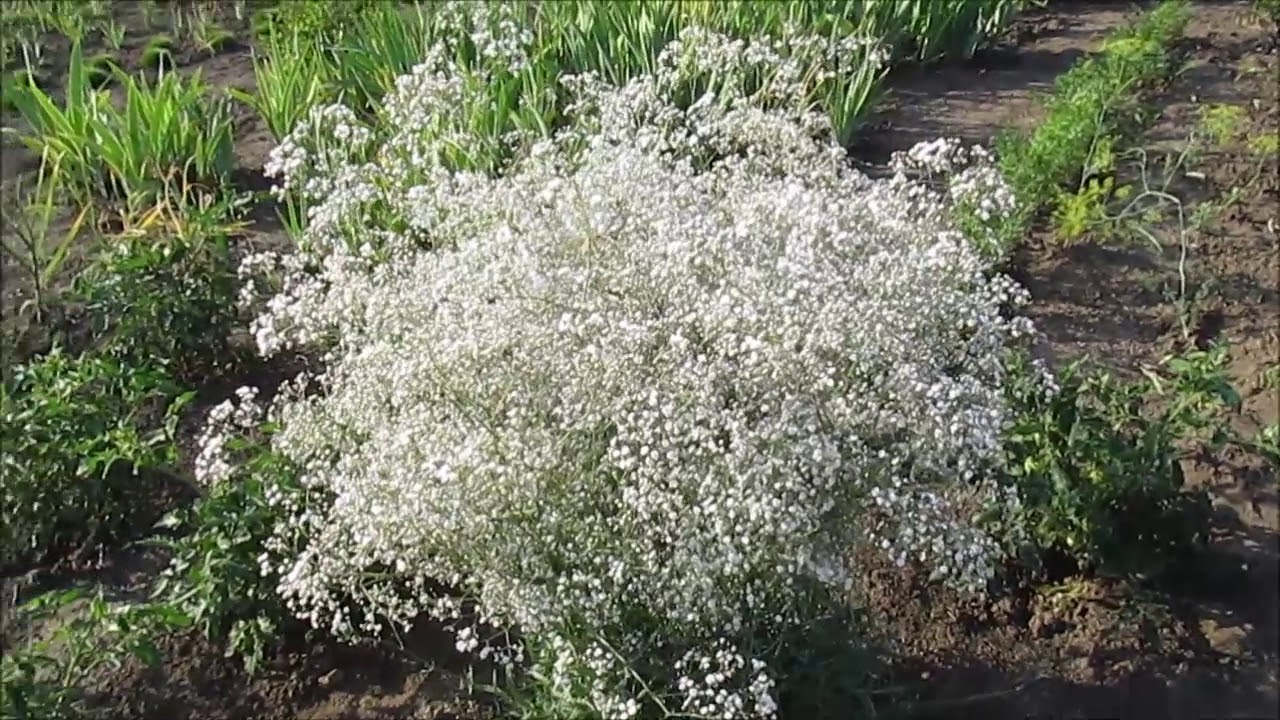
- Terry
-
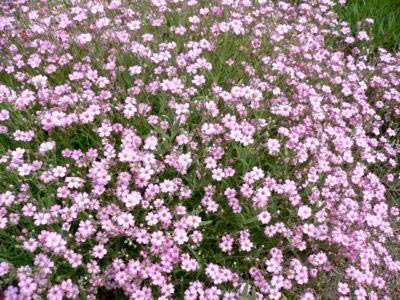
- Graceful
Perfect
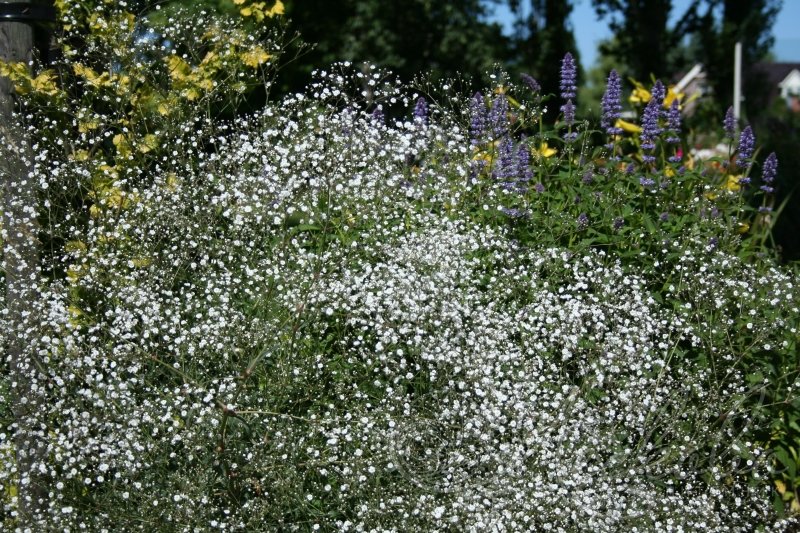
A double-flowered variety of Gypsophila paniculata. The graceful, spherical bush transforms into an airy, silvery cloud during flowering, thanks to its knobby, highly branched, grayish stems. The leaves are few and small. The flowers are white and quite large. It makes a striking backdrop for large flower beds and rockeries.
Creeping
This species includes all creeping varieties growing 0.3-0.4 m tall. These are typically annual herbaceous plants with flexible stems that spread along the ground. In their natural habitat, they grow in mountainous areas, sandy areas, and wastelands. Their shoots are leafy, with green leaves arranged opposite each other. Paniculate inflorescences, consisting of very small flowers, are borne at the ends of the shoots, forming a lacy cloud.
Popular varieties of this species:
- Monstrosa is a profusely flowering creeping variety with white flowers;
- Pink haze – bright pink inflorescences that completely cover the bush;
- Gypsy Rose – double raspberry inflorescences;
- The paniculate variety Rosenshleyer, about 40 cm tall with pale pinkish inflorescences, can also be included here.
Snowflake
The most decorative paniculate variety among white cultivars. The bush is low (up to 50 cm), heavily branched, dense, and spherical. During flowering, which begins in early June, it becomes densely covered with snow-white flowers. Snowflake tolerates partial shade, makes a wonderful addition to brightly colored flowerbeds, and is most often used in bouquets.
Mirabella
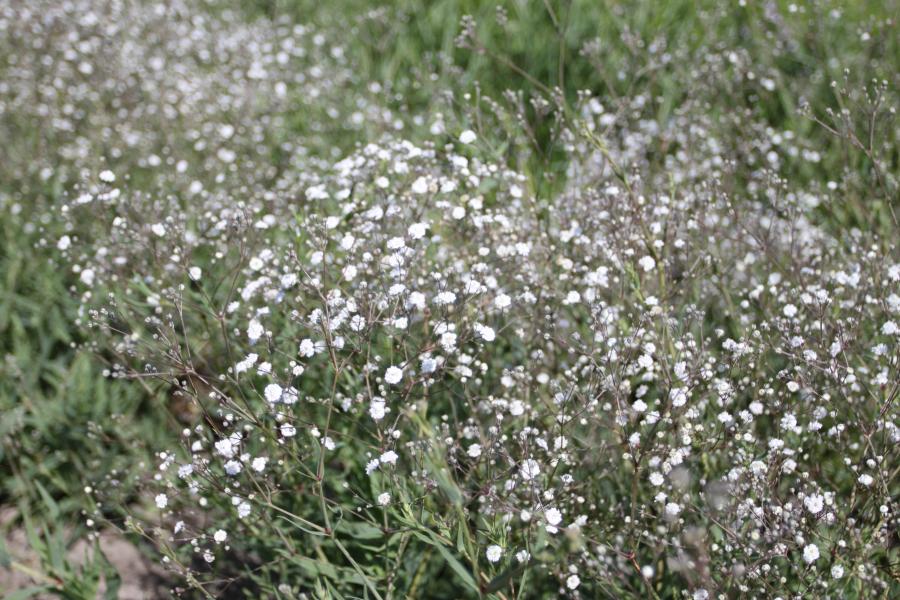
A picturesque, heavily branched shrub with small leaves that transform into a white cloud during flowering. It also belongs to the paniculate variety. With its not-so-small, semi-double flowers, Mirabella attracts the attention of florists and is often used in bouquets.
Paniculata
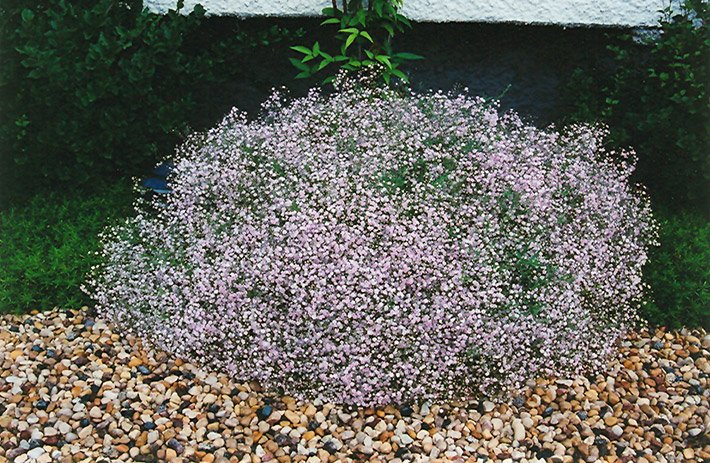
A beautiful, compact plant growing up to 1 m tall. The spherical shoots, heavily branched at the top, create an airy effect during flowering. Flowering begins in midsummer and lasts for 1.5 months. The flowers are up to 6 mm in diameter and white or pinkish in color. Common varieties include Paniculata White (snow-white flowers) and Rose (pale pink flowers).
-
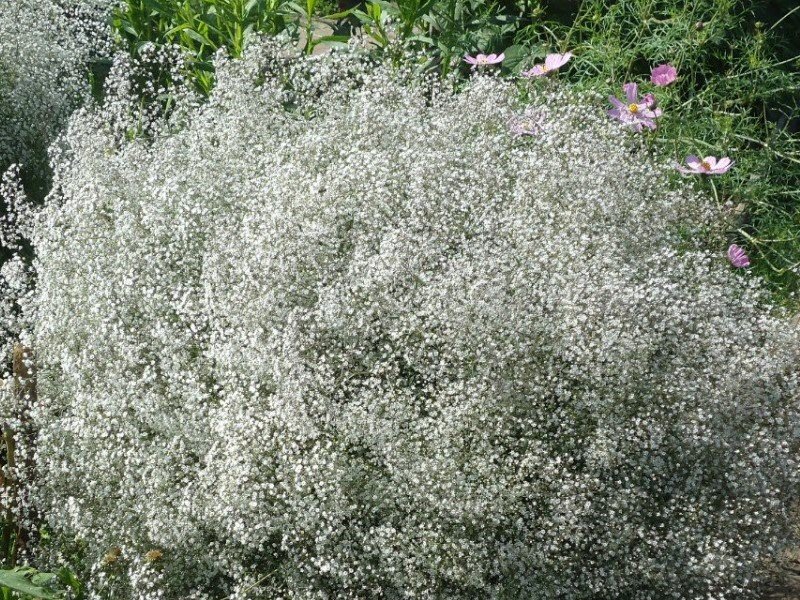
- Snowflake
-
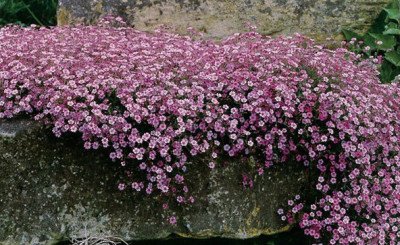
- Creeping
-
- Perfect
-
- Paniculata
-
- Mirabella
Video: Growing Perennial Gypsophila
In this video, experts explain the rules for planting and caring for garden crops.
Planting and growing perennial gypsophila
All varieties of gypsum flora are unpretentious, but for good flowering it is necessary to adhere to certain planting and growing rules.
Selecting a location and soil
Gypsophila should be planted in a sunny location, away from stagnant moisture and cold air. For optimal growth, the plant requires conditions similar to its natural environment: dry, well-drained, preferably sandy or rocky soil with added lime. A permanent location should be determined immediately, as the bushes are sensitive to transplantation.
Methods of reproduction
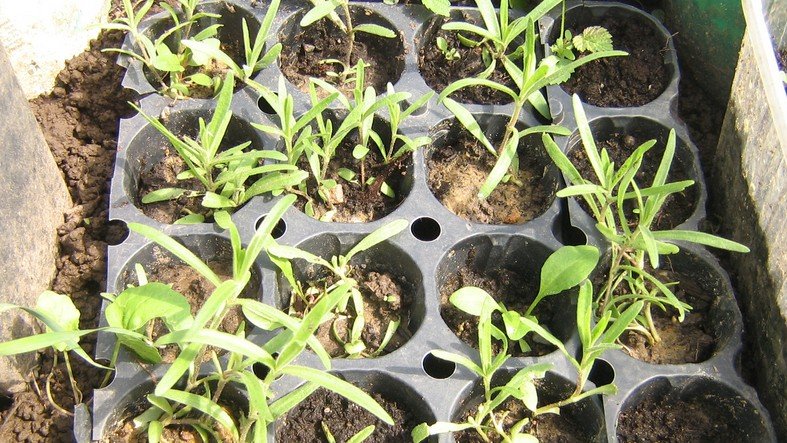
Garden gypsophila is propagated by seeds and cuttings. The first method requires containers with loose, moist soil. The seeds are sown in shallow furrows (0.5 cm). Cover the container with a transparent cloth and place it in a bright location. The emerging seedlings are thinned out, and when they have 2-3 true leaves, they are transplanted into the ground.
Perennial varieties are typically propagated by cuttings, but this method is unpopular due to the low survival rate. Cuttings are taken from young shoots before flowering and rooted in loose, moist soil, creating greenhouse-like conditions. Once roots appear, they are transplanted to the desired location.
To enjoy gypsophila blooms in early summer, seeds for seedlings should be sown in the spring, in April or May. They can also be sown directly into the ground in the fall and then simply transplanted into a flowerbed in the spring. Cuttings rooted in the summer should be transplanted to their permanent location no later than the end of August to allow them time to establish before the cold weather sets in.
Watering and fertilizing
Basic care for gypsophila involves moderate watering and occasional fertilizing. Since the flowers prefer dry soil, they need to be watered infrequently, only to maintain their beauty. During flowering, it is recommended to fertilize no more than once a month, alternating between complex mineral fertilizers and organic matter. Compost or humus are suitable organic matter.
Avoid adding fresh manure and droppings, as these fertilizers can burn the roots and cause the plants to die.

Gypsophila in winter
After collecting the seeds, the plant usually dries out, signaling that it's time to prepare it for winter. The above-ground portion should be cut off, and the roots should be covered with leaves or spruce branches. Pruning should be done at a height of 3-4 cm above ground level. If the winter is snowy, mature perennial bushes can be left uncovered—the snow will be sufficient. It's better to be safe with young plants.
Please note that you should only prune a dry bush. If the shoots remain wet, they will quickly rot and the plant will not survive the winter.
Pests and diseases of gypsophila
In damp conditions, dense bushes are often susceptible to rot—the shoots rot at the base, then dry out and die. To prevent this, spray the plants with copper sulfate or Oxychom in the spring. If signs of disease appear, remove rotted branches and treat the bush with Fundazol or Topaz fungicides.
Insects rarely damage bushes. In exceptional cases, they may be caused by mealybugs or nematodes. To get rid of them, dig up the bush, wash the roots, treat them with an insecticide, and then replant.
Using gypsophila in landscape design
Gypsophila's primary use in design is, of course, as a backdrop for larger-flowered plants. Low-growing shrubs perfectly accentuate the edges of flowerbeds and can be planted as borders. A bed of bright poppies, peonies, hydrangeas, and roses looks stunning against a backdrop of small white flowers. The plant also pairs beautifully with greenery, such as low conifers and lawn grass. Avoid planting the shrubs as solitary specimens, as they will look lonely and lackluster.
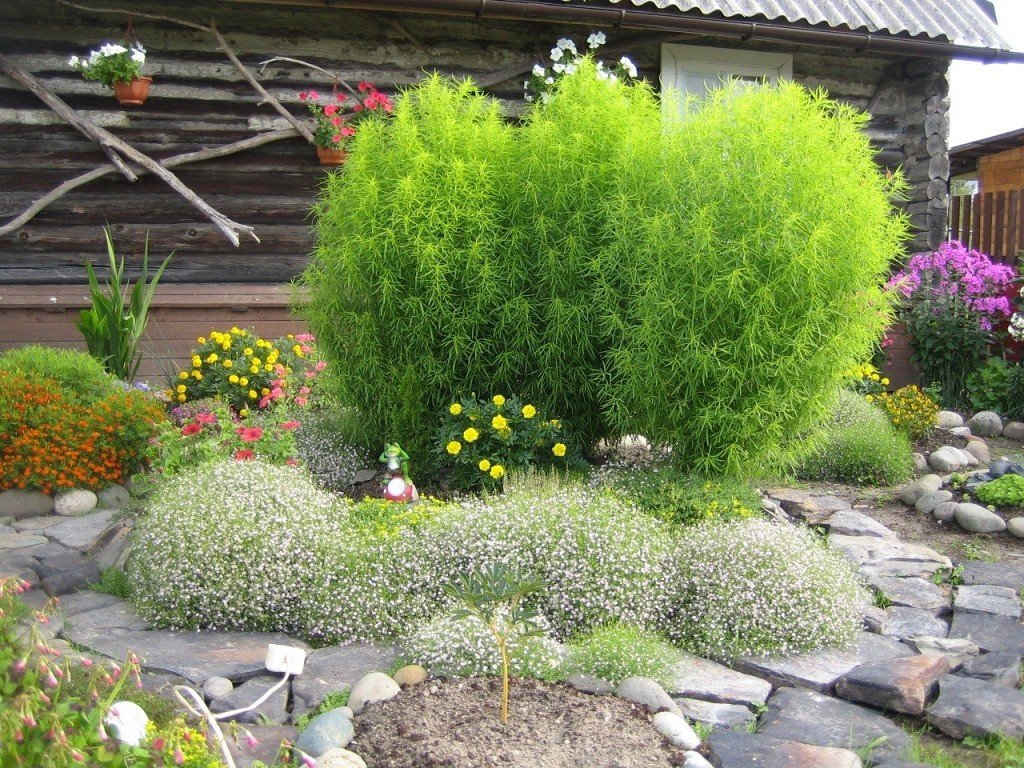
Growing gypsophila is not difficult. The main thing is to choose the right location and soil, and for the next few years, you can simply enjoy the exceptional ornamental beauty of the plant.