
African daisy in the garden, or the subtleties of planting and caring for gazania
Content
Description of African daisy
The Asteraceae family, popular with gardeners and landscape designers, comprises over 33,000 species. Among this diversity of flowers, gazania is particularly popular.
Gazania (also known as gazania) is a herbaceous perennial. The plant's native land is believed to be South Africa. This likely explains its common name, African daisy. Despite its heat-loving nature, this exotic African daisy is widely cultivated in Europe and Russia. Since Russia's harsh climate is unsuitable for overwintering the flower outdoors, the plant is grown as an annual.
Gazania, an annual and perennial plant, is a medium-sized garden flower. The bush grows to a height of no more than 30 cm. Some varieties are even considered dwarf subspecies. Dense basal leaves are gathered into rosettes. The leaf blades are rich or dark green. The outer surface has a grayish tint and barely noticeable hairs. Thanks to the fine hairs, the flowers are not affected by lack of moisture. The plant is highly drought-resistant.
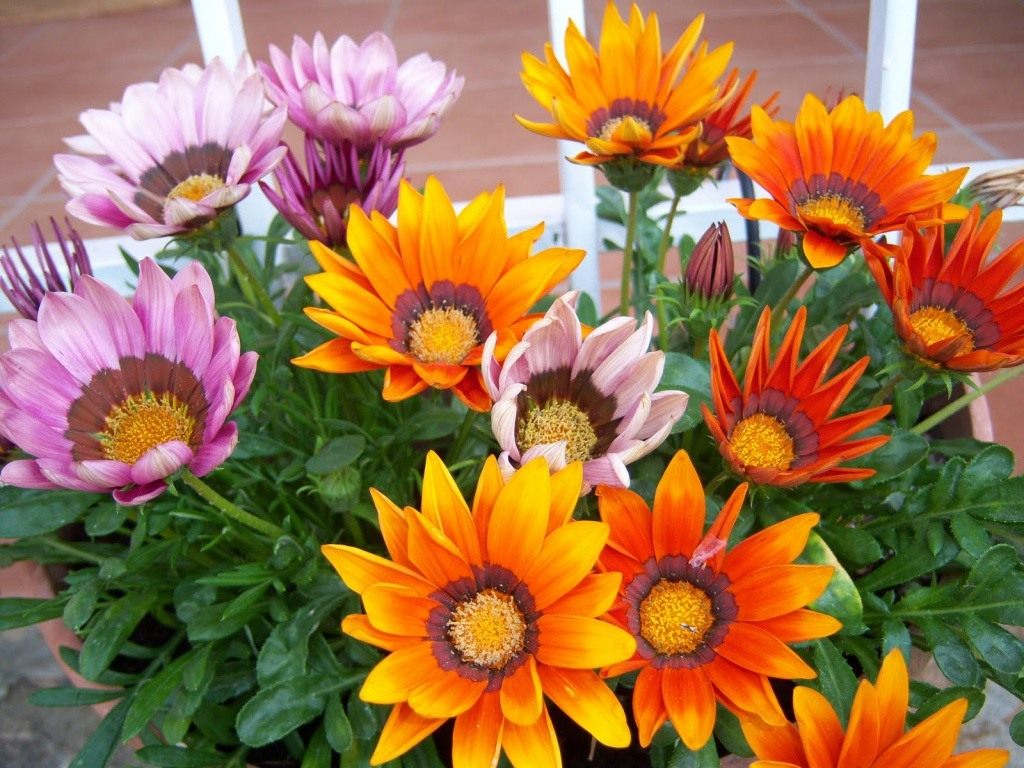
The African daisy's distinctive feature is the color and shape of its flower buds. The flower heads come in various shades of yellow, orange, coral, salmon, pink, and red. The bases of the petals are accented with contrasting stripes. The diameter of the basket when open ranges from 5 to 9 cm. Larger flowers are also found, reaching a diameter of 10–12 cm.
Video: "All About Successfully Growing Gazania"
This video provides helpful tips and recommendations for planting and growing exotic flowers in your garden.
The main types and varieties of gazania with photos
The gazania flower comes in several dozen species and varieties. Only a few have thrived in our climate. Let's look at the most interesting varieties of the African daisy.
Long-rifle
Gazania longiscapa is an annual herbaceous plant that grows to a height of no more than 20 cm. The flower is characterized by entire, bright green leaflets. The profuse pubescence makes the underside appear slightly lighter. The longiflorum variety produces large, ligulate or tubular flower heads. The petals are bright yellow and yellow-orange with dark brown bases.
Rough or shiny
Gazania rigens and Gazania splendens are tall varieties. A mature bush reaches a maximum height of 30 cm. The leaf blades are predominantly entire, rarely pinnate. The flowers come in tubular and ligulate varieties. The flower heads range from 4.5 to 6 cm in diameter, and the petals range in color from deep yellow to coral red.
Peacock
Gazania pavonia has narrow leaves up to 20 cm long. The average diameter of the flower head when open is 8 cm. The center of the flower is dark brown, and the edges of the petals are bright yellow.
Potsie
Gazania pottsii is very similar in appearance to the somewhat hardy variety. The leaf shape and color are identical. The main difference is the flower size. Gazania pottsii's vibrant flower heads reach up to 12 cm in diameter.
Hybrid
The most common gazania species in Russian gardening is the hybrid gazania (Gazania x hybrida). Gardeners and landscape designers are particularly fond of the Daybreak Red Stripe and Talent varieties. In recent years, the hybrid form Ministar, whose heads are colored white and yellow, has seen a rise in popularity.
-
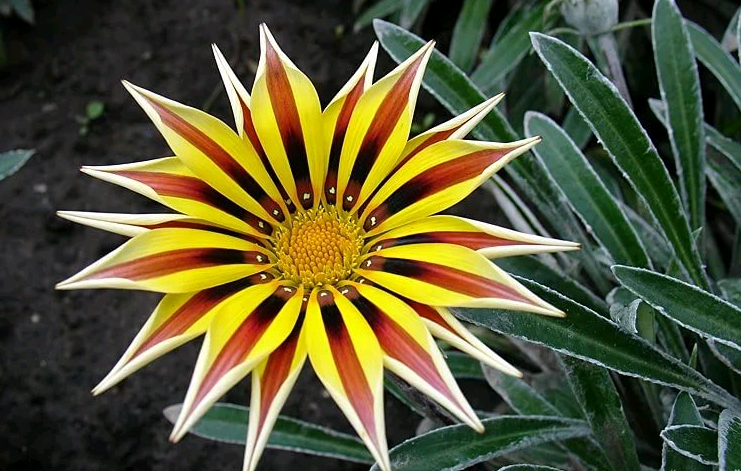
- Long-rifle
-
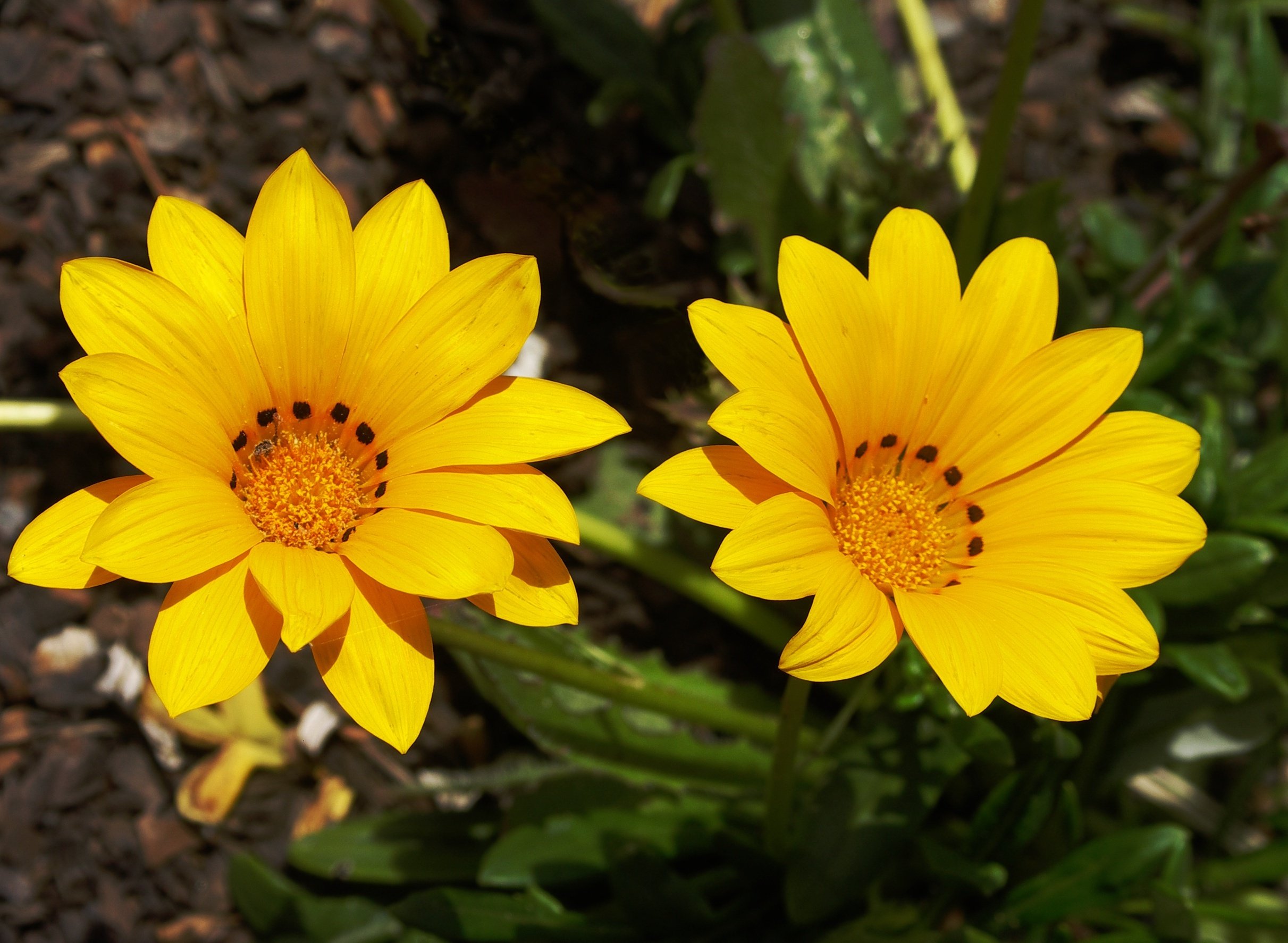
- Rough or shiny
-
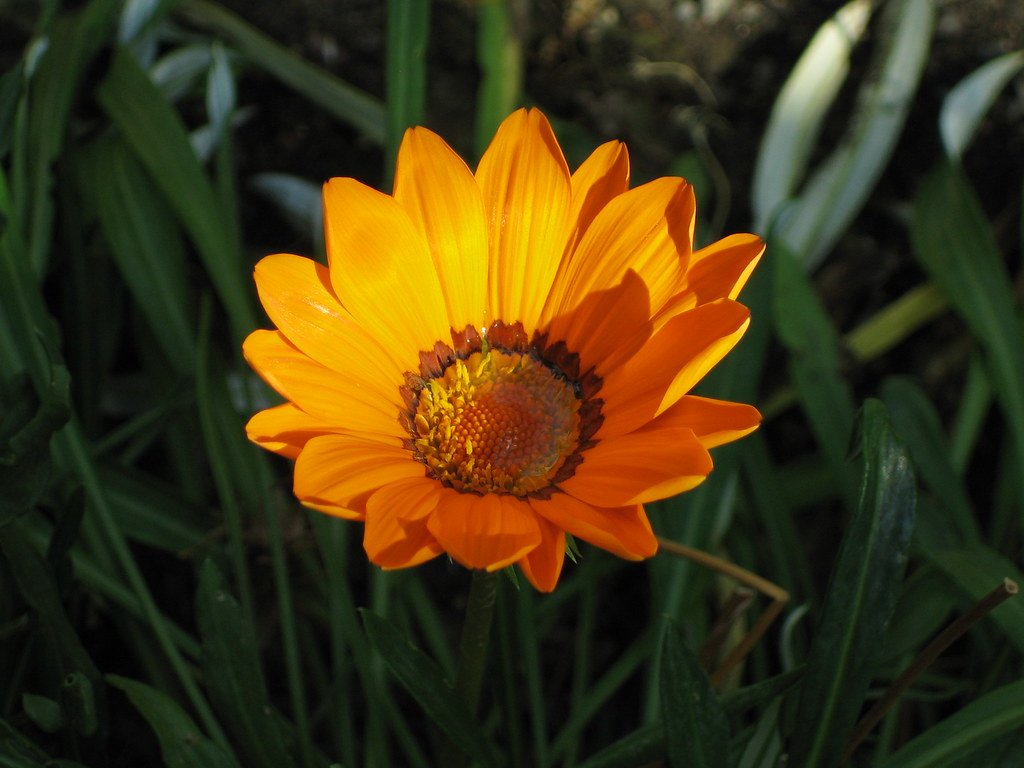
- Peacock
-
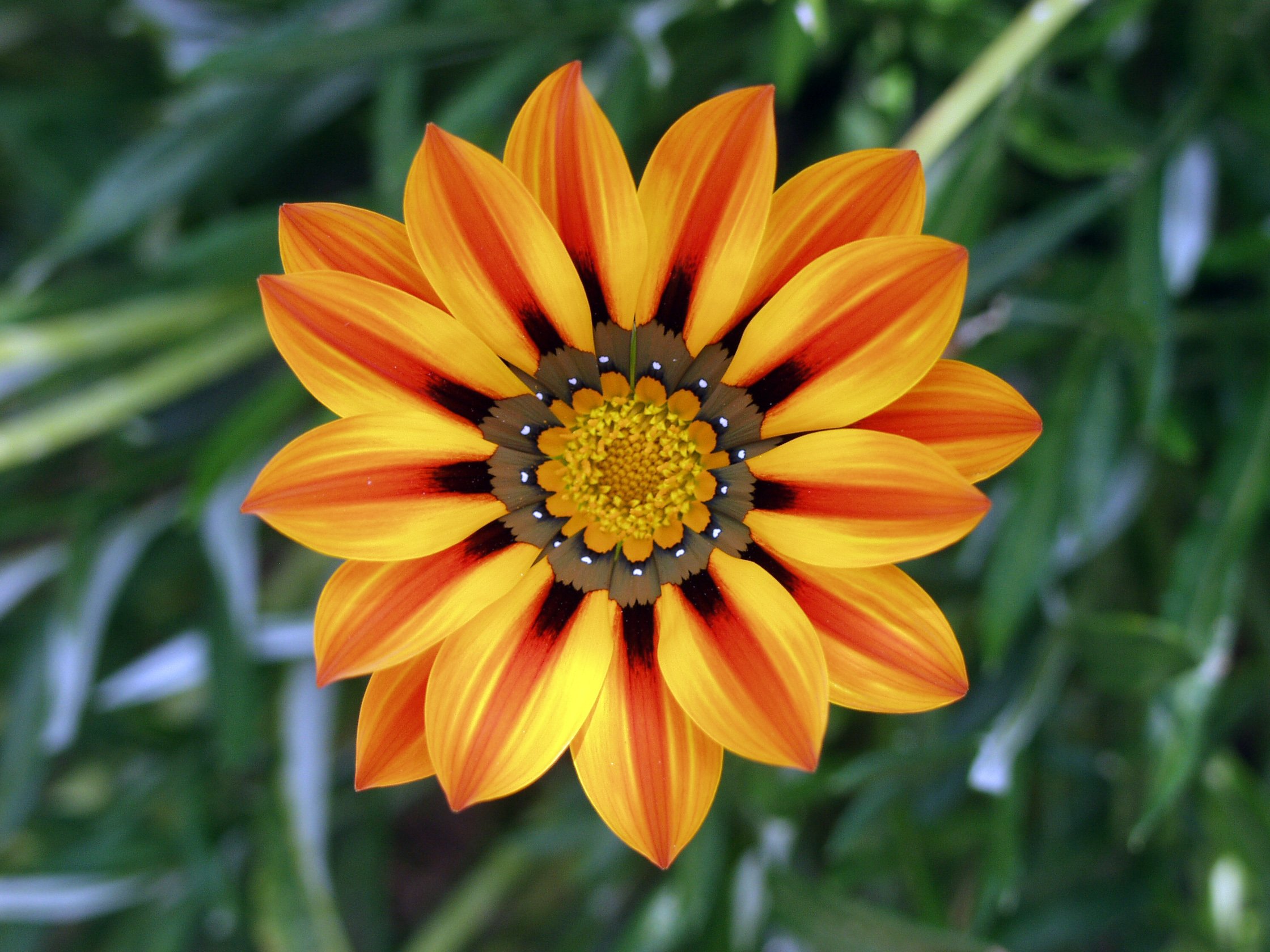
- Potsie
-
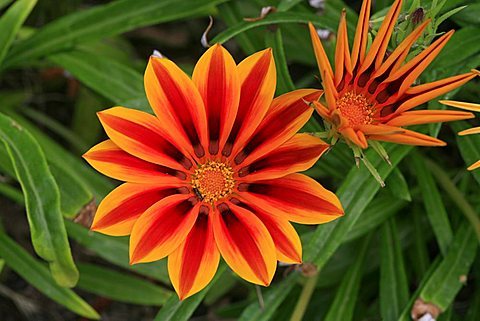
- Hybrid
Features of planting and growing
African daisy is grown from seed. Seeds of this exotic flower can be purchased at a nursery or collected at home. The seeds are collected after flowering. To collect the seeds, the flower heads are covered with a piece of gauze. If this precaution is not taken, the wind will quickly scatter the lightweight umbels throughout the garden.
Sowing for seedlings
African chamomile seeds, soaked in the plant growth stimulant "Epin" or "Zircon," are sown in fertile soil. The best time for sowing is from mid-March to mid-April.
For sowing seeds, use shallow planting boxes and a light, well-drained, neutral soil mixture.
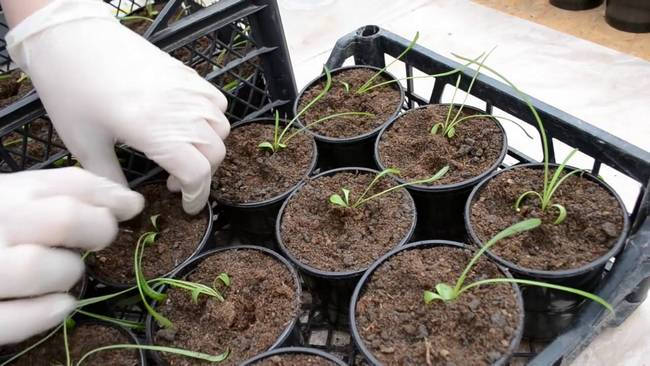
Caring for seedlings
After sowing, the substrate is moistened with a spray bottle, covered with glass and moved to a warm and bright place where the average daily air temperature is maintained at +20 °C.
The mini greenhouse should be ventilated daily and cleaned of accumulated condensation. After 10-15 days, the first shoots will begin to emerge. Once the seedlings have lifted, they are pricked out. The beds should be thinned out so that there is a 2-3 cm gap between the seedlings.
Young flowers begin to harden off. First, the glass is removed. Then the container with the seedlings is moved to a cooler room, where the air temperature is 12 to 16°C.
Planting in open ground
Once the seedlings have established themselves, they can be prepared for transplanting into open ground. The optimal time for planting in open ground is from mid-May to mid-June. The planting site should be well-drained by the sun. African daisies dislike shade, wind, drafts, and excessive soil moisture.
As for soil, gazania prefers light, well-drained, and fertile soil. It should be neutral in pH. Before planting, the soil should be tilled and fertilized with compost, humus, and peat.
Transplantation is carried out using the transshipment method, taking care not to damage the plant's fragile root system. The recommended distance between holes is 20 cm. After planting, the herbaceous plants are watered and mulched.
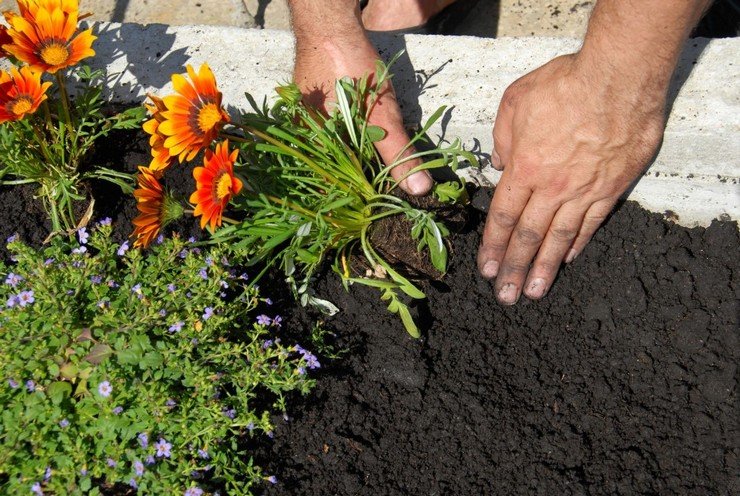
Rules for caring for gazania in a flowerbed
Planted outdoors, the flower requires certain agricultural practices. Lack of care negatively impacts flowering.
Watering and fertilizing
Native to hot Africa, this flower tolerates dry soil. Watering is only necessary during prolonged periods of dry weather. If the summer is rainy, water the African daisy no more than 2-4 times per season.
Don't forget to periodically remove weeds that are choking your crops. Mulching the root zone with black spunbond (mulching) will help prevent weed growth.
The frequency of fertilizing depends on the density and type of soil. For example, rocky garden plots should be fertilized with organic matter diluted in water or liquid mineral complexes every 15–20 days. The soil should be moistened beforehand, otherwise the plant's root system may be burned.
The nuances of pruning
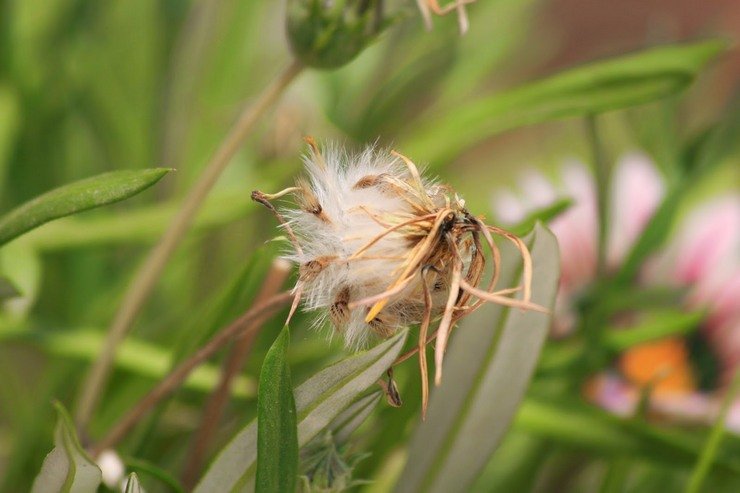
Pruning means removing faded flower buds. If drooping and/or dried flower heads are not cut off, the gazania loses its decorative appeal. Furthermore, the presence of dried flower heads prevents the formation of new flower heads.
Preparing for winter
This heat-loving plant is characterized by low winter hardiness. Overwintering outdoors is only possible in the south of the country. The flower stems are trimmed, but the leaves are left intact, as they provide additional insulation. Gazania bushes are sprinkled with a mixture of peat and river sand, then covered with pine branches.
Gazania, grown in central and northern regions, is transplanted into flowerpots using the transshipment method and overwintered on a loggia or glassed-in balcony. The optimal temperature for overwintering African daisies is between 6 and 10°C.
Diseases and pests of flowers
Gazania has strong immunity to most fungal, viral, and bacterial diseases. Its only drawback is susceptibility to gray mold when the soil is too moist and sunlight is insufficient. Fungicides such as Fundazol, Horus, Flint Star, and Magnicur Star can help protect the plant.
This exotic flower can suffer from spider mite and aphid infestations. Pest control can be achieved with insecticides such as Actellic, Fitoverm, Akarin, Ditox, and Fufanon. Slugs and snails also love gazania. Preserving the flower depends on the gardener, as the insects must be removed manually.
Application in garden design
Thanks to its striking appearance, African daisy is widely used in garden design. The plant can be used to create mono-flower beds and mixed borders. It looks stunning in alpine gardens and rockeries. It can also be used as a decorative display element.
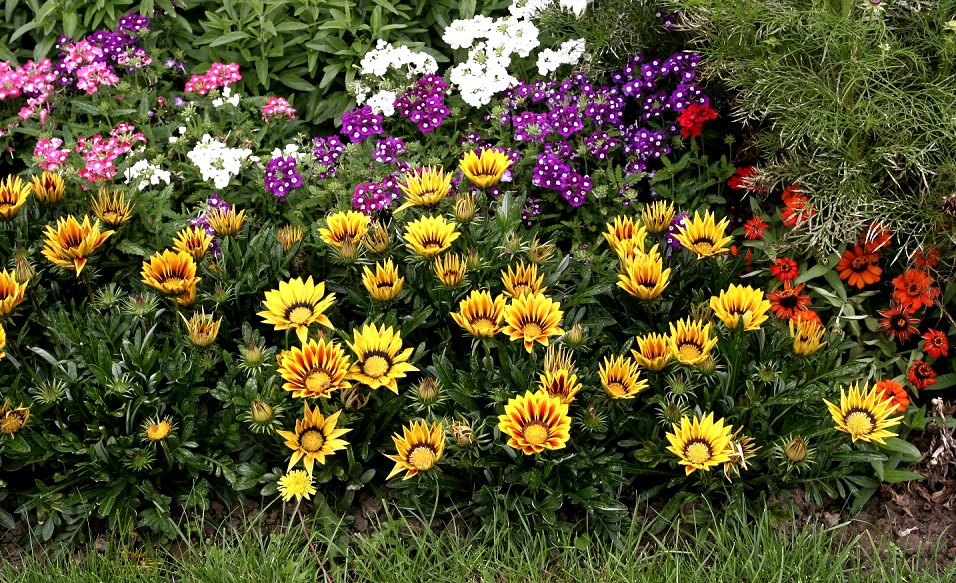
Since the low-growing flower is shade-phobic, pairing it with taller plants isn't ideal. Best companion plants for African daisies include lobelia, iberis, gypsophila, alyssum, dimorphotheca, venidium, ursenia, and other low-growing perennials and annuals.
Not sure which ornamental plant to plant in your garden? Consider the exotic African daisy, which boasts a striking appearance. Furthermore, gazania requires little care and rarely gets sick.