
The most beautiful species and varieties of perennial phlox: names, descriptions, and photos
Content
- 1 Morphological description of phloxes
- 2 Classification of perennial phloxes
- 3 Video: Growing Perennial Phlox
- 4 Paniculata (Phlox Paniculata)
- 5 Spotted Species (Phlox Maculata)
- 6 Spreading species (Phlox Divaricata)
- 7 Stoloniferous species (Phlox Stolonifera)
- 8 Subulate species (Phlox Subulata)
- 9 Phlox in landscape design
Morphological description of phloxes
Ornamental perennials of the Polemonium family came to Europe from North America. European gardeners began cultivating these flowers in the 18th century, gradually developing different varieties and hybrids.
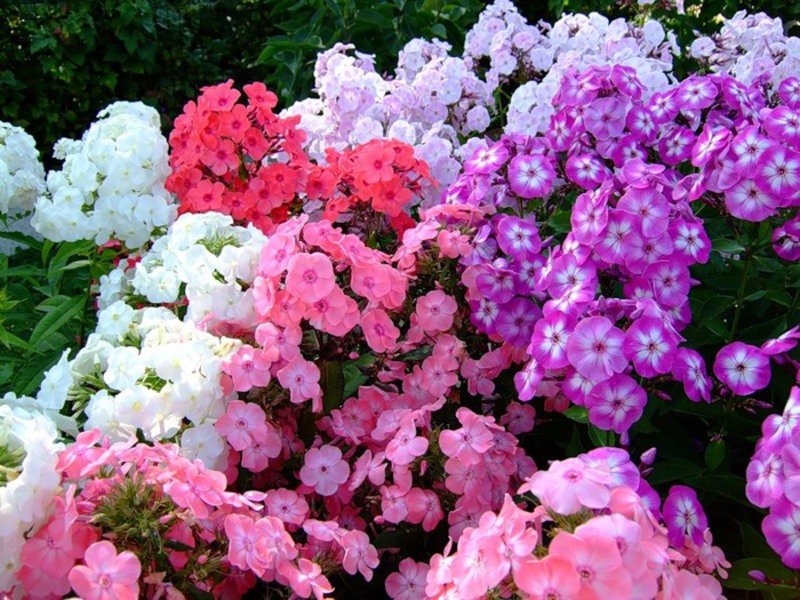
Botanists distinguish several species of phlox, each significantly different from the other. Plants can have erect, ascending, or creeping stems. Height varies by variety and ranges from 10 cm to 1.5 meters. The stems are densely foliated, with elongated oval or lanceolate leaf blades, smooth, and a rich green. The flowers are small, 2-5 cm in diameter, tubular, and always composed of five petals. The inflorescences are lush, dense, and come in a variety of colors, sometimes containing up to 90 buds. After flowering, fruits form, which look like small ovoid seed capsules.
Classification of perennial phloxes
Over nearly three centuries, breeders have developed approximately 1,500 varieties. For convenience, gardeners have devised several classifications that divide hybrids according to various parameters. One of them includes five groups:
- paniculate phlox;
- spotted;
- splayed;
- stoloniferous;
- subulate.
Each species comprises varieties with similar characteristics. To understand their differences and their distinctive features, we'll describe the most famous members of the Polemonium family.
Video: Growing Perennial Phlox
This video explores the secrets of caring for flowering perennials.
Paniculata (Phlox Paniculata)
The most numerous and popular group, representatives of which can be found in almost every garden plot. These phlox bloom from midsummer to early fall, decorating flowerbeds with vibrant colors. The plants are unpretentious, but it is not recommended to plant them near buildings, as they require good air circulation.
The flowers can reach a height of one and a half meters, the shoots are erect, and the leaf blades are lanceolate, 6-15 cm in size. The inflorescences of paniculate phlox are small, spherical, and loose. During flowering, the plant emits a delicate, pleasant fragrance.
Amethyst
A medium-sized bush, no more than 0.9 m tall and 30 to 60 cm in diameter. This highly decorative variety blooms from mid-summer to late August. The petals are a uniform lilac-purple color.
Blue Paradise
The mature flower grows up to 1.2 m tall with an average width of about half a meter. The flowering period is from early July to early September. The bright azure flowers have a subtle lavender hue.
Bright Eyes
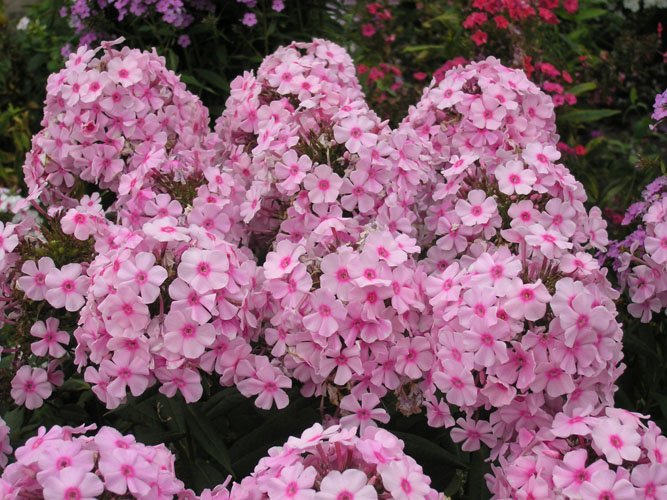
The bush grows to a height of only 0.4-0.5 m with a diameter of 30 to 50 cm. It blooms in the second half of summer. The buds are pale pink with a fuchsia center. The hybrid is distinguished by its increased immunity to fungal infections.
David
An award-winning variety at a prestigious British florists' competition. This tall phlox (0.9-1.2 m) is approximately 50 cm wide. It blooms from mid-July to late August. The color is snow-white, uniform, and free of any unwanted inclusions.
Delilah
The bush grows to a maximum height of 0.6 m and a diameter of up to half a meter. Flowering period is from mid-July to early September. The petals are magenta with a lilac tint. The hybrid is virtually disease-resistant, but is sometimes prone to spotting.
Candy Twist
Bicolor phlox resembles a lollipop in appearance. The plant grows 0.4-0.6 m tall and up to 70 cm wide. It blooms in early August. The snow-white petals have broad lilac strokes.
Sandro Botticelli
A medium-sized hybrid (approximately 0.7 m) created by Yu. A. Reprev, named after the famous Italian artist. The bushes, up to 60 cm in diameter, bloom in late summer. The color is lilac-purple with a pinkish tint.
Spotted Species (Phlox Maculata)
Flowers in this group are also called meadow flowers. They are slightly shorter than paniculate flowers, reaching no more than one meter in height. The stems are thinner and spotted, and the inflorescences are pyramidal. The corollas are small, only 2.5-3 cm in diameter. The leaf blades are oval-lanceolate, slightly thicker than those of Phlox Paniculata. The flowering period begins earlier, in the first ten days of July.
Hybrids thrive in well-drained, nutritious soil. A sunny or partially shaded location is best. Another difference from the paniculate variety is their susceptibility to fungal infections.
Delta
One of many gardeners' favorite varieties. A medium-sized bush (0.7-0.8 m) about half a meter wide. It blooms throughout the second half of summer. The buds are a soft cream with a bright pink center.
Natasha
Another garden favorite, this one has become a regular in flowerbeds. This low-growing hybrid grows no more than 0.8 m tall and reaches up to 50 cm in diameter. It blooms in early July. Its flowers are bicolor—white with pinkish-purple highlights.
Phlox Natasha is prone to fading, so it is better to plant it in partially shaded areas.
Omega
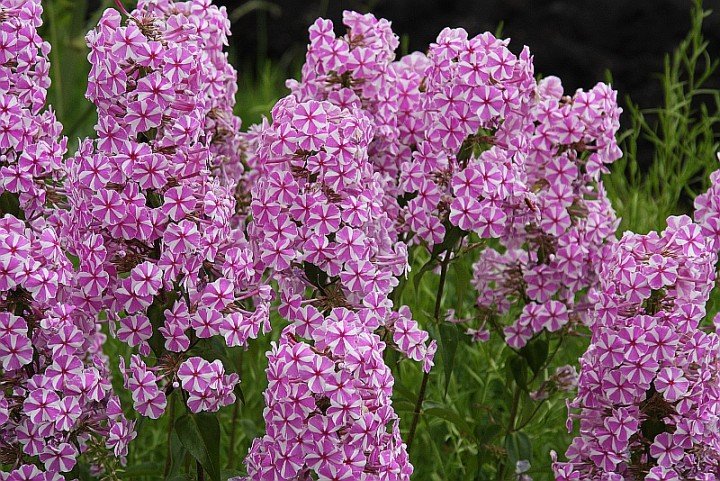
A mature bush is 0.9 m tall and half that wide. It begins blooming around mid-July. The petals are snow-white, with a violet-purple base. This hybrid is frost-hardy, withstanding temperatures down to -20°C.
Rosalind
The oldest variety, nearly a century old. A tall hybrid (1 to 1.3 m) with a diameter of about half a meter. Early flowering, beginning in late June. The color is uniform, without any impurities, an ultra-pink hue.
Spreading species (Phlox Divaricata)
Phloxes of this group are also known as "Canadian," "forest," or "wild blue." These plants are medium-sized varieties, reaching a height of no more than 0.5 meters. Their color palette includes various shades of blue. The inflorescences are small and loose, consisting of a small number of buds that begin to open in mid-spring. When blooming, the plant emits a strong, sweet fragrance.
These flowers are easy to grow and require little care. They thrive equally well in fertile soil or rocky surfaces. For this reason, they are often used by landscape designers in alpine gardens.
Clouds of Perfume
A miniature phlox, only 0.2-0.3 m in height and about half a meter in diameter. It blooms in mid-spring. The color is uniform, soft lavender, without any blotches. This hybrid is susceptible to powdery mildew and nematodes.
Landen Grove (London Grove)
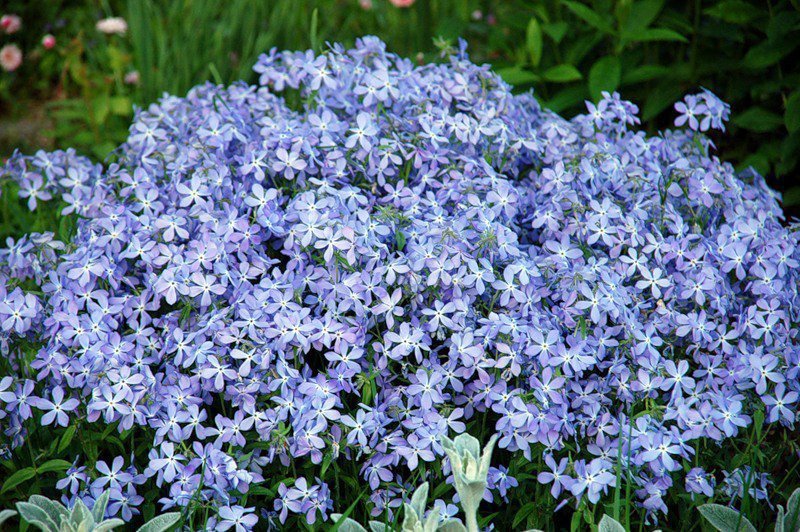
This variety grows no more than 0.3 m tall and up to 60 cm wide. It blooms in the second ten days of April. The petals are azure with a slight lavender tint. When in bloom, Landen Grove phlox resemble forget-me-nots.
Fuller's White
A low-growing plant (0.2-0.3 m) with a diameter of no more than 30 cm. Flowering period: April-May. The color is uniform white with a subtle bluish tint. It is the most winter-hardy hybrid, withstanding temperatures down to -40°C.
Eco Texas Purple
A mature bush reaches a height of approximately 0.3 m and a width of 20-30 cm. Flowering begins in mid-May and can sometimes linger until early June. The buds are dark lilac with a beetroot-colored center.
Stoloniferous species (Phlox Stolonifera)
A small group comprising only a few varieties. Another name for this plant species is creeping phlox or groundcover phlox. In its natural habitat, it grows on the mountain slopes of the Appalachians, making it very frost-hardy and highly resistant to infections.
Phlox stolonifera grows to form distinctive mats up to 0.2 m tall with numerous bright flowers. To maintain its vibrant color, this perennial is best planted in partial shade, in moist, nutritious soil.
Bruce's White
A hybrid that won an award at a prestigious American competition. The bush grows to just 15 cm tall, though it can reach almost half a meter. Flowering occurs in the second half of spring. The color is a uniform snow-white.
Home Fires
The creeping plant grows to a height of no more than 0.2 m and a diameter of 60 cm. It blooms in the second ten days of April. The petals are a rich purple-pink hue. Home Fires tolerates drought well and retains its vibrant color in bright light.
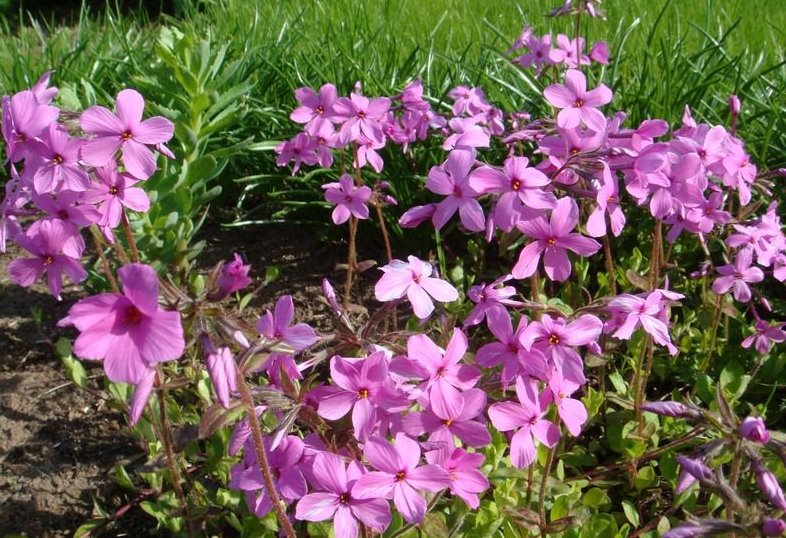
Sherwood Purple
This variety forms a 15-20 cm tall canopy, quickly growing to 50-60 cm. Flowering begins late, in late July. The color is blue with subtle purple hues. These phlox are best planted in tree trunk circles.
Subulate species (Phlox Subulata)
The shortest group of creeping phlox, reaching a height of no more than 10-15 cm. Varieties in this section are distinguished by their vibrant color palette and ability to withstand direct sunlight. The mats grow very densely, densely covered with small flowers during flowering.
The plant thrives in brightly lit areas. It prefers moist, nutritious, and well-drained soil. Subulate phlox are easy to care for and easily adapt to any conditions.
Bonita
This bush, about 0.1 m tall, can grow to almost 60 cm. Flowering occurs in the second half of summer. The buds are bright pink with a fuchsia center. This hybrid is frost- and drought-resistant and is often used to border paths.
Candy Stripes
The most variegated variety, growing no taller than 15 cm with a bush diameter of 0.5 m. It blooms in late spring. The petals are white with wide purple-pink strokes and a bright violet base.
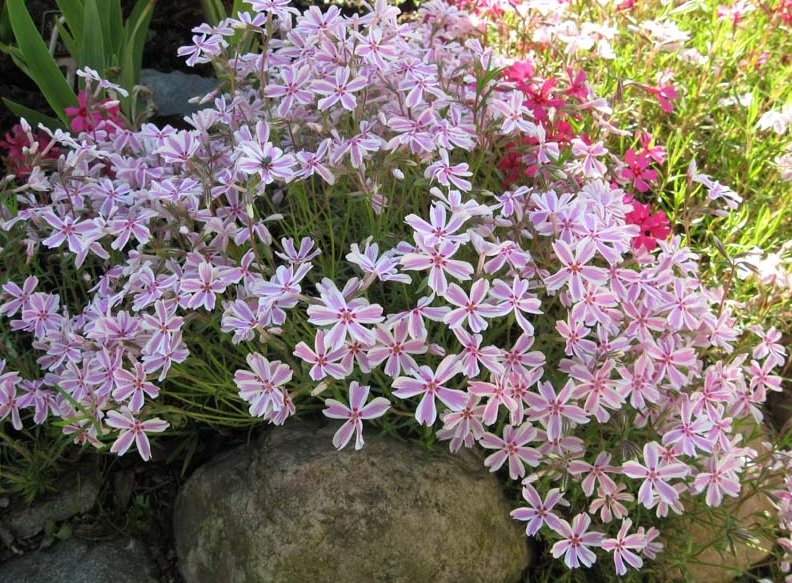
Early Spring Blue
An ultra-early hybrid that blooms in April. The bush reaches 10-15 cm in height and 0.6 m in width. The color is uniform, soft blue with lavender undertones. Early Spring Blue phlox grows very quickly, forming a dense ground cover.
Phlox in landscape design
Just a couple of decades ago, only paniculate species were used in landscape design. The most popular, besides the aforementioned varieties, were Hercules, Grafika, and Intriga. However, gardeners now have a wider range of phlox varieties.
Phloxes grow well next to the following plants:
- geranium;
- irises;
- low-growing coniferous trees or shrubs;
- perennial decorative rugs.
-
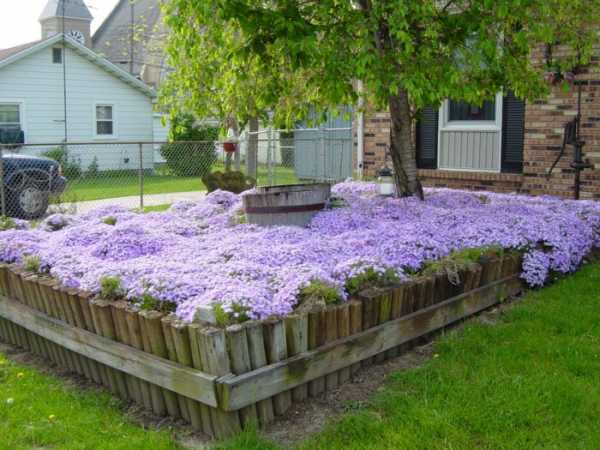
- Floral "sea"
-
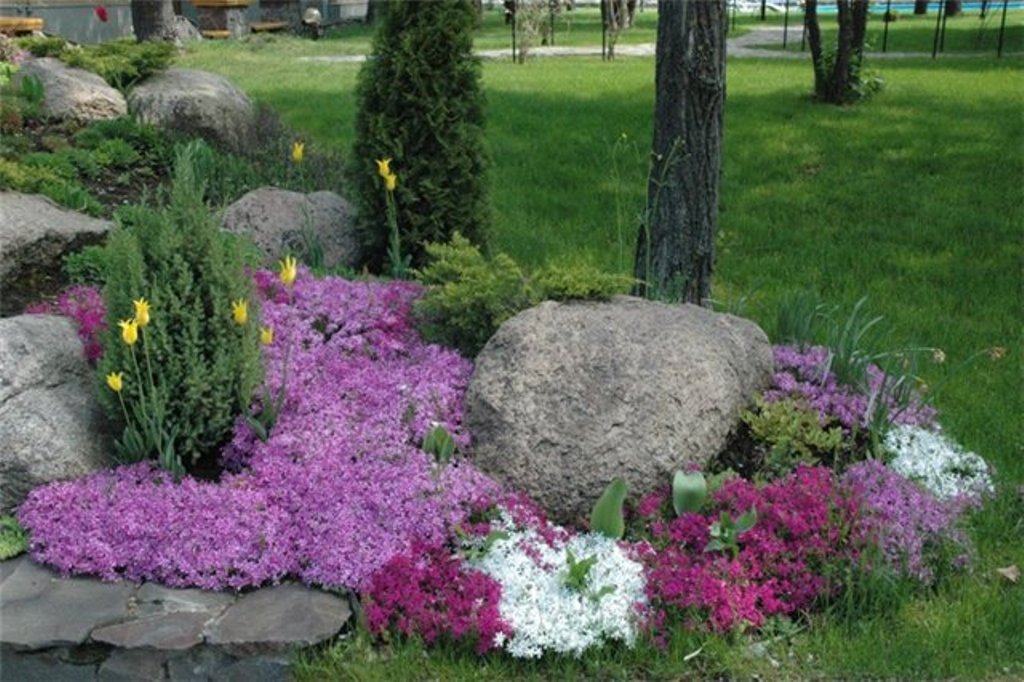
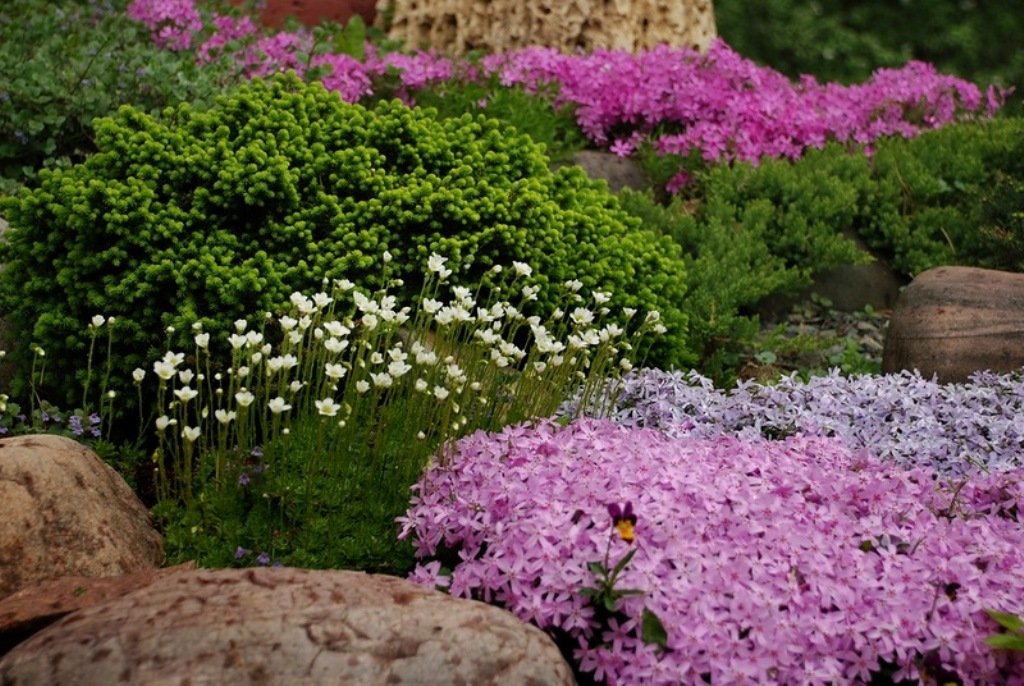
- Alpine slide
-
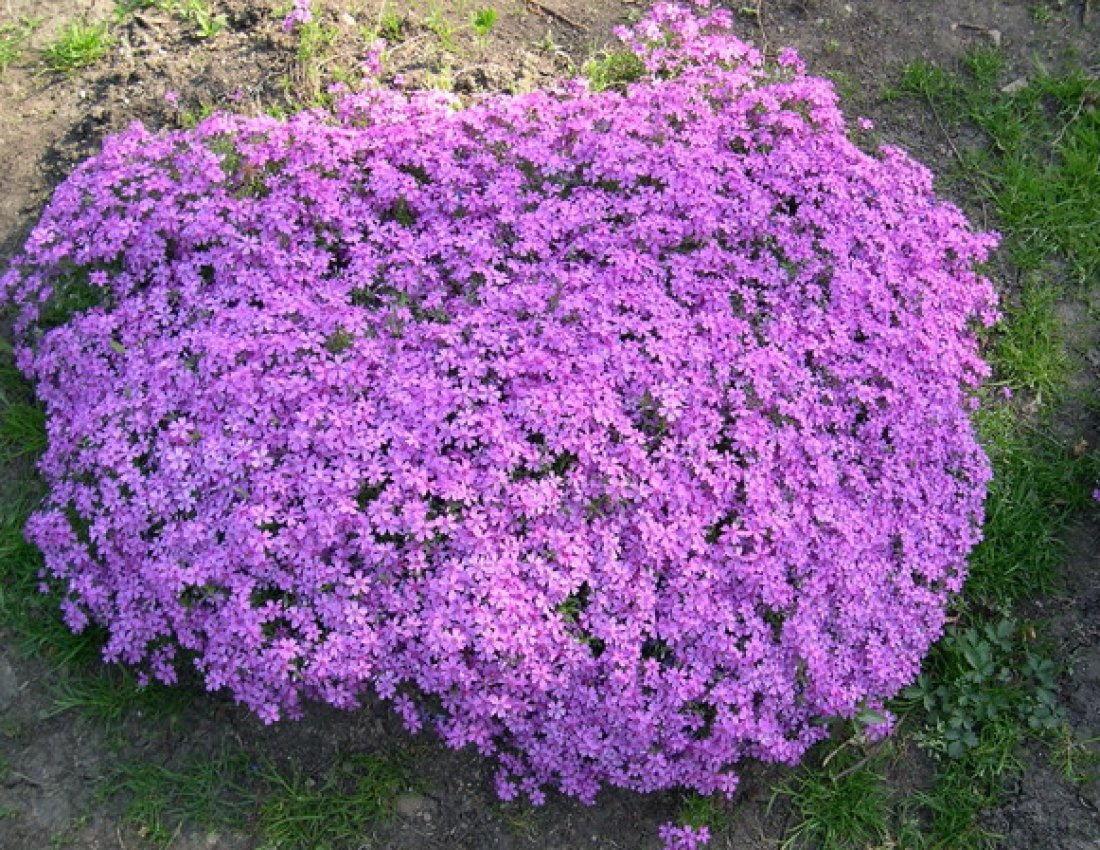
- Solitaire planting
-
- Flower arrangement
-
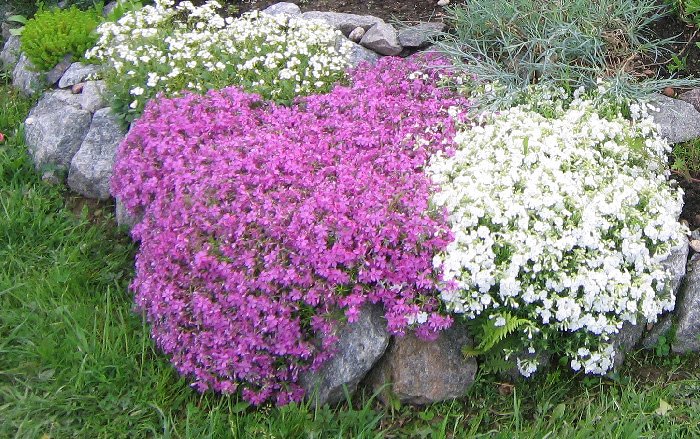
- Rockery element
-
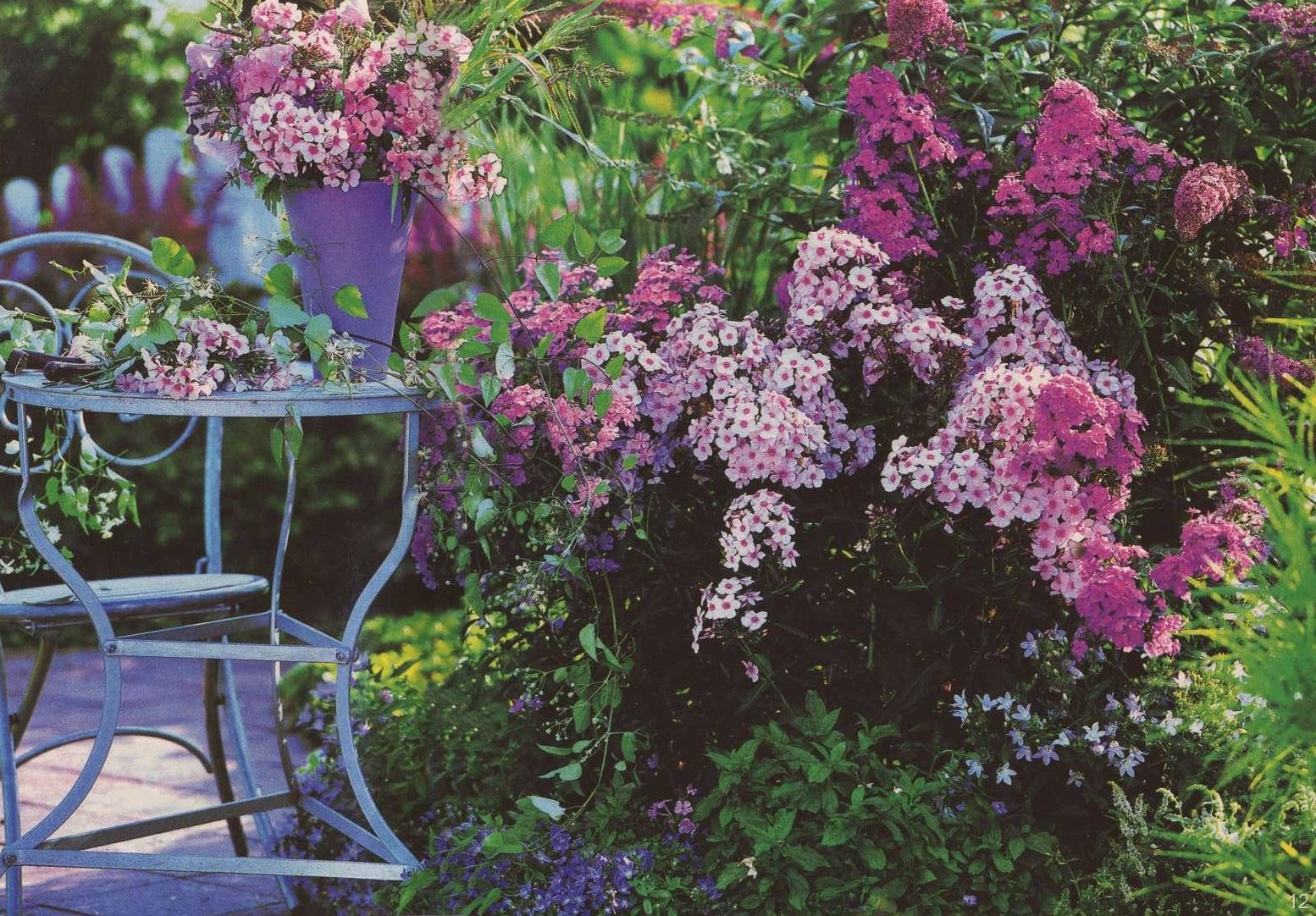
- Decorating a plot with phlox
When creating a composition, it's best to plant tall plants deeper, flanked by trailing or miniature varieties. This will make the flowerbed appear fuller and more voluminous, and the carefully combined colors will create a more harmonious look.
Subulate or spreading phlox are great for decorating rockeries and alpine gardens. They are also suitable for border decoration. Planted along paths, they will become a true highlight of the yard.
Designers love using these flowers to create mixed borders, massifs, and regular flower beds. The wide range of colors allows for various combinations, mixing phlox with other ornamental plants.
This ornamental perennial, nicknamed the "flame flower" by the ancient Greeks, is popular among gardeners for good reason. Its diverse palette of varieties will inspire any original imagination and add a unique touch to your garden.