
Interesting DIY ideas for landscaping your garden
Content
Preparatory work and zone planning
It's easier to tidy up a newly acquired plot of land without flowerbeds, garden beds, or trees. Start by clearing debris, uprooting stumps, and dismantling unnecessary structures. Then, draw up a detailed plan.
Planning is organized as follows:
- A diagram of the site is drawn and the boundaries are marked.
- Existing buildings, trees, fruit-bearing bushes, flower beds, and paths are indicated. Elements planned for preservation are also drawn.
- In the empty spaces, they sketch out future flower beds, vegetable gardens, gazebos, and greenhouses, i.e., details of the proposed landscape.
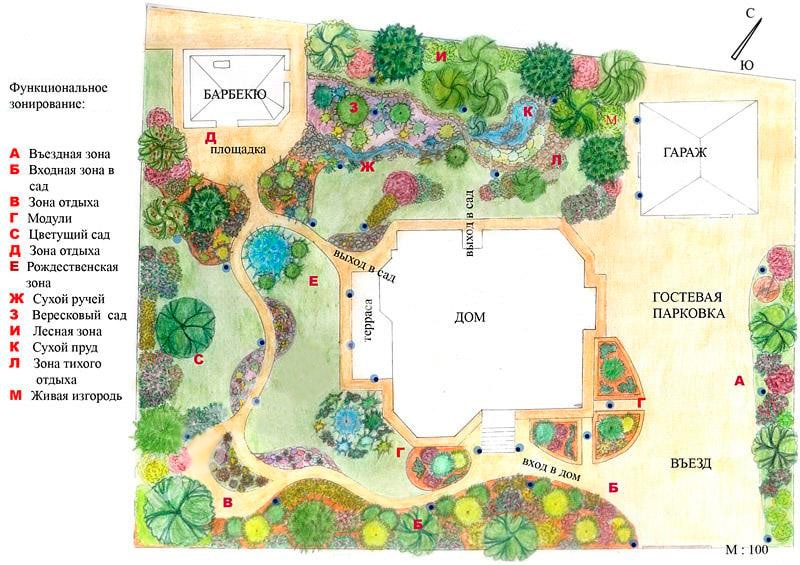
It's a good idea to plan for areas that are likely to be useful. These include:
- entrance or entry area;
- a recreation area including a gazebo, benches, a barbecue area or a patio;
- a play area with swings and a sandbox for kids, a basketball hoop or a tennis table for parents;
- a utility yard containing a cellar, an outdoor shower or sauna, and a garage;
- plots for a vegetable garden, greenhouse and orchard.
Popular landscape styles
A plot designed in a certain style looks pleasant and respectful. Here are some examples of styles used in landscaping a summer cottage:
- Classic (French). The area is divided into symmetrical zones, each with a regular geometric shape. Wildlife has no place here; everything is subordinated to a demonstrative cultivation. The alleys are straight, the flowerbeds are formal, and the fountains and gazebos are round, placed in the center of the compositions or at the intersections of the paths.
- Landscape (English). No strict forms, complete freedom and naturalness – the ambiance of noble estates of the 19th century. This doesn't negate the need for plant maintenance, but such measures should be discreet. Paths are winding, ponds are freeform, and lawns are neatly trimmed.
- Country style. This style is very popular among the local population due to its ease of implementation. It allows for complete creative freedom. Natural materials in vibrant colors are used in the design, and low-maintenance plants are planted. Creative decorations are created using scrap materials.
- Contemporary (high-tech). Unique vegetation (cypress or arborvitaes), new materials like polycarbonate, glass, or plastic, and creative accessories like lamps or sculptures are popular. This area is designed for relaxation for business people and requires almost no maintenance. Ponds are filled with water or covered with blue pebbles.
-
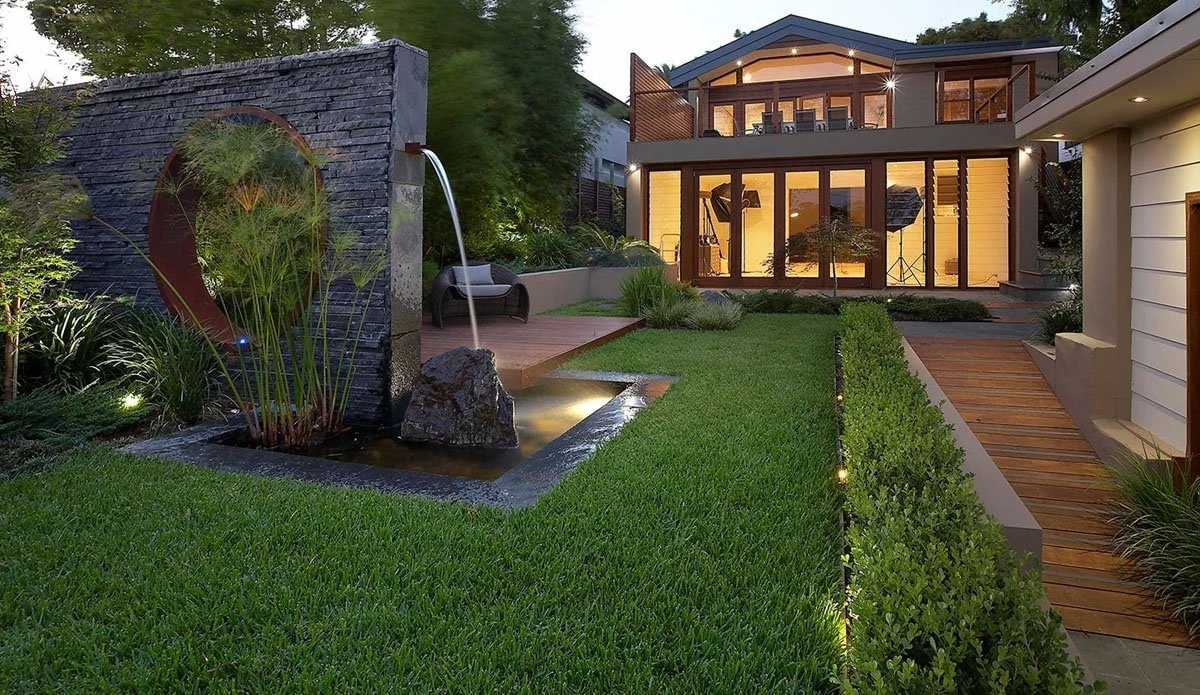
- High-tech
-
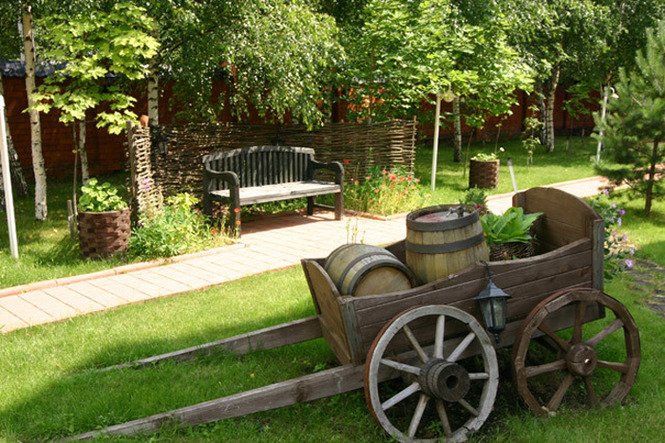
- Rustic
-
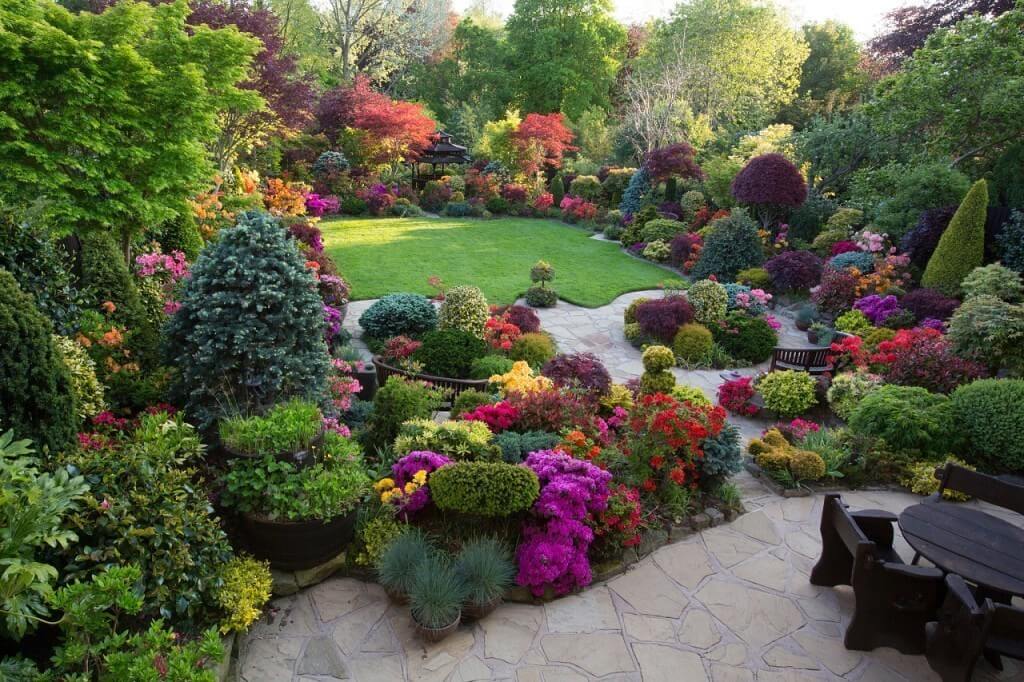
- English
-
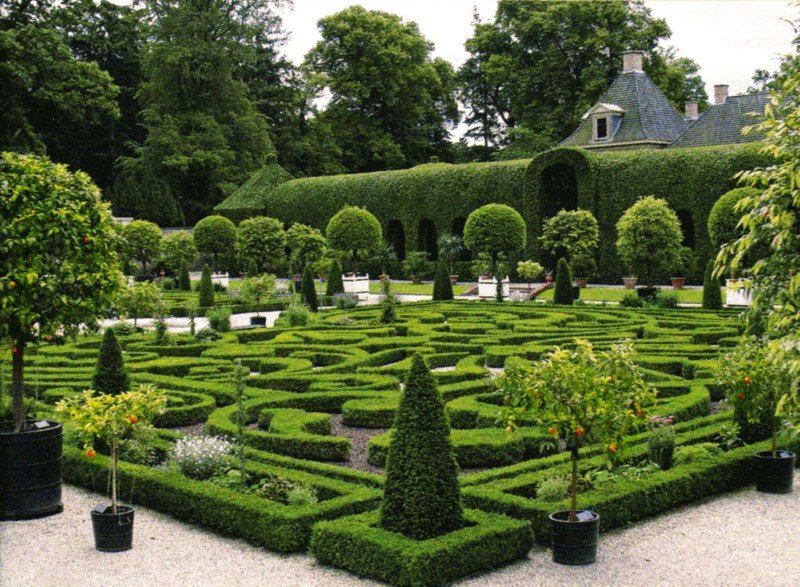
- Classical
Choosing the perfect hedge
To keep a dacha plot looking well-maintained, a fence is essential. There are several solutions:
- The fence is made fundamental, using stone, bricks or forged metal.
- A simpler option is a wooden picket fence. To extend its lifespan, the wood is treated with preservatives and periodically painted.
- To completely close off the area from prying eyes, a fence made of profiled metal sheets is installed.
- The cheapest option is to cover the perimeter of the property with chain-link fencing. This eliminates shadow areas along the fence, allowing for more sun-hungry plants. Later, climbing plants can be trained along the fencing, creating a hedge.
It's worth mentioning that the country style suggests a hedge or wicker fence, the classic style suggests a massive stone fence, the English style is more suited to a wrought iron fence, and a high-tech style plot is enclosed by a high, blank wall made of concrete or wooden panels.
Video: "Ideas for Landscaping a Summer Cottage"
This video presents original and interesting options for landscaping and landscaping a garden plot.
Development of the territory of a summer cottage
Several approaches are used to design areas of varying sizes. Here are some examples of universal design solutions:
- Small areas should avoid massive elements, such as wrought iron arches. Small details should be kept to a minimum.
- A cozy wooden gazebo, covered with grapes or ivy, will be appropriate in almost any garden plot.
- Small ponds, waterfalls, and rock gardens look great anywhere. Flower pots, either hanging or on the floor, are perfect for decorating verandas or terraces.
- Consider lighting the area. Decorative lanterns do the trick in the yard, and wall lamps on the terrace. Flowerbeds or artificial branches can also be decorated with dim lighting.
- Those who enjoy digging in the soil are given a plot of land for gardening. This will provide the family with affordable food and, like any outdoor work, will improve their health.
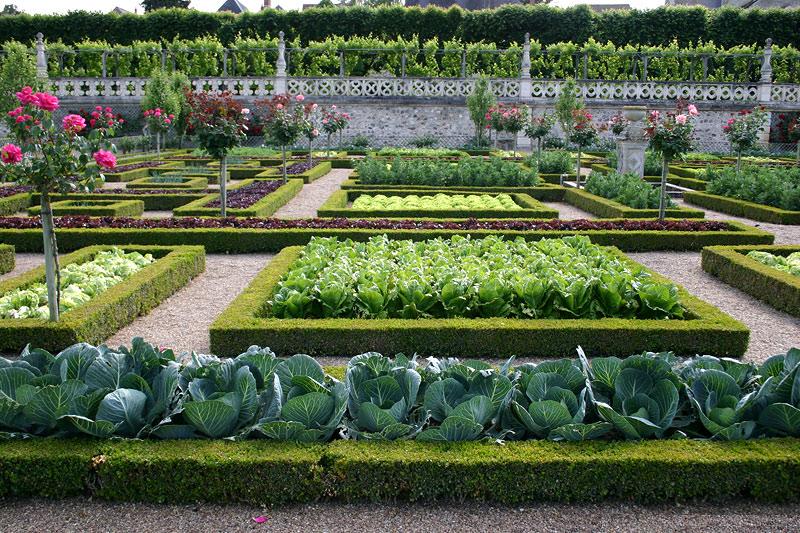
Vegetable garden at the dacha
The gardening area is set up in an open, shade-free area. It is separated from the recreation area by a hedge. It is best to use:
- fruit crops – gooseberry and currant bushes;
- colorful border of annual plants.
To make your garden look more interesting, you can line its perimeter with trimmed shrubs, such as boxwood, and gradually cut them into creative shapes.
It's best to protect the beds themselves from weeds in advance. To achieve this, they are constructed raised:
- they make something like a wooden border from boards (separate for each bed);
- Place old newspapers as the bottom layer and pour gravel on top;
- Compost and fertile soil are placed on top in layers.
If you decorate the border boards with paint or make each perimeter figured, the "smart" beds take on the appearance of a real flowerbed.
Recreation area in the garden
A suitable-sized garden lawn is allocated away from neighboring plots, but closer to the house, preferably with a beautiful view. Then, on site:
- install benches and sun loungers;
- hang a hammock or a garden swing;
- they put a table around which the whole family can fit if necessary;
- They are building a canopy to protect from the rain.
As a result, the relaxation area also doubles as a dining area, especially if a permanent barbecue is installed nearby or a portable grill is designated. Later, the covered shed is converted into an open-air garden gazebo.
If you plan to host barbecue parties in the recreation area, ensure fire safety regulations are followed. The stove or grill should be installed at a strictly defined distance from flammable objects, and an artificial pond should be provided nearby.
Playground
To prevent children from disturbing adults while they relax or work in the garden, it's recommended to create a designated play area. The area should be safe, easily visible from both the house and the yard, and preferably located some distance from bodies of water and other potentially dangerous areas.
The site is laid out on a level surface, away from steep slopes, in light shade, as too much sun is still harmful. A temporary awning or a permanent canopy can be erected over the site to provide protection from the rain.
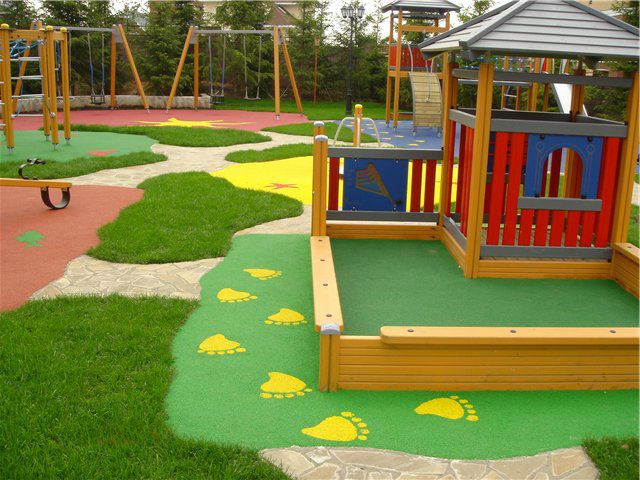
The following structures are suitable for a children's playground:
- horizontal bars;
- slides;
- sandboxes;
- swing.
The area is cleared of stones and sharp bushes, and anything dangerous is removed.
Garden paths
Paths serve to connect garden areas. Their location and directions are chosen to ensure maximum ease of movement at any time of day. While many simply use trampled paths, landscaping still requires owners to create paths using available materials. Paths can be laid out:
- by sprinkling and compacting sand, flat pebbles or bricks in layers;
- large round tree cuts;
- wooden boards or planks, longitudinally or transversely;
- paving slabs.
Sand paths are the simplest, but they don't last very long. Concrete paths or paths laid out of large stone slabs with grass growing in between look more substantial.
When planning directions, don't forget about the driveway. It should also be designed and made wide enough to accommodate several people walking from the parking lot to the house.
-
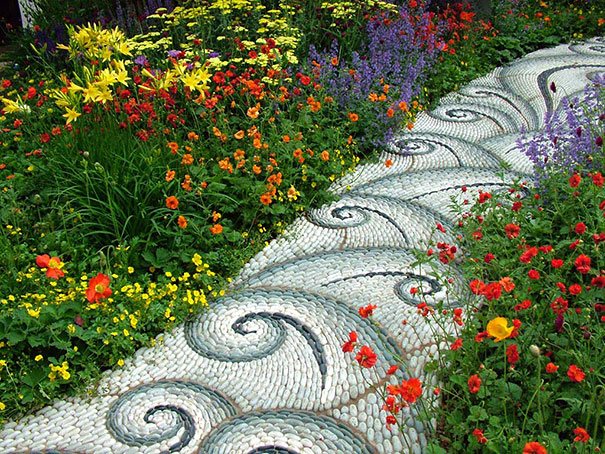
- From sea pebbles
-
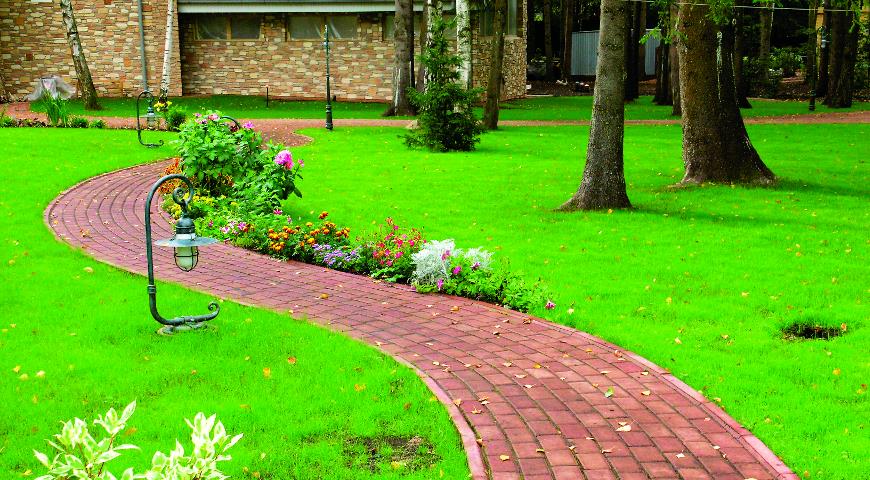
- From paving slabs
-
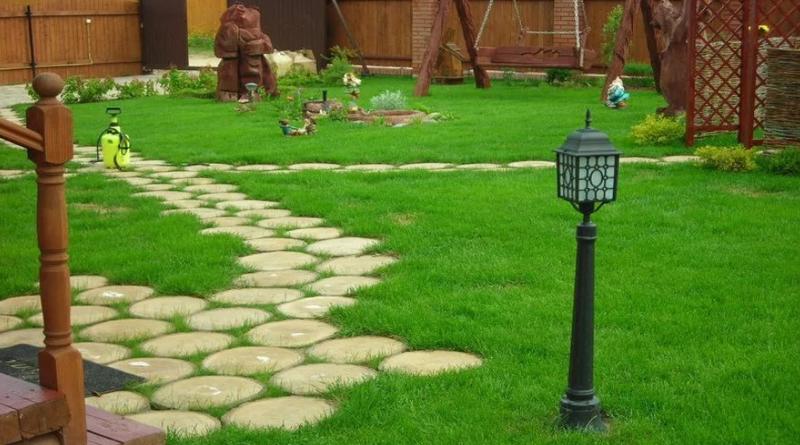
- Made of timber
-
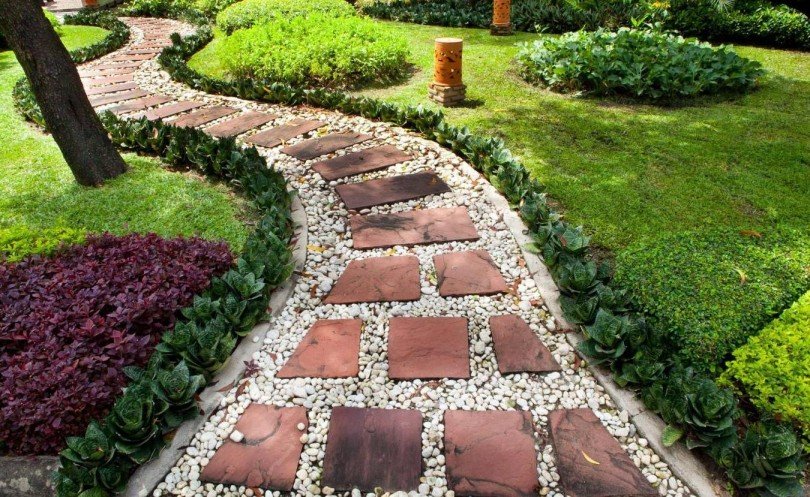
- From slabs and small stones
Site lighting
Smart lighting will not only allow you to navigate your property safely but also add an extra touch of charm in the evening. It illuminates not only the porch or terrace, but also the surrounding area, garden paths, and driveway.
Many decorative elements look great with special lighting:
- spotlights and other lighting fixtures are suitable for the lighting ambience of a waterfall, fountain, and sculptures;
- LED strip does a good job of lighting and landscaping paths.
Evening lights for get-togethers can even be made from glass jars suspended on strings, filled with beans and a burning candle.
Artificial reservoirs
One of the most beloved elements of landscape design, the pond's design is entirely up to the owner's imagination. The shore is decorated with decking, and the banks are lined with stone slabs. A natural environment is imitated by planting low shrubs along the bank.
You can build a decorative bridge across the pond. It would be nice to have a separate path leading to the pond.
Decorative elements
It's ideal for such details to combine beauty and practicality. For example, decorative lanterns can be solar-powered, and decorative furniture made from a variety of materials can also be comfortable.
In small spaces, a single colorful element is sufficient. This could be an alpine garden in the center of the property, a small pond, or a landscape composition of neat shrubs.
-
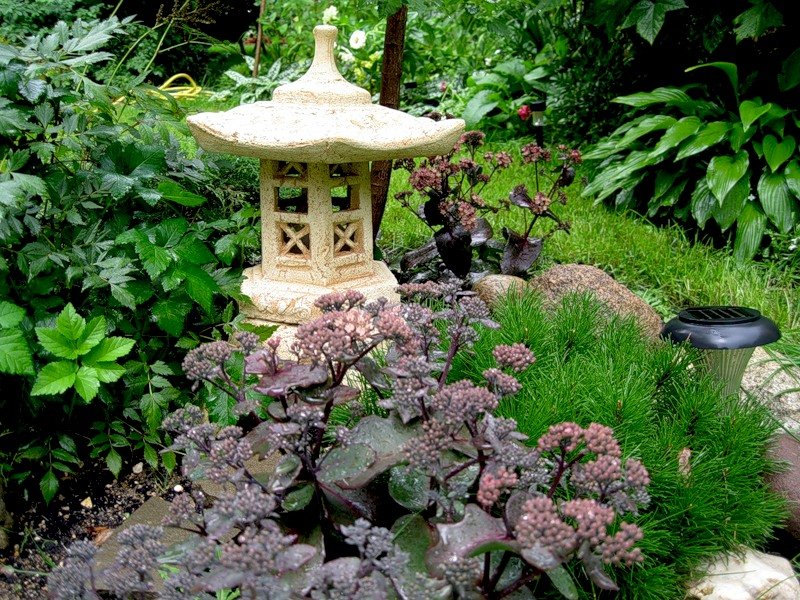
- Elements of a Japanese garden
-
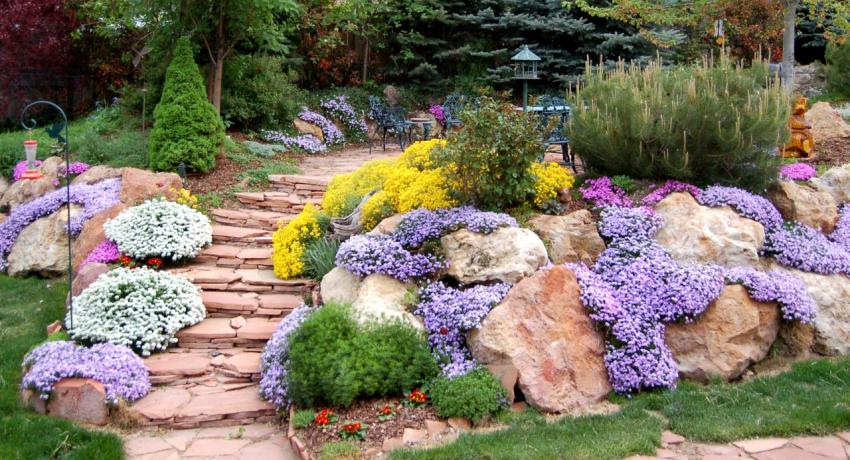
- Alpine slide
-
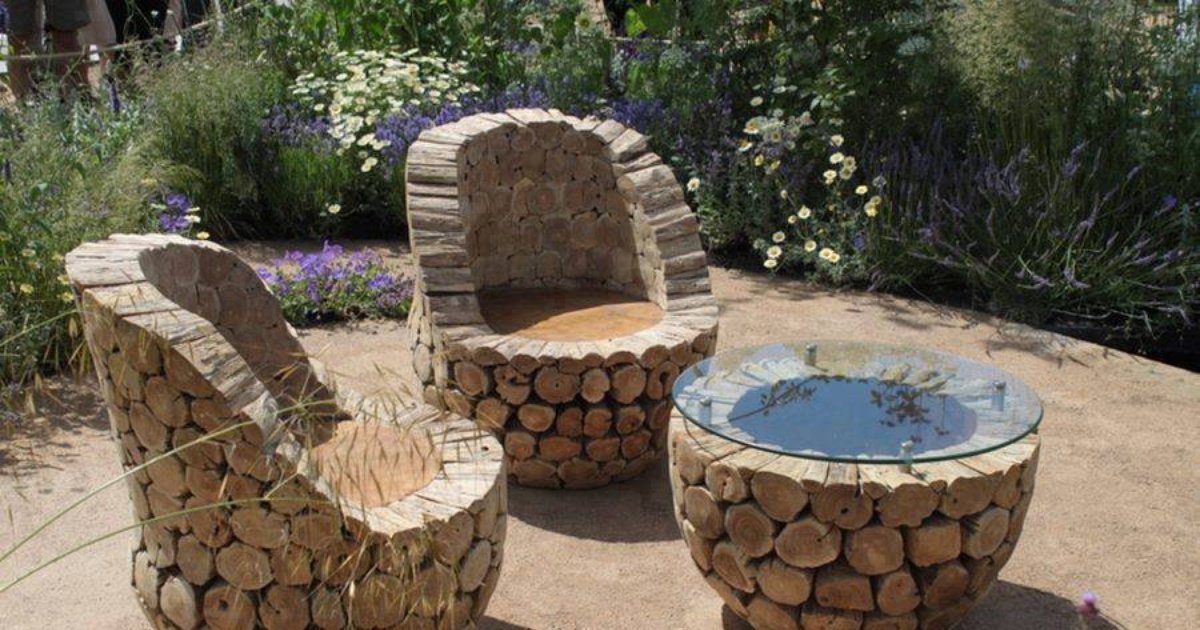
- Original handmade furniture
-
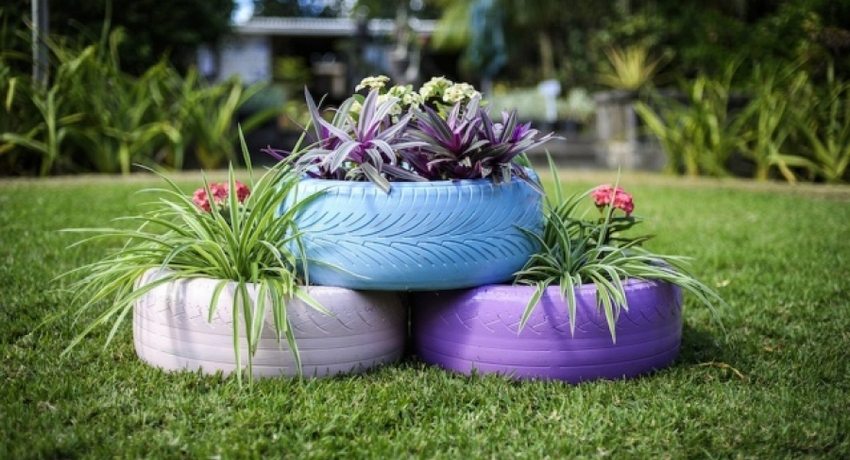
- Flower bed made from car tires
DIY landscaping
Once the designated areas are finished, it's time to start landscaping the property. While everyone's tastes vary, some tips from professional designers may be helpful:
- To attract guests' attention and for your own enjoyment, create several flowerbeds or borders, planting them with vibrant flowers. Select plants that bloom alternately. Tulips look great in spring, gladioli in summer, and chrysanthemums in fall.
- When planting trees, plan to include a couple of uniquely shaped trees with picturesque foliage. These could include arborvitaes, maples, or conifers.
- In small areas, it is not worth planting trees with dense crowns that shade a large area.
- A small lawn with individual flower beds of perennials looks beautiful in front of the house. The spaces between them are planted with annuals to ensure continuous flowering.
Shrubs and lawns
In a garden, it's advisable to plant crops that look neat and provide a backdrop for the rest of the vegetation. Lawns and shrubs are ideal for this purpose. Lawns, for example, are now available in roll-out form at specialty stores, significantly simplifying landscaping and reducing labor costs.
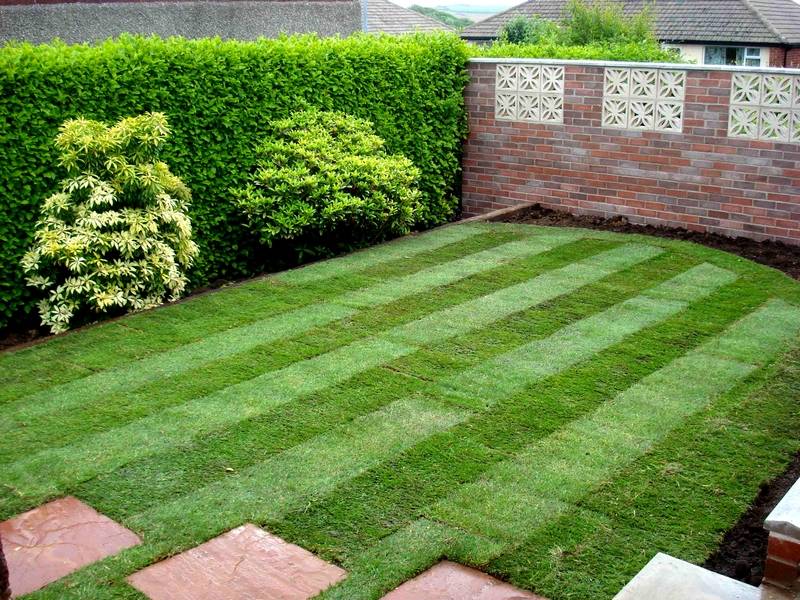
When choosing a lawn, pay attention to the grass varieties used. Consider:
- the number of people who will “trample” on them – there are grasses that are resistant to trampling;
- general vegetation on the site - shade-tolerant varieties are suitable;
- climatic features - stop at drought-resistant ones.
Ornamental shrubs are planted along paths and fences, and they decorate rock gardens and ponds. It's best to choose plants that don't require constant care and are easily established in a new location. These include:
- lilac;
- dwarf spruce trees;
- Weigela;
- jasmine;
- Japanese rhododendron.
Flower beds
These plants can easily find a place anywhere. There are a wide variety of flower varieties to choose from, so you can choose varieties that won't be affected by:
- excess moisture;
- hot summer;
- constant stay in the shade;
- poor quality soils.
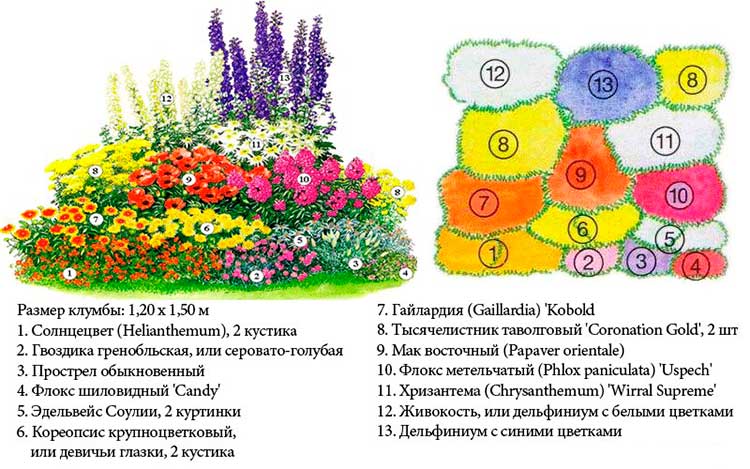
To give a flowerbed a neat appearance, enclose it with a low decorative fence. Suitable materials include vines, stones, a wooden trellis, or a picket fence made from pruned branches. A miniature flowerbed can easily be constructed using the back of a broken bicycle, an old wheelbarrow, or painted tires.
Although landscaping a country garden requires some knowledge and an understanding of landscape styles, the primary focus is creativity. Ideas are often in the air, and finding and implementing them with the whole family will provide many exciting hours and a wealth of pleasure.