
Growing and using winged euonymus in landscape design
Content
Botanical description of the winged euonymus
Botanists classify the plant as a distinct subspecies of the Euonymus family, of which there are over 200 species. There are evergreens and deciduous plants, 1.5-meter-tall shrubs and tall trees, up to 10 meters tall.
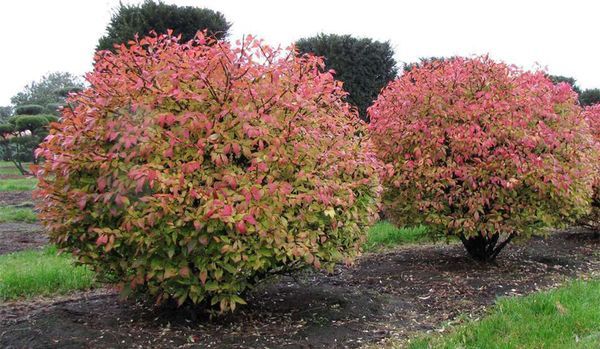
Wild euonymus is common in temperate and subtropical latitudes, in mixed and deciduous forests. Up to 20 species are found in our region, commonly known as privet, lady's eye, night blindness, or wolf's bast.
The appearance of the euonymus tree varies depending on the variety. General description:
- The branches are tetrahedral and oval in cross-section, sometimes with growths in the form of cones or longitudinal ribs.
- The leaves are smooth, arranged oppositely, and about 4 cm long. The foliage of some varieties is exclusively green, while others have brightly variegated foliage in the spring – yellow, scarlet, etc.
- Ripening fruits take the form of four-chambered, leathery capsules containing seeds. Different varieties are colored yellow, pink, or purple. Although the fruits themselves resemble flowers, the actual inflorescences that form in late spring are unattractive. Euonymus flowers are small, grouped in corymbose clusters, and have an unpleasant odor.
The berries are poisonous (as is the entire plant) and should not be eaten.
Video: Planting Euonymus alata
This video shows instructions on how to properly plant winged euonymus.
Varieties of Euonymus alatus
There are enough varieties of this plant to allow any gardener to select a suitable specimen for their plot based on its description and that will suitably enhance the overall landscape. Some varieties have been designed to retain their original beauty, while others have been enhanced by making them shorter and offering more variegated foliage.
Compactus (Compactus)
The name comes from the compact shrub's small height (up to a meter). Despite its size, the crown is lush, reaching 2 to 3 meters in width. In autumn, Compactus leaves turn red and scarlet, while the branches remain white and the bark is black.
Tinctures and decoctions from this plant relieve headaches and heart pain, but it is advisable to take them only after consulting with your doctor.
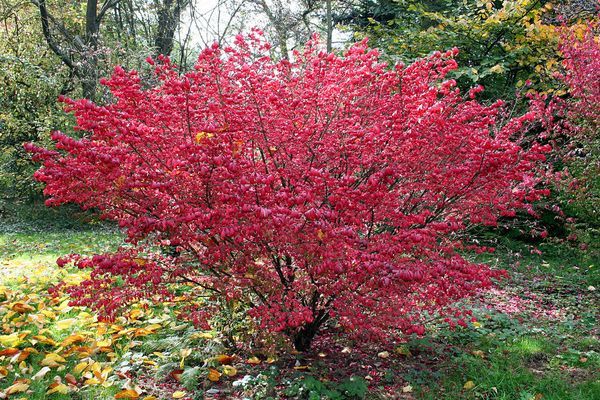
Chicago Fire
A true garden gem. The fruits are bright red, like a real flame. The bushes are small, reaching up to one and a half meters in height. Most of the branches of the Chicago Fire grow horizontally.
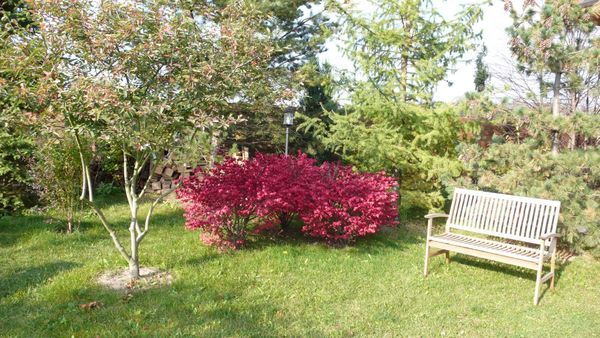
Fireball
Another name for this cultivar is "winged." It's a multi-stemmed bush, one and a half meters tall, with a crown diameter of 2 meters. The branches are green, turning cherry-red in autumn. Fireball's capsule-shaped fruits are dark red. There's another variety of this cultivar, Euonymus alatus. It's slightly taller and wider, with yellowish-red flowers, barely noticeable against the numerous bright red fruits.
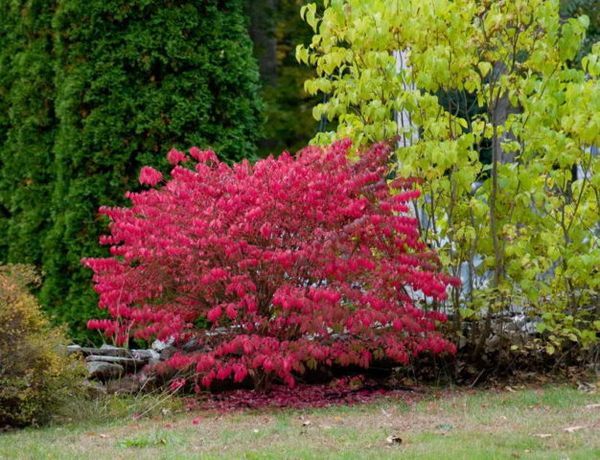
Macrophyllis
The foliage is massive, turning orange and burgundy in spring.

Advantages and disadvantages of the plant
Gardeners rarely plant euonymus, mistakenly believing that the plant's exotic appearance indicates delicacy and a need for special care. This is incorrect.
- Cold resistance – even severe frosts are not a problem.
- Resistance to polluted and smoky atmospheres – the crop feels good even within the city limits.
- Susceptibility to fertilizing – a wide variety of fertilizers are suitable.
- Unpretentiousness to soil - the main thing is that the soil is fertile; the degree of acidity does not play a special role.
- With its picturesque, lush, and dense crown, the euonymus often becomes the main decoration element of a site.
- The ability of the fruits to change color creates the impression that the crop blooms all year round.
- The plant loves light; there should be no tall crops or buildings nearby that cast shadows.
- Needs abundant watering and good drainage, especially during dry periods.
- Slow growth.
The fact that all parts of the plant are poisonous requires special care, especially if children or pets are playing in the garden. The attractive berries and flowers may attract their attention, enticing them to try it.
Planting and care
For those who decide to plant a shrub in a garden or summer house, knowledge of basic agricultural practices will be useful.
Landing rules
Planting is recommended in spring, but in southern regions, it can be done in autumn. Choose a sunny, exposed site—this will allow the foliage to develop its most vibrant color. Groundwater should be as deep as possible.
The soil should be loose and fertile. If the reaction:
- slightly alkaline or neutral - the bottom of the pit is covered with drainage gravel, a layer of fertile soil and humus is placed on top;
- acidic - additionally fertilize with a couple of glasses of slaked lime.
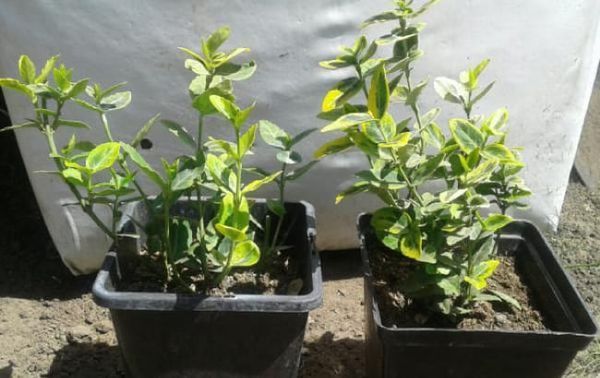
After planting the seedlings, compact the soil immediately surrounding them, water, and mulch. For the next week, ensure the soil remains moist but not soggy, otherwise the roots will rot.
Methods of reproduction
Although it's easy to buy plant seedlings at any specialty store these days, many gardeners propagate their favorite crop themselves. All known methods are suitable for this:
- seeds (available only from fresh harvest);
- layering;
- green cuttings;
- dividing the bush (for low-growing varieties).
Watering and fertilizing
The plant has moderate moisture requirements. Water the euonymus as needed, when the soil around the trunk begins to dry out. Watering is not necessary during rainy or cloudy weather, as excess moisture is harmful to the roots.
The crop requires fertilizing three times per season:
- In spring, the emphasis is on nitrogen-rich fertilizers.
- In summer. A complex mineral composition is needed.
- In autumn. Phosphorus-potassium fertilizers.
It is also advisable to add compost or humus to the soil in the fall, approximately 2/3 of a bucket for each square meter of the tree trunk area.
Trimming
Annual care involves formative pruning to maintain the plant's decorative appearance. Don't be afraid to trim too much—the plant actively grows branches and quickly makes up for lost hair.
If desired, the crown can be shaped into a sphere or cone, given an elliptical form, or pruned to resemble a standard tree. Pruning is done in the fall or early spring; in the summer, it's sufficient to:
- remove defective branches;
- pinch off the tops of the branches.
Preparing for winter
As mentioned earlier, euonymus is cold-resistant and can easily withstand our harsh climate. It requires no protection. But in the case of young seedlings, it is better to play it safe by insulating the roots before the arrival of winter with a thick layer of mulch made from fallen leaves, twigs, and sawdust.
Diseases and pests of crops
Diseases dangerous to the species:
- Powdery mildew. Spindle trees are affected by excess moisture. Treatment is by spraying with a suitable fungicide solution. Treatment is repeated 3-4 times at weekly intervals.
- Trunk rot. Treatment is complex; preventative antifungal treatments are easier in the spring and fall. 1% Bordeaux mixture, copper sulfate, and other solutions are used.
The plant is also susceptible to pest attacks, despite its toxicity. With the onset of warmer weather, the following are threats:
- hawthorn - you need to collect the caterpillars by hand or knock them down with a stick, and also use chemicals such as a solution of copper sulfate and urea;
- apple moth - treated up to 3 times with paraffin-containing preparations such as "Dimilin" or bio-compositions "Lepidocid", "Iskra-bio", "Bitoxibacillin";
- aphids - spray the plant with insecticides, suitable ones are "Decis Expert", "Bickaya", "Confidor Extra";
- thrips - use systemic chemicals, for example, "Actellic" 500 EC, "Vertimek" 018 EC and "Confidor";
- spider mites - pesticides "Aktofit", "Akarin", "Vermitek" will help.
Winged euonymus in landscape design
Landscape designers use this plant to create parks and alleys. The methods used vary:
- Hedges and border decorations.
- Eye-catching solitaires in vibrant, saturated colors. This approach pairs well with low-growing shrubs.
- The alley design features interspersed plants with rose hips and rose bushes.
- Flower beds. The root system of the spindle tree, which is usually placed in the center, does not harm neighboring crops.
- Alpine slides and rockeries.
- In combination with conifers (thuja, spruce, juniper).
-
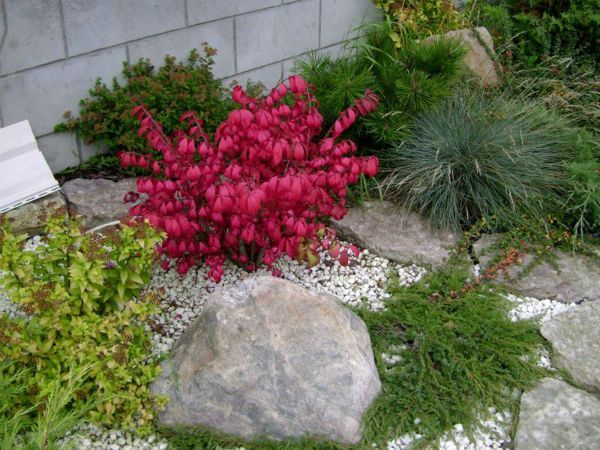
- Alpine slides and rockeries are decorated with euonymus
-
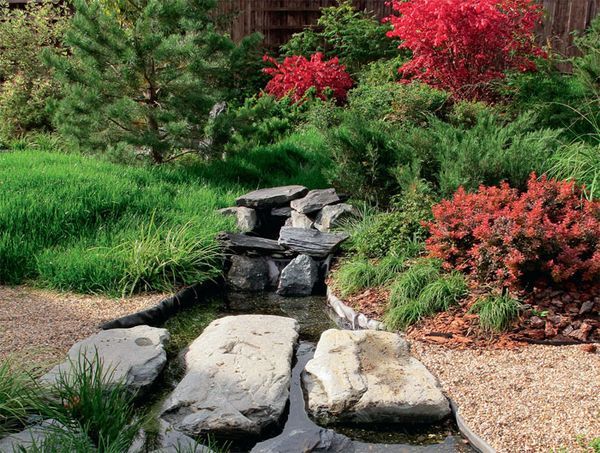
- Euonymus is planted in combination with conifers
-

- Despite its exotic appearance, the plant does not require excessive care.
Spindle trees grown in the garden delight not only with their picturesque appearance but also with their enviable ease of maintenance. Despite their exotic appearance, the plant requires little care. There are winter-hardy varieties that thrive in various regions of the country.