
Recommendations for planting and caring for the evergreen shrub Euonymus fortunei
Content
Description of Euonymus fortunei
The plant originated in China and was named after the English botanist Robert Fortune, who first described it. It is a low shrub that retains its leaves year-round. Fortune's euonymus reaches a maximum height of half a meter, but with proper support, its branches can spread out in all directions for up to two meters.
The main highlight of the culture is not flowering (in temperate latitudes it happens rarely and the flowers have an unsightly appearance), but its attractive foliage.
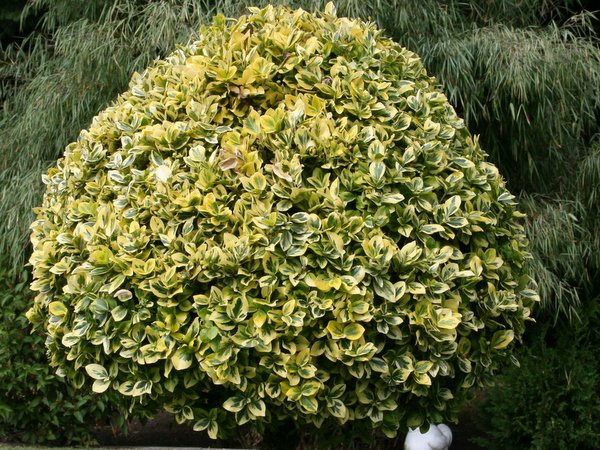
Here is a brief description of the shrub.
- Lateral branches form adventitious roots, allowing them to attach to various supports or take root by touching the ground.
- The leaves are short, oval-shaped, bright green, with a yellow or white border. In autumn, the leaf color changes, becoming red, pink, or burgundy, depending on the variety.
- In the southern regions, inflorescences in the form of white-green buds may appear by the end of spring, from which inconspicuous fruits form by the beginning of autumn.
All parts of the bush – foliage, flowers, berries – are poisonous and therefore can pose a danger to children or pets left unattended in the garden.
Popular varieties of Euonymus fortunei
The plant's natural habitat is mixed and broadleaf forests, where it grows freely, covering an area of up to two square meters. It is occasionally found in tropical forests.
There are approximately 200 species of this plant worldwide. In Russian gardens, approximately 20 cultivated varieties are common, varying greatly in shape, foliage color, height, and so on.
Let us describe several of the most popular types.
Emerald Gold
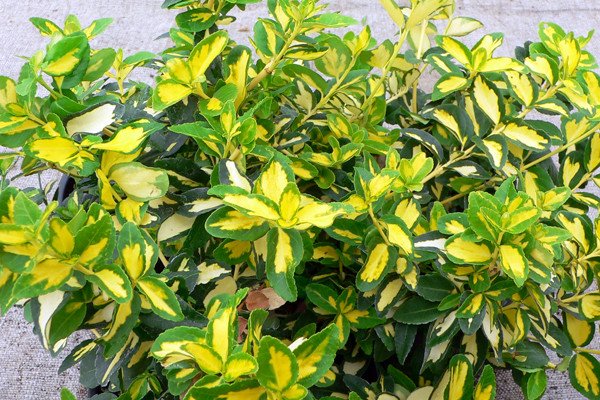
One of the most famous varieties, this one has a telling name. Its leaves are golden-yellow with green veins down the center. Emerald Gold grows to 40–50 cm, with shoots extending up to 2 m on vertical trellises, making it ideal for decorating plain buildings or chain-link fences.
Sun-loving, the leaves take on their most vibrant colors on the sunny side. In the afternoon, the plant prefers shade.
It doesn't require extensive care, but it does require loamy soil and moderate, periodic watering (to prevent the surrounding soil from drying out). The root system is close to the surface, so loosening the soil should be done carefully.
Emerald Gold has a long growing season, reaching its peak development in the fifth year. The berries are round and red. They can withstand temperatures as low as –23°C.
Emerald Haiti
If desired, the shrub can be given a rounded shape for a more attractive appearance. The leaves are bright green with a white edge. It grows up to 60 cm tall and up to 1.5 to 2 meters in diameter.
Emerald Gaiety is unpretentious and can be kept in the shade for most of the day, which allows it to be grown even in northern regions – it is considered the most frost-resistant of this subspecies.
In the spring, the Haiti variety blooms, producing pale green flowers.
Harlequin
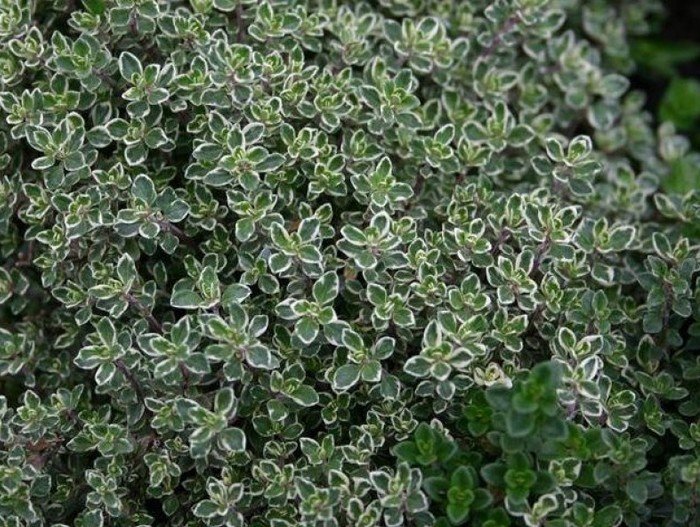
By summer, the foliage turns white-green, turning pink in autumn. It's easy to grow, thrives in any soil, even in the shade, and requires moderate watering. Harlequin is frost-resistant, although it's best to protect it from late frosts and strong winter sun.
The dense foliage is used by growers to protect lawns and flowerbeds from weeds. The leaves are elliptical, 3 cm long. The stem is thin and strong.
-
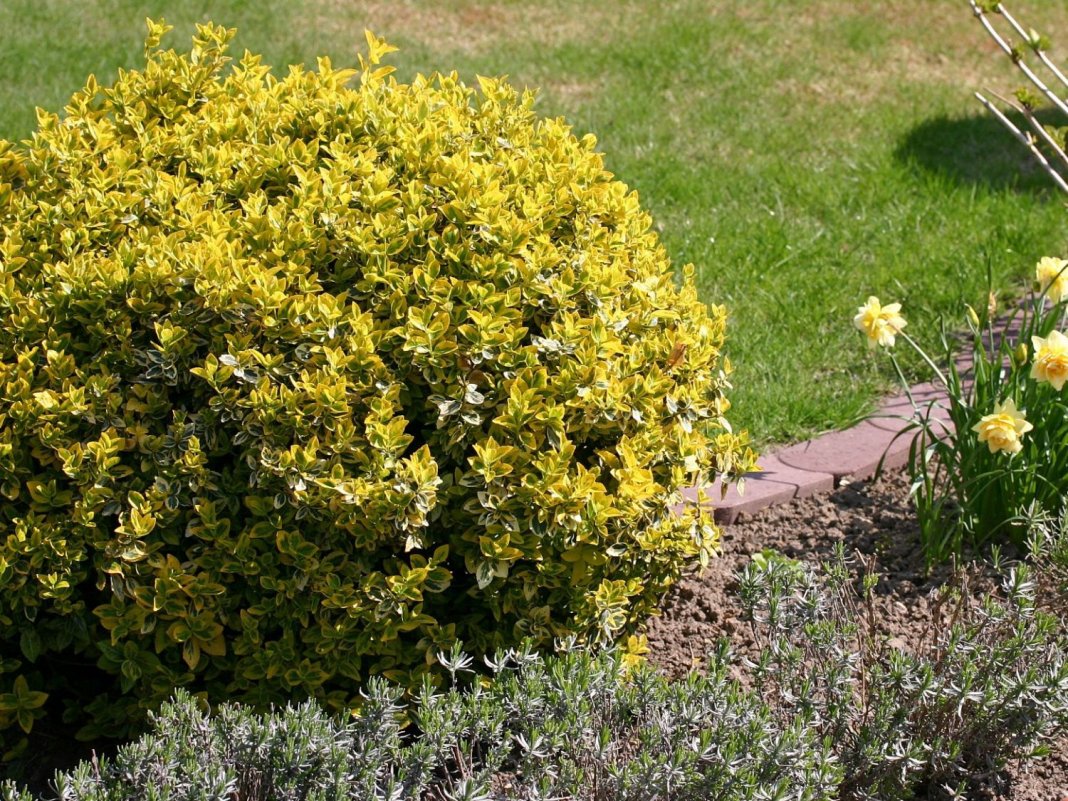
- Emerald Gold
-
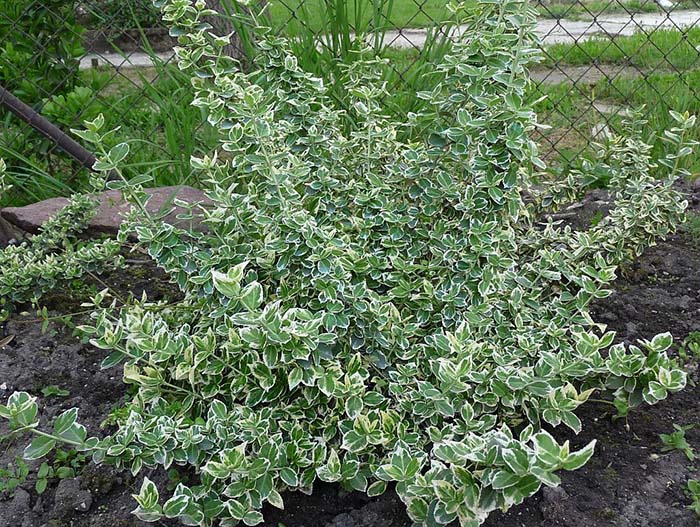
- Emerald Haiti
-
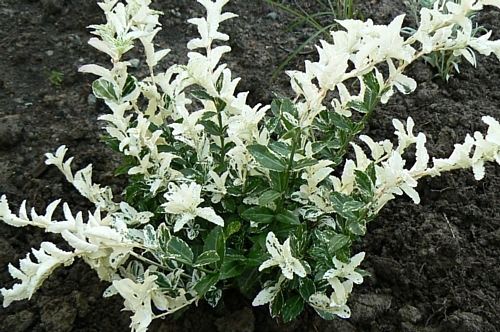
- Harlequin
Silver Queen
Translated as "Silver Queen," it is widespread in the western regions of the country. It can take the form of a shrub or a vine, with branches stretching up to 45 cm during the growing season. The maximum height is 70 cm.
Appearance:
- the crown takes on a spherical shape;
- stems are pink in color, elastic and strong;
- The leaves are bright green with a white border and a glossy, hard surface.
Grows equally well in sun and shade, and is undemanding. It tolerates temperature fluctuations, is cold-resistant, and is not afraid of dry periods.
Sunspot
Translated as "Sun Bunny," it's a low-growing plant, reaching a maximum height of 25 cm and a diameter of about a meter. Its dense crown is covered with small, dark green foliage with yellow stripes down the center, resembling sunbeams. The crown takes on a dense, spherical shape. It's a fast-growing variety (up to 30 cm per year).
Sunspot doesn't shed its leaves in winter, so even when covered with snow, it tolerates even severe frosts. It doesn't require special lighting and thrives in shaded areas. It is common in Siberia and the Far East.
Coloratus
Thrives in both sun and shade, growing up to half a meter. It can "grow" quickly, clinging to tree trunks or specially designed supports. Its robust root system supports vigorous growth up to five meters. As a result, the plant forms a continuous carpet of leaves, which, when blown by the wind, mimics a cascade of greenery.
The leaves are uniform in colour, light green, about 5 cm in diameter.
-
- Silver Queen
-
- Sunspot
-
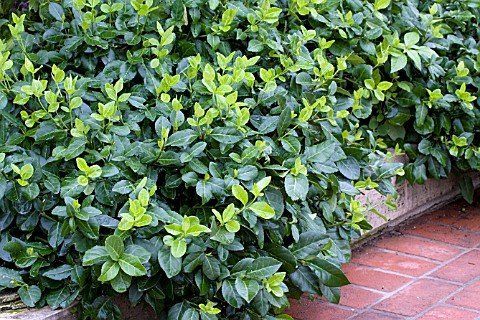
- Coloratus
Video: Growing Euonymus fortunei
In this video, experts explain how to plant and grow ornamental shrubs in your garden.
Planting and caring for Fortune's Euonymus
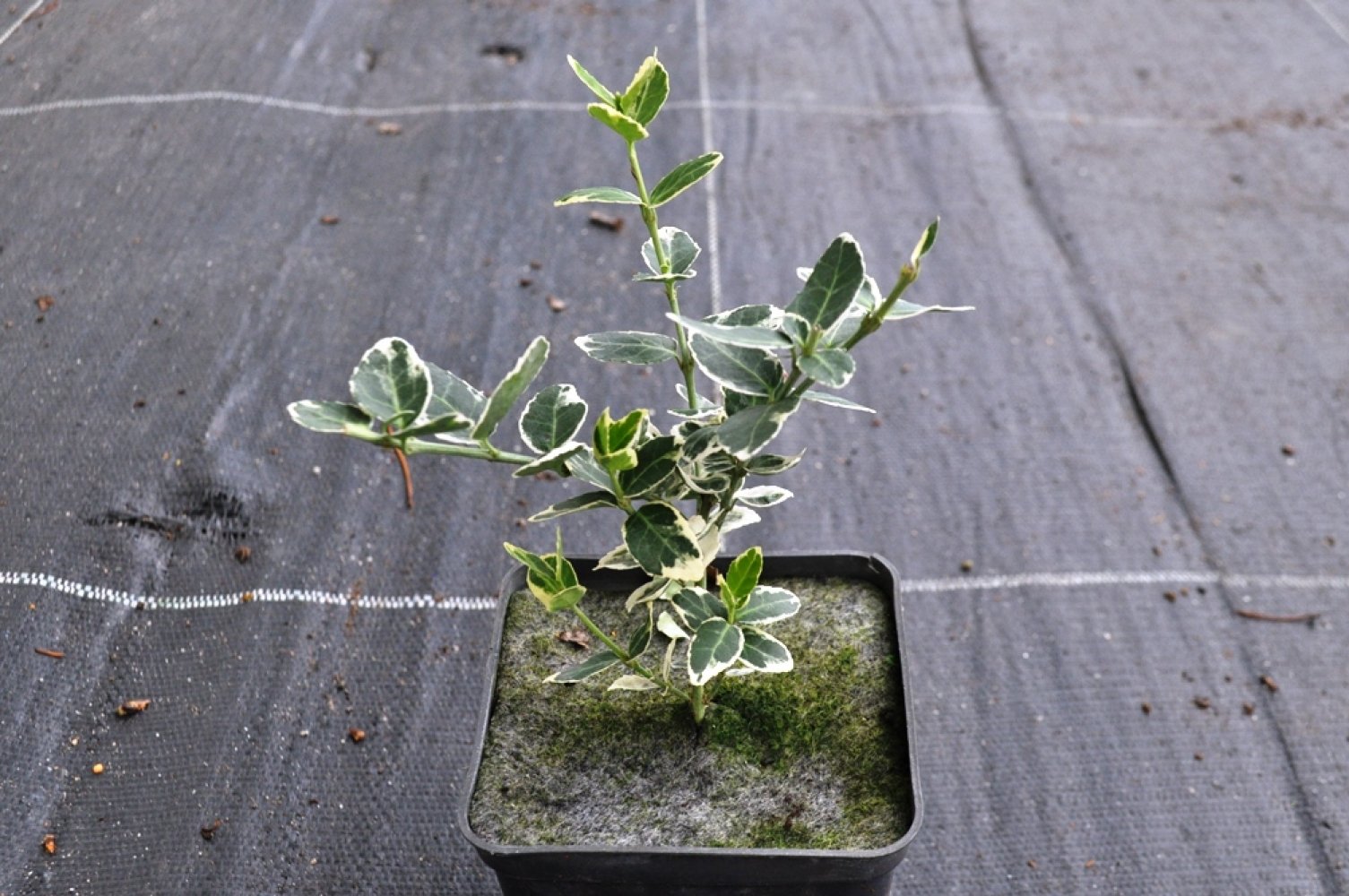
To grow a full-fledged ornamental shrub in your garden, you need to purchase a healthy seedling from a nursery or an experienced breeder. When purchasing, pay attention to:
- roots – strong, developed, without defects;
- shoots are straight, do not break, and are not affected by diseases;
- The greenery is juicy, thick, and shiny.
Planting dates
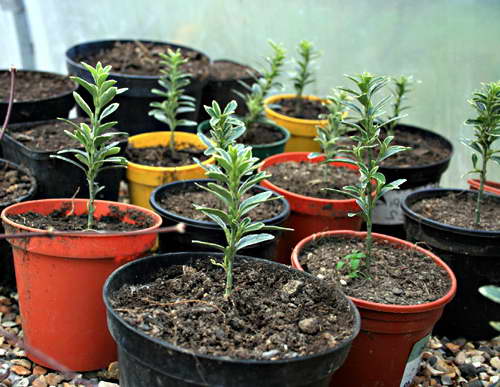
Depending on your region, you can plant the plant in spring or fall. In temperate climates, it's best to wait until the plant has time to take root. Experts recommend starting the young plant in a pot and allowing it to develop indoors, then transplanting it to its permanent location in the spring.
Site and soil requirements
The shallow root system doesn't require deep holes; digging a hole the same size as the seedling's root is sufficient. Whether to plant the plant in full sun or shade depends on the variety chosen. An east-facing location, where shade from buildings or trees reaches by midday, is ideal.
It is better to select the soil in advance by mixing a mixture of:
- sand;
- peat;
- humus;
- turf;
- wood ash.
Methods of reproduction
You only need to purchase one seedling. There are several methods of propagation.
- When a young bush emerges in the garden, it can be propagated by cuttings. Cuttings are taken from 10 cm long pieces of branches left over from pruning, each with one or two buds.
- The shoots root quickly on their own, as soon as they touch the ground. This rootlet is separated from the main plant and transplanted elsewhere (layering).
- Dividing the bush. After digging up a mature plant, divide the root system into several parts and replant them in different locations.
- The seeds are collected fresh, treated with a 5% potassium permanganate solution, and then planted in special containers and soil to produce seedlings.
Watering and fertilizing
The plant is undemanding in terms of moisture and can even withstand prolonged dry periods. While this slows down growth, the plant itself does not die. If it rains at least three times a month in the summer, no additional watering is required.
When planting, be sure to water the seedling generously. Water regularly during dry seasons, ensuring the soil does not dry out. Mulching with wood shavings, which helps retain moisture, is a good idea.
Fertilizer is applied twice:
- in April you will need organic fertilizers;
- At the end of summer, phosphorus-potassium compounds are needed.
Pruning rules
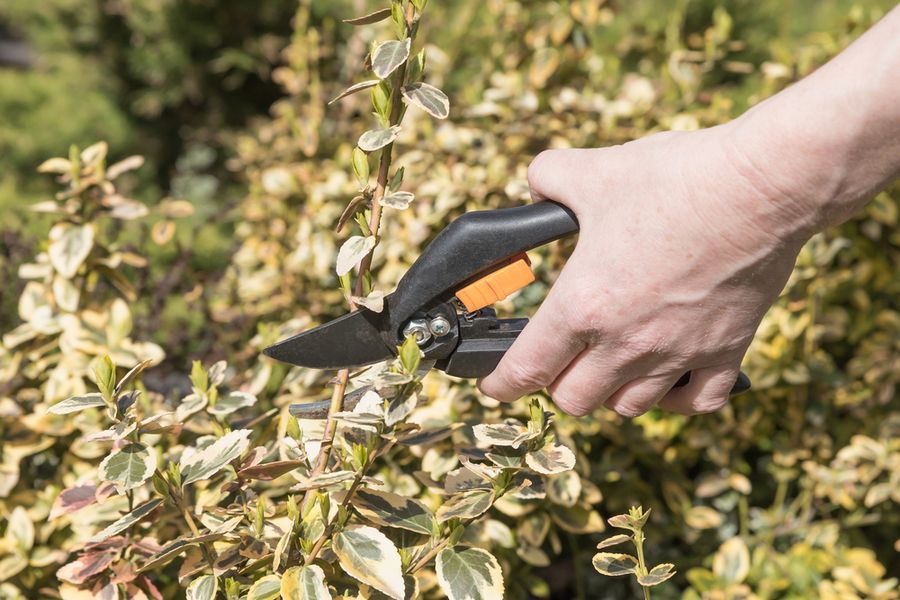
Pruning is only necessary to shape the crown. This is done twice: in early spring and in late fall.
Preparing for winter
Although most varieties of Euonymus fortunei are frost-hardy, it's advisable to protect young first-year trees when winter arrives. Toward the end of autumn, cover the euonymus with fallen leaves, and when snow falls, rake away the snowdrifts around the tree's trunk.
Prevention and protection from diseases and pests
Selectively bred varieties of Euonymus fortunei possess the wild ancestor's immune system against most garden pests. However, it requires disease prevention.
High humidity and cold temperatures increase the risk of fungal infections and powdery mildew. Fungicides (such as Bordeaux mixture) are used to combat this.
Euonymus fortunei in landscape design
The shrub is commonly used to create hedges, decorative fences and railings, and to decorate flower beds. It is rarely planted in isolation, but is more often combined in large groups and masses.
The culture looks good in combination with conifers (thuja, spruce, juniper) and other perennial shrubs, for example, lilac, barberry, mock orange.

Thanks to its exotic appearance, Euonymus fortunei pairs well with other plants, beautifully complementing any garden. It's easy to care for, and the pleasure of contemplating its beauty lasts all season long.