
The most beautiful types and varieties of marigolds with names and photos
Content
Characteristics and description of marigolds
Marigolds received their Latin name, Tagetes, thanks to the Swedish scientist Carl Linnaeus, who named these flowers after the grandson of the god Jupiter. However, among modern gardeners, they are better known as marigolds or marigolds.
The botanical description of the flowers varies by species, but they all have erect stems and fibrous rhizomes. The bushes can be compact or spreading, ranging in height from 0.2 to 2 meters. The leaves are dissected, pinnate, sometimes entire, with serrated edges. Depending on the variety, they are colored in varying shades of green.
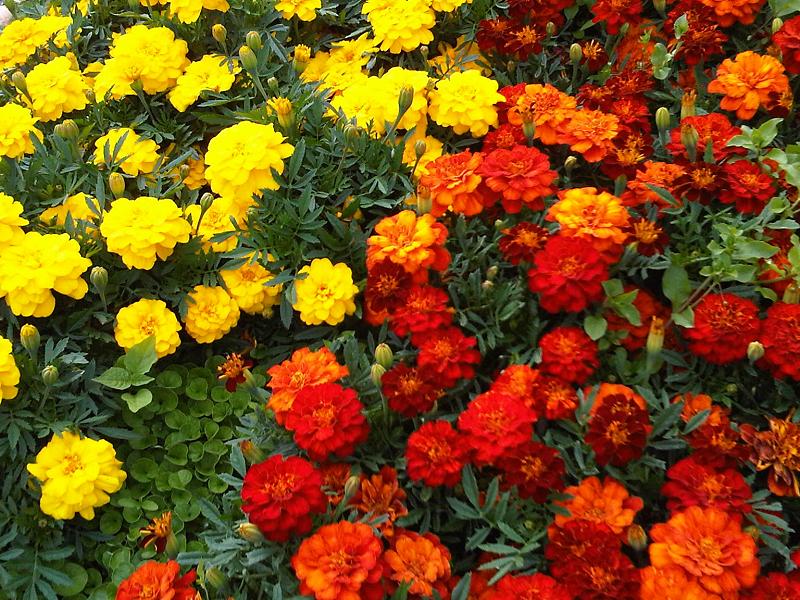
The inflorescences-baskets form two types of flowers: ligulate and tubular. The flowers are characterized by a rich spectrum of tones, from white to reddish-brown. During the flowering period, which occurs from June to October, marigolds emit a strong "aster-like" fragrance. In late autumn, the plants produce black, flattened capsules containing up to seven hundred seeds.
To better navigate among the varieties, botanists have created a classification system that divides marigolds into groups. We'll discuss each of these in more detail below.
Classification of marigolds by bush height
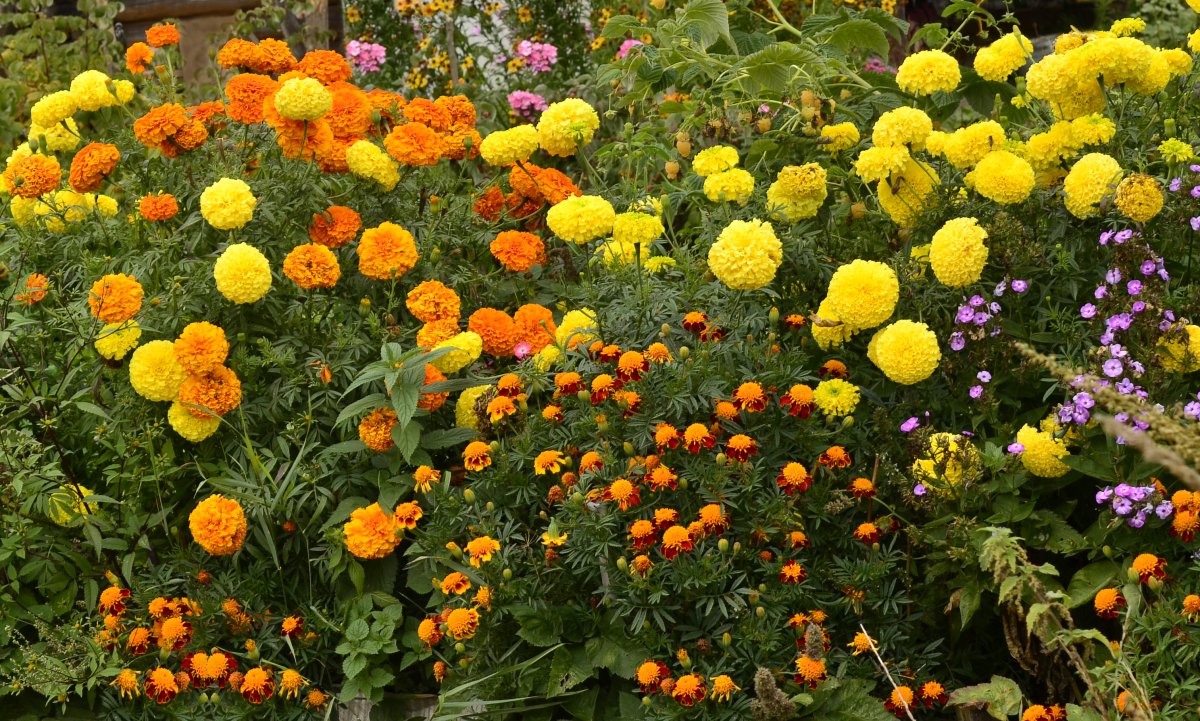
One of the criteria for classifying marigolds is shoot length. This classification includes five species.
Giant
The height of plants in this group ranges from 0.9 to 1.2 m. Among them, the following varieties can be distinguished:
- Gold Dollar (Golden Dollar). An early-flowering annual hybrid. The stems are densely foliated, with light-colored leaf blades. Flower heads are 70-80 mm in size and fiery orange.
- Lemon Queen. Marigolds with lush, double blooms of a bright lemon, uniform color. The buds are 8-10 cm in diameter. Peak flowering occurs in the second half of summer.
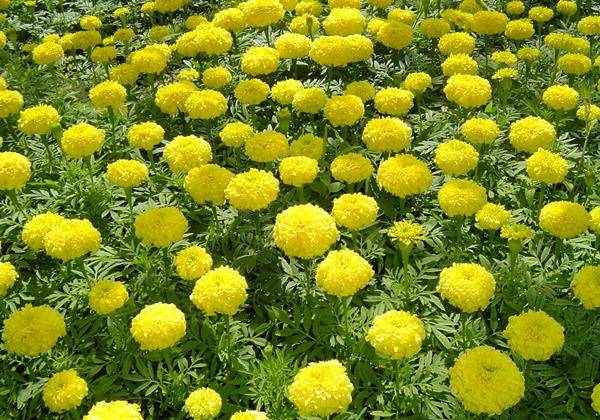
Tall
This group includes plants with a height of 0.6-0.9 cm. The most famous varieties are:
- Gelber Stein (Yellow Stone). Annual marigolds in a rich, sunny hue. In early summer, they bloom with lush, double flower heads about 15 cm in diameter.
- Frills (Frills). The mature plant reaches almost 0.8 m in height. The buds are medium-sized (about 80 mm), with golden-orange petals.
- Zitronen prinz (Lemon Prince). These marigolds are standard varieties. The dark green shoots are covered with pinkish fuzz. The inflorescences are medium-sized (8-10 cm) and bright lemon-colored.
Medium-sized
These marigolds grow to about 0.4-0.6 m. Here are a couple of examples:
- Kilimanjaro (Kilimanjaro). A sparsely branched annual marigold with small (7-10 cm) creamy-white inflorescences. Blooms in early June.
- Golden Ring (Golden Ring). Distinguished by its deeply dissected leaves and small flower heads (20-30 mm in diameter), the color is bright orange in the center and yellow at the edges.
Short stature
The height of these velvet plants is 0.2-0.4 m. The most popular varieties include the following:
- Bonanza Deep Orange. An early hybrid that grows no taller than 0.3 m and produces small buds about 60 mm across. The petals have a rich pumpkin hue.
- Discovery Yellow. The smallest representatives of this section. The baskets are double, 80 mm in diameter, and a deep lemon color.
-
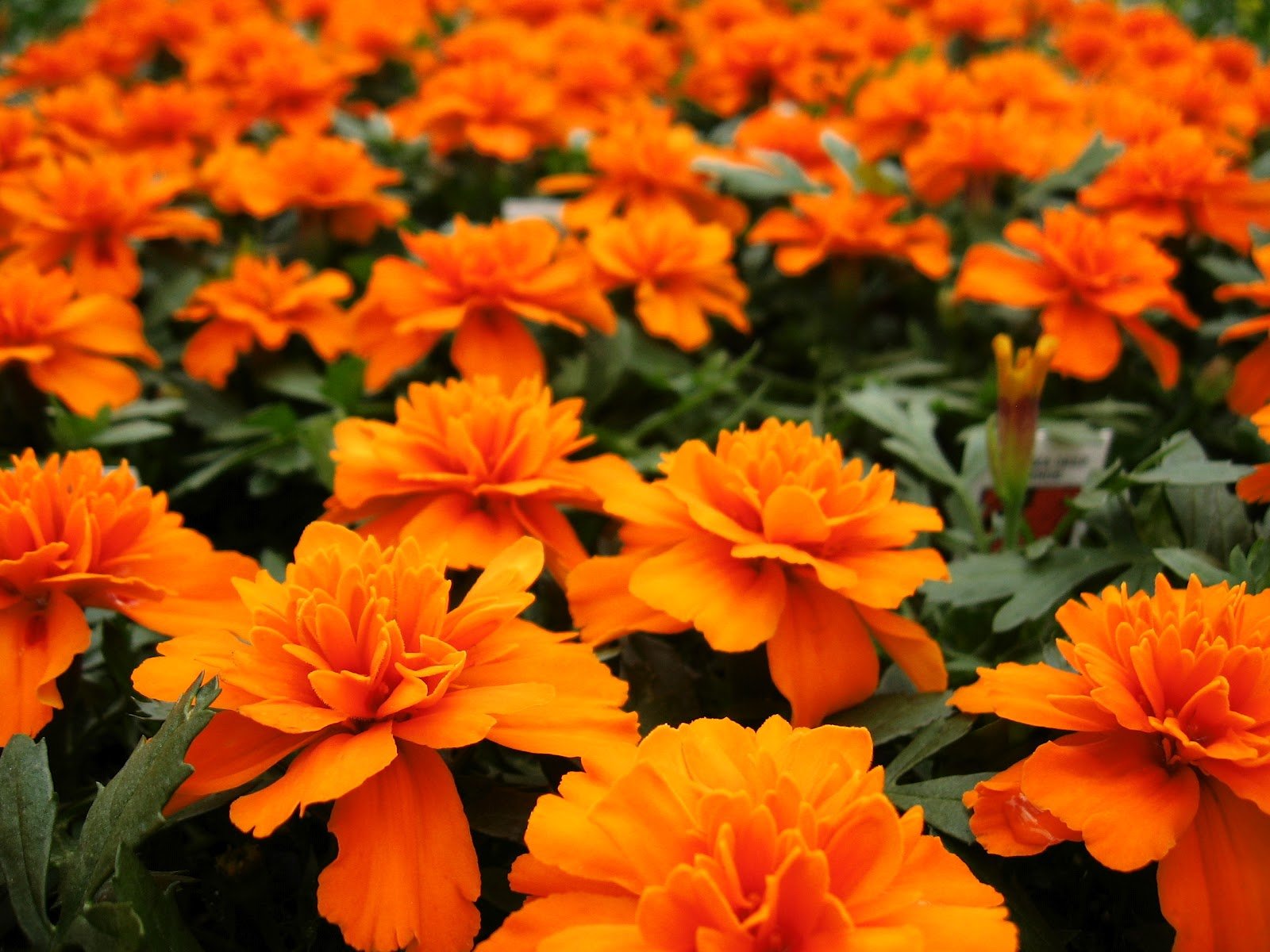
- Short stature
-
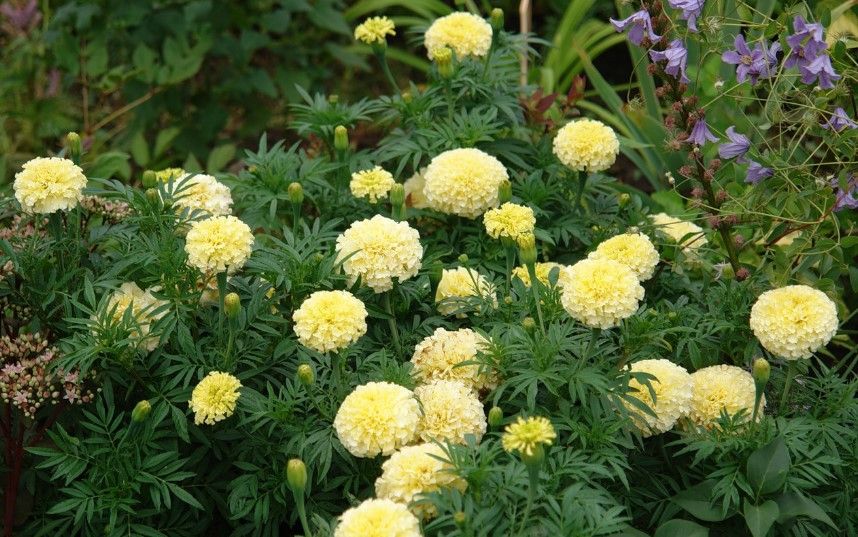
- Medium-sized
-
- Tall
Dwarf
These miniature marigolds rarely grow taller than 0.2 m. Among them, the following hybrids stand out:
- Harmony (Harmony). It features compact bushes with dark leaves and buds about 50 mm in diameter. The outer petals are reddish-brown, with a deep yellow center.
- Mimimix (Mimimix). These marigolds are characterized by miniature, simple inflorescences no larger than 20 mm. The color range is varied, from light yellow to fiery red.
- Lunacy Orange (Lunacy Orange). The bush grows to a height of 15 cm and a width of about 20 cm. The flower heads are yellow-orange, small (40-50 mm), and shaped like chrysanthemums.
Video: Growing Marigolds
This video describes the basic rules for planting and growing garden flowers.
Types of marigolds by inflorescence shape
In addition to stem length, botanists have divided all species by flower type. This section includes six subgroups.
Simple
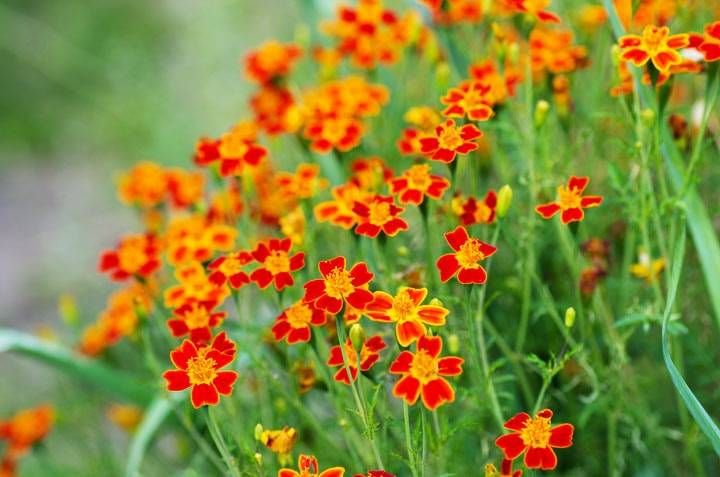
Marigolds in this section are distinguished by simple inflorescences consisting of several tubular flowers surrounded by a single row of ray florets. Here are some of them:
- Lemon Jam. A low-growing annual hybrid, no more than 0.2 m tall. The flower heads are small – only 30-40 mm. The petals are deep yellow at the center, with lemon-colored edges.
- Paprika (Paprika). The bushes grow to 0.2-0.3 m and form spheres. The leaves are light-colored, the buds are small (20-30 mm). The center is yellow-orange, the edges are fiery red.
Semi-double
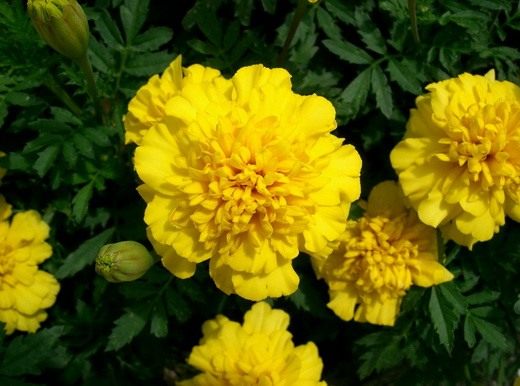
Unlike the previous group, these marigolds have two or three rows of ray florets. The most well-known varieties are:
- Gold Ball (Golden Ball). Grows to 0.5-0.6 m and produces small flower heads 40-50 mm in size. The petals are yellow-gold at the center, with burgundy-brown edges.
- Red Brokade (Red Brokade). A low-growing annual hybrid, no more than 0.2-0.3 m tall. The inflorescences are about 50 mm in size and are colored reddish-brown.
Terry
This section is characterized by varieties with lush, spherical flowers that resemble caps. Here are a few examples:
- Popsicle (Eskimo). This hybrid grows approximately 0.4 m tall and has medium-sized inflorescences (6-10 cm). The color is creamy white. Flowering begins in mid-summer.
- Fantastic (Фантастик). Forms a tall bush (0.6-0.7 m) with double flower heads about 11 cm in size. The color palette is varied – from golden yellow to fiery orange.
- Strawberry Blonde. Annual marigolds grow no more than 0.2 m tall. The inflorescences are medium in diameter (40-50 mm) and feature a chameleon-like coloring.
Strawberry Blonde petals change color depending on the weather and temperature conditions.
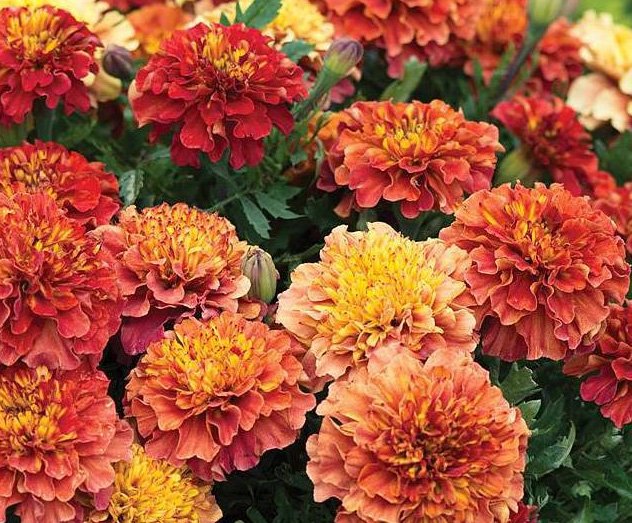
Anemone-like
The group's name speaks for itself. The buds consist of several rows of ray florets and large tubular florets in the middle. The most famous varieties are:
- Durango (Durango). Low-growing annual hybrids, 0.2-0.3 m tall. Flower heads, 50-60 mm in size, feature a diverse palette of colors, from sunny yellow to burgundy-brown.
- Orange Flame (Orange Flame). It grows to no more than 0.3 m and blooms with small buds 35-50 mm in diameter. The yellow-orange inflorescences are neatly framed by burgundy-brown petals.
Caryophyllales
These marigolds resemble the flowers of the same name in appearance. Their buds are composed almost entirely of ligulate petals. The most popular varieties are:
- Carmen (Carmen). A low-growing annual plant reaching 0.3 m in height. The flower heads are medium-sized (about 50 mm), with a rich yellow center and burgundy-red edges.
- Black Velvet. Compact marigolds that grow no more than 0.3 m. They bloom with 50-60 mm buds the color of ripe cherry. The petals are edged with a bright orange border.
Chrysanthemum-like
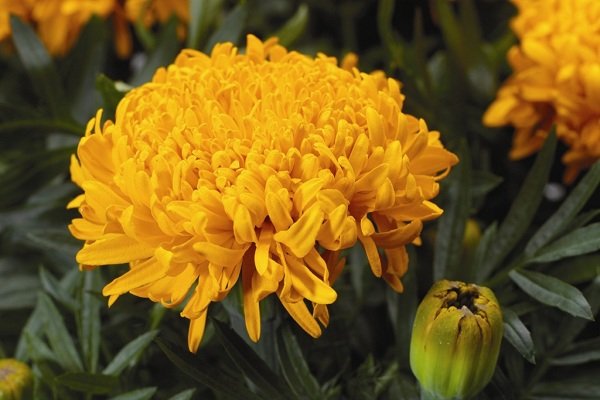
These marigolds, on the other hand, consist entirely of tubular flowers. The most famous of these are:
- Taishan (Taishan). A low-growing, early variety that blooms in late May. The buds are large, about 80 mm in diameter. The color ranges from golden yellow to fiery orange.
- Vanilla F1 (Vanilla F1). Annual, 0.4 m tall and 0.2-0.3 m wide. Medium-sized (60-70 mm) flower heads, cream-colored with a light green tint.
-
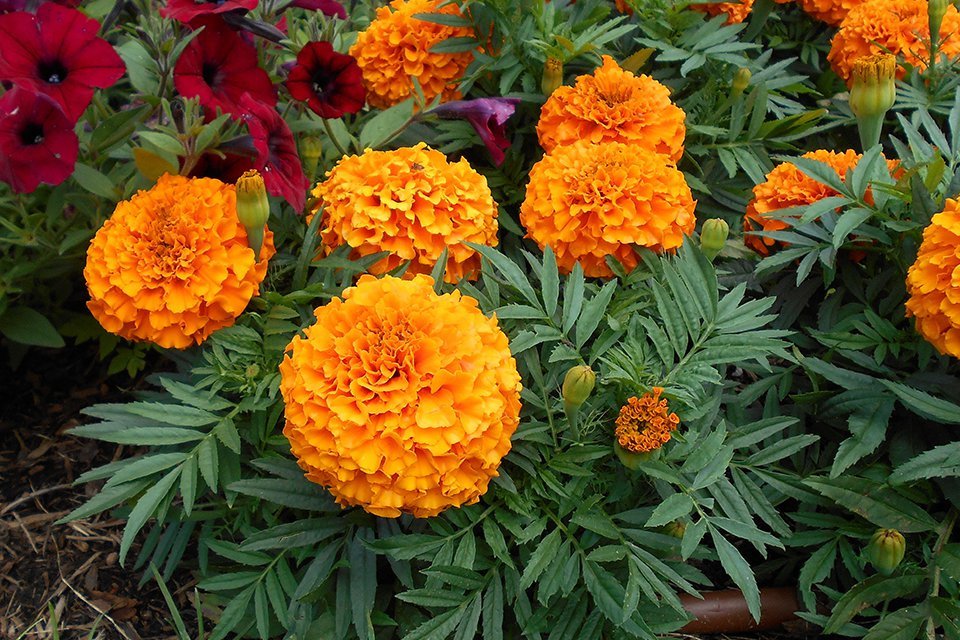
- Chrysanthemum-like
-
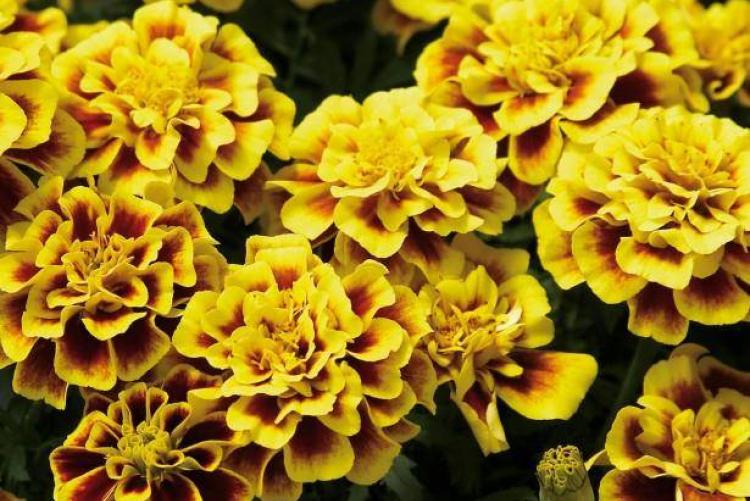
- Caryophyllales
-
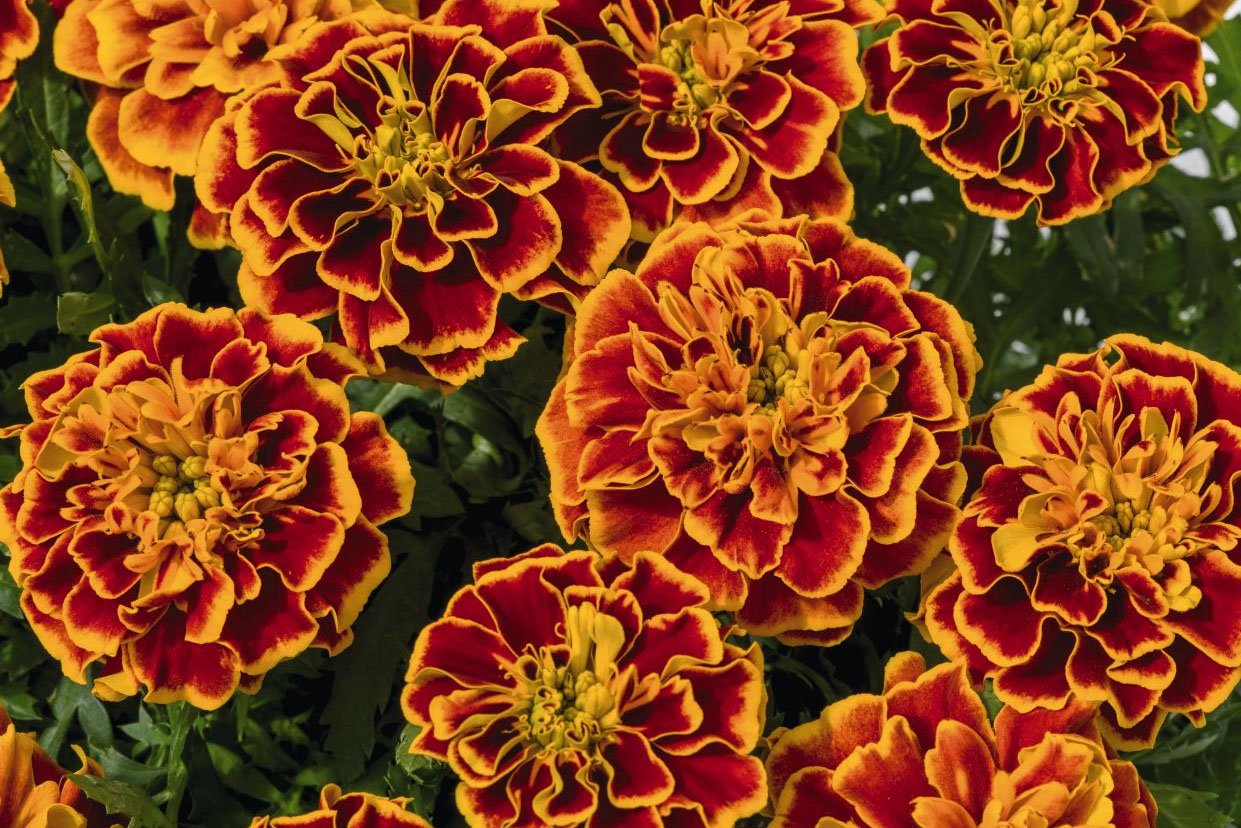
- Anemone-like
Other types and varieties of marigolds
In addition to the two classifications discussed above, botanists also know of other species of marigolds. We'll discuss them below.
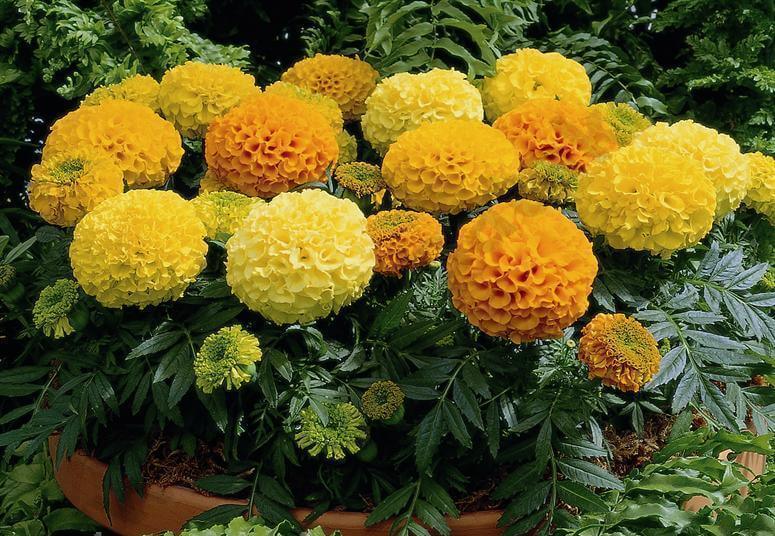
Erect, or African (Tagetes erecta)
These are among the tallest representatives of the genus, reaching a height of 1-1.2 m. They are characterized by a predominantly solid color and double buds with a maximum diameter of 15 cm. The most typical varieties in this group are:
- Antigua (Antigua). A low-growing hybrid with very large inflorescences, approximately 15 cm in size. The petal colors range from lemon to pumpkin.
- Crush (Krash). Dwarf marigolds no more than 0.2 m tall with buds 60-70 mm in size. The coloring is yellow-orange, uniform.
- Lady. Mature plants grow up to half a meter and produce small flower heads 50-60 mm in diameter. This variety comes in a variety of colors.
Rejected (Tagetes patula)
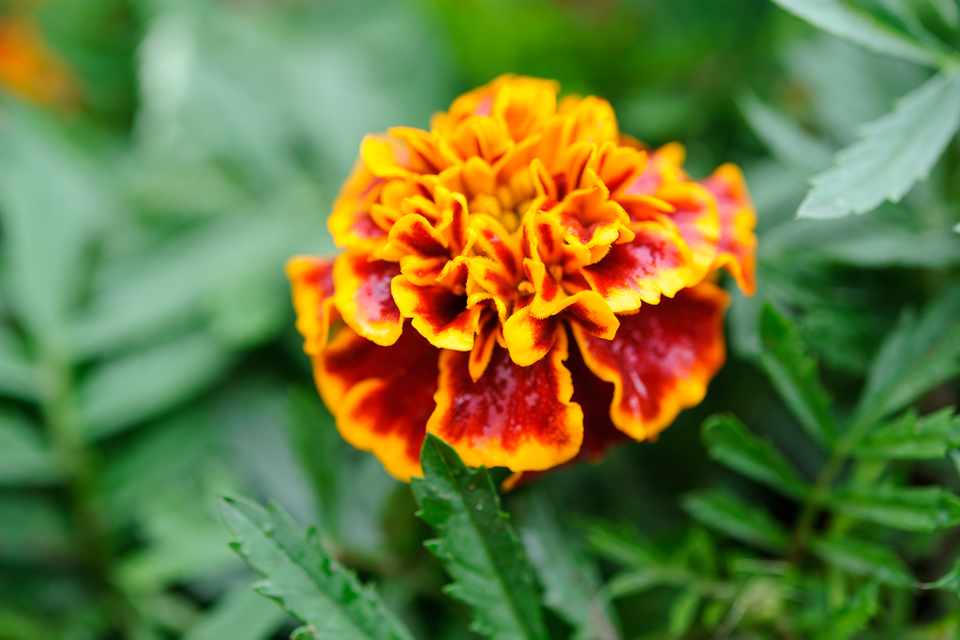
This section includes spreading varieties no taller than 0.4-0.6 m with buds approximately 80 mm in size. Inflorescences can be double or single. Peak flowering occurs in the second half of summer. Popular varieties include:
- Mercedes (Mercedes). Low-growing marigolds, 0.3 m tall, with double flower heads about 50 mm across. The petals are burgundy-brown, with bright yellow centers.
- Fireball (Fireball). A bush no more than 0.2-0.3 m tall with inflorescences 40-50 mm in diameter. It has a chameleon-like coloration, which ranges from red-burgundy to yellow-orange.
Narrow-leaved, or Mexican (Tagetes tenuifolia)
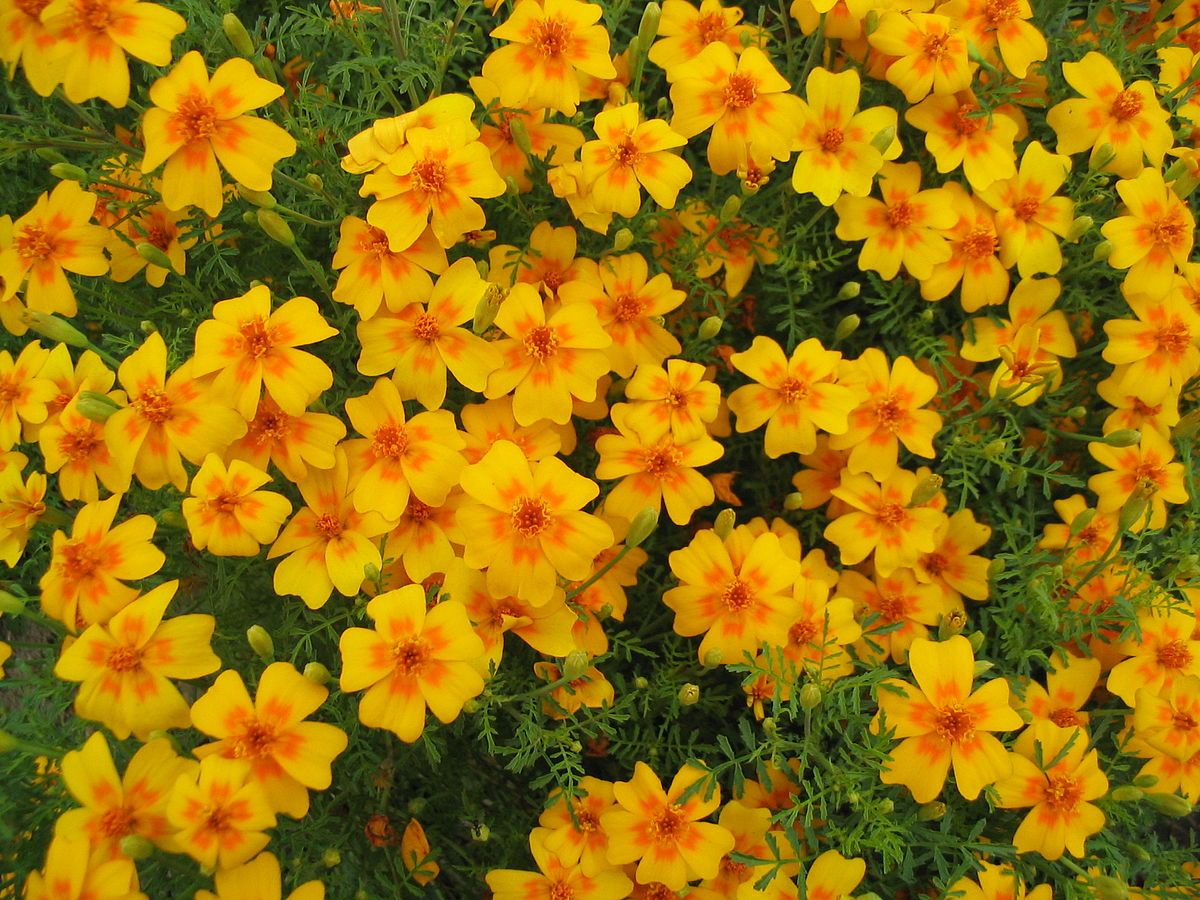
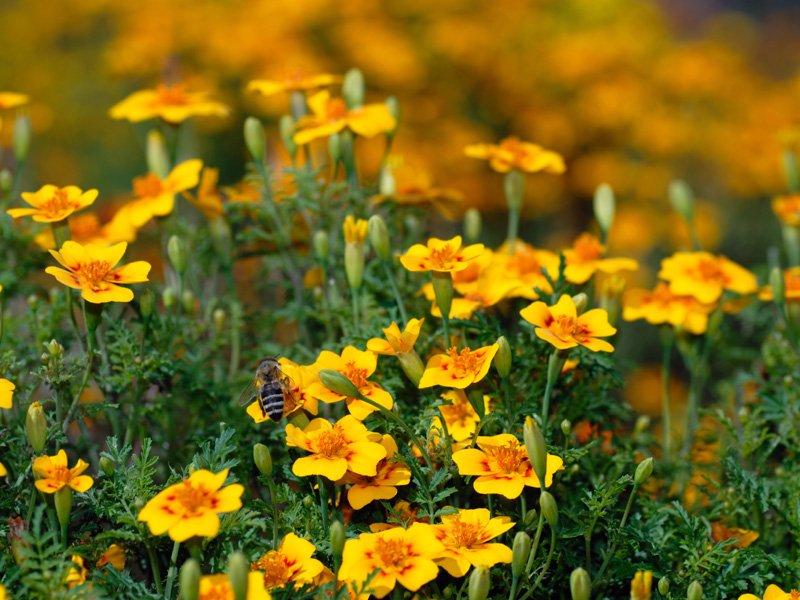
This group of marigolds is difficult to confuse with any other. Annual plants are distinguished by their simple flower heads and low growth (no taller than half a meter). Narrow-leaved marigolds are characterized by a wide range of colors. Let's look at some of them:
- Gnome (Gnome). These marigolds grow to 0.2-0.3 m tall, but the inflorescences are quite large (about 80 mm). The color is uniform, richly sunny.
- Lulu (Lulu). A low-growing variety (no more than 0.2 m) with miniature buds just 30 mm in diameter. It blooms with a beautiful lemon color.
- Carina (Karina). A mature plant rarely grows taller than 0.2 m. It produces small flower heads, about 30-40 mm in size, of a fiery orange hue.
Tagetes lucida
Marigolds are also known as Spanish tarragon. Dried, they are used as a tarragon substitute, and the crushed flowers are a natural dye. These perennial marigolds grow to 0.4-0.8 m, forming clumps with erect stems. The leaf blades are lanceolate, 6-8 cm in size. The buds, approximately 15 mm in diameter, consist of simple petals. The flowers are a uniform yellow-gold color. Flowering lasts from early June to late September.
Nelson's marigold (Tagetes nelsonii)
Found in Texas and Mexico, this tall plant has robust stems 0.9-1.2 m long. The shoots are densely foliated and have a reddish tint. The leaf blades are narrow, serrated, and dark green. The flower heads are medium-sized, simple, and a rich, sunny yellow. When flowering, marigolds emit a vibrant fragrance with fruity and musky notes.
Nelson's marigolds are often used in cooking as a seasoning for fish, meat or baked goods.
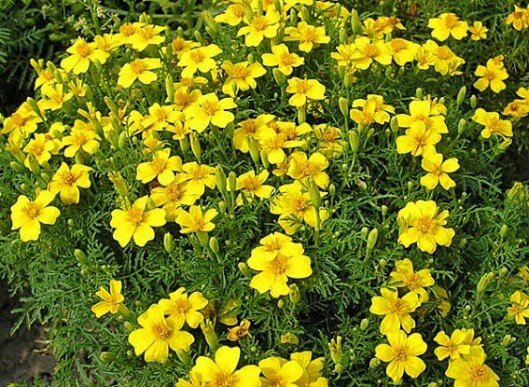
Lemmon's marigold (Tagetes lemmonii)
Tall plants, reaching 1.2 m in height, are most commonly found in the mountainous regions of America and Mexico. The leaf blades are lanceolate, finely serrated, 5-15 cm long, and dark green. The inflorescences are simple, measuring approximately 50 mm. The petals are a uniform lemon-yellow color. The scent of flowering marigolds has a slight minty note. The scent is so intense that butterflies constantly gather above the Lemmon marigold bushes.
-
- Lemmon's marigolds
-
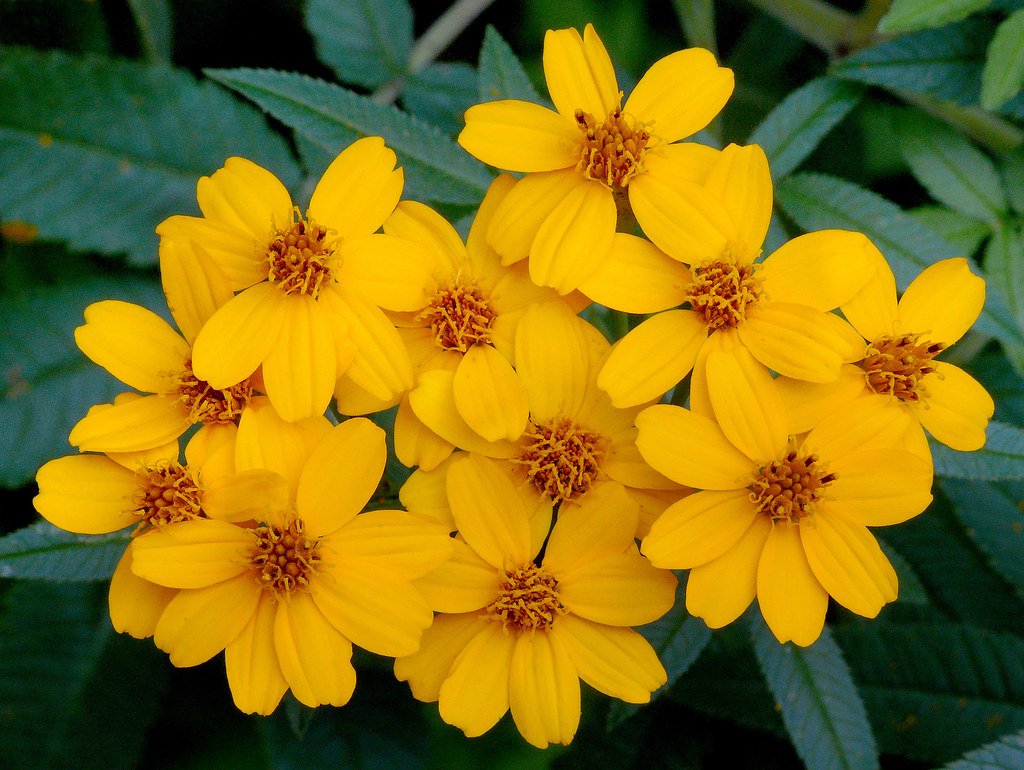
- Nelson's marigold
-
- Radiant
Small marigolds (Tagetes minuta)
Giant representatives of the genus, growing from half a meter to two meters. The leaves are narrow, with serrated edges, 5-20 cm in size. They are arranged densely on the stem, opposite each other. These marigolds bloom with small, simple buds, 15-20 mm in diameter. Tagetes minuta is found in many regions of the world. The flowers grow in North and South America, Africa, Eastern countries, Australia, and southern Europe.
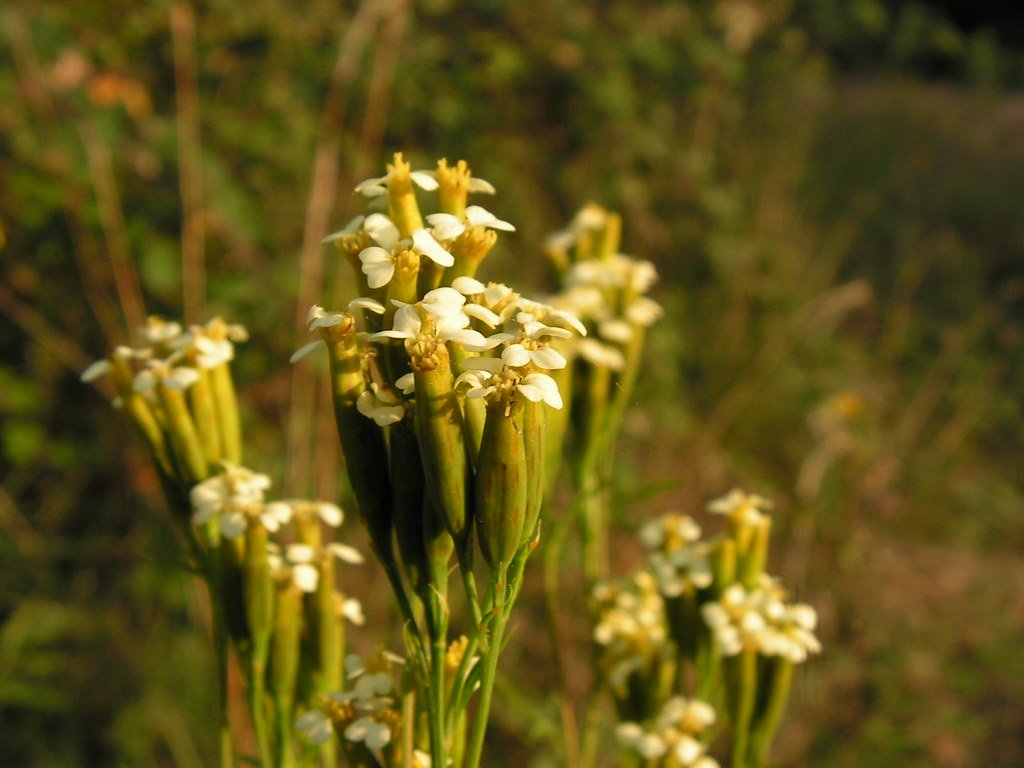
Small marigolds (Tagetes minuta)
Marigolds and landscape design
Variegated, multicolored marigolds will look great in any garden. They are widely used in landscape design:
- design of paths and borders;
- decoration of gazebos or other yard buildings;
- creation of flower beds;
- single-species plantings;
- mixborders;
- mobile single flowerpots.
Designers often use dwarf varieties of various colors to create whimsical geometric patterns. They are also frequently planted in garden beds to decorate vegetable crops.
Marigolds pair well with almost any garden flower. They pair best with the following plants:
- asters;
- lobularia;
- tobacco;
- sage;
- echinacea;
- calendula;
- cineraria;
- alyssum;
- zinnias.
-
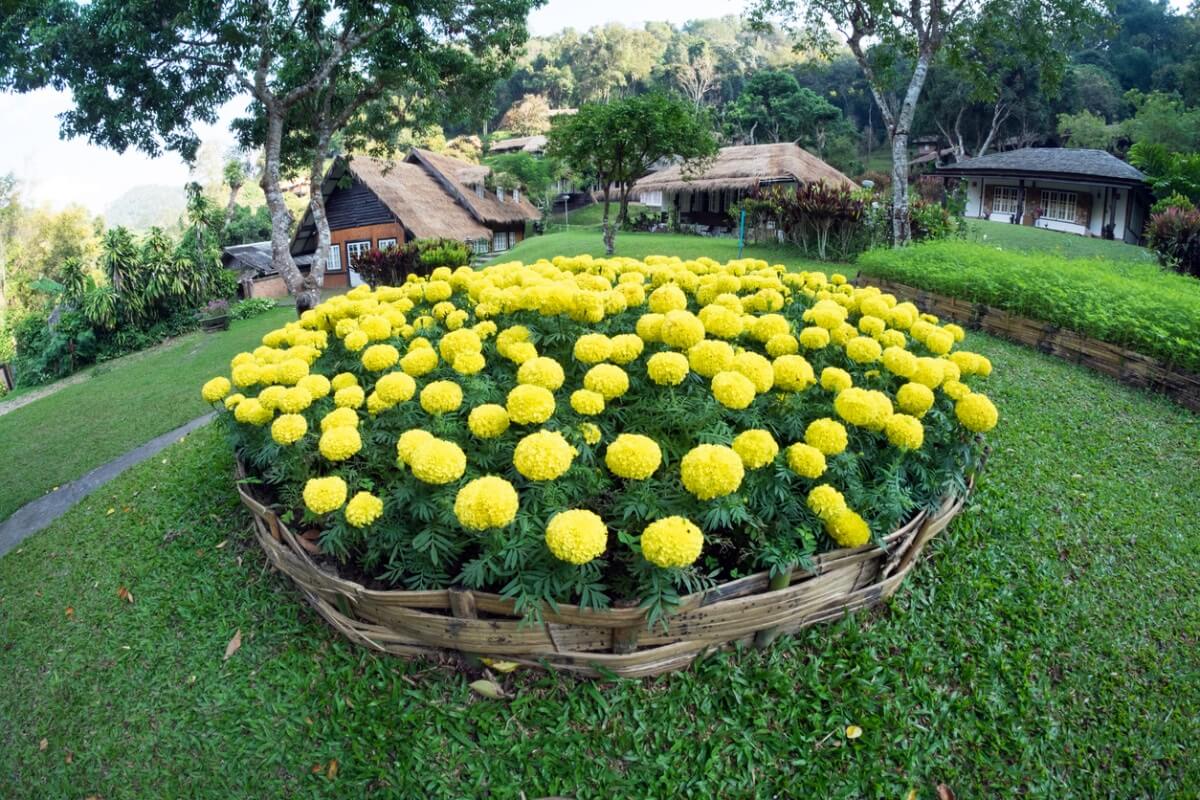
- Monoflowerbed
-
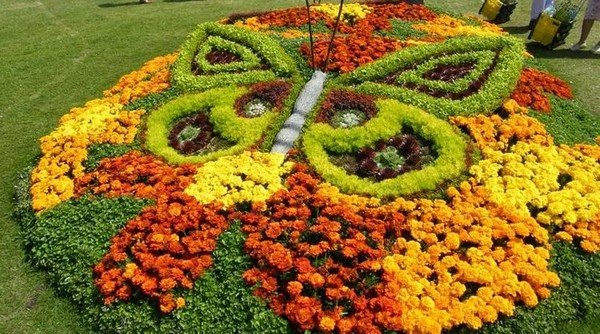
- Garden decoration
-
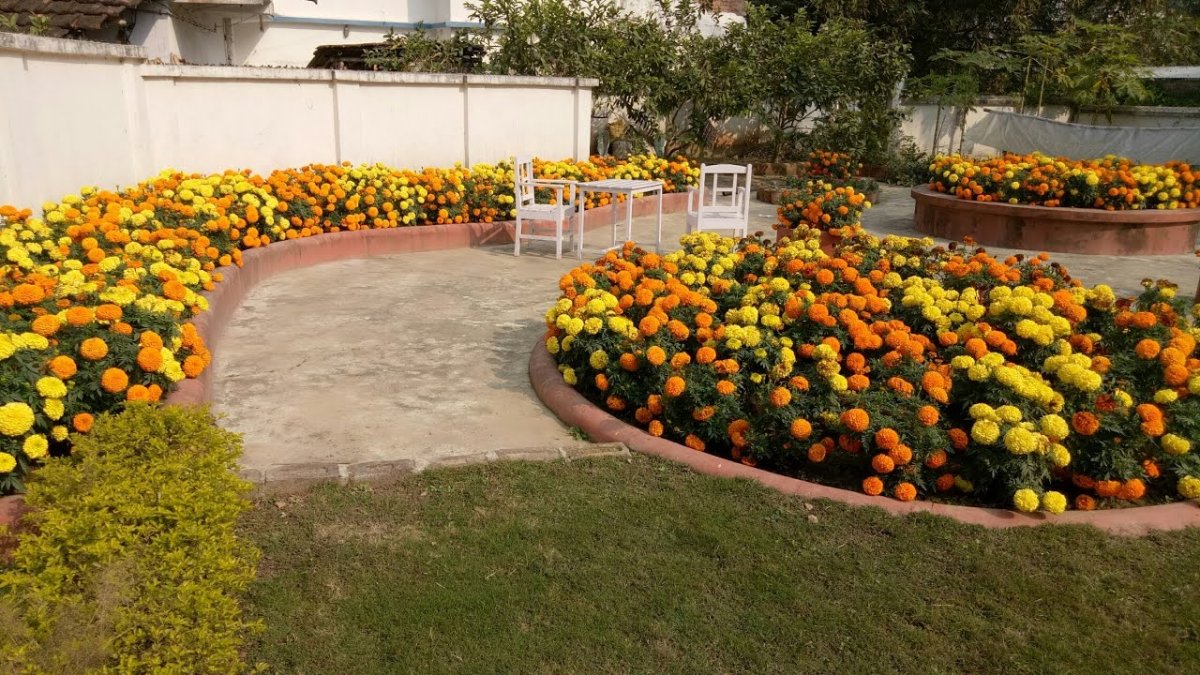
- Design of the recreation area
-
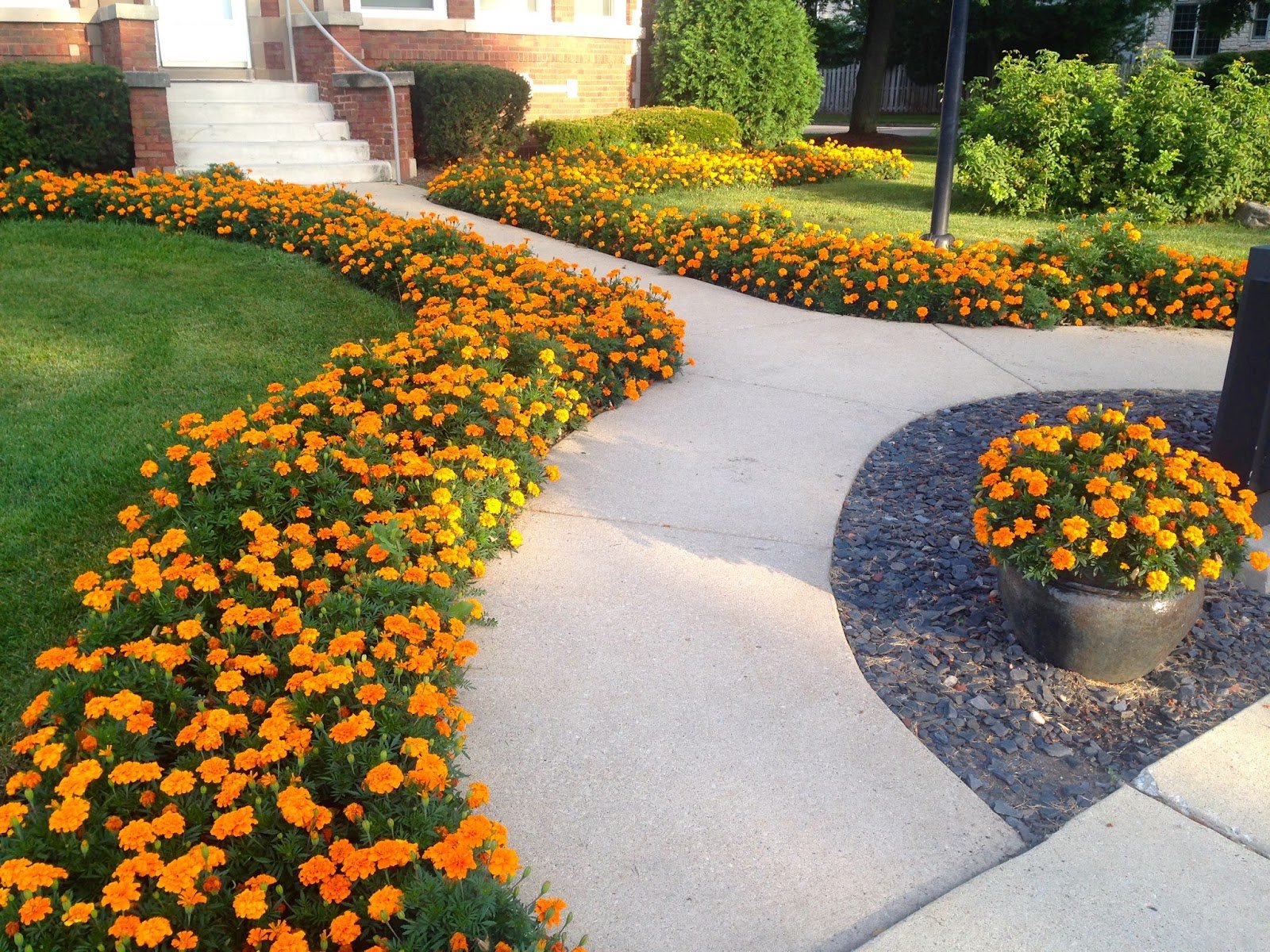
- Decorating garden paths
-
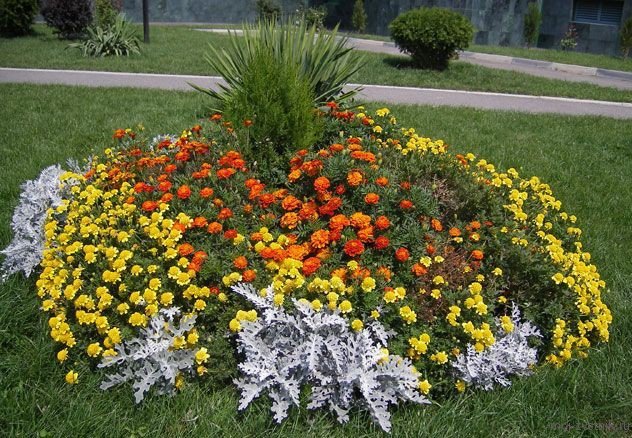
- Flower arrangement
-
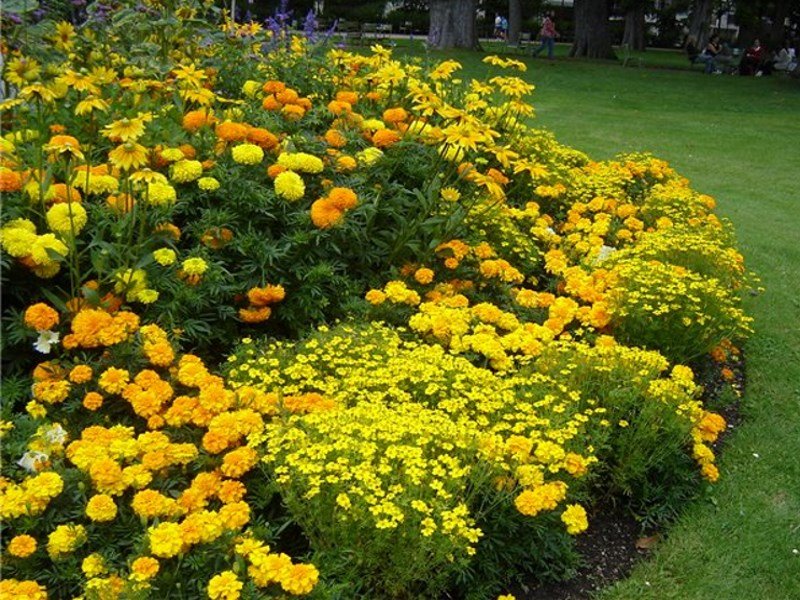
- Flowerbed in yellow
The variety of marigold varieties is vast, satisfying even the most discerning aesthete. Don't be afraid to experiment by mixing different species. This will give your property a unique character.