
Decorating Your Garden: Growing and Caring for Alpine Aster
Content
Description of Alpine aster
Cultivated hybrids of the plant appeared in the 16th century, and since then, alpine perennial shrubs have been found in urban flowerbeds and country houses. Botanists classify the alpine aster as a perennial groundcover, heather-like, suitable for open ground.
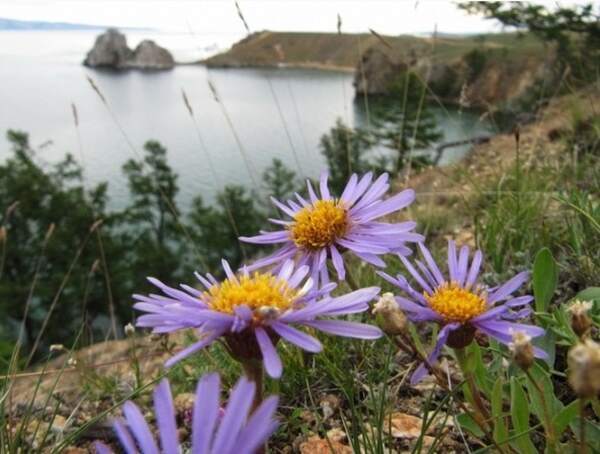
Here is a description of the plant:
- The root system grows horizontally, creating a dense carpet of grasses and flowers on the surface. This extensive grass cover prevents weeds from growing in the area, simultaneously preventing the soil from drying out.
- The shoots are erect and covered with down. An isolated, basket-like inflorescence forms at the end. Height ranges from 5 to 40 cm.
- Flowers are 3–6 cm in diameter and resemble daisies. The colors vary among varieties. A yellow circle occupies the center, with thin, elongated petals radiating outward.
- The foliage is bright green and small.
Growing in a well-lit area, the shrub develops a voluminous, lush appearance and retains its green foliage until winter. The plant's popularity is due to the following factors:
- long flowering period (from spring to late autumn);
- easy care;
- a variety of shades – from white to bright purple;
- the ability to combine asters with other crops.
Video: Growing Asters from Seeds
In this video, an expert will explain how to grow asters from seeds.
The most beautiful varieties with photos
There are over 250 varieties of this species in the Northern Hemisphere. Some are perennial and some are annual. Most require warm climates and are found only in Africa. When choosing suitable varieties, consider:
- flowering time;
- the size of the flower cup;
- coloring.
Let's look at the most popular varieties.
Albus
Low-growing, the stems reach no more than 15-20 cm in length. Each stem ends in a small white flower basket. The stems are densely covered with leaves, creating a lush foliage. The flowering period lasts two months, from June to July.
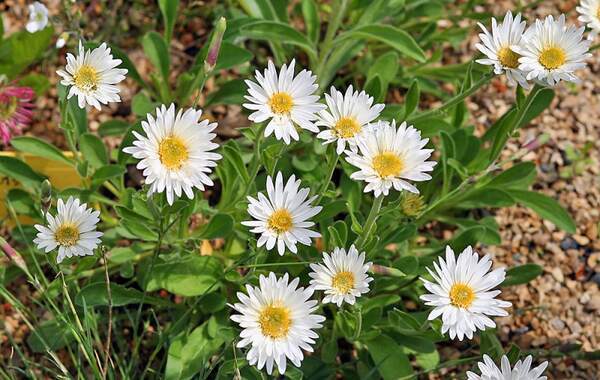
White Alps
A perennial plant, it can grow in the same location for up to five years. It's a compact, low-growing shrub with green foliage and white flowers. It's drought-tolerant and thrives in loose soil. It's also frost-hardy.
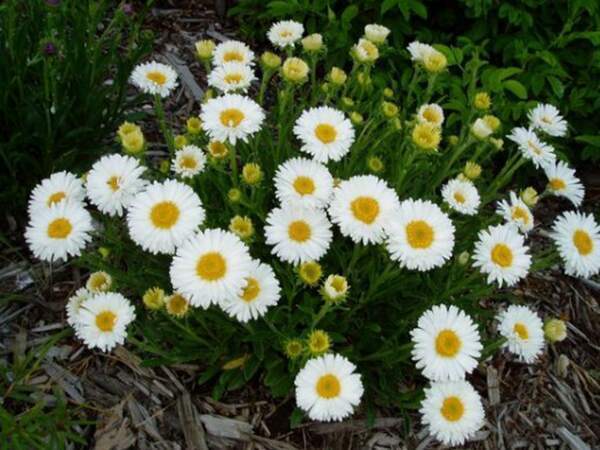
Gloria
A low-growing perennial (up to 35 cm). The flowers are blue, with a diameter of about 3 cm. It begins blooming in late May to early June. It retains its decorative appearance until late autumn. It is undemanding and cold-resistant.
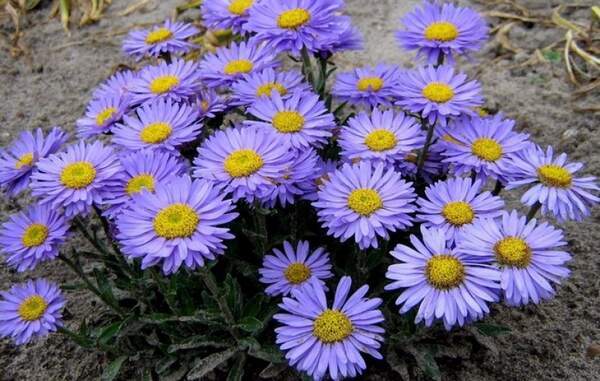
Illyria
Low-growing (15–20 cm). The daisy-like petals take on shades of blue, pink, white, or lilac, making this variety a beautiful addition to rock gardens. It grows quickly, beginning to bloom the second summer after planting. It is winter-hardy.
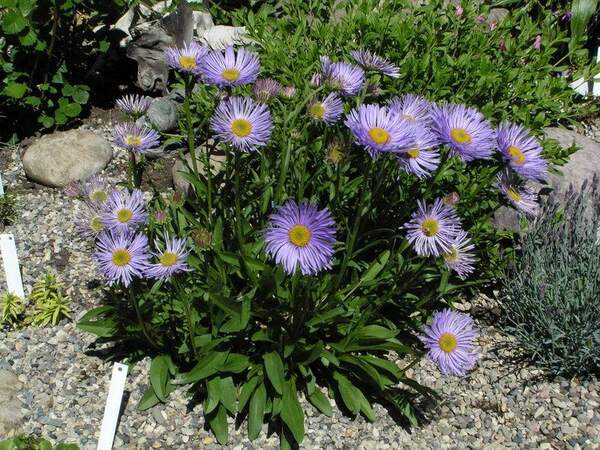
Goliath
A larger variety. Rosettes up to 6 cm, semi-double, light purple. Blooms throughout June. Spreads quickly, completely covering the designated area. Stems are gray-green.
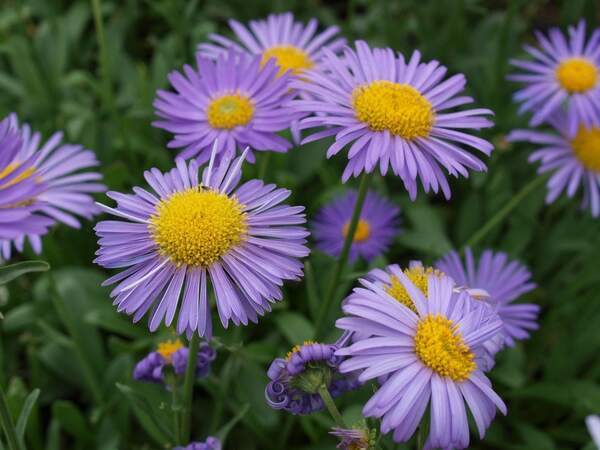
Astra Blue
Perennial. Bushes grow up to half a meter tall. Aster Blue flowers are large, up to 8 cm in diameter, a rich blue color, with a bright yellow center. It tolerates temperatures down to -34°C.
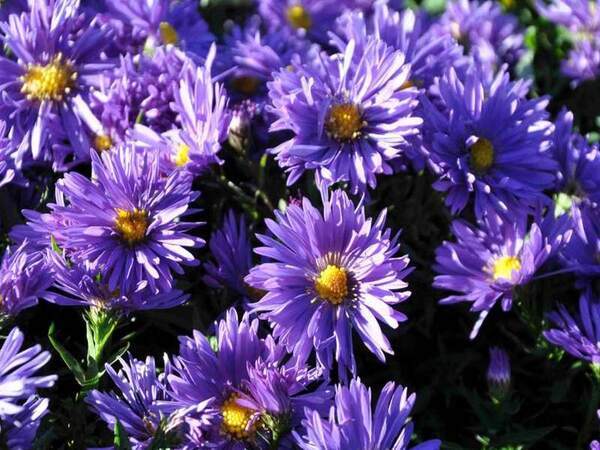
Rosea
A herbaceous perennial named for the vibrant pink petals. It blooms in July, with rosettes about 4 cm in diameter. It grows vigorously and requires frequent repotting by division. It forms dense flower heads.
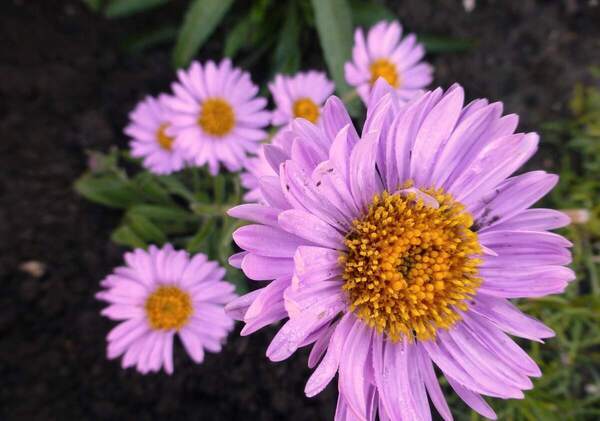
Alpine mix
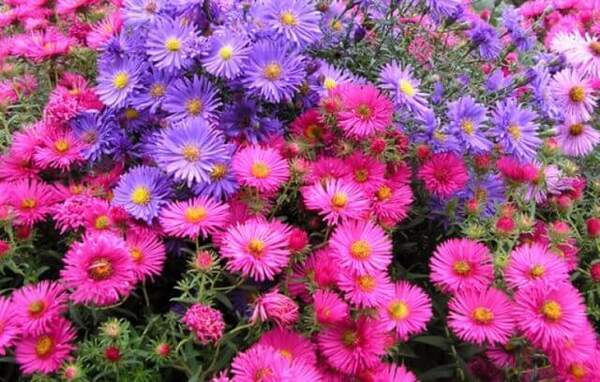
The inflorescences are massive, semi-double, and come in a variety of vibrant shades. They are used to create multicolored flower arrangements.
Features of cultivation and care
An important characteristic of the Alpine aster is its low maintenance. However, it responds well to care, and under favorable conditions, it can achieve long-lasting and abundant flowering.
Cultivation and care are organized according to agricultural technology rules:
- Good lighting allows the bush to grow, taking on a voluminous appearance.
- Soil drainage improves establishment.
- Abundant watering during the flowering season makes it more abundant.
- Tall varieties require periodic feeding.
- With the arrival of autumn frosts, the bush is cut back to the root collar.
- In warm climates, the plant doesn't require winter cover. In northern regions, the bushes are covered with spruce branches or dry moss.
- In spring, when pruning the bush, remove frozen stems.
- It is advisable to cover the exposed part of the root with soil or use it for replanting by division.
Choose a planting site on a raised platform, otherwise the roots will become diseased from accumulated moisture. Dug-up loam soil is suitable. Depleted soil is fed with organic fertilizers and lime.
Various methods are suitable for propagation.
Growing from seeds
Sow the seeds in the ground in early April, but be sure to cover the planting area with plastic wrap. The sprouts will emerge in a few weeks, and can then be transplanted to another location.
Another option is to plant in the fall in slightly frozen ground. In this case, special furrows are made and then filled with soil. Seedlings will emerge in the spring. Once they've grown, they are spaced apart to avoid excessive density.
The first weak flowering will occur in the first summer. It's best to cut off the buds by the end of the season. Expect abundant flowering in the second summer. Only fresh seeds should be used; this will ensure a high germination rate.
Seedling method
This option involves pre-germinating the seeds at home. The finished seedlings are transplanted outdoors in the spring. The following are the cultivation guidelines:
- Seedling preparation begins in late February or early March. You'll need fertile soil, which can be purchased at a store or prepared by mixing garden soil with well-rotted manure. Containers should have drainage holes.
- The seeds can be either buried a centimeter deep in the soil or scattered over the surface and lightly covered. Then, water gently and place the container on a south-facing windowsill for maximum sun exposure.
- When the first shoots appear, the container is transferred to a cooler room, up to 18 °C.
- If you use separate cups for containers, pricking out is not necessary. Otherwise, pricking out is done when 3-4 full-fledged leaves appear.
- As soon as it starts to get warmer, the seedlings begin to harden off little by little.
- Before planting, the soil in the area is disinfected with a hot solution of potassium permanganate.
The seed method does not guarantee the inheritance of varietal traits, so it should not be used when breeding rare subspecies.

Propagation by cuttings
This method is ideal for situations where it's desirable to preserve the parent's varietal traits. The technique involves a few simple steps:
- Select healthy, strong young shoots. Cut them so that each cutting has three leaves. Treat the cut with succinic acid or another growth stimulant.
- The cuttings are planted in fertile soil prepared by mixing turf, sand, and peat. The planting site is covered with plastic film.
- Water in moderation; excess and lack of moisture are equally harmful.
- The film is removed briefly daily for ventilation. It is removed completely in the fourth week, when the cuttings have rooted.
Replanting of strengthened bushes can be done at the end of August – beginning of September.
Dividing the bush
This method is considered the simplest and most effective, and can be used throughout the season. Dividing the bush is done as follows:
- When the plant starts to grow rapidly, part of the bush is separated (with the root) and transplanted to another location.
- Damaged and dry shoots are cut off at the same time.
Flower care
The perennial alpine aster can grow in one place for up to 7 years, but 3-4 years is considered optimal. To extend its lifespan, it is recommended:
- water evenly with settled water;
- remove weeds and faded flowers of the crop;
- After watering and rain, loosen the soil, but not deeply, so as not to damage the roots;
- hilling to strengthen the roots;
- feed during the period of growth and budding;
- In spring, clear the ground of snow as quickly as possible, preventing excess moisture.
Diseases and pests of perennials
The crop has good immunity to many diseases, but when growing in unfavorable conditions, the risk of damage increases:
- powdery mildew (ash, white);
- fusarium.
At the first sign of disease, affected stems are cut off and burned. The next step is to treat the shrub with antifungal agents or Bordeaux mixture.
The crop is also threatened by insect pests such as:
- spider mite;
- caterpillars;
- slugs.
Alpine aster in landscape design
The voluminous appearance and variegated coloring of asters are used to decorate flowerbeds and garden plots. Options for using perennial shrubs:
- when organizing the background on alpine hills;
- when forming flower groups in rock gardens;
- for organizing borders and garden paths;
- in flowerbeds in combination with other perennial crops, such as alpine woodsia and fragrant creeping lily;
- to create a picturesque colorful carpet;
- as decoration for decorative lakes and natural reservoirs on the site.
-
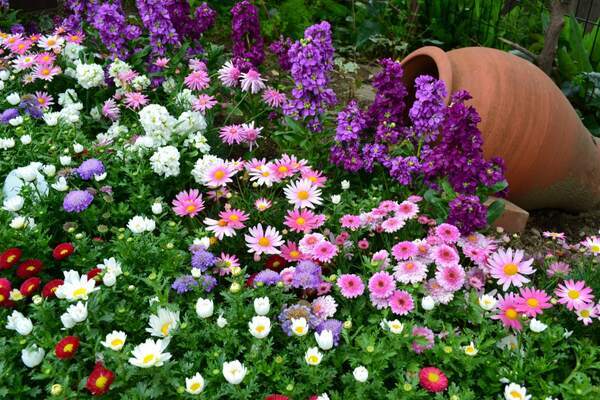
- Perennial plants delight their owners with bright colors
-
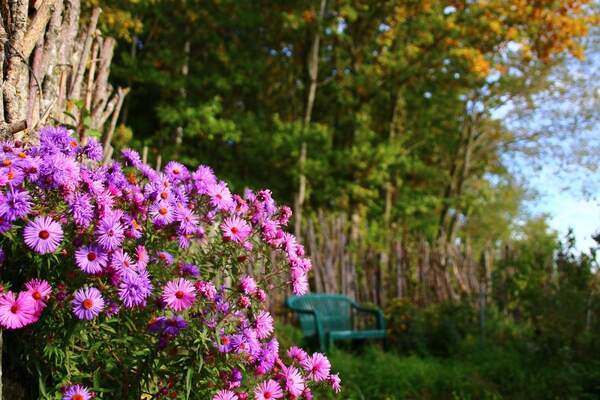
- When creating lush flower beds, a gardener cannot do without alpine asters.
-
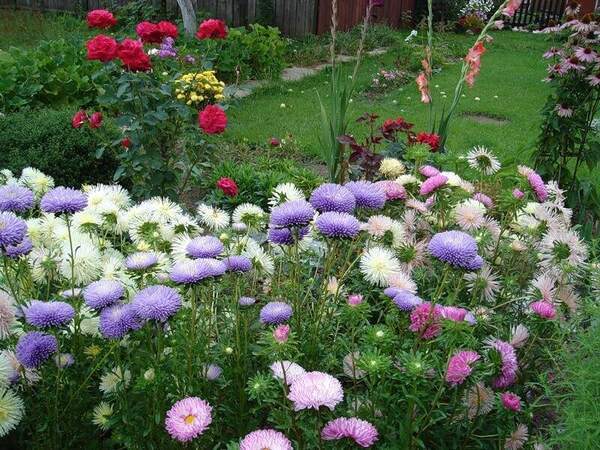
- An important characteristic of the Alpine aster is its unpretentiousness.
-
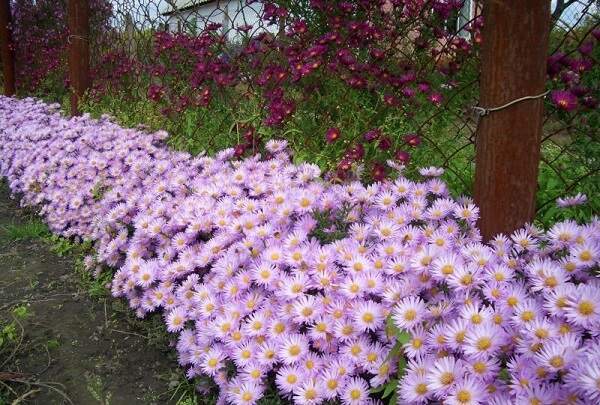
- Asters are planted along garden paths
-
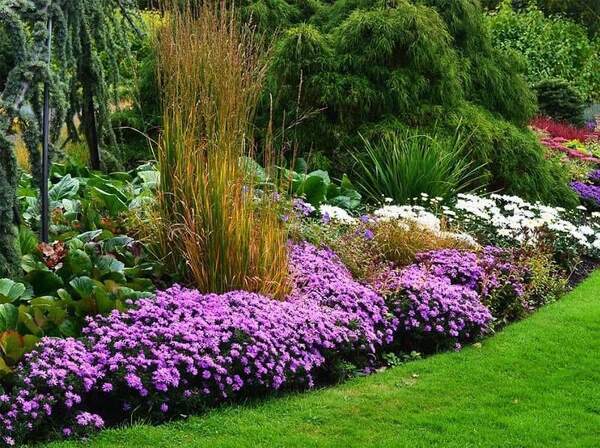
- Alpine asters are used to form flower beds.
-
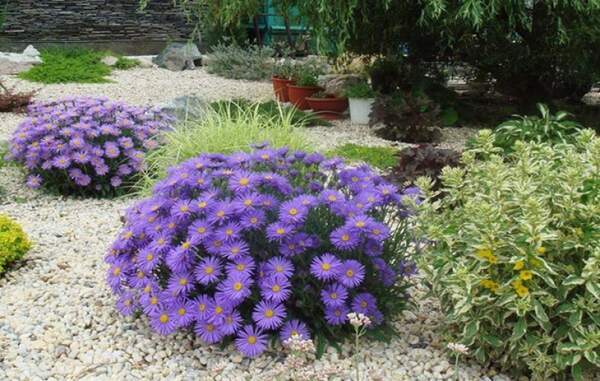
- Asters can decorate the garden
When creating lush flowerbeds, a gardener can't do without alpine asters. These perennials delight their owners with vibrant colors and decorative appearance from spring until late fall.