
Aster flowers in the garden: descriptions and photos of interesting varieties
Content
Description of aster
This perennial flower was first cultivated as a garden crop due to its late blooming, which allows the garden to remain decorative until mid-autumn. This easy-to-grow aster can grow in any soil and tolerates harsh winters well. However, this sun-loving plant dislikes extreme heat or prolonged drought.
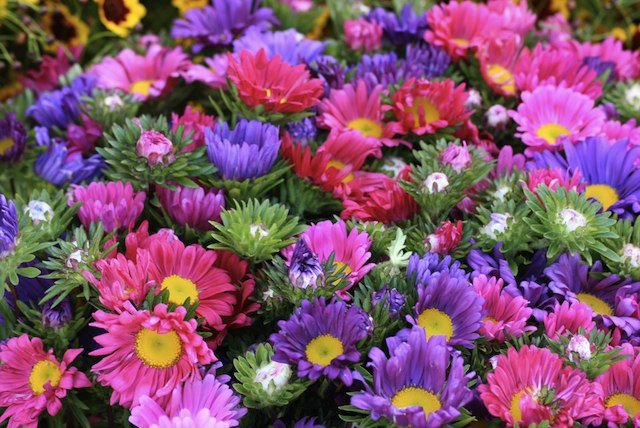
The ornamental plant is characterized by erect branching stems, lanceolate leaf blades and basket-shaped inflorescences. The buds consist of two types of flowers: tubular in the center and ray-shaped at the edges. The color, shape, structure, size, and other characteristics of the flowers depend on the variety.
Existing classifications
Asters, as a whole genus of herbaceous plants, have been divided by botanists into several classifications. The classification by flowering time is as follows:
- early (May-June);
- middle, or summer (July-August);
- late, or autumn (September-November).
Also, all flowers are divided according to the height of the bush:
- low-growing (border) – 25-40 cm;
- garden (medium-sized) – 40-80 cm;
- tall – 80-160 cm.
Varieties with different inflorescence structures were divided into separate groups:
- simple;
- semi-double;
- terry.
Another section in the classification is the purpose of cultivation:
- universal – used for garden decoration and flower arrangements;
- dwarf - grown to decorate a garden plot;
- tall - grown for sale, for cutting.
Video: "Aster Varieties for Growing in the Garden"
This video presents the most interesting species and varieties of flowers.
Popular varieties of annual asters
These annual flowers are also called Chinese flowers, after their country of origin. Botanists recognize about six hundred varieties of this plant, but we'll tell you about the most beautiful.
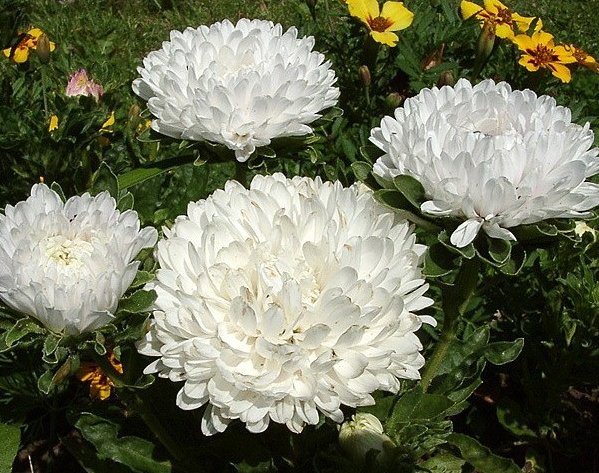
Snow White
A medium-sized variety, no more than 0.7 m tall, with densely double inflorescences measuring 9-12 cm. Flowering lasts from August to September. The color is uniform, snow-white, without any foreign inclusions.
Bolero
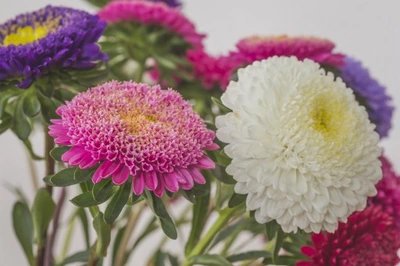
These are highly branched late hybrids, up to 0.6 m tall. The diameter of the double, hemispherical flower heads is 7-12 cm. This variety is characterized by a wide range of shades, from light lemon to burgundy-violet.
Gala
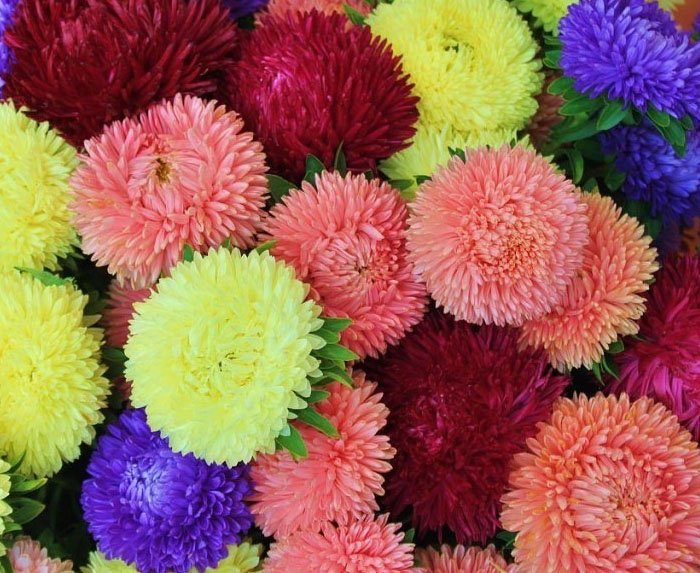
A medium-sized pyramidal shrub, 0.7-0.8 m tall. The spherical, densely double buds are 9-10 cm in size. The color is varied and uniform. Flowering occurs in late summer and early fall.
Galaxy
A highly branched bouquet hybrid, approximately 0.7 m tall. The flower heads are double, needle-like, and 8-10 cm in diameter. This variety is characterized by a wide range of colors. Galaxy blooms in the second half of summer.
Golden
A mid-season variety. The pyramidal bush grows to 0.7 m tall. The inflorescences are hemispherical, densely double, and approximately 10 cm in size. The color is lemon-yellow and uniform.
Dwarf
Border asters no more than 0.3 m tall. Peony-shaped, double buds are 50-70 mm in diameter. Blooms from late summer to September. Petals are a uniform shade, ranging from white to purple.
The dwarf variety is often used to decorate balconies or terraces.
-
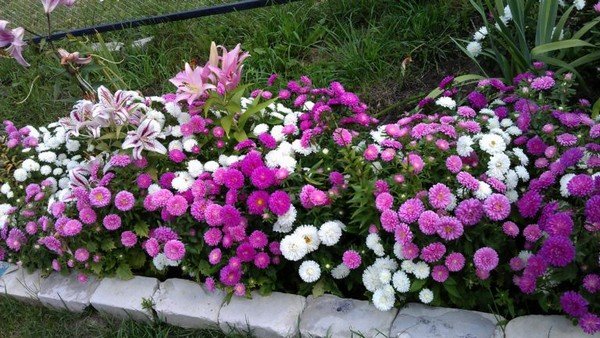
- Dwarf
-
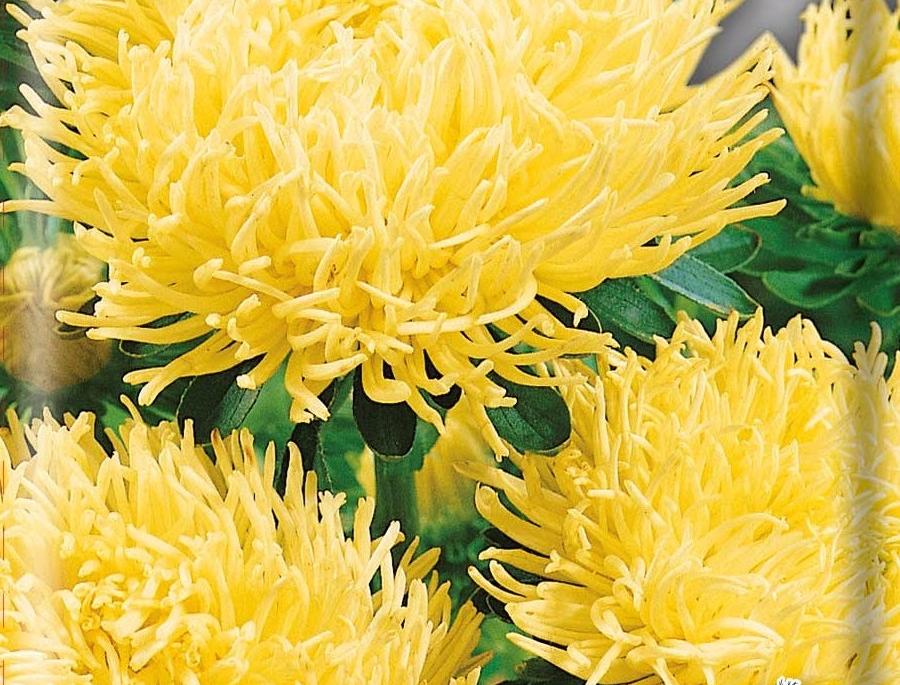
- Golden
-
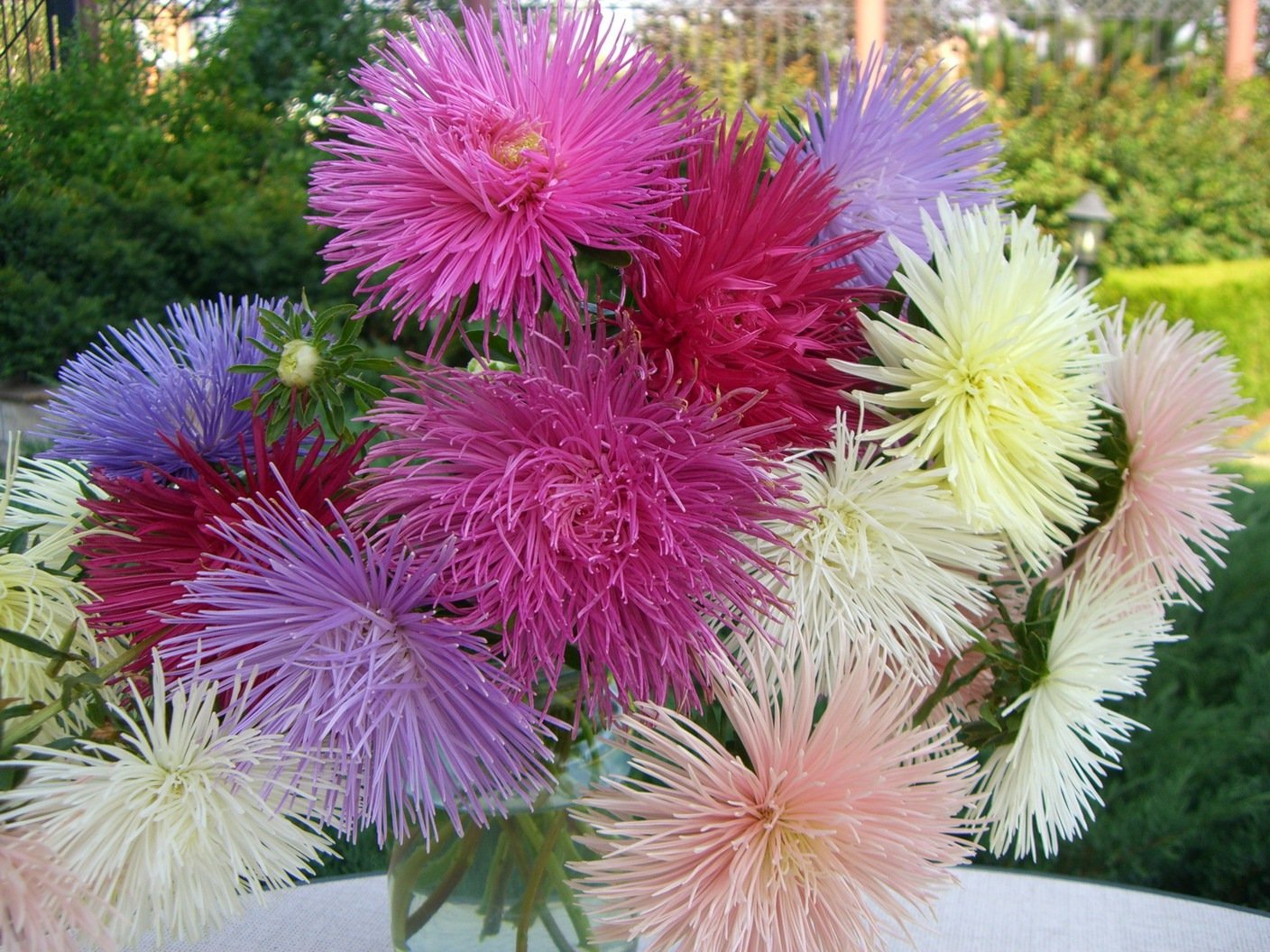
- Galaxy
Comet
A medium-sized (about 0.7 m) pyramidal shrub with needle-like inflorescences 12-15 cm in diameter and ultramarine in color. Flowering lasts for a month and a half, beginning in the second half of July.
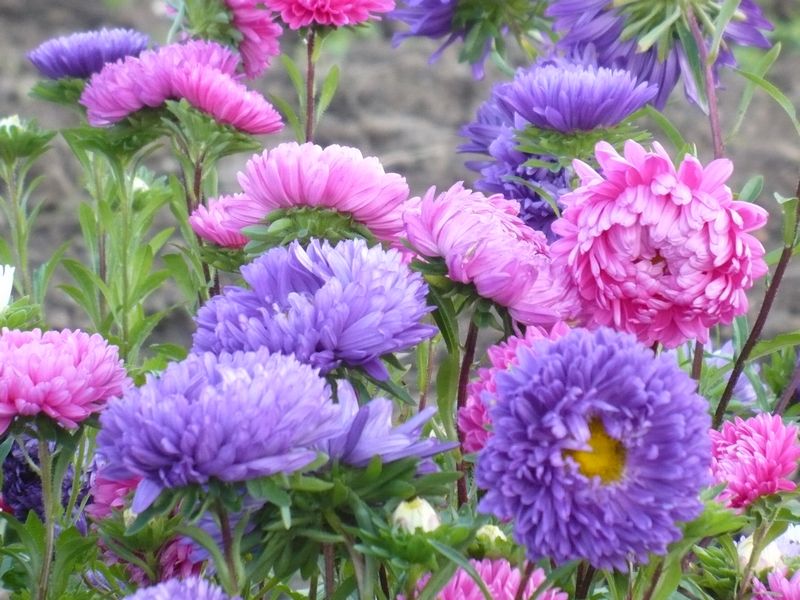
Lady Coral
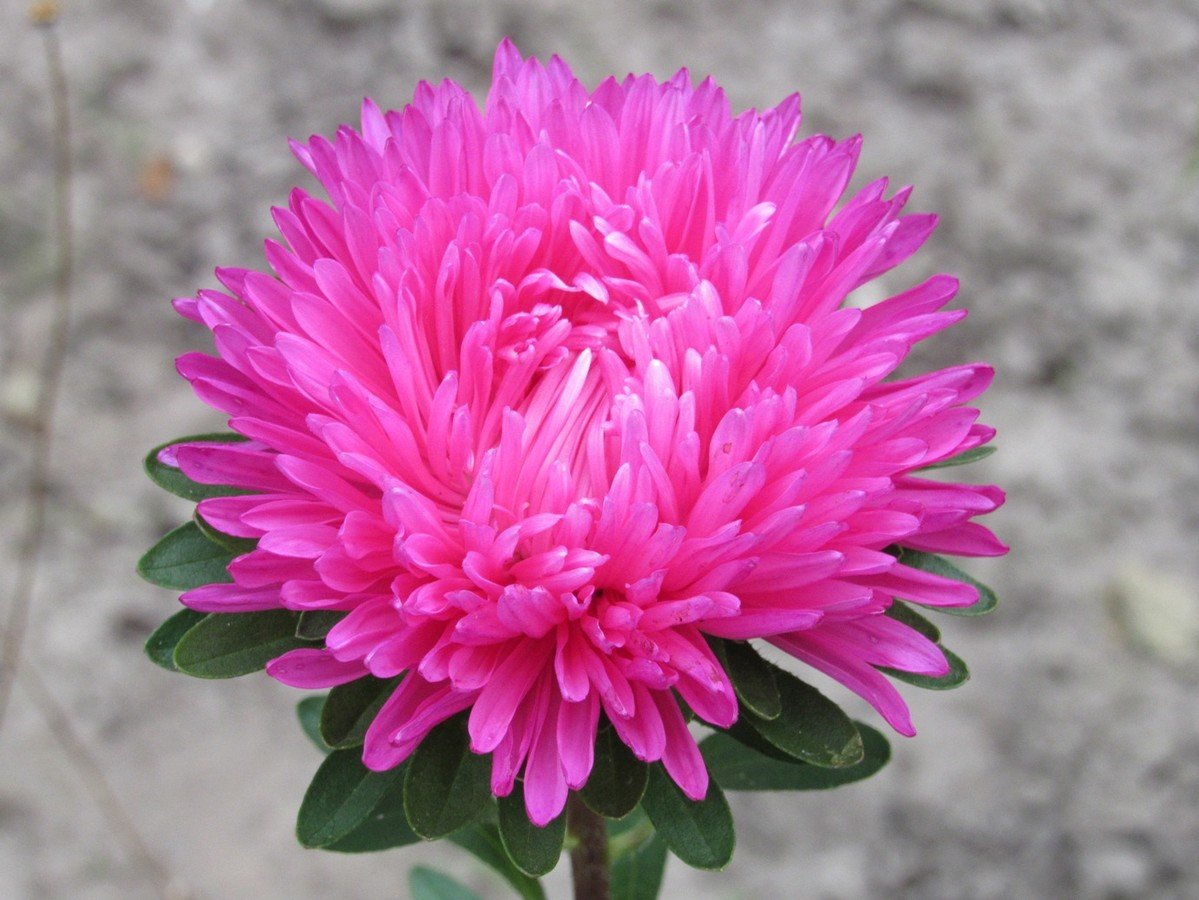
A medium-sized pyramidal bush (0.6-0.7 m) with large, densely double buds measuring 15-17 cm, resembling a ball. The color palette is varied, from snow-white to deep burgundy.
Cloud
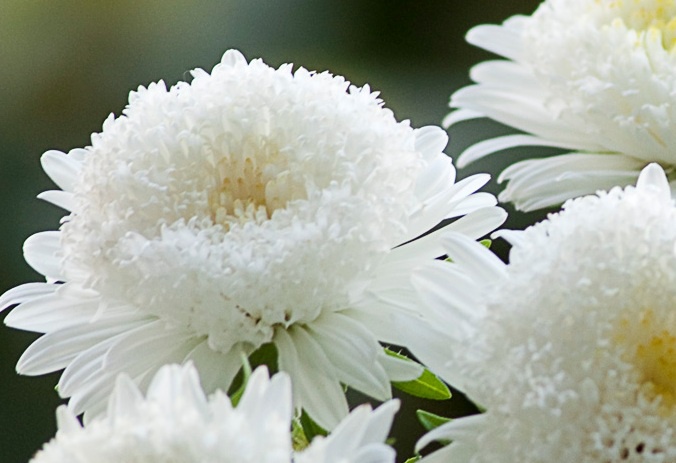
This variety with a delicate name grows up to 0.8 m and blooms with semi-double, snow-white flower heads 10-12 cm in size. Flowering begins in the second half of summer and ends in September.
Oktyabrina
The bush is about half a meter tall. The inflorescences are very dense, pompom-shaped, 7-9 cm in diameter. The petals are burgundy-carmine, with an orange-yellow center. Oktyabrina blooms from July to August.
Memory
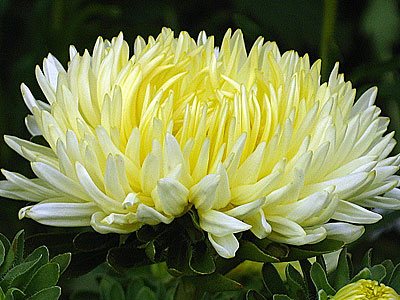
A medium-sized aster reaching 0.7 m in height. When in bloom, the bush is covered with large, densely double flower heads, almost 20 cm in size, in a lemon-yellow hue. Flowering occurs in the second half of summer.
Excellent Rakli
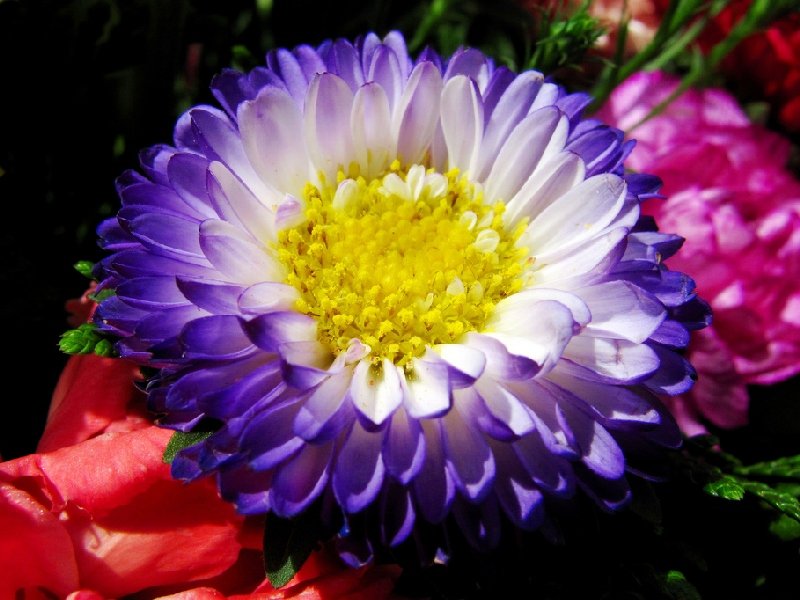
A pompom variety, growing up to half a meter and blooming from late July to September. The buds are flattened and round, 50-80 mm in diameter. The outer petals are a deep ultramarine, and the center is snow-white with a bright yellow center.
-
- Excellent Rakli
-
- Memory
-
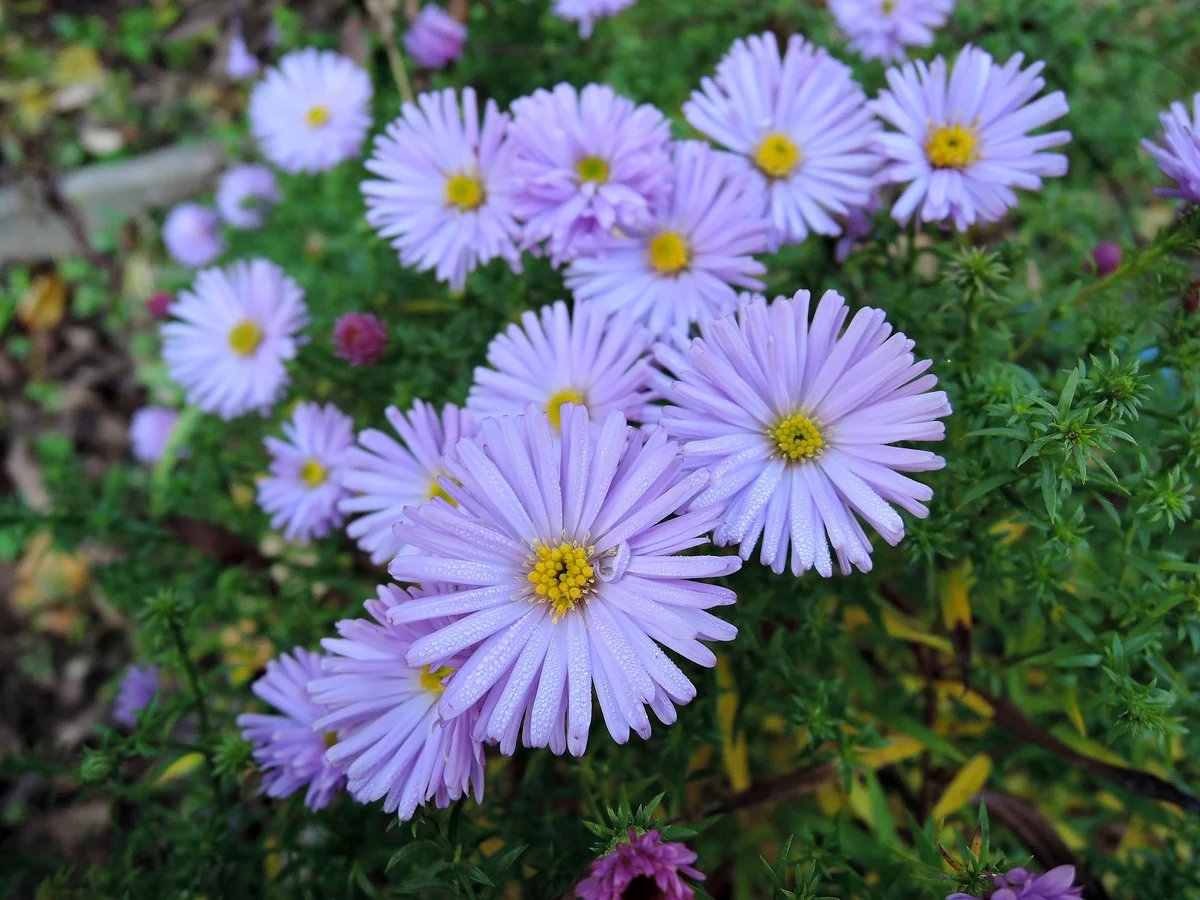
- Oktyabrina
Symphony
Tall hybrids, about a meter tall. Double, needle-like flower heads, 9-12 cm in size, resemble a sphere. The petals are a uniform raspberry-scarlet hue. Flowering occurs in the second half of summer.
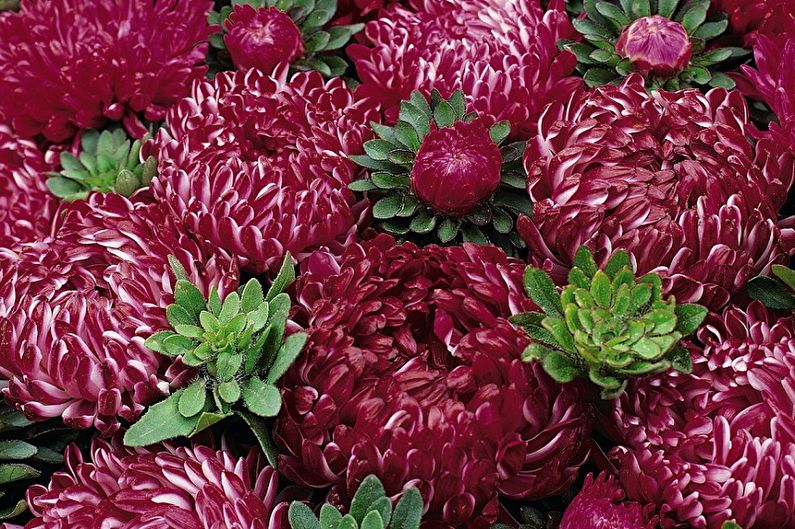
Suliko
Mid-late flowers, growing no more than 0.7 m. During flowering, they are covered with densely double "caps" 10-12 cm in diameter. The color is bicolor: the center is bright yellow, the remaining petals are a rich purple.
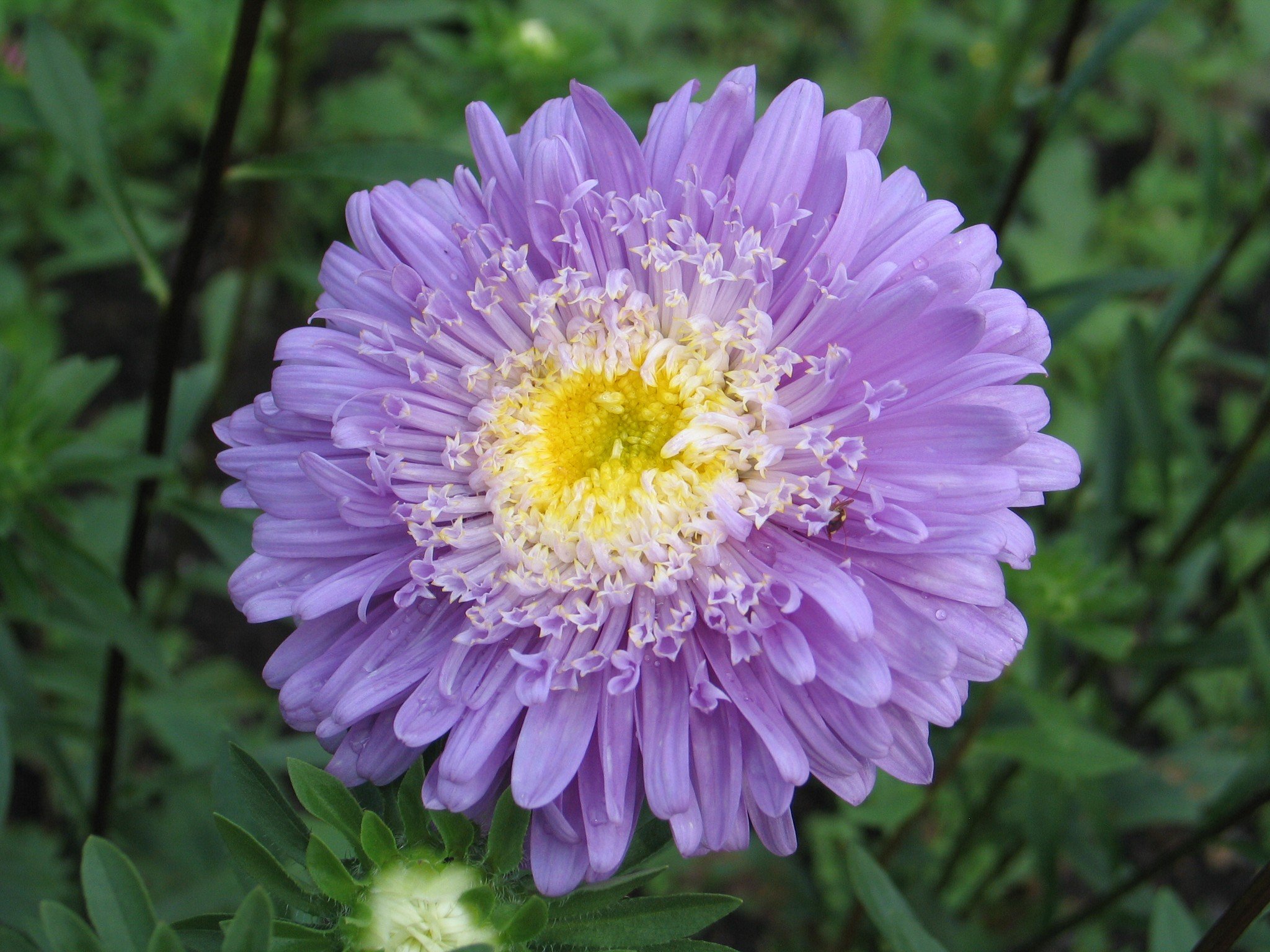
Purple Tower
The cultivar grows to a height of 0.6-0.7 m. Flowering occurs in late summer and early fall. The buds are densely double, approximately 10 cm in size. The petals are needle-shaped and a uniform violet-purple hue.
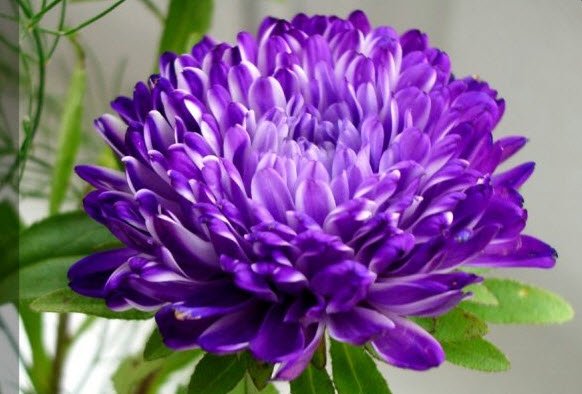
Types and varieties of perennial asters
To make it easier to navigate perennials, botanists have created a separate classification system for this segment. Read more below.
Ageratoides
This ornamental group is known for its medicinal properties. The plants are distinguished by straight, smooth stems 0.4-0.7 m long and small (3-5 cm) corymb-shaped inflorescences. Here are a few examples:
- Starshine. The plant blooms from August to November with small, snow-white, simple flower heads.
- Ezo Murasaki. Blooms in the first half of autumn with tiny, bright purple, simple flower heads.
Alpine
Varieties in this group are characterized by early flowering. The bushes grow miniature (15-25 cm), with single, simple inflorescences measuring 40-50 mm, resembling daisies. Here are a couple of examples:
- Gloria. A border hybrid with delicate blue flower heads.
- Albus. Blooms with snow-white, daisy-like inflorescences.
- Rosea. A compact bush with bright pink buds and a yellow center.
Bessarabian
The distinctive features of Bessarabian asters are their orange-brown center and lilac coloring. These profusely blooming, spherical bushes reach a height of approximately 0.7-0.8 m. The inflorescences are simple, approximately 10 cm in diameter, with needle-like petals reminiscent of daisies. Flowering occurs in the first half of summer.
-
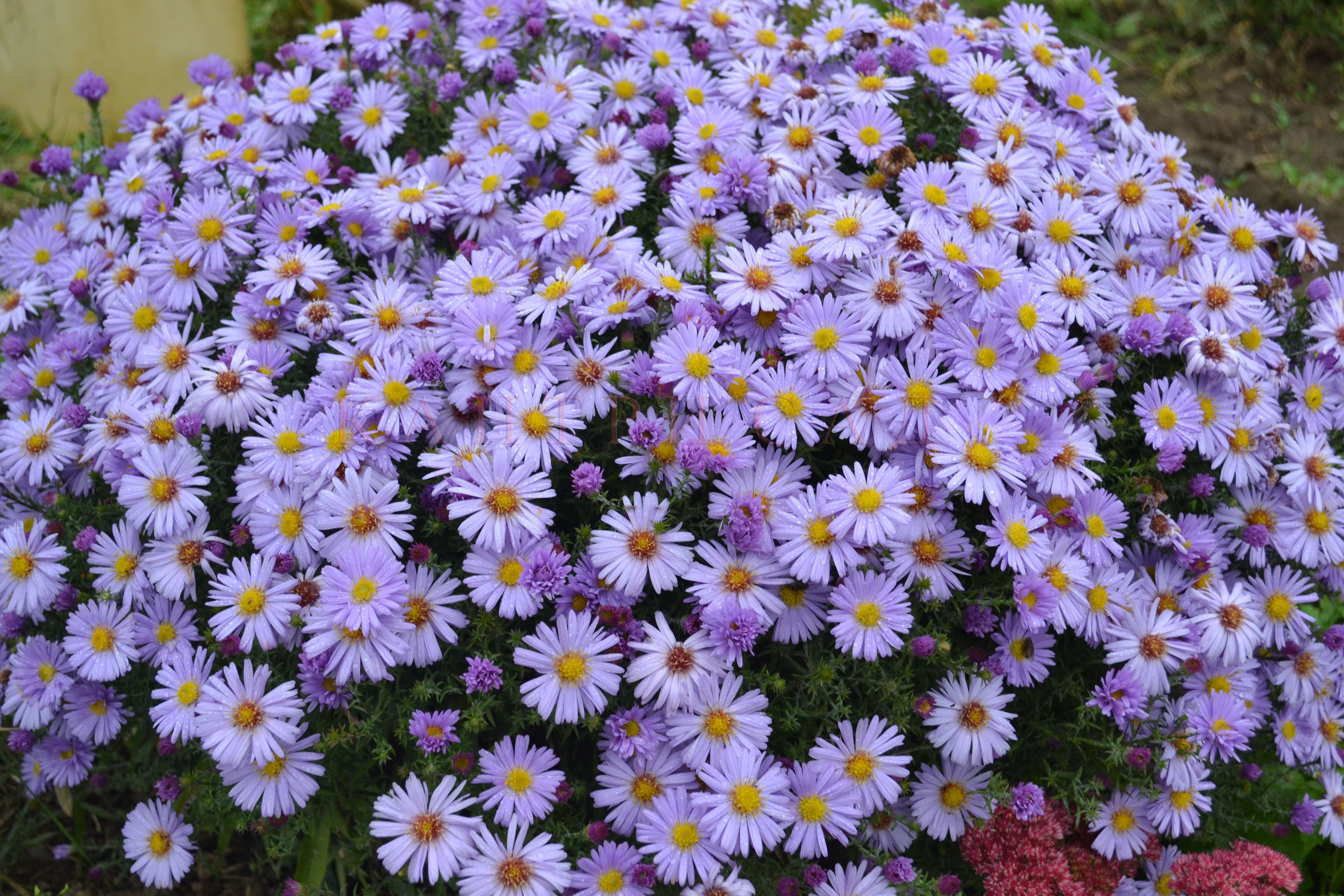
- Bessarabian
-
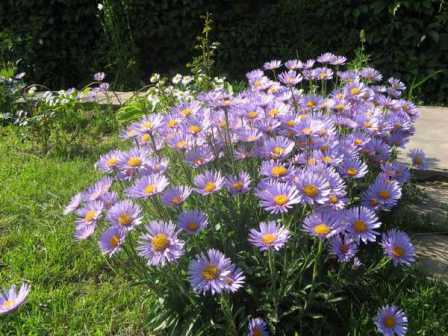
- Alpine
-
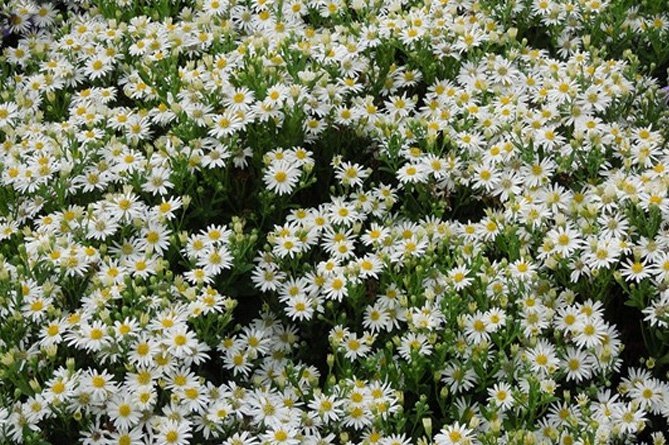
- Ageratoides
Heather
A nearly meter-tall, pyramidal-shaped bush with drooping shoots. Each stem is densely covered with small (about 1-1.5 cm) single-flowered buds. Heather aster blooms in early September. The most famous varieties are:
- Erlkönig. This variety is characterized by a white-purple color and a bright yellow, contrasting heart.
- Blue Star. A medium-sized shrub (0.7 m) with creeping stems and miniature lavender-lilac flower heads.
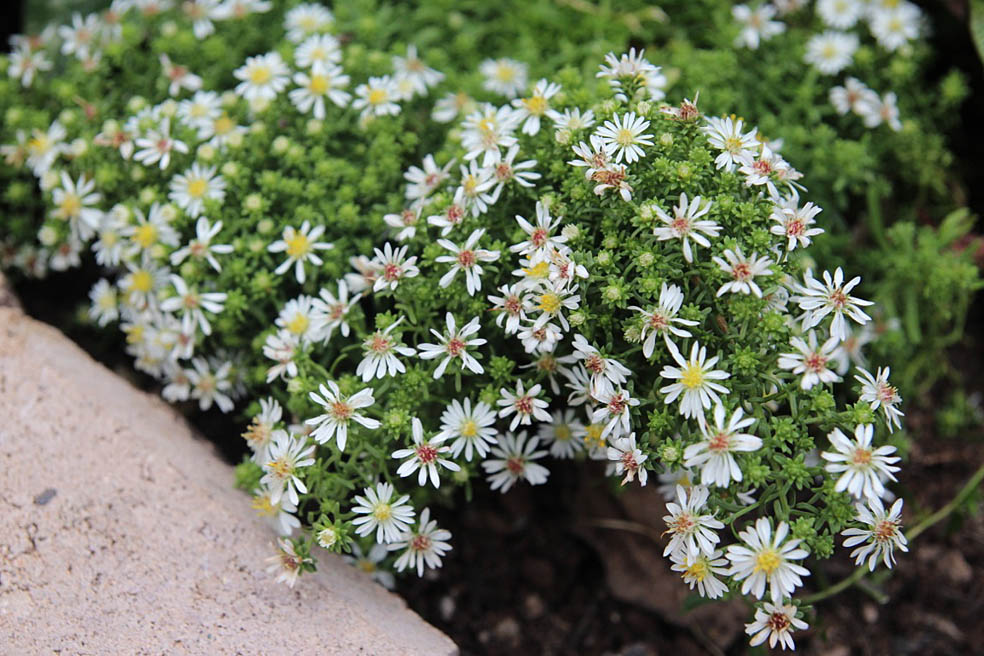
Italian
This group includes medium-sized cultivars (0.4-0.5 m) that bloom in the second half of summer. The heads are simple, shield-shaped, and no more than 50 mm in size. The most popular varieties are:
- Amalia. The plant blooms with loose, light lilac-hued inflorescences.
- Rudolf Goethe. Compact bushes are covered with small pinkish-purple buds during flowering.
- Kobold. Distinguished by delicate lilac-pink flower heads with a bright yellow center.
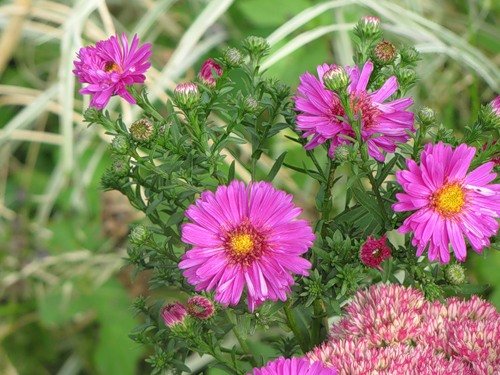
Bushy
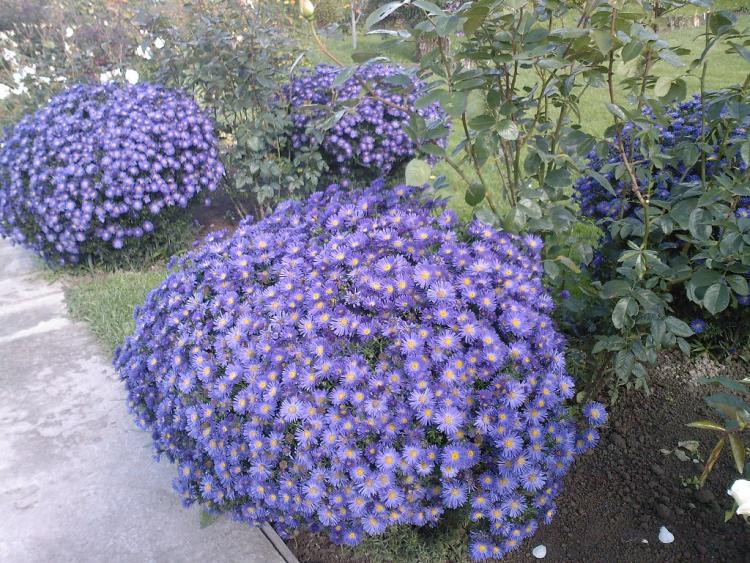
The soft stems of these compact bush asters are erect, covered in short hairs, and reach up to half a meter in length. The inflorescences are simple, sparsely corymbose, no more than 3-4 cm in size. Blooming is long and profuse, occurring in the second half of summer.
Among the bush varieties there are creeping varieties that are used as soil conditioners.
Popular varieties:
- Alba Flor Plena. A snow-white flower, 0.4 m tall, with a bright yellow center.
- Blue Bird. A dwarf shrub (up to 25 cm) blooming with miniature, delicate lavender flower heads.
- Diana. A low-growing plant (0.3-0.4 m) with simple, bright pink inflorescences.
Terry
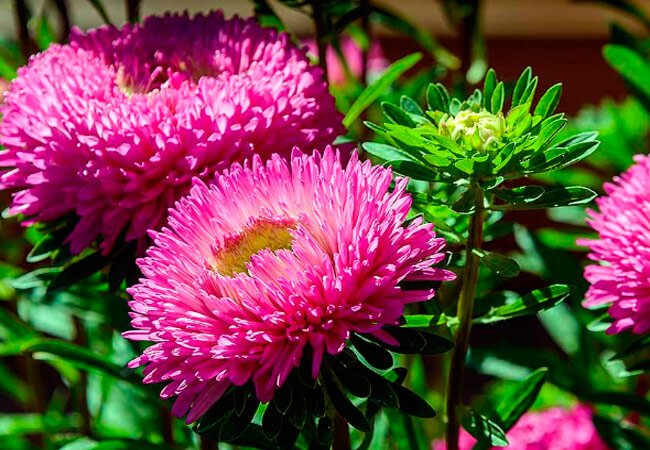
This variety is characterized by very dense flower heads, reminiscent of chrysanthemums. Their color and size depend on the variety:
- Patricia Ballard. The bush grows to about a meter in height. It blooms in early autumn. The buds are large, pinkish-lilac in color.
- Leilek Rose. A sparsely branched, medium-sized flower (0.4-0.5 m) with flower heads 6-8 cm in diameter. Petals are carmine-pink, whitish at the base.
New England
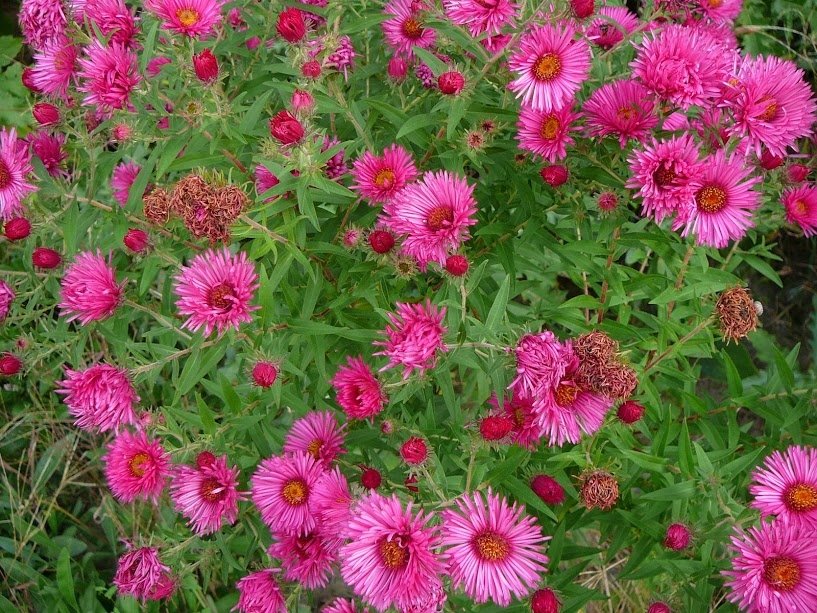
Autumn aster, also known as American aster. The bushes are tall, with upright, heavily branched stems. The buds are medium-sized (40-50 mm) and form racemose inflorescences. Here are a few example varieties:
- Lucida. Blooms with bright ruby-colored flower heads until the first frost.
- Ann Leys. This variety is distinguished by its unusual, lush, burgundy-green inflorescences.
- Rose Seeger. This spreading bush blooms with delicate pink buds with a red-orange center.
-
- New England
-
- Terry
-
- Bushy
New Belgian, or Verginskaya
Another group of autumn cultivars blooming until the first frost. Height varies depending on the variety, with single inflorescences rarely exceeding 2-3 cm. The flower heads are so densely packed that the green part of the plant is almost invisible. Let's look at a couple of varieties:
- Royal Ruby. The bush grows up to a meter in height and blooms with crimson-pink paniculate inflorescences.
- White Ladies. A tall plant (1-1.1 m) characterized by uniform snow-white buds.
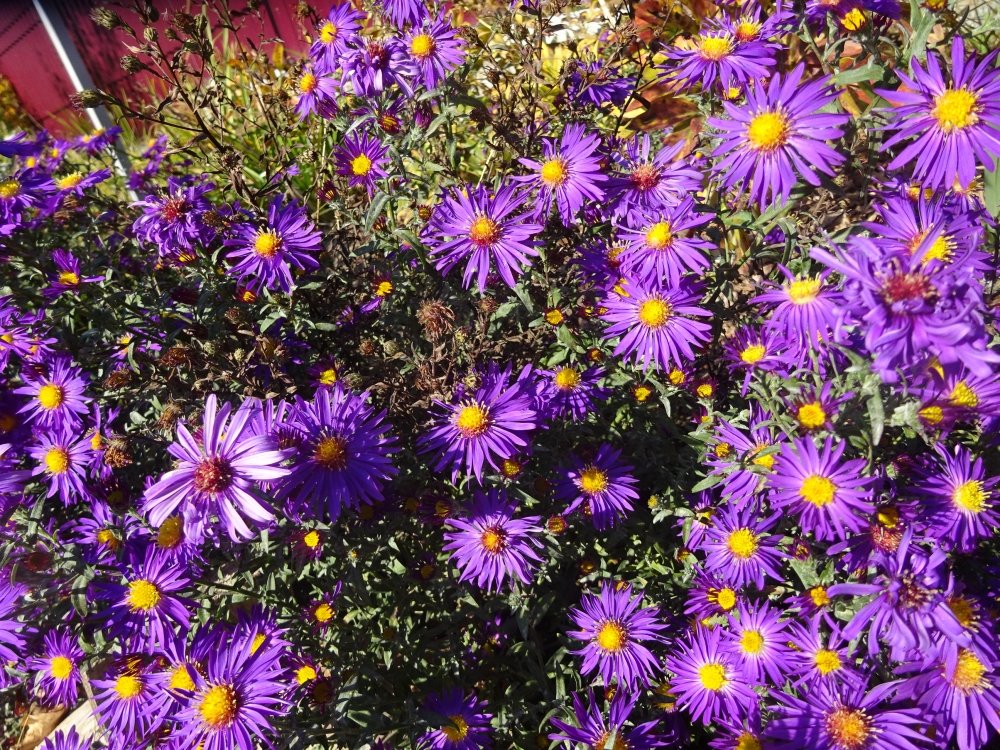
Tatar
Like the ageratoides aster, this aster is also used medicinally. This variety thrives in moisture, so it can be found near bodies of water or at forest edges. The bush grows almost one and a half meters tall. The inflorescences are miniature, white with pink or blue hues. The center is a bright yellow, contrasting color. The flower blooms towards autumn.
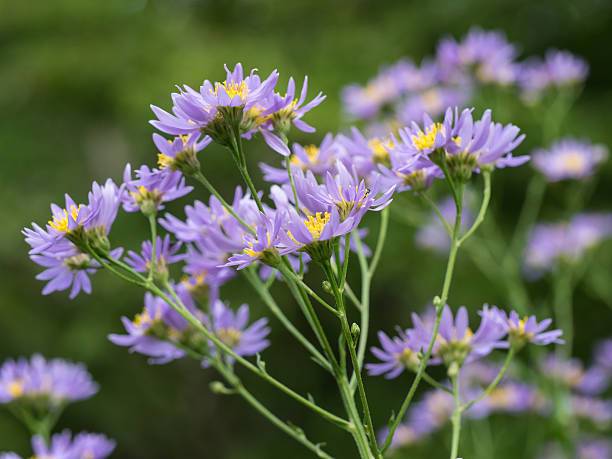
Spherical
A characteristic feature of this group of asters is the perfectly spherical shape of the bush, which grows up to half a meter and spreads almost as wide. Compact flowers in a variety of colors look beautiful in individual pots on balconies or windowsills.
- Snow White. A flower with lush, snow-white heads and a light green center.
- Lilac Sunset. Distinguished by its delicate white color with a slight lilac tint.
- Magenta. A hybrid of a beautiful, uniform beetroot-purple color.
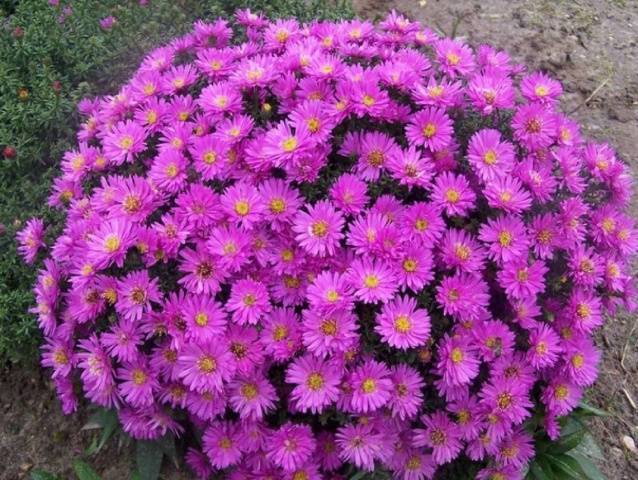
Applications in garden design
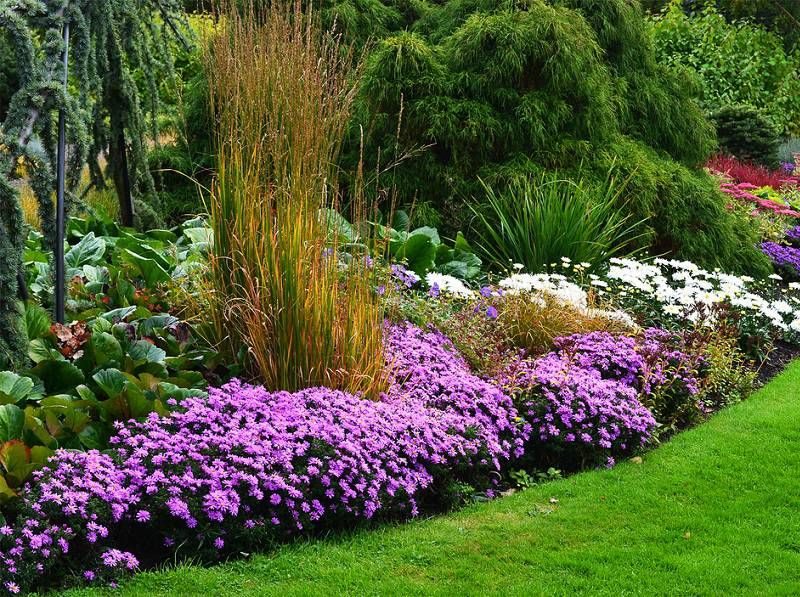
Beautiful flowers planted in your garden will help maintain its decorative appeal throughout the season. To achieve this, simply select varieties with different bloom times that will gradually replace each other. Garden asters are versatile, so there are countless ways to use them in landscape design:
- design of borders or paths;
- Astraria (monoflower beds of asters);
- mixborders;
- flower beds;
- composing flower arrangements;
- creation of single flower beds or mobile flowerpots.
Autumn flowers pair beautifully with low-growing conifers, chrysanthemums, bergenia, heleniums, and hostas. They also look great with marigolds, peonies, and dahlias.
-
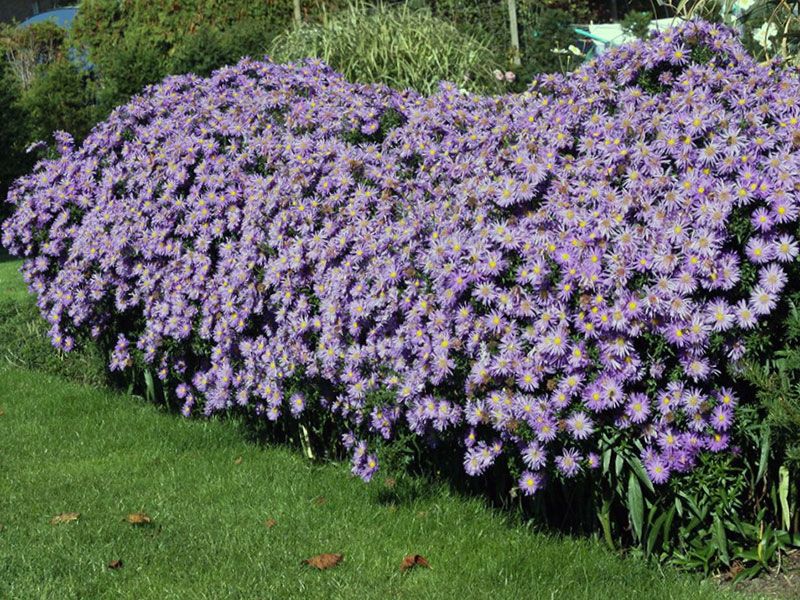
- Planting as a mini-hedge
-
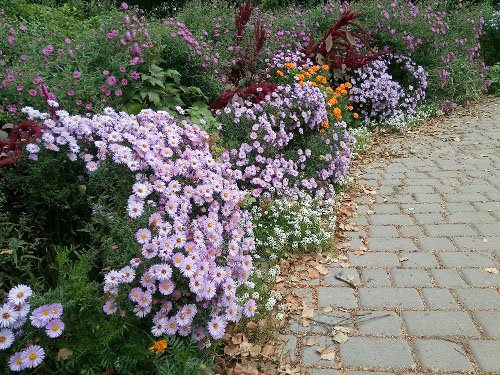
- Garden path design
-
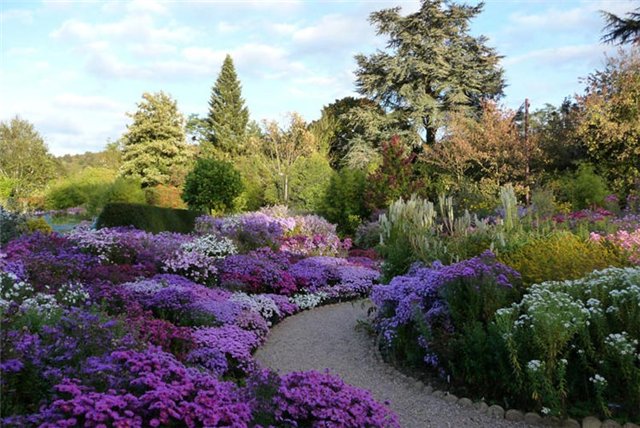
- Creating mixborders
-
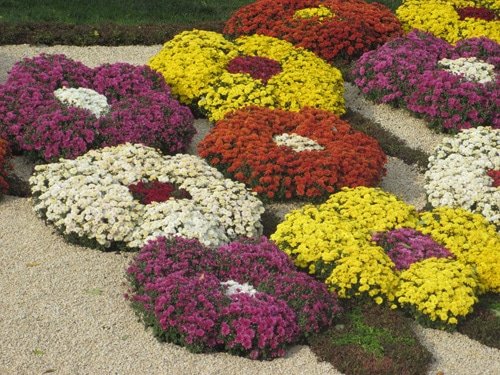
- Flower beds
-
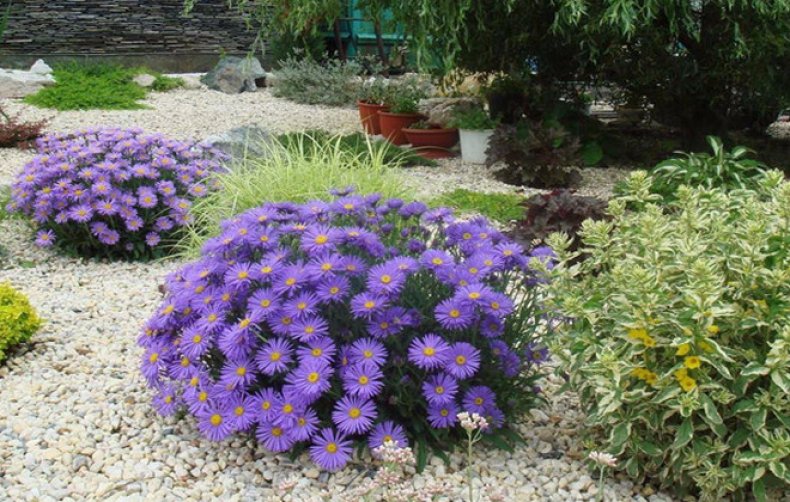
- Solitaire cultivation
-
- Composite planting
Despite the numerous aster varieties already developed, breeders continue to create new ones, continually expanding the collection. Today, over four thousand varieties are known, and all indications are that this is far from the limit.