
Anemone flowers for the garden and dacha: 25 varieties and cultivars with descriptions and photos
Content
Botanical description of anemone
The plant is also popularly known as "windflower" or "daughter of the winds," which is how the word "Anemone" is translated from Greek. Anemones are perennial herbaceous plants in the buttercup family. They are naturally found in the Northern Hemisphere, in the temperate zone, but are not fond of the tropics. About a dozen varieties have adapted to life above the Arctic Circle. In Russia, there are over fifty species.
The plant has a powerful root system, allowing some species to stretch up to 150 cm. Botanists describe the crop as follows.
- The foliage is divided or finger-shaped. The color is green or gray, and in most cultivated species, silvery.
- Some varieties have a basal rosette.
- Flowers are clustered in loose umbels, although solitary ones are also common. The color varies between shades of pink, white, light blue, blue, and red.
- Cultivated species come in semi-double and double forms; in nature, flowers are symmetrical and have from 5 to 20 petals.
- After flowering, the plant either forms small nut-shaped berries or remains empty.
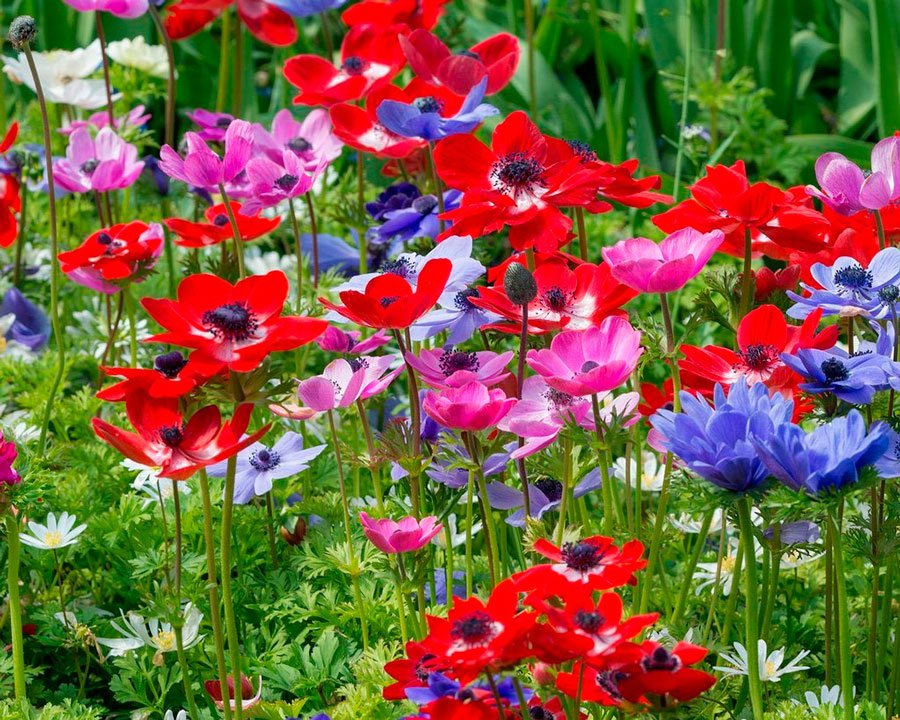
Flowers propagate vegetatively. They don't tolerate winter well, so it's best to cover most plants when cold weather sets in. In particularly cold climates, it's recommended to dig up the plants and store them at above-zero temperatures.
There are varieties that grow well in the shade, while others require plenty of bright light.
Like all members of the Ranunculaceae family, anemones are poisonous. Keep them away from children and pets.
Classification by type of rhizome and flowering period
Existing varieties are divided into two groups:
- Cultivated plants.
- Used in the creation of hybrids.
A classification system has been developed for both types, taking into account the appearance of the root system and the flowering period of the crop. The classification includes five groups.
- Early-flowering rhizomes. They bloom in the spring, after the snow melts. The growing season is short; the buds soon fall off, and the above-ground portion dries out. The root system is long and multi-partite.
- Plants with tubers. They bloom a little later. The growing season is also short, but of all the varieties, these are the most beautiful.
- An autumn variety. Flowering begins in late summer. These rhizomatous plants grow to a great height. The flowers are borne in drooping racemes. They are easy to grow and thrive when repotted correctly.
- Plants that produce root suckers are the easiest to propagate. The growing season lasts all season, and the suckers are easily transplanted, causing virtually no damage to the parent plant.
- A North American species. Besides North America, varieties of this class are common on Sakhalin and the Kuril Islands. Rarely seen, the flowers are attractive and bloom for a long time.
Video "Types and Varieties of Anemones"
This video presents popular varieties of flowers in gardening.
Popular species and varieties in gardening
Let us describe the varieties of anemones of different classes that are commonly found in Russia.
Altai
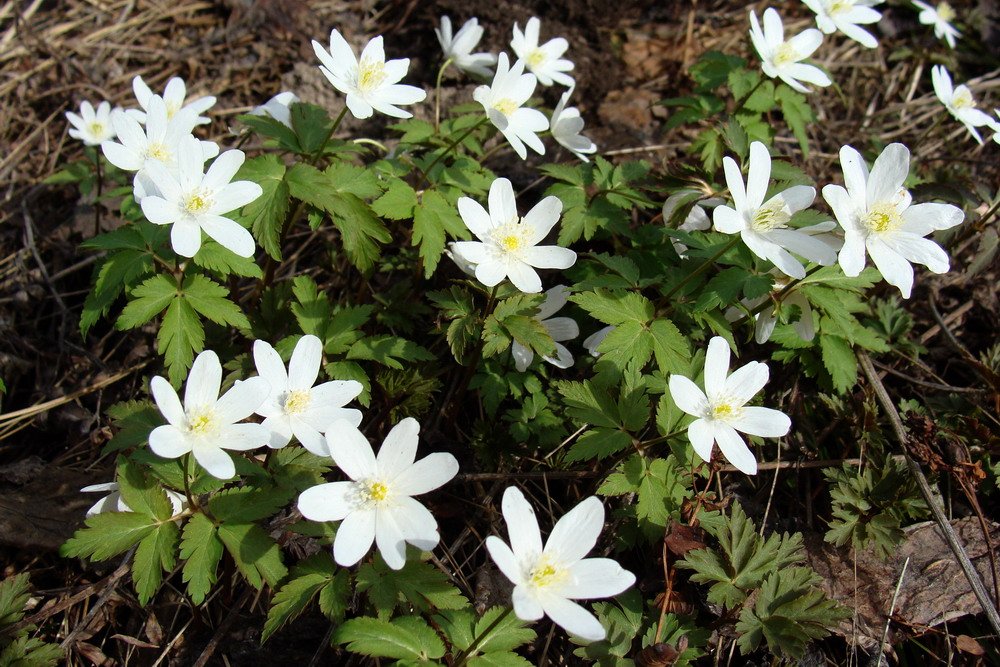
Native to the Altai forests, its favorite habitat is in the shade of trees and meadows. It is a protected plant. It grows up to 15 cm. Single flowers, 4–5 cm in diameter, are formed by 8–12 white petals, sometimes tinged blue or pinkish on the outer surface. The leaves are oval with serrated edges.
A honey-bearing variety. Blooms in April–May. The sap is toxic and can cause a burn if it comes into contact with skin. It is used in folk medicine as an anti-inflammatory, diuretic, and analgesic.
Apennine
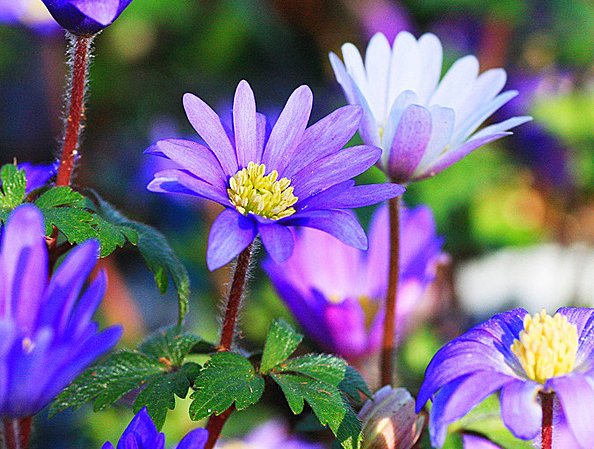
The Balkans and southern Europe are considered its homeland. The bush grows up to 15 cm. The leaves form on long petioles, dissected to the base. The rhizome is robust, not creeping. Flowering time: April–May. The flowers are isolated, blue, and 3 cm in diameter.
Frost-hardy (down to –23°C), it can overwinter in the ground. In harsh climates, shelter is required.
Baikal
In the wild, it grows in Mongolia, Korea, China, and Siberia. It grows to 18–40 cm. There are two types of foliage:
- near the rhizome on long petioles;
- on the stem - on short ones.
The inflorescences are long, each containing up to three white flowers. Diameter: 3 cm. Flowering time: June–July.
Vesennikovaya
A low-growing variety, reaching up to 20 cm. Flowers form in pairs on stems. The buds are brown, and the petals are yellow. The flower diameter ranges from 1 to 3 cm. It requires fertile soil, humus, and bright, indirect light.
Forked
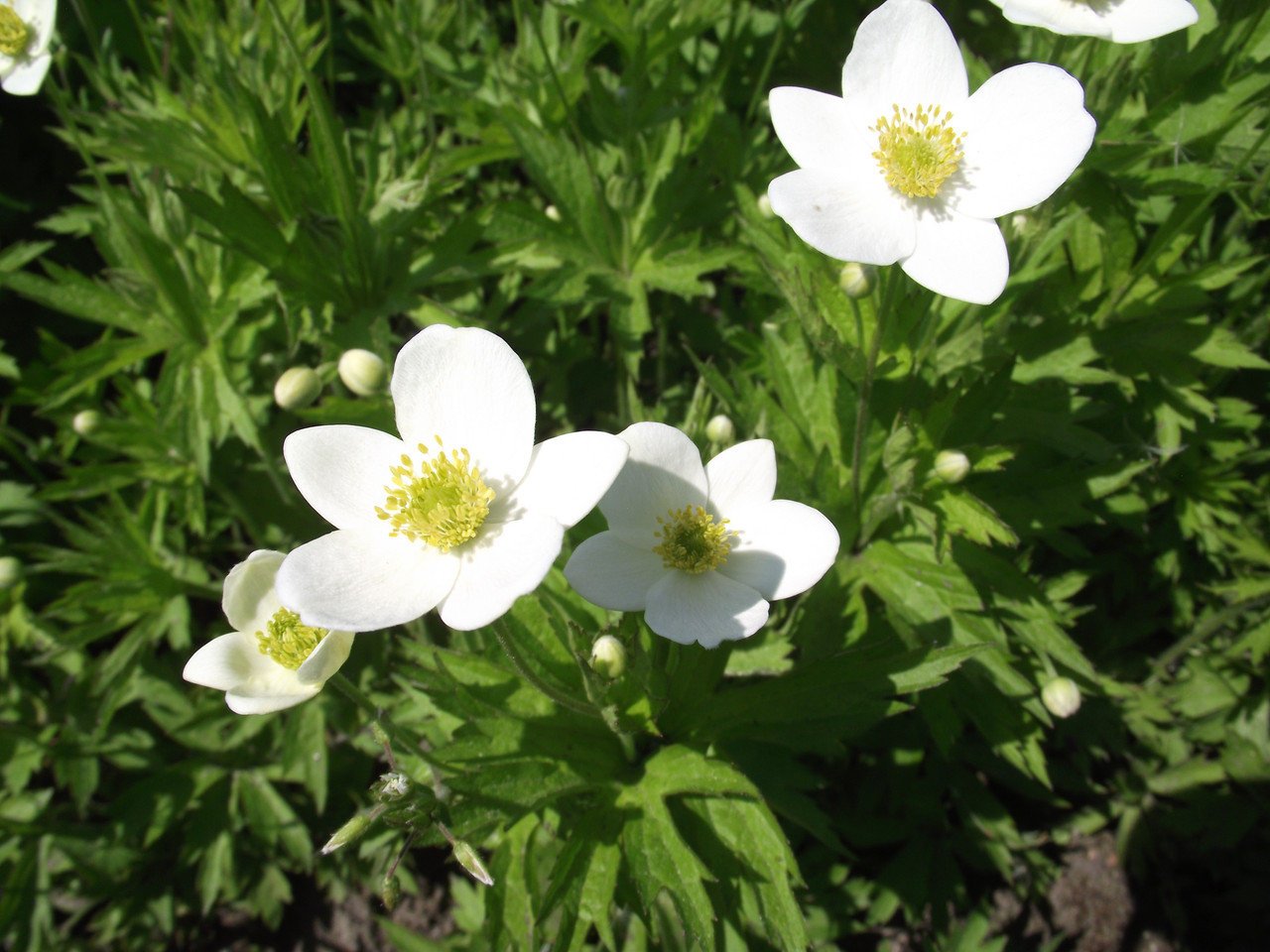
Originating in Russia. Found in marshy areas, floodplain meadows, and groves. Grows 40–80 cm. The sharply dissected foliage is covered with a downy underside. The flowers are small and white, sometimes with a reddish tint on the underside of the petals. They grow in pairs. The peduncles are long, with flowers up to 3 cm in diameter. Blooming time is July.
-
- Forked
-
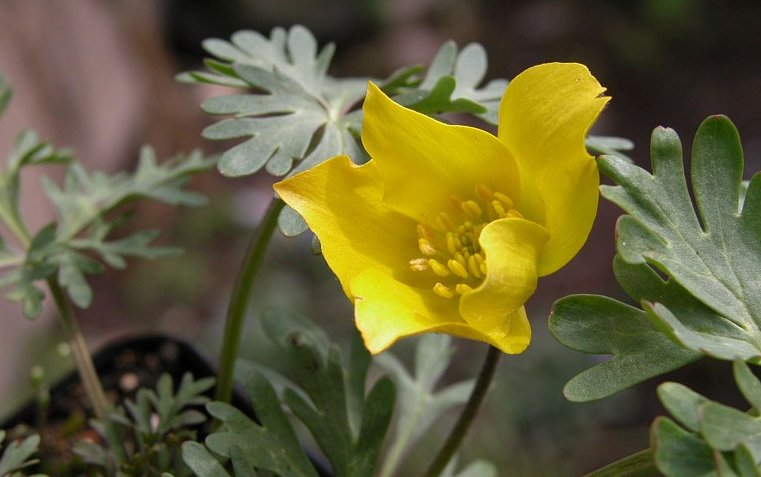
- Vesennikovaya
-
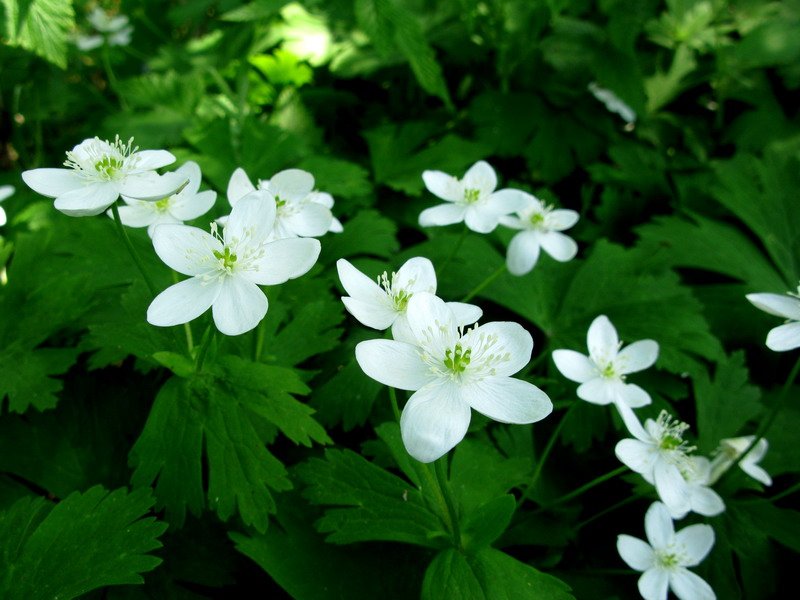
- Baikal
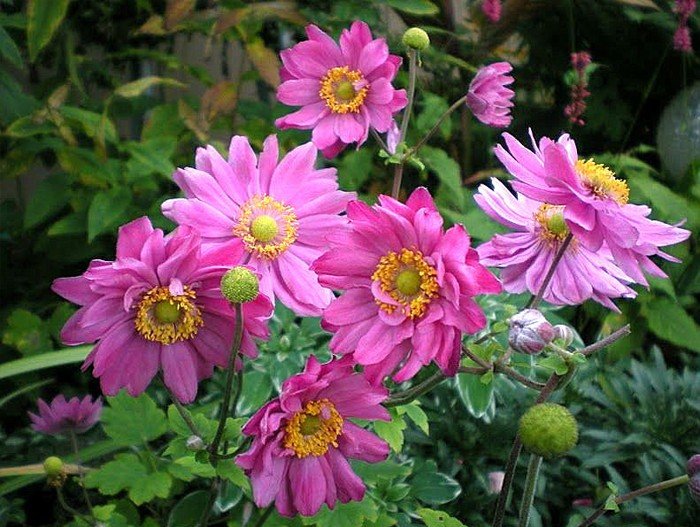
Hybrid
The most attractive variety of the autumn class, as intended by breeders. Subspecies come in vibrant colors with massive, single or semi-double inflorescences.
The stem extends 60–120 cm. Foliage forms in spring and remains until frost. Flowering lasts from late summer to late September. The flowers are 6 cm in diameter. The yellow center is surrounded by petals in various shades of pink. The root system is extensive and creeping. It prefers shade and requires shelter when the first frosts arrive.
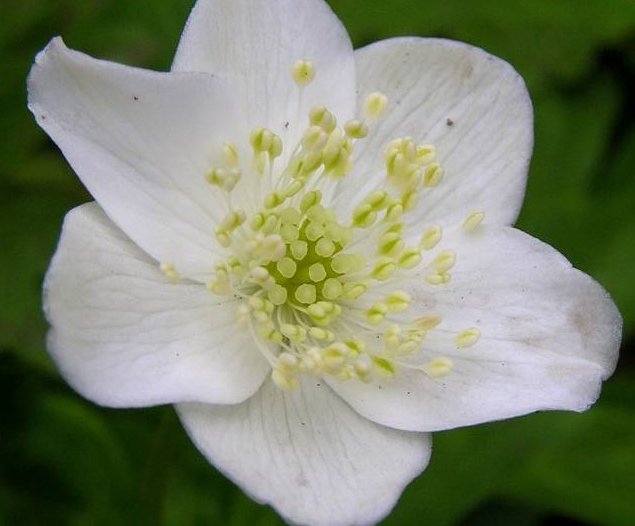
Smooth
A rare variety, found only in the Far East. It's low-growing, reaching a height of 6 to 20 cm. The bush produces only a pair of flower stalks. The stamens are massive, surrounded by small white petals 2 cm in diameter. Flowering occurs in late April. It reproduces only by roots.
Blue
In the wild, it grows in the Sayan Mountains and Western Siberia. It grows to a height of 20 cm. It blooms in mid-May and lasts for 2-3 weeks. The flowers are white or blue, 1.5 cm in diameter. The root system is creeping.
New seedlings immediately cover a large area, but are spaced sparsely. They prefer shaded areas.
De Caen
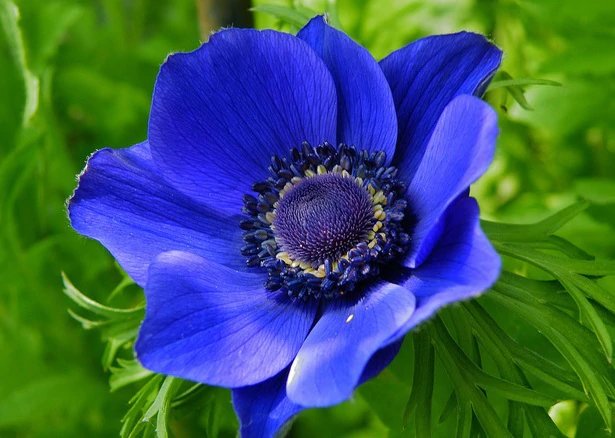
Tall – up to 70 cm. Simple, solitary inflorescences of varying colors. Blooms for a month or more. Emits a pleasant fragrance. Unpretentious, resistant to adverse climates. Rarely prone to disease and resistant to insect attacks.
Long-haired
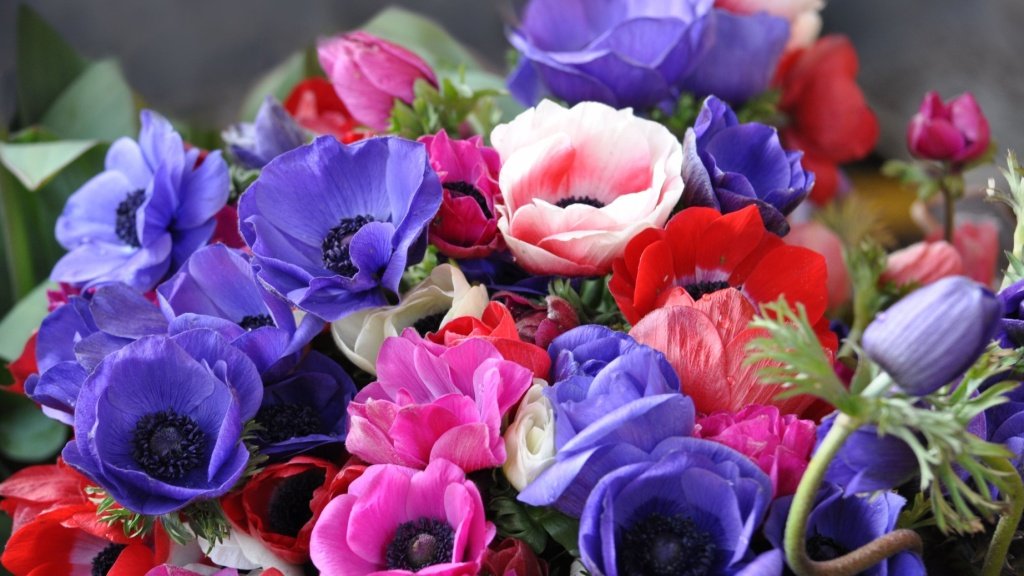
Native to Siberia. Medium-sized, with stems ranging from 12 to 45 cm. The foliage grows on long petioles and is densely covered with hairs. The lower the leaflets, the longer the hairs (hence the name).
The bush produces up to 5 inflorescences. The flowers are medium-sized, 4 cm in diameter. The flowering season is May–June, lasting a month. The petals are white and elliptical. Drought-resistant. It thrives in sun or partial shade.
Dubravnaya
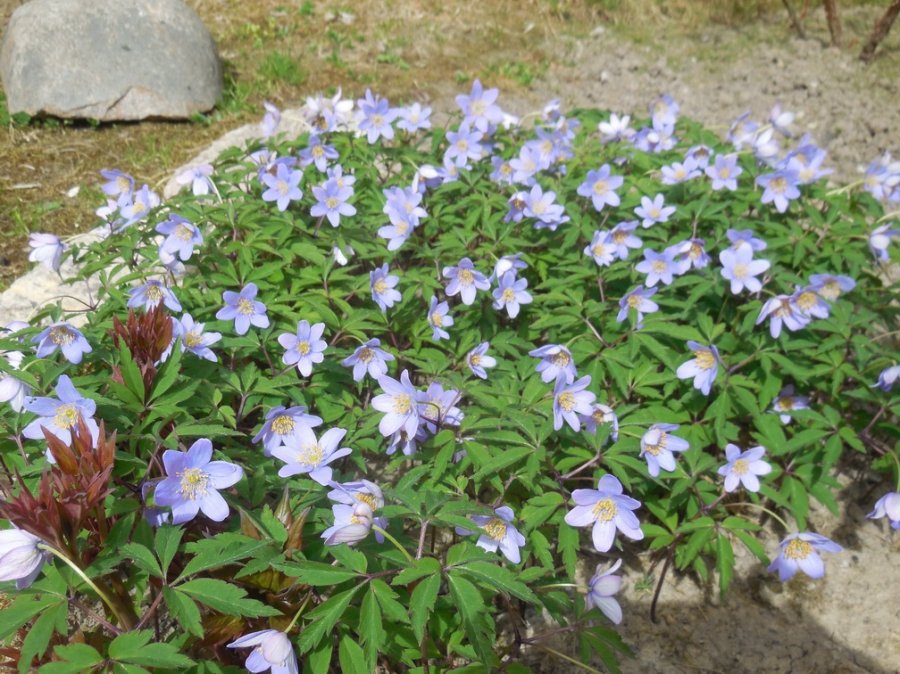
It is found throughout Russia's deciduous forests. Several cultivated species with varying colorings have been developed for gardens. It grows to 20–30 cm tall. The flowers are white, sometimes greenish, pink, or lilac, and can be single or semi-double, with a diameter of about 4 cm. It blooms in spring, after the last snow melts. The flowering season lasts a month: by June, the foliage turns yellow and dies back in midsummer.
Propagated by seeds (less common) or by division (more common). Unpretentious, it thrives in temperate climates. In the garden, it grows in shaded areas, and in the wild, in the shade of trees. It loves moisture. Its highly branched root system requires regular pruning to prevent it from spreading too far.
Canadian anemone
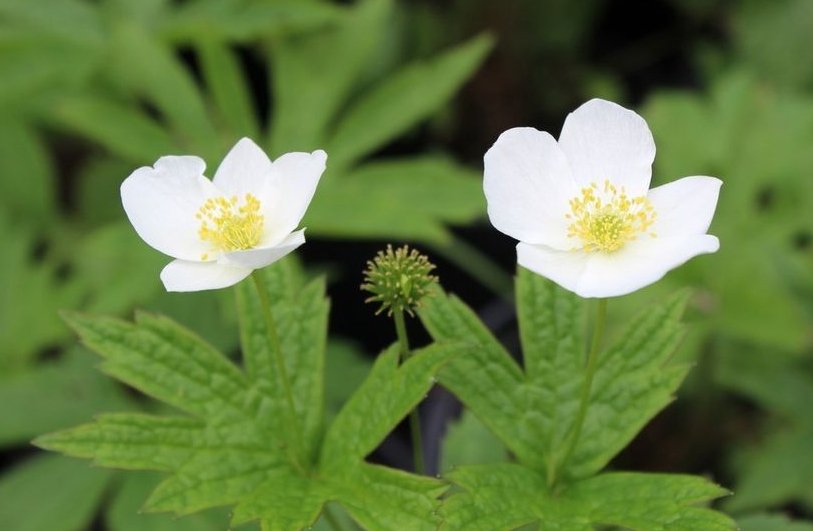
Imported from North America, its powerful, branched roots promote independent shoot formation. It grows throughout the season.
Flowering season: May – midsummer. In warm weather, it may bloom a second time in the fall. The foliage is long, and the star-shaped white flowers rise to a height of 60 cm. The flowers are composed of five white petals, with a yellow center and a diameter of 2.5–3 cm. Frost-hardy. With winter shelter, it can withstand temperatures down to –34°C.
-
- Canadian
-
- Dubravnaya
-
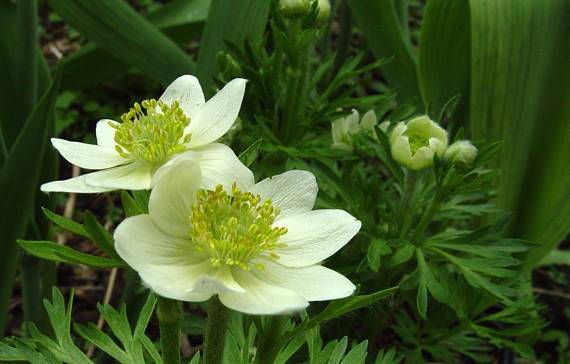
- Long-haired
Crowned
This variety is as beautiful as it is capricious. It's considered an ornamental cultivar and requires careful care and experience. It's usually grown for sale or to decorate flowerbeds. Garden varieties grow to 45 cm, but in temperate climates they don't exceed 20 cm. They resemble poppies in appearance, and can be single or double, with a variety of colors. The tones are bright or pastel, and bicolor varieties are also available. The diameter reaches up to 8 cm.
It prefers soil with a touch of lime. Being native to the Mediterranean, it loves warmth. It is often planted as a pasture plant. It requires shelter and digging up the tubers to survive the winter.
Anemone coronaria and similar species, dug up in the fall and planted in the ground in the spring, bloom much later in summer cottages than in the wild.
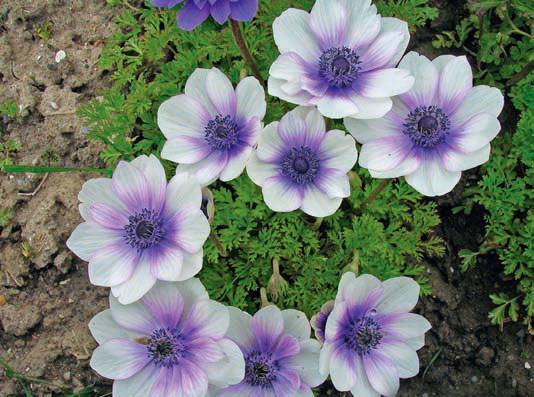
Leinzig
Another name is Anemone Zeemanii. It was created by crossing the buttercup and oakwood varieties. Flowering begins in early spring. The flowers are isolated, yellow, and 2 cm in diameter. By midsummer, a pronounced dormancy period begins.
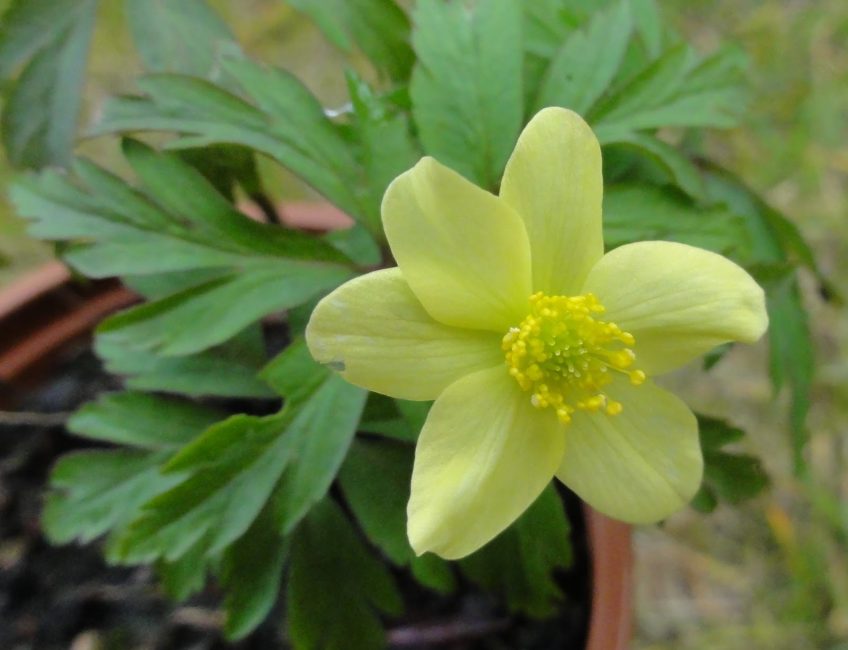
Forest
Cultivated in the 14th century, it thrives in temperate climates and is winter-hardy. The primrose grows 25–50 cm tall. The flowers are large, 3–5 cm in diameter, and white. Garden varieties with large, double flowers (up to 8 cm) have been developed.
It thrives in partial shade and prefers light soil. It grows quickly, creating dense cushions of green foliage. It becomes a beautiful addition to any garden in late May or early June, blooming for 2–3 weeks.
Buttercup
Native to Russia. Low-growing, reaching 25 cm above ground level. The flowering season lasts two weeks, beginning in May. The flowers resemble buttercups, yellow, and 1.5–3 cm in diameter. Ornamental varieties with double purple leaves have been developed. Undemanding, it thrives in any soil. The creeping root system grows vigorously.
It is used in folk medicine to combat gout, whooping cough, and menstrual irregularities.
Rock art
Brought from the Himalayas. Low-growing, bushes up to 30 cm tall. Compact roots, spread slowly. Undemanding, it thrives in poor soils. It tolerates winds and drafts. The petals are white on the inside and light purple on the outside. Two to three flowers form on an inflorescence. Flowering lasts about a month.
-
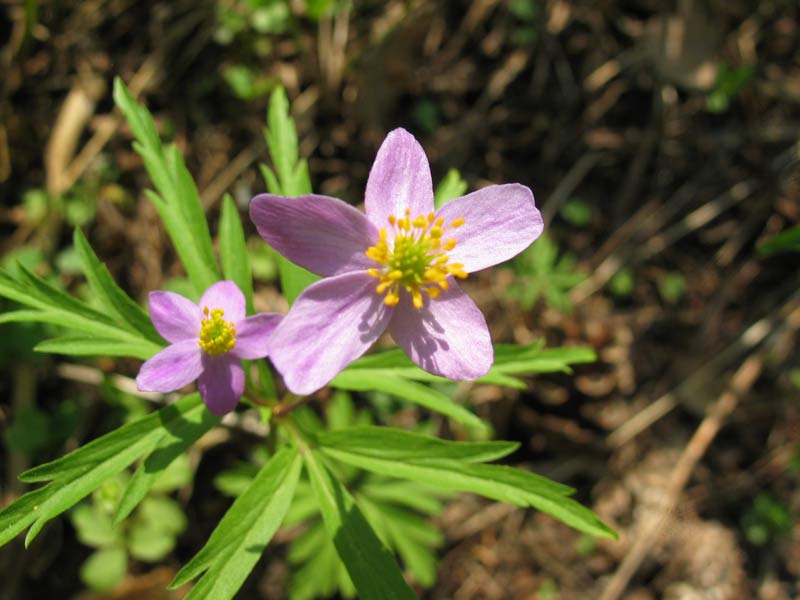
- Rock art
-
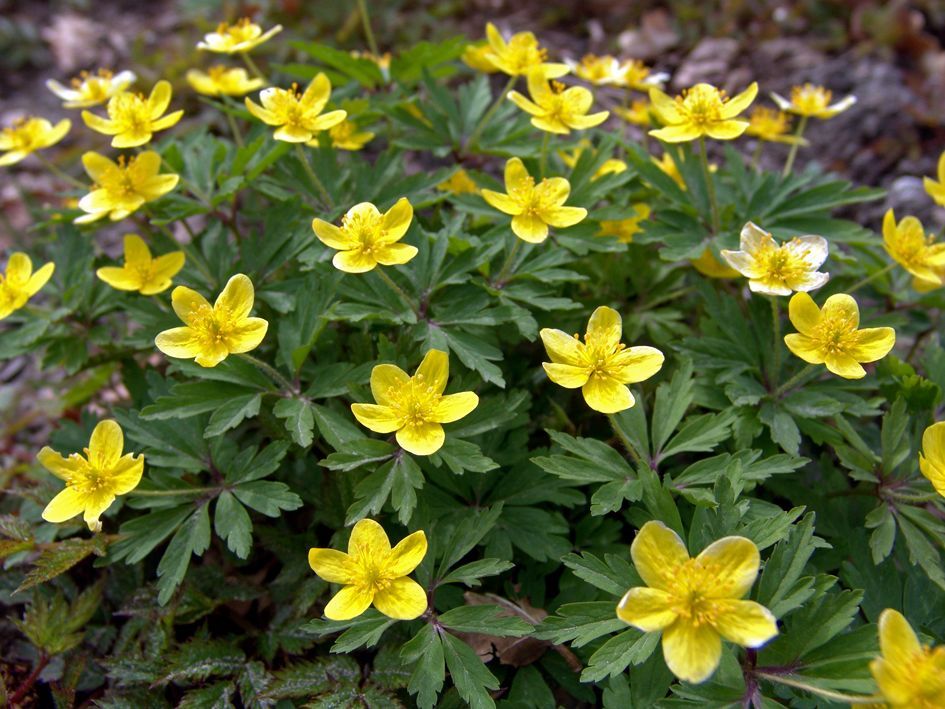
- Buttercup
-
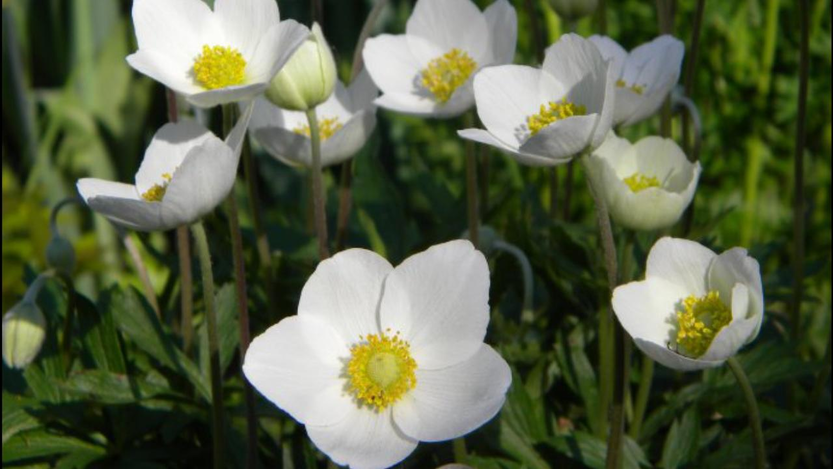
- Forest
Tender
Frost-resistant. Prefers bright, well-lit areas, but tolerates partial shade. Drought-resistant. Low-growing, no taller than 5–15 cm. Daisy-shaped flowers appear in spring, blooming for 2–3 weeks.
Many garden subspecies with petals of different colors have been developed. The most popular are:
- Charmer, petals dark pink;
- Pink star, lavender with pink tint;
- Blue shades, soft blue;
- Radar, purple;
- Purple star, two-tone - white center in amethyst surroundings.
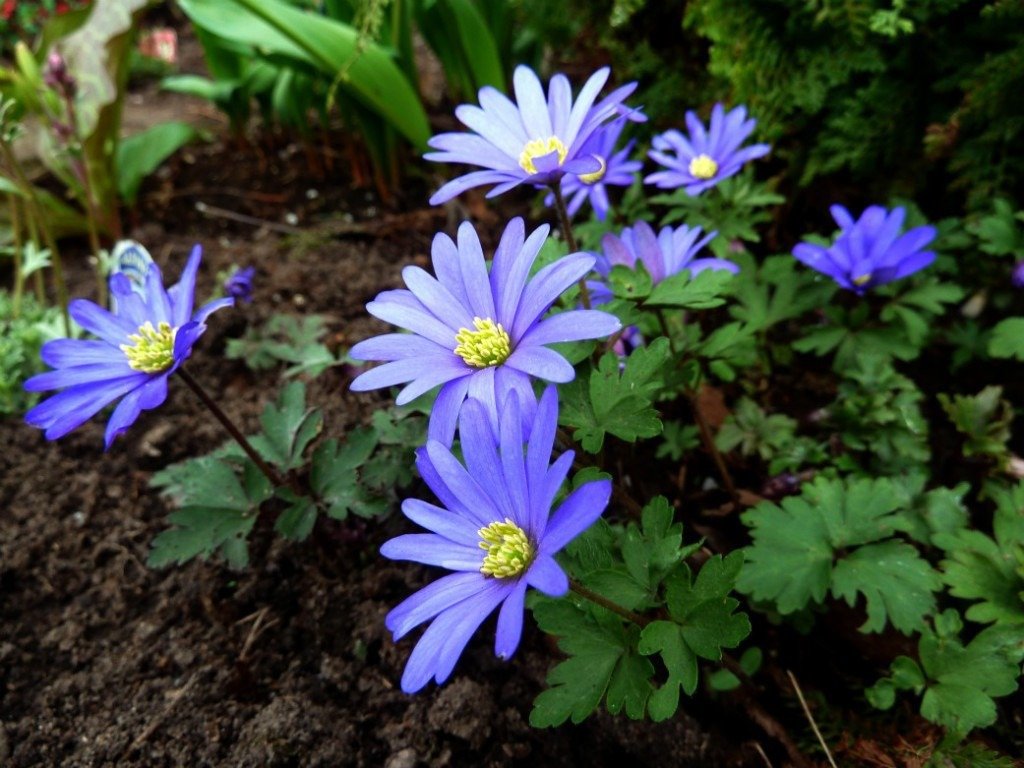
Noble copse
Native to the Northern Hemisphere, the bush grows up to 12 cm. The foliage and inflorescences emerge from the tuber. The leaves are covered with fine hairs and are two-toned: green on the outside and purple on the inside.
The flowers are 2 cm in diameter. Flowering begins in mid-April and lasts for a month. Petal colors include blue, lilac, pink, and white. In the wild, it blooms up to seven times a year; cultivated varieties bloom only three times.
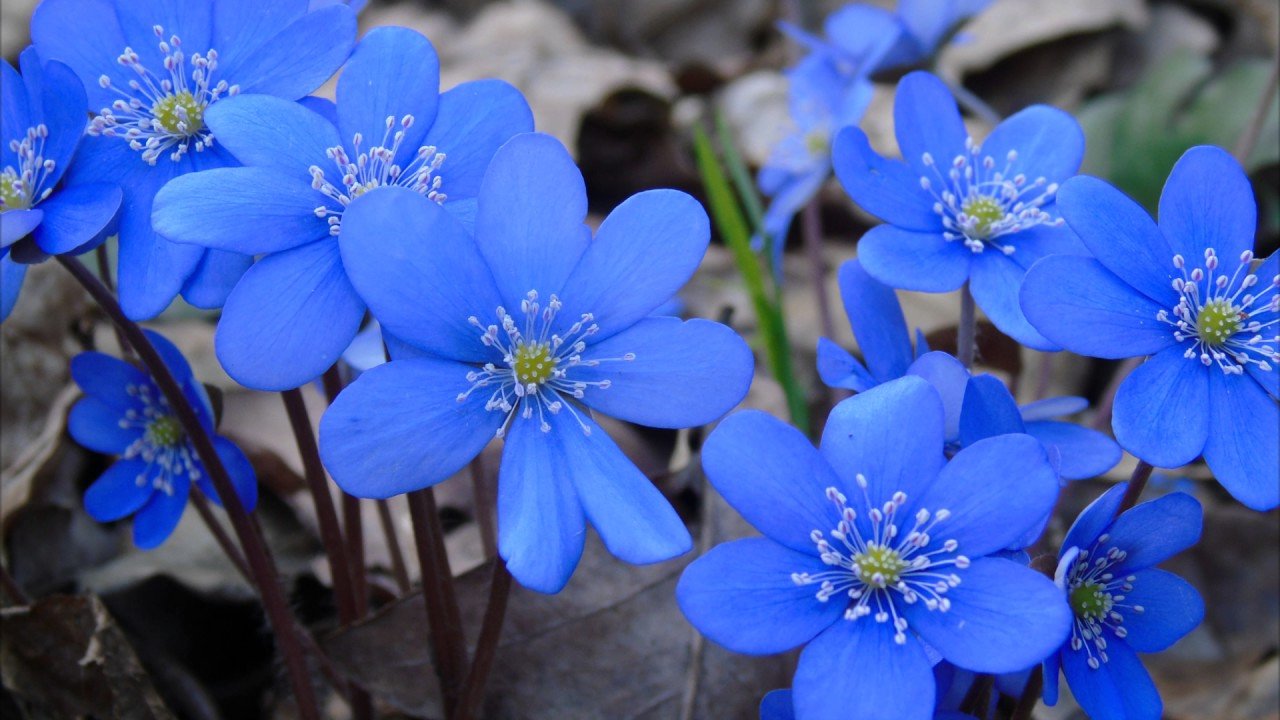
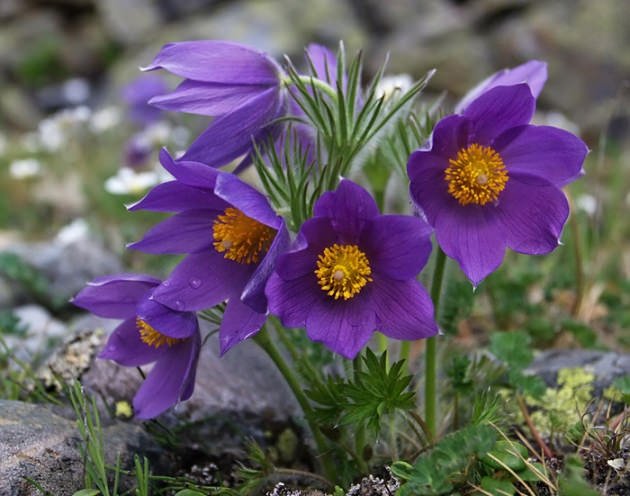
Common Pasque Flower
Popularly known as "sleep-grass," it's distinguished by the silvery fluff on the outer surface of its petals. The bushes grow up to 15 cm tall.
Flowering occurs in the second year after planting. Flowers appear in early spring, with blue or purple hues. In the wild, it prefers sunny areas, but in the garden, it prefers partial shade. It propagates by seed. Its root system is fragile. It is advisable to cover the roots for the winter.
Beam
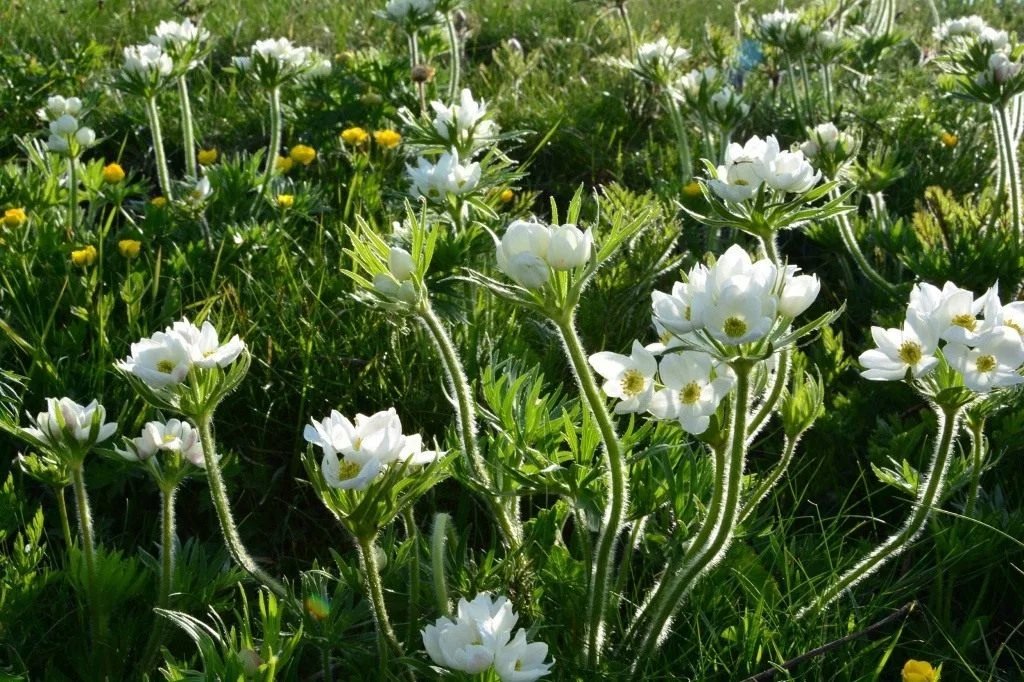
In its natural habitat, it grows in the Caucasus, Europe, and North America. It grows to a height of 30–60 cm.
Flowering begins in late May and lasts 30 days. Up to eight umbel-shaped inflorescences form on the bush. The flowers are small, 2.5 cm in diameter, white or pink depending on the variety. Propagation is vegetative or by seed (in the latter case, it will take 4-5 years for flowering to occur). It prefers sunny areas and is cold-resistant. It requires shelter in regions with harsh climates.
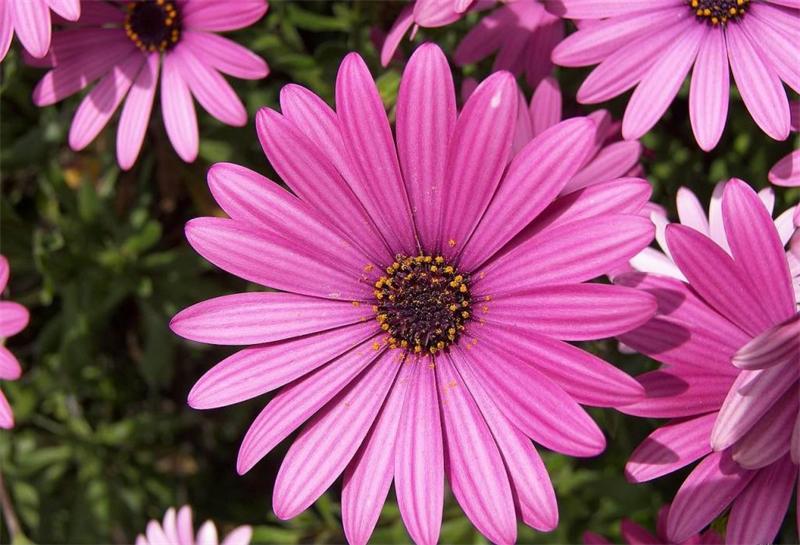
Garden
Low-growing, 15 to 30 cm tall. Flowering begins after the snow melts. The flowers are 5 cm in diameter. It is covered with lacy foliage of varying shades depending on the variety. It has a pronounced dormant period; the leaves die back in midsummer and reappear only in spring. It does not tolerate frost well. It is advisable to dig up the tubers for the winter or construct a secure, warm shelter.
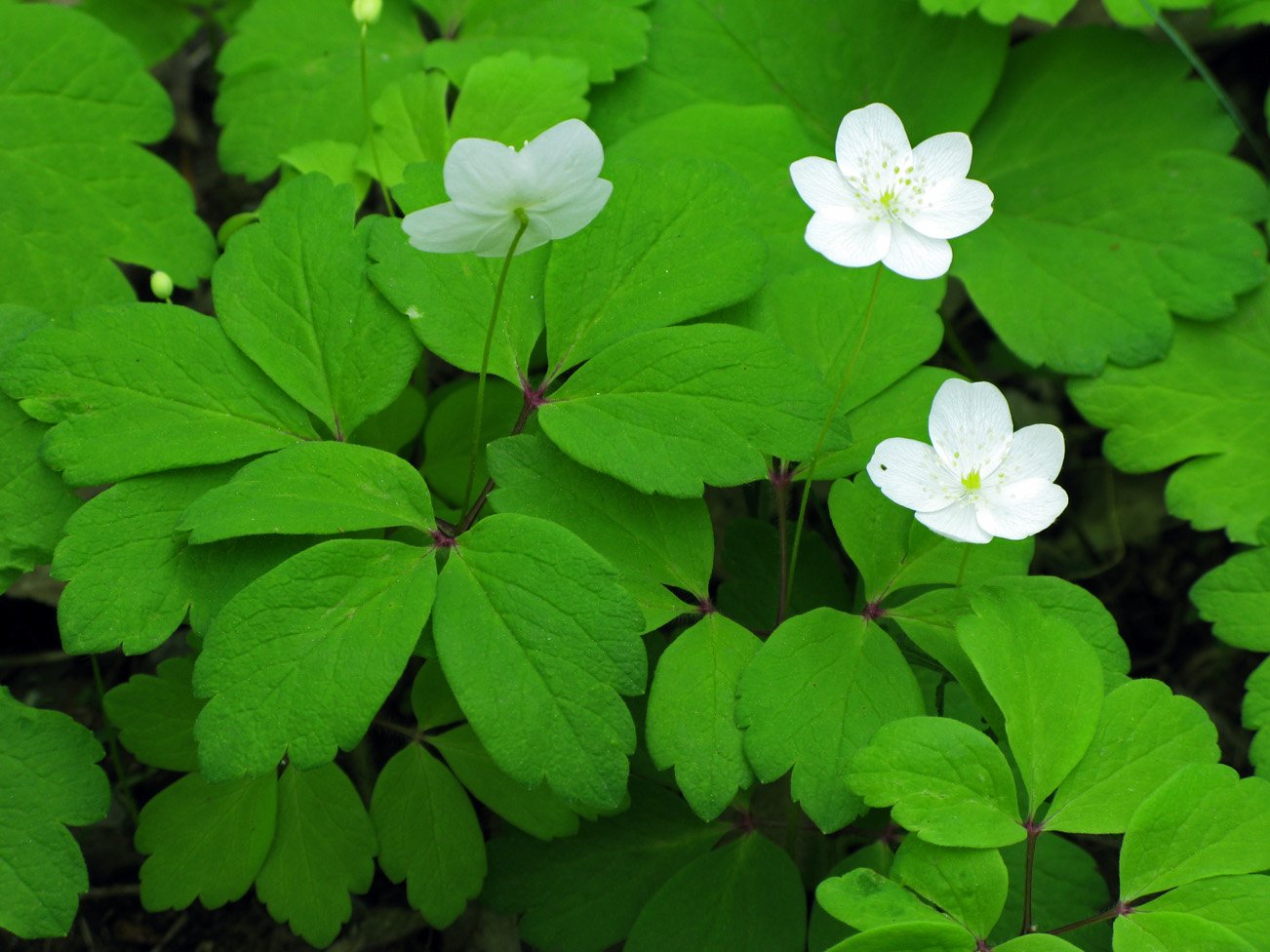
Udinskaya
Low-growing, 10–20 cm tall. The inflorescences are thin, capable of supporting only a single flower, 3 cm in diameter. The petals are white. Flowering begins in the second half of May and lasts 20 days. It reproduces easily through the root system.
-
- Udinskaya
-
- Garden
-
- Beam
Hubei
In the wild, it grows up to one and a half meters tall, while garden hybrids are no taller than 50 cm to 1 m. The foliage is dark green, and the flowers are small, 5–7 cm in diameter. They have a neat, colorful appearance. They delight the eye from early August to late September.
Popular varieties:
- Kriemhilde – semi-double flowers, pink-purple, loves shade;
- Splendens – red variety;
- September Charm – tall, up to 1.2 m, imported from the UK. Flowers are soft pink.
Japanese
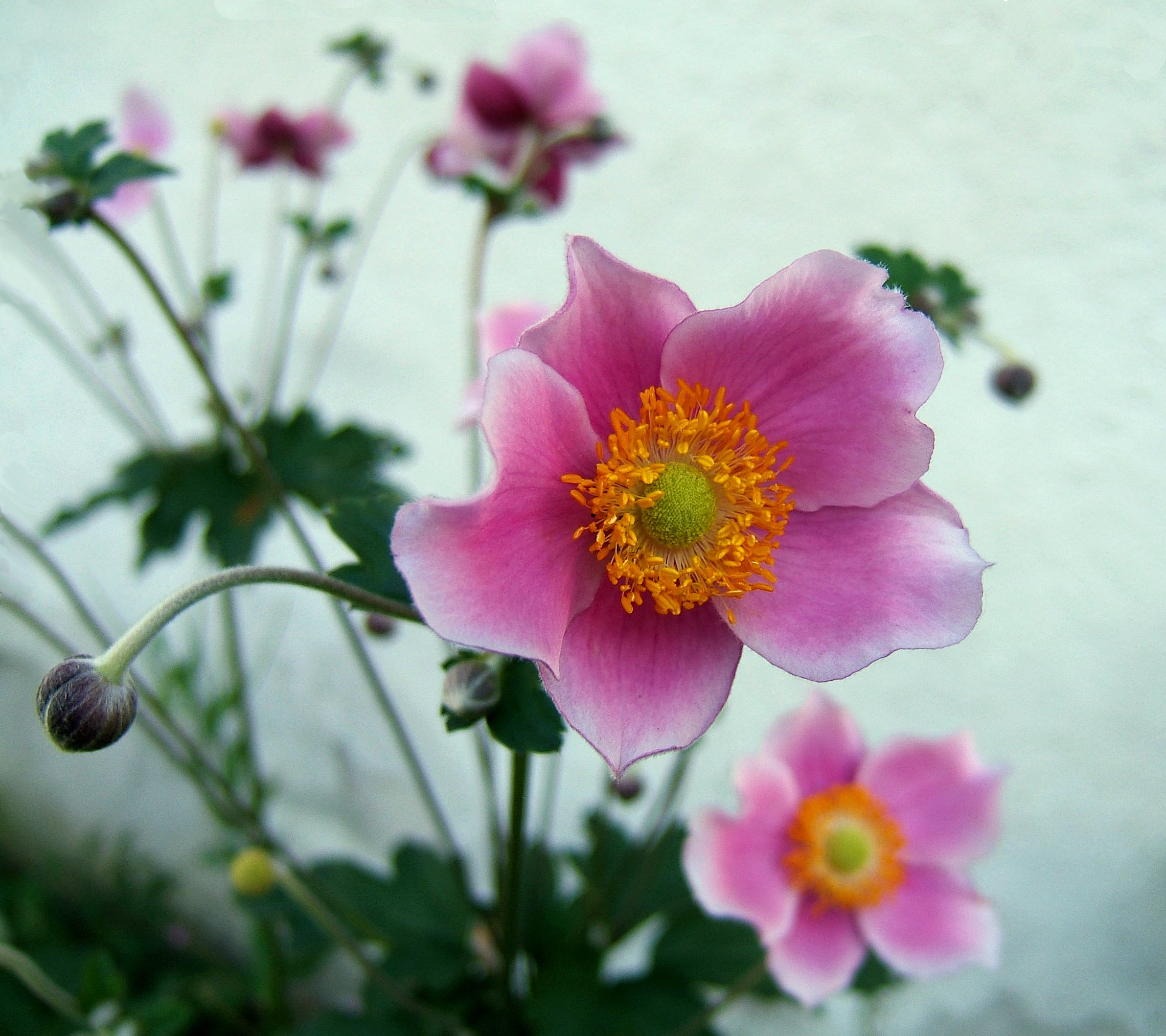
A tall variety, it grows up to 80 cm in the wild, while bred varieties range from 70 to 130 cm. Dwarf varieties, around 45 cm, also exist. Flowering begins in the fall and lasts until the first frost. The leaves are gray-green, pinnately dissected, and crowned with clusters of single or semi-double flowers in pastel shades. The coloring varies: white, red, burgundy, and others.
In its natural habitat, this variety is considered perennial, but in central Russia it cannot withstand low temperatures. It loves the sun. Growing is easy, but requires attention. It requires shelter in winter.
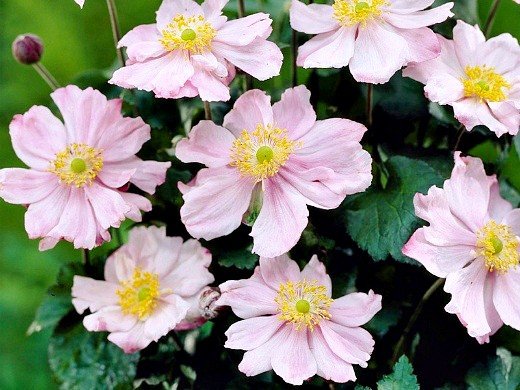
Anemones are flowers that fit beautifully into any garden setting. Unpretentious varieties are best for beginners, while more experienced gardeners will appreciate the more demanding but beautiful varieties. Choose the ones that suit your taste.