
Fertilizing tomatoes when planting in a hole: proven methods
Content
Fertilizers in autumn
The root-to-above-ground ratio of tomatoes is approximately 1 to 15. To obtain nutrients, the plant expends enormous effort extracting them from the soil. To produce 5 kg of fruit (the average yield of one plant), the plant extracts 1.5 g of nitrogen, 0.5 g of phosphorus, and 2 g of potassium from the soil. Therefore, soil rich in microelements, minerals, and nutrients is essential for normal growth and abundant fruiting.
It is most convenient to apply organic, potassium and phosphorus fertilizers in the fall, at the same time as digging. Of the organic fertilizers, cow manure is the most readily available. It enriches the soil with almost all essential nutrients, improves its structure, making it looser, enriches it with beneficial microorganisms, and neutralizes acidity. Apply 5-8 kg (one 10-liter bucket) per square meter.
Horse manure is even richer in nitrogen, phosphorus, and potassium; it's applied at a rate of 3-4 kg per square meter. Half-rotted manure will decompose over the winter, mix with the soil, and become food for beneficial microorganisms.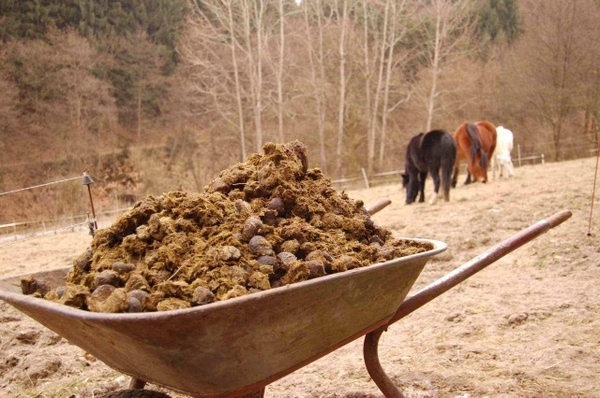
Autumn is the optimal time to apply mineral fertilizers. Potassium and phosphorus fertilizers are added to the soil dug to the depth of a bayonet. Phosphorus, the main component of many common phosphorus fertilizers, is present in them in a form difficult for plants to digest. Over the winter, it permeates the soil and takes the form needed for absorption by plant roots. Phosphorus is a very important element for tomatoes, increasing the rate of growth and ripening.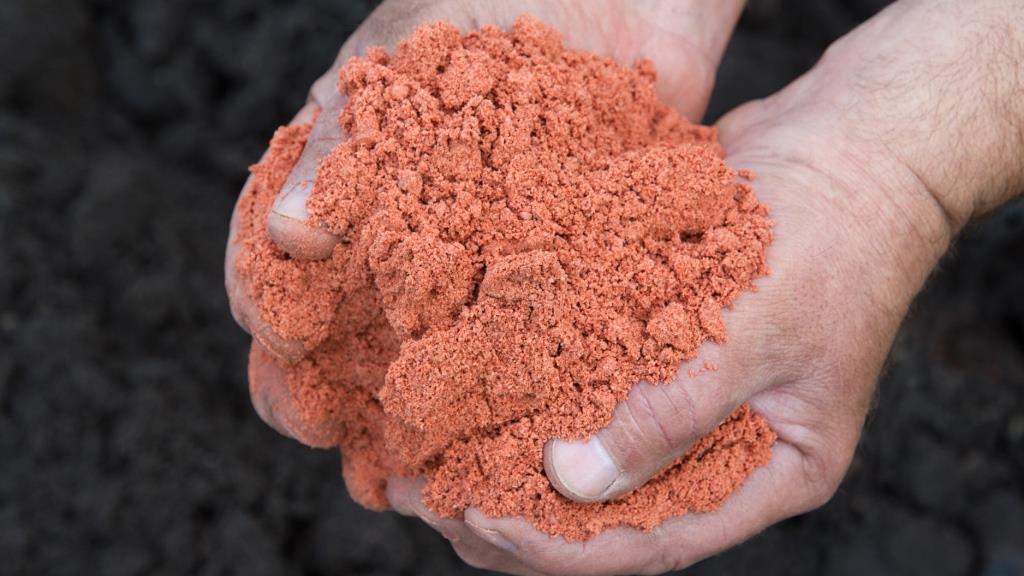
Potassium fertilizers contain chlorine, which is harmful to plants. It is much more mobile than potassium and phosphorus, so it will be washed away by groundwater into deeper horizons by spring. A potassium deficiency negatively impacts photosynthesis and reduces resistance to fungal diseases. Potassium is especially essential during fruit ripening. A hard, unripe, stalk-like apex indicates a potassium deficiency.
Nitrogen-based mineral fertilizers are easily washed out of the soil by heavy autumn and spring rainfall. Therefore, it's best to apply them during spring cultivation, working them into the soil to a depth of 10 cm, or directly into the holes when planting tomatoes.
Video "How to Fertilize"
From the video you will learn how to fertilize tomatoes.
Fertilizers when planting
If the soil for tomato planting wasn't fertilized during the fall digging, soil enrichment can be postponed until spring. Complex fertilizers are very easy to use, and dosages for different crops are detailed in the instructions included. Along with the basic essential elements, they enrich the soil with magnesium, sulfur, iron, manganese, and zinc, which, of course, will have a beneficial effect on the future harvest. Granules of these fertilizers can be scattered directly onto the snow in early spring or raked into the soil. You can also apply a precisely measured amount directly into the planting hole, mixing it thoroughly with the soil. Tomatoes can be fertilized with the following complex fertilizers:
- Kemira Universal 2 contains a full range of essential minerals and is recommended for spring application to the soil;
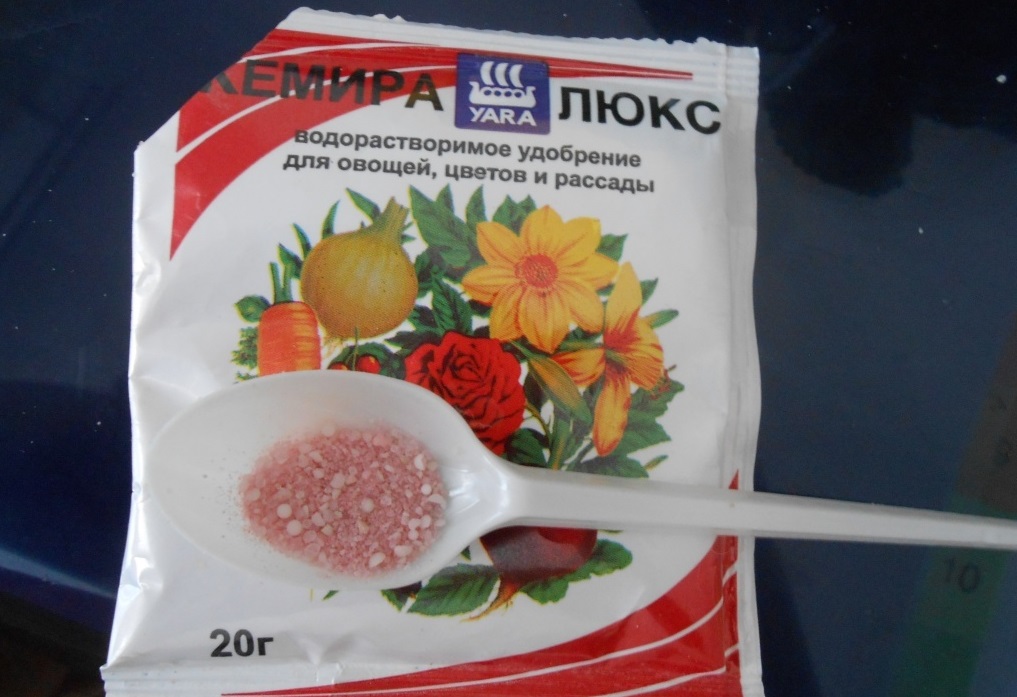
- Kemira Lux is completely water-soluble, making it valuable for fertilizing;
- Universal, in addition to macro- and microelements, contains a large amount of humic substances. It is fully absorbed by plants without polluting the environment.
You can make your own tomato fertilizer, which you apply to the planting hole when planting, using equal parts humus, compost, and peat. Add a tablespoon of superphosphate to a bucket of this mixture. When planting, add 2 liters of this nutrient mixture under each root.
In spring, fresh manure should not be used as fertilizer. Due to its high nitrogen content, the plant will happily grow green mass and leave you without fruit.
Fertilizer during cultivation
Despite the large amount of nutrients tomatoes require, excess nutrients in the soil will negatively impact future yields. Therefore, it's important to fertilize tomatoes sparingly, applying only those nutrients the plant needs at a given stage of development.
The first feeding is carried out 2 weeks after planting in open ground, if preliminary fertilization was not carried out.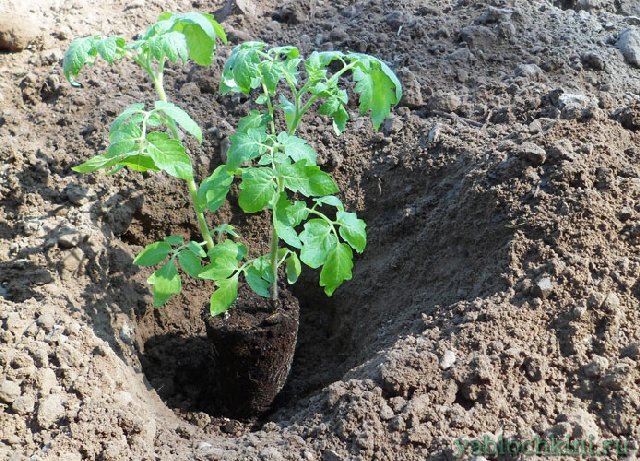
During this time, the seedlings have time to adapt and begin to grow intensively.
For better absorption, prepare a 10-liter aqueous solution of nitrogen (25 g), potassium (15 g), and phosphorus (40 g) fertilizers. Apply 600-700 ml of this solution under each root after preliminary watering.
The second feeding is carried out when the tomatoes enter the intensive flowering phase.
For this feeding, you can use a complex fertilizer or prepare a “cocktail” of weeds, bird droppings, and ash in advance.
When tomatoes begin to bear fruit, they especially need potassium. At this time, they can be fed with the following mixture: pour 5 liters of boiling water over 2 liter jars of sifted wood ash, stir well, and let cool and steep.
Add a bottle of iodine and 10 g of boric acid to the cooled mixture. Add water to bring the nutrient mixture to 10 liters. After 24 hours, you can prepare a working solution by diluting 1 liter of concentrate in 10 liters of water, adding one liter per plant. Boron is essential for proper fruit set and development. A deficiency can cause bud drop. Iodine will increase resistance to fungal diseases.
Folk remedies
We've already discussed some folk fertilizer recipes in previous sections. Although they're made from inexpensive, readily available materials, they have a gentler effect and don't harm the soil.
Simple baker's yeast can help plants better absorb mineral nutrients. When added to the soil, it restructures its composition and activates the breakdown of organic matter by beneficial microorganisms, enriching the soil with potassium and nitrogen. To prepare the concentrate, you'll need 200 g of yeast and 1 liter of warm water.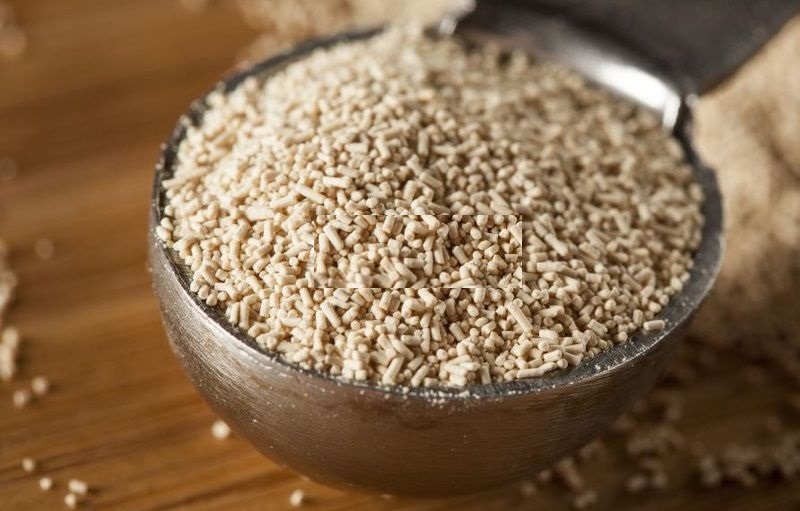
For irrigation, dilute it with water at a ratio of 1:10 and apply 1 liter per mature plant. If mineral or organic fertilizers were applied before planting the tomatoes, this recipe can be used for subsequent feeding.
You can usually tell what fertilizers a plant needs by its appearance. If the plant appears stunted, with small, yellowish leaves, this is a sign that nitrogen fertilizer is needed. A phosphorus deficiency causes the stem and underside of the leaves to turn purple. Young leaves curling inward and drying out at the edges indicate a potassium deficiency. Blossom-end rot on fruit is caused by a calcium deficiency. A boron deficiency causes flowers to fall off without producing fruit.
Video "What to Fertilize With"
From this video you will learn what you can and should fertilize tomatoes with.