
How to properly plant tomato seedlings and transplant them into the ground
Content
Sowing seedlings
Tomatoes are best grown from seedlings because they are warm-loving southern plants, and this method of growing them allows for a harvest during the short summer. Therefore, in our country, tomatoes are planted in the ground as seedlings, not seeds. The way tomato seedlings are planted determines their future development and the harvest itself. An experienced gardener, who knows how to plant tomato seedlings correctly, first determines the sowing date, then skillfully selects and prepares the planting material, as well as the appropriate containers. After sowing, tomato seedlings should be grown indoors until they are strong and healthy, so that when the time comes, they can be transplanted into the ground or a greenhouse.
When to plant
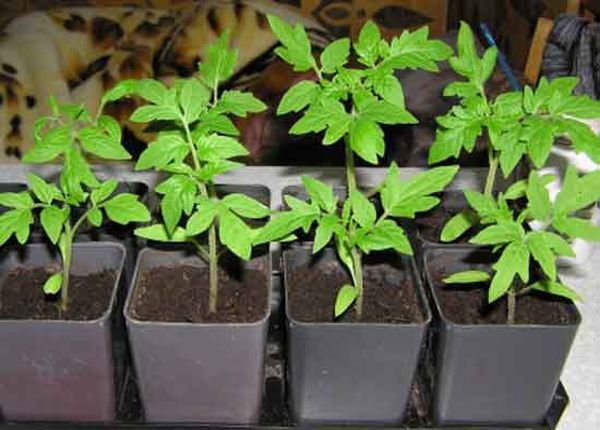
Planting tomato seedlings in open ground occurs after 45–60 days of growth, when they have grown by 20–30 cm, have 5–7 leaves and a flower stalk.Knowing the local weather conditions, you can estimate when the soil will warm to 12–15°C in the spring and the threat of frost will pass. Subtract approximately 65 days from this time—this is the date when tomato seedlings can be grown.
In southern Russia and Ukraine, sowing begins in winter. In Central Russia, gardeners sow tomatoes for seedlings after March 15, while in Siberia and the Urals, they do so in the first half of April. If you plan to plant tomato seedlings in a greenhouse, then indoor tomato seedlings begin growing 20 days earlier. It's best to sow during the waxing moon, choosing the appropriate day according to the lunar calendar.
Selection and preparation of seeds
Preparing tomato seeds for sowing seedlings begins a few days before the designated date by warming the seeds and determining their germination rate. Regardless of where the seeds were previously stored, they should be moved to a warm room. Many gardeners prefer to keep the gauze bag containing the seeds near a radiator for a couple of days.
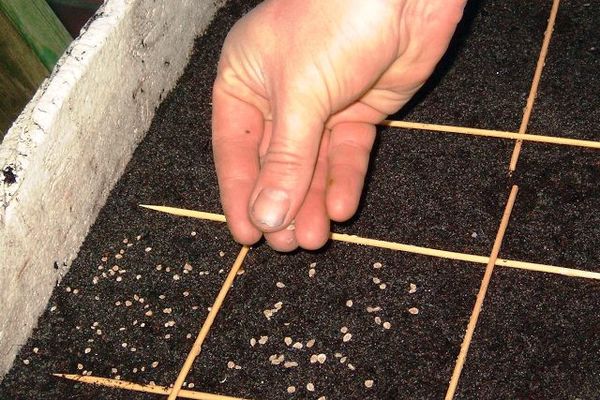
To determine how many seeds you'll need, it's helpful to know their germination rate. To do this, take a certain number of seeds (the more, the more accurate the prediction), soak them in warm water, place them on cotton pads or a soft cloth soaked in water, and hold them near a radiator until sprouts appear. Then, calculate the percentage of germinated seeds and determine the required amount of seed, purchasing additional seeds if necessary.
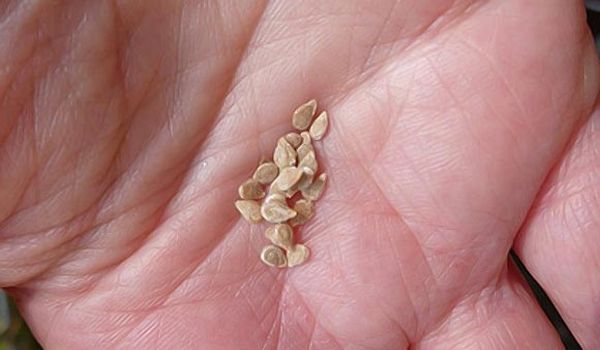
Next, the seeds are sorted by soaking them for a while: any seeds that don't settle to the bottom can be discarded. This selection is usually done simultaneously with preparation, since it still involves soaking the seeds. Some gardeners simply soak the seeds in warm, soft water for 24 hours before sowing. This is sufficient for seeds purchased from a reputable producer who has already disinfected them. If the seeds were taken from your own stock or purchased at the market (without certification), you should first soak them for 20-25 minutes in a saturated solution of potassium permanganate, then dry them slightly. You can soak the seeds for 24 hours in an aloe vera juice solution (equal parts water and juice), which will strengthen the future plants and positively impact the quality of the harvest. You can soak them for 24 hours in a baking soda solution (2 grams of baking soda per 1 cup of water), which promotes early fruiting.
Necessary conditions for growing
Not sure how to grow tomato seedlings? First, you need to prepare comfortable conditions: a balanced temperature and moisture level, the right amount of light, fresh, draft-free air, and suitable containers. How many days does it take for tomatoes to sprout? The best temperature for sprouting is between 26 and 30°C; seedlings will appear in 3–5 days. At 22–25°C, tomatoes will sprout in 7–9 days; at lower temperatures, it will take longer.
Light won't be needed until the sprouts emerge, so the containers can be stacked and kept on the floor near the radiator. But first, you need to prepare the soil for planting the seeds. Tomato seedlings thrive in loose, nutritious soil that retains adequate moisture. Equal parts humus and turf are a good option, but add sand or sawdust for looseness. You can use black soil, sand and garden soil, sand and high-moor peat, coconut coir, or peat tablets. The main requirement for the soil is a pH of 5.5–6.0.
It's best to sift the soil through a fine sieve to ensure the grain size matches the seed; otherwise, air pockets will form between the small roots and the soil. The soil also needs to be disinfected before use. To do this, soak it in a hot, saturated solution of potassium permanganate, then bake it for 30 minutes in an oven preheated to 200°C (400°F), or microwave it for a couple of minutes at maximum power. Afterward, moisten the soil and leave it at room temperature for two weeks.
Sowing
Tomato seeds are planted in various containers. These can be trays, peat tablets or cups, individual pots, or boxes. Peat tablets and cups are advantageous because they eliminate the need for transplanting; trays on a tray are convenient for bottom watering; however, most gardeners use wooden or plastic boxes to save space. Simply take 10 cm high boxes, fill them 2/3 full with prepared soil, and moisten with warm, clean, soft water. Make furrows in the soil 1–1.5 cm deep, spaced 3–4 cm apart.
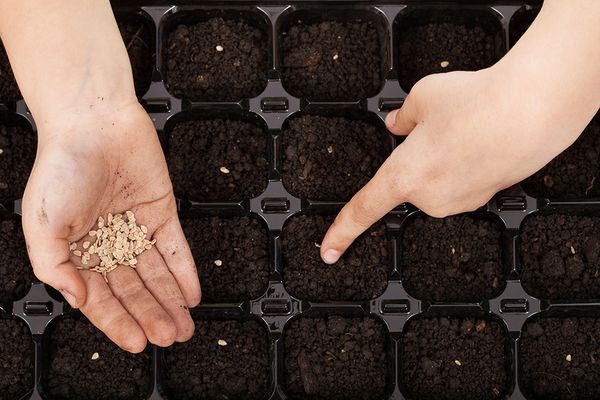
Prepared seeds are placed in the containers and sprinkled with sand, soil, or vermiculite. The seedlings are covered with glass or transparent film and placed near a heat source. The number of days it takes for the sprouts to emerge depends on the quality of the seed, temperature, and humidity, but immediately afterward, the glass is removed and the container is exposed to light.
Caring for seedlings
How do you grow tomato seedlings before planting them outdoors? They need watering, adequate light, occasional loosening of the row spacing, and air temperature regulation. Once the seeds germinate, the air temperature is reduced to 16°C for a week to prevent them from stretching excessively. They need 24-hour light for the first 3-4 days. After that, they'll need 12 hours of daylight, so supplemental lighting with a phytolamp placed above the box will be necessary. A week after the first sprouts appear, the temperature is adjusted to around 22°C during the day and 16–18°C at night. It's generally accepted that seedlings don't need to be watered until the first true leaf appears, but it's best to check the soil and water as needed.
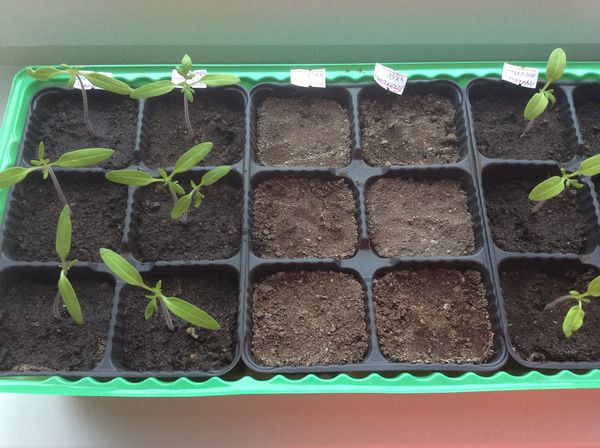
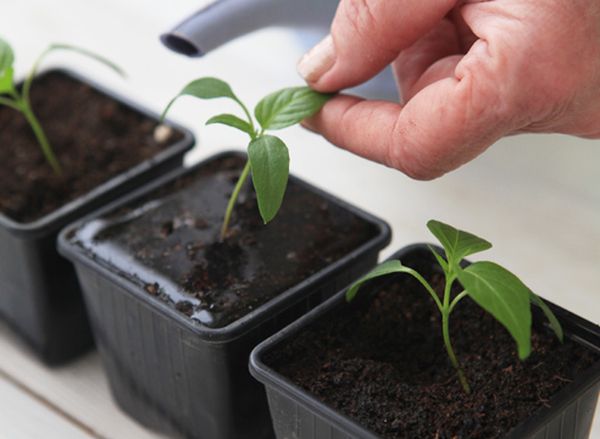
You can moisten the soil from above using a syringe (without the needle) or a narrow watering can to avoid wetting the stems. The older the plants, the more moisture they will need. Water them weekly when 2-3 leaves appear, and every 3-4 days when 5 leaves appear. The water should be clean, soft, and warm (a couple of degrees warmer than the air).
After the first true leaf appears, thin the seedlings to leave at least 5 cm between plants. If there aren't enough seedlings, carefully transplant them into empty spaces. If the seedlings appear weak or lack nutrition, you can feed them simultaneously with watering with a solution of Agricola Vegeta or another specialized preparation, but it's best to dilute it to a lower concentration than indicated on the package. After transplanting, you can water the plants with a solution of charcoal, calcium nitrate, and urea, applying it directly to the soil to avoid burning the leaves.
Picking
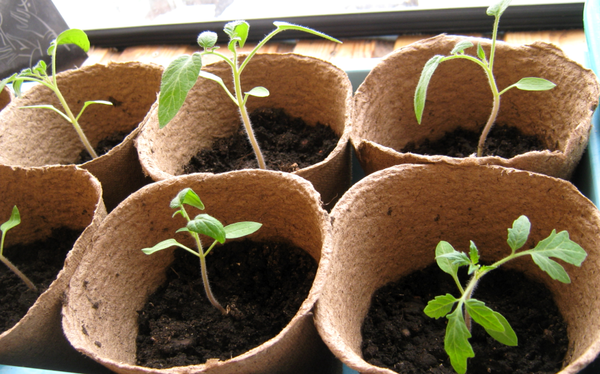
When the plants develop their third true leaf, they are transplanted into individual pots of at least 0.5 liters. The pots are filled with the same soil as for sowing, moistened, a depression is made in the center, and the plant is placed in. Some vegetable growers also shorten the central root, but others consider this unnecessary, as the root will be damaged during transplantation anyway.
So, how to plant correctly is up to each person to decide. For large numbers of seedlings, they are pricked out, two plants at a time, placed together, and tied tightly with synthetic thread. Once they have established themselves in their new location, reaching 15 cm in height and fused into stems, one tip is pinched off. This creates a strong plant with a double root system. However, planting tomato seedlings in individual cups significantly weakens them, so the air temperature is raised for a few days to facilitate rooting.
Timing of planting in the ground
When to plant tomato seedlings outdoors varies by region. The timing for planting seedlings varies from April in the south to early June in the north. For gardeners in central Russia, May is the best time to plant seedlings. It's best to coordinate the dates for planting tomatoes in May with the lunar calendar, but you can plant tomatoes outdoors in May if the soil has warmed up and the risk of frost has passed. Tomato seedlings can be planted outdoors once they are 30 cm tall, have 6-7 leaves, and have a flower stalk. Two weeks before the expected planting date, harden them off by placing them outdoors. Short periods of exposure begin: initially, they are placed in the shade, then the time is increased, acclimating them to direct sunlight.
How to plant correctly
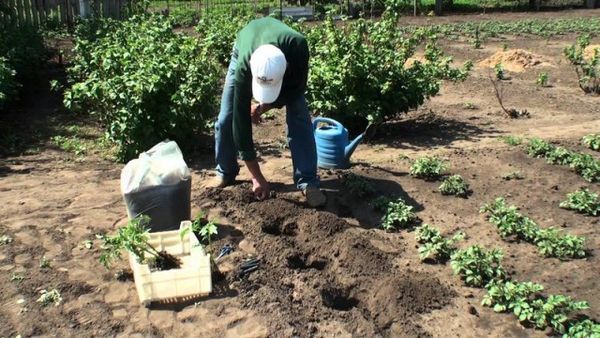
Before planting tomatoes in the garden bed, it's loosened and watered, although the main preparation took place in the fall. When planting tomatoes in the ground, the holes are often fertilized by mixing mineral fertilizers into the soil. Tomatoes are planted on a warm, cloudy day. It's even advisable to shade them for the first two days.
Water the seedlings generously to make them easier to remove from the container. Place them in prepared holes with a lump of soil, deepening them to the cotyledons. If the plants have grown too tall on the windowsill, you can plant them even deeper by removing a couple of the lower leaves and placing them at an angle in the soil. This will encourage new roots to grow from the stems.
For low-growing varieties, leave 30 cm between bushes and 70 cm between rows. If the bushes grow tall and wide, leave at least 60 cm between them and at least 130 cm between rows. Plants are pressed down with soil, watered, and mulched with sawdust, sand, and peat.
Further care of the bushes
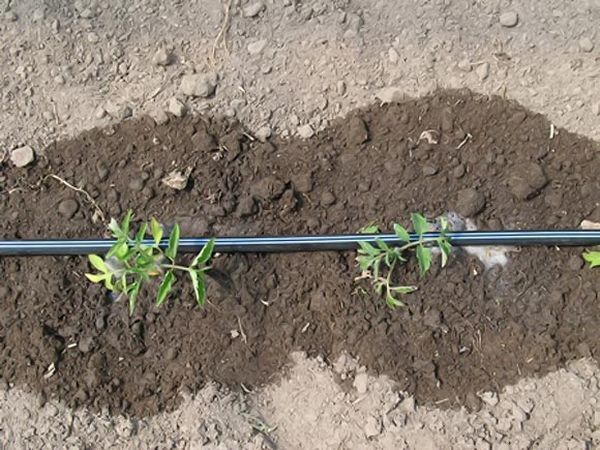
Even if the tomato planting was successful, it will still take a few days for the planted seedlings to adapt to the new location.
Next, be sure to remove weeds and loosen the soil after watering. Fertilize for the first time 10 days after planting, and then every two weeks if soil conditions require it. Tomatoes require uniform watering, but not excessive watering to avoid fungal diseases. Side shoots should be removed promptly and the bushes should be trained.
Video: Planting Tomatoes in Open Ground
This video will show you how to properly plant tomatoes in open ground.