
Timing and best methods for planting tomatoes in open ground
Content
Timing of planting tomatoes
When to plant tomatoes? Planting tomatoes is a serious undertaking, so it's important to know exactly when to plant them. Many people ask whether it's possible to plant tomatoes in the spring. Of course, spring is the best time to plant tomatoes, but it should be done in May.
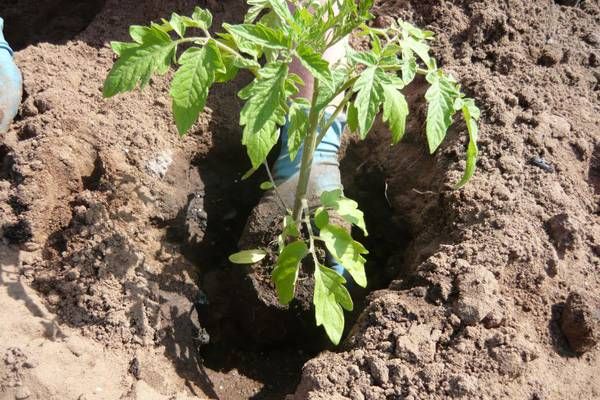
While in warmer regions, tomato plants are planted outdoors in May, in colder regions, various varieties can be planted as late as June (as long as daytime temperatures remain between 22–25°C). Nighttime temperatures should be no lower than 15°C, otherwise your seedlings simply won't establish themselves in their original location.
Selecting a site and preparing the soil
To ensure successful planting of tomatoes outdoors, it's essential to carefully select the location for your seedlings. The first thing to consider is adequate light. Tomatoes are sun- and heat-loving plants, so avoid planting them outdoors in a location where they won't receive sufficient light. The soil should also be kept clear of waterlogged conditions, as this will negatively impact the plants' health.
Once you have decided on a location, you need to prepare the soil before planting tomatoes in the ground.The first rule to follow is not to plant tomatoes in the same place in the ground for several years in a row.It is also not recommended to plant potatoes, peppers, or eggplants in the ground before tomatoes; moreover, they should not even be planted nearby (this is fraught with the development of fungal diseases).
Some crops, on the other hand, can be planted before tomatoes. For example, you can plant mustard, which will help tomatoes adapt faster and produce a richer harvest. You can also plant onions or cabbage before tomatoes.
In the fall, prepare the plot for spring tomato planting in open ground. To do this, dig the soil and add appropriate fertilizers: organic matter (7 kg), superphosphates (40 g), and lime (0.7 kg). With the arrival of spring, dig the plot again and add superphosphates and potassium fertilizers (20 g/m2). Just before planting the seedlings, don't forget to apply nitrogen-containing fertilizers. Also, about a week before planting, it is strongly recommended to treat the soil with a copper sulfate solution to minimize the risk of fungal diseases in your seedlings.
Preparing seedlings
By the time they're planted in the ground, the seedlings should be large enough to form small bushes. Sometimes, when planting time approaches, the seedlings stretch too far and become overgrown. In this case, trim off a few leaves from the bottom. The adventitious roots that form at the base of the stems will help provide additional nutrition.
Before planting, it's recommended to treat seedlings with copper oxychloride to protect them from various fungi. You can also water them with a warm solution of potassium permanganate to improve rooting. However, if you don't do this, it won't make things worse.
Planting patterns
Before planting tomatoes, you need to decide on a planting method or pattern. There are four basic patterns, but in any case, it's worth remembering a few general rules:
- Tomatoes should be spaced far enough apart to avoid shading each other.
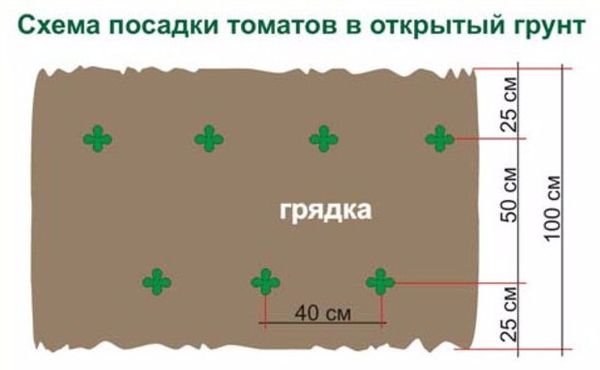
- The optimal distance is 50 cm between rows and 40 cm between holes.
- One tomato requires about 0.3 square meters, so calculate how much you can plant based on this.
Now let's look at how to plant tomatoes correctly, according to each of the schemes.
Square-nested
This system is ideal for tall tomato varieties, where inter-row cultivation is especially important. It's also extremely convenient for maintaining a consistently loose soil and eliminating weeds as they appear.
According to this pattern, tomatoes should be planted in the corners of the square to prevent too many plants in a row. To compensate for this, two or three plants are usually planted next to each other. This pattern helps save time cultivating rows and frees up your energy for something equally important. Furthermore, timely cultivation increases the yield you can harvest from your garden. This is what makes this planting method so popular among Russian farmers.
Ribbon
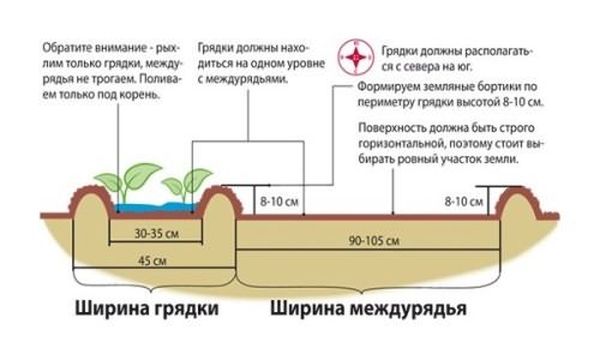
To plant tomatoes this way, you need to dig a shallow trench (about 30 cm) and make holes in it. The distance between holes should be about 40 cm, and the distance between the trenches should be 80 cm.
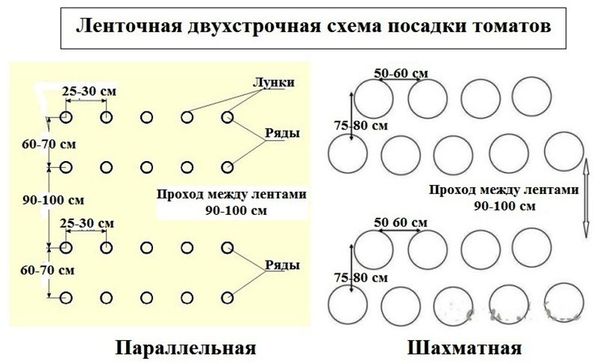
What are the advantages of this planting method? First of all, it saves space on which to grow your tomatoes. Furthermore, these trenches are very convenient for watering—it requires much less effort and energy than traditional irrigation. Therefore, this planting scheme is ideal for small plots.
Ribbon-nested
This layout saves space and allows for more plants than the square-nested layout. Therefore, it's suitable for small plots where plants need to be spaced more closely. It's also worth noting that this method is very suitable for growing low-growing tomato varieties.
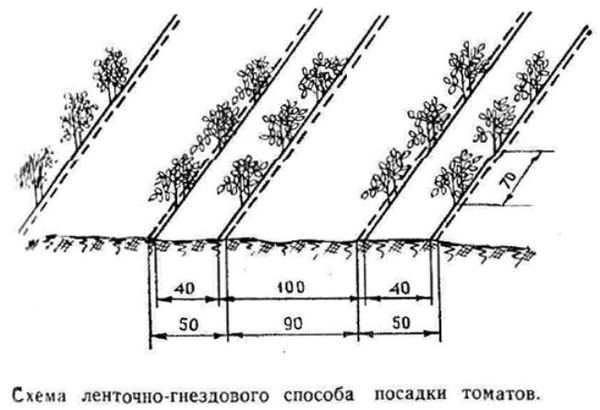
The soil is divided into irrigation furrows every 140 cm, and the plants are planted on both sides of these furrows. This layout, just like the square-nested planting, significantly saves time on cultivating the bushes, loosening the soil, and weed control. And since it also reduces the area occupied by the tomatoes, the method is also quite cost-effective.
Chess
This scheme has much in common with the strip-and-nest system. Trenches are also dug, but this time the bushes must be staggered on both sides of the trench. This allows for even greater space savings. At the same time, the distance between the bushes is optimal, so they don't interfere with each other's growth. As with the previous method, the distance between the trenches should be at least 140 cm.
As you can see, this layout is designed to save space, allowing you to plant as many plants as possible even in a small plot. This makes it ideal for planting low-growing tomato varieties.
Step-by-step instructions
So, how do you plant tomatoes in the ground correctly? The first thing to remember is that the best time to plant tomatoes is in the afternoon, when the heat has subsided. To remove the seedlings from their pots without damaging them, it's recommended to lightly moisten them with water beforehand to make them easier to remove. And remember, as soon as you remove the plant from the pot, you need to plant it back in the hole immediately. The longer it sits out of the pot, the faster it wilts.
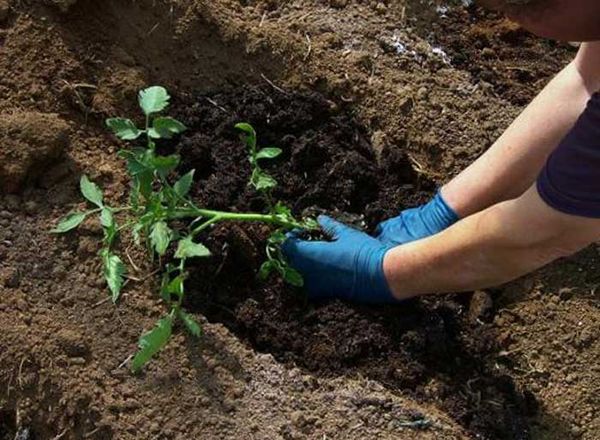
Planting tomatoes in open ground requires properly prepared holes. They should be small—roughly the size of the pot the seedlings were in. Add compost, wood ash, and other fertilizers to the dug hole to help the plants adapt more quickly.
Seedlings must be planted very carefully to avoid damaging the root system. To grow good, healthy tomatoes, avoid planting two to a hole. Some people think this saves space, but this is a misconception and will lead to no good. So, plant two seedlings in two separate holes.
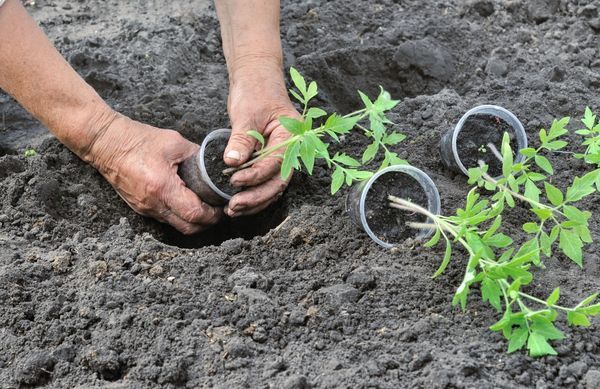
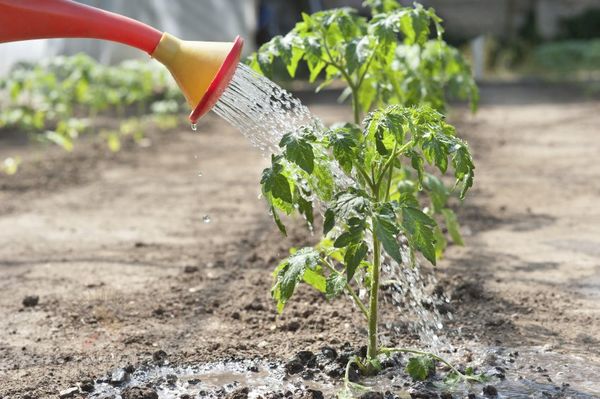
After your seedlings have been placed in the hole, their roots are straightened and directed downward, then carefully covered with soil. Immediately after planting, it's important to water the tomatoes generously to help them recover from the stress of transplanting. After you've finished watering, you can tie the plant to a stake to prevent the stem from breaking in the wind.
Tips and Next Steps
So, we've covered how to plant tomatoes, and finally, a few words about the next steps. All tomatoes will require regular watering, followed by a thorough loosening of the soil to allow the roots access to oxygen. Ten days after planting, you can apply a dose of fertilizer containing nitrogen and phosphorus. Two weeks after planting, it's a good idea to earth up the plants by about 12 cm.
After reading this article, any farmer will be able to say: “I plant and grow tomatoes correctly!”
Video: Planting Tall Tomatoes in Open Ground
This video will show you how to properly plant tall tomatoes in open ground.