
Why tomato leaves are drying out: How to save the harvest
Content
Air humidity and watering principles
Poor humidity control and improper watering have a very negative impact on tomato plants. Greenhouse plants suffer the most from temperature and humidity fluctuations. Excessively dry air and insufficient watering cause leaves to quickly turn yellow and then dry out. In this case, simply water the plants regularly, or if that's not possible, place containers (jars or buckets) filled with water in the greenhouse. The air temperature should be no higher than 25-28°C. Dry leaf tips and curled leaf edges indicate that this temperature has been exceeded.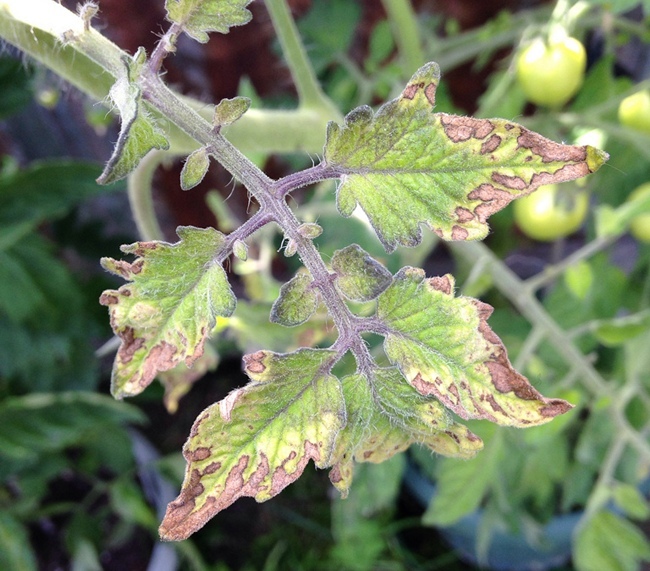
Equally dangerous for plants is high soil and air humidity. Every experienced greenhouse grower knows that such conditions encourage the development of fungal diseases, most of which manifest as yellowing and spotting on the leaves. In addition, with high humidity, tomato stems stretch out significantly, which leads to weakening of the bushes and, accordingly, to the loss of some chlorophyll (yellowing).
If greenhouse tomato leaves are drying out due to humidity, the problem can be solved by regularly ventilating the room and regulating the temperature. Reviving a drying plant in the open ground is much more difficult. To avoid having to rescue the plants, follow these watering guidelines:
- It is better to water mature bushes infrequently, but generously, since their roots go deep into the soil - 1-2 times/week with a water consumption of 0.5-1 bucket/1 bush (depending on size);
- seedlings and young saplings, whose root system is still superficial, on the contrary, need to be watered daily, but little by little until the plants enter the bud formation phase; the soil should always be slightly moist;
- It is recommended to water tomatoes at the roots, avoiding moisture getting on the stems and leaves - drip irrigation is ideal for greenhouse plants.
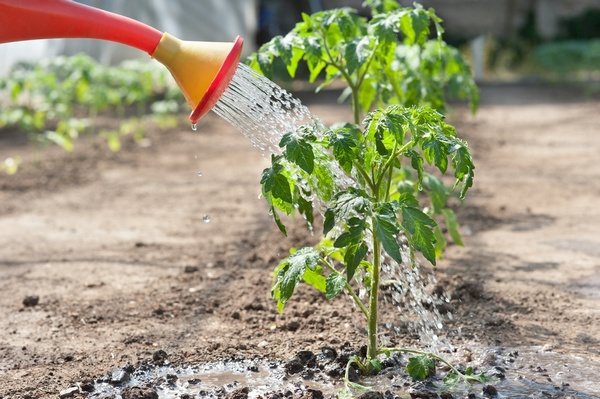
An equally common problem that leads to leaf wilting is inadequate lighting. Seedlings grown in short-daylight periods experience leaf discoloration due to insufficient light, so young plants need to be illuminated with lamps on cloudy days and in the evenings. Mature plants are more susceptible to excess sunlight, which can cause leaf scorching.
Video "Causes of the Problem"
This video will tell you why tomato leaves turn yellow.
Top dressing and fertilizers
Another reason why seedlings and mature plants dry out is a deficiency or excess of nutrients in the soil. Proper fertilizing is essential for plant health. Fertilizer concentrations should not be exceeded, but neither should the dosage be reduced, as both can lead to developmental problems.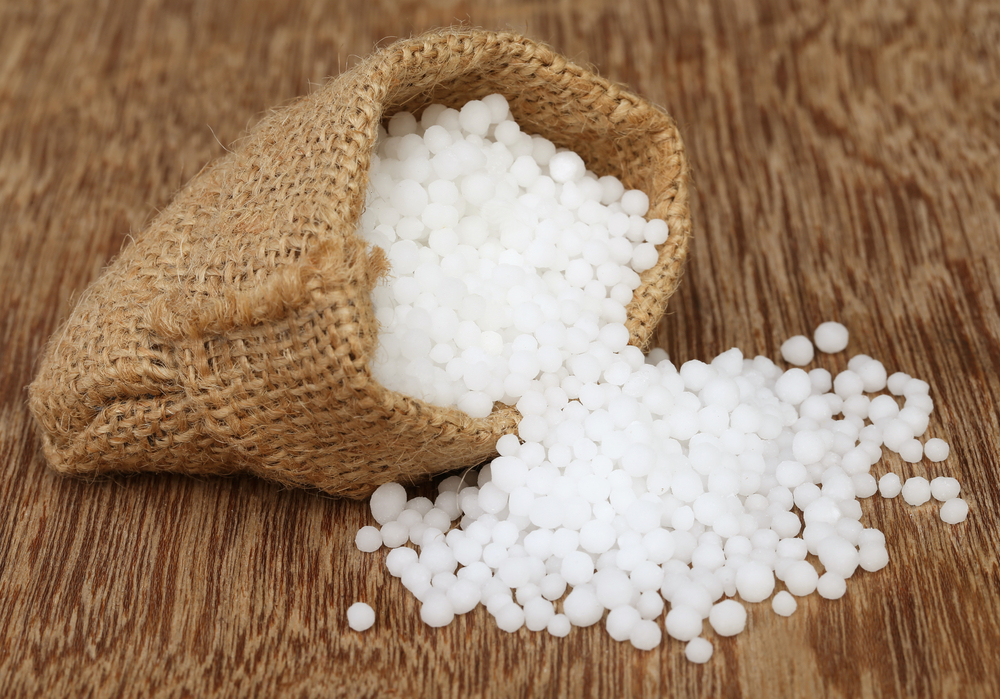
Thus, an excess of nitrogen in the soil leads to increased growth of green mass, but the vegetative process is not endless, and when the plant runs out of strength, tomato leaves begin to lose color, curl, and dry out.
Nitrogen deficiency also immediately affects plant health: leaves become dull, brittle, and easily break off, while the lower leaves dry out and fall off. Excess nitrogen can be neutralized by applying potassium and phosphorus fertilizers (ash, superphosphate). If nitrogen deficiency is present, tomatoes should be fed with urea, ammonium nitrate, or organic solutions.
Dried leaf tips and tops indicate a potassium deficiency. Most often, tomato seedlings experience dry leaves due to a lack of this element in the substrate. This can be corrected by adding ash, preferably in solution, or any potassium fertilizer. Curling and drying tomato leaves can be caused by a deficiency of certain micronutrients (magnesium, boron), which can be replenished with micronutrient fertilizers or complex mixtures.
When applying dry mixtures, it is necessary to ensure good watering of tomatoes, since moisture is needed to absorb mineral fertilizers.
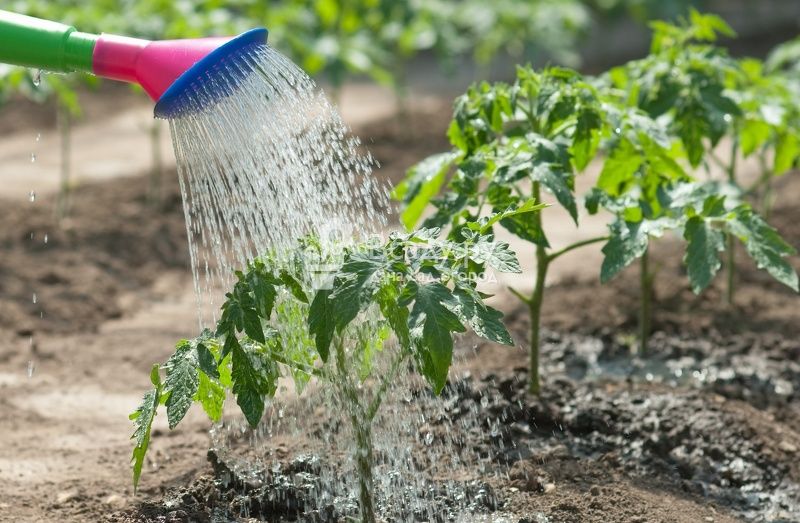 Yellowing and wilting of seedling leaves can be caused by soil salinity, which can be identified by a white coating on the surface and an excessively compact soil consistency. This problem is typical for reused substrates that have already been fertilized. Salinity can also be caused by watering plants with hard water. The situation can be corrected by adding good soil, temporarily stopping fertilization, and watering with high-quality water.
The important role of disinfection
Gardeners are often perplexed as to why, despite proper care (watering, fertilizing, and maintaining proper temperature), tomato leaves wilt and dry out. The answer is simple: the plants are sick. Yellowing, spotting, and drying of leaves early in their development are signs of viral, bacterial, and some fungal diseases:
- Tobacco mosaic can be identified by deformation, curling and dried brown spots on the leaf blades;
- The first signs of late blight infection are brown dry spots on the leaves;
- Fusarium is manifested by yellowing of foliage, drying out and falling of the lower tier of leaves;
- Leaf curl is a viral disease that cannot be cured and is characterized by deformation and then drying out of leaves;
- Bacterial spotting also causes brown spots to form on the leaves and the tips to dry out.
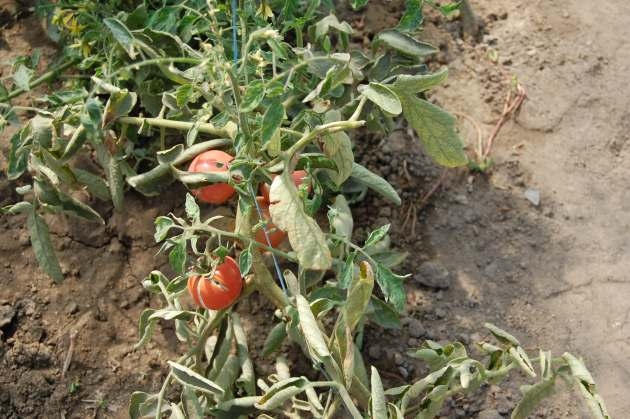
Mechanical damage, such as improper side-sonning, pinching, or pests, can lead to equally dire consequences. Insects such as aphids, spider mites, and certain types of caterpillars suck the sap from the leaves, causing them to dry out.
The main reason leading to all these unpleasant phenomena is infection of the soil or seeds.
What should you do in this case? Disinfection should be considered even before planting. Seeds must be disinfected in solutions of potassium permanganate, copper sulfate, and ash. Particular attention should be paid to soil preparation, as it is where all kinds of larvae, bacteria, and fungal spores live. Immediately after harvesting, remove all plant debris, including every dried leaf, and burn them. Then, generously water the soil with a disinfectant solution or boiling water.
As we can see, there can be many reasons for leaf wilting, and often it's not just a plant quirk, but the beginning of a serious problem that leads to plant death. Regularly inspect seedlings and mature plants for damage; this will allow you to spot any problems early, correct them, and thus save the harvest.
Video: How to Solve Tomato Problems
This video will show you how to cure tomatoes of unpleasant diseases and problems.