
Features of spraying tomatoes with boric acid for fruit set
Benefit
When growing tomatoes, many gardeners face problems such as weak flowering, yellowing and falling leaves, ovaries, and flowers, or late blight infestation of nearly ripe tomatoes. And no matter what they do or how they treat their tomatoes, the yield remains low, and the quality of the fruit leaves much to be desired. The problem lies in the plants' lack of boron. This micronutrient barely accumulates in the soil, and since it is consumed so intensively by vegetable crops, it requires annual supplemental boron-containing fertilizers.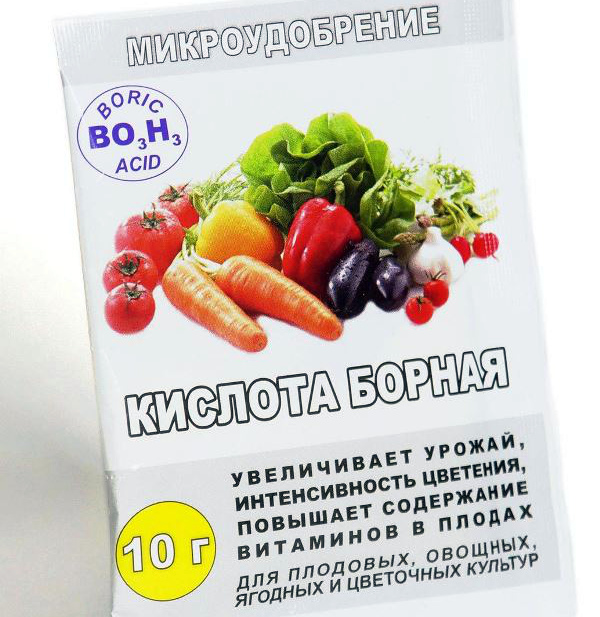
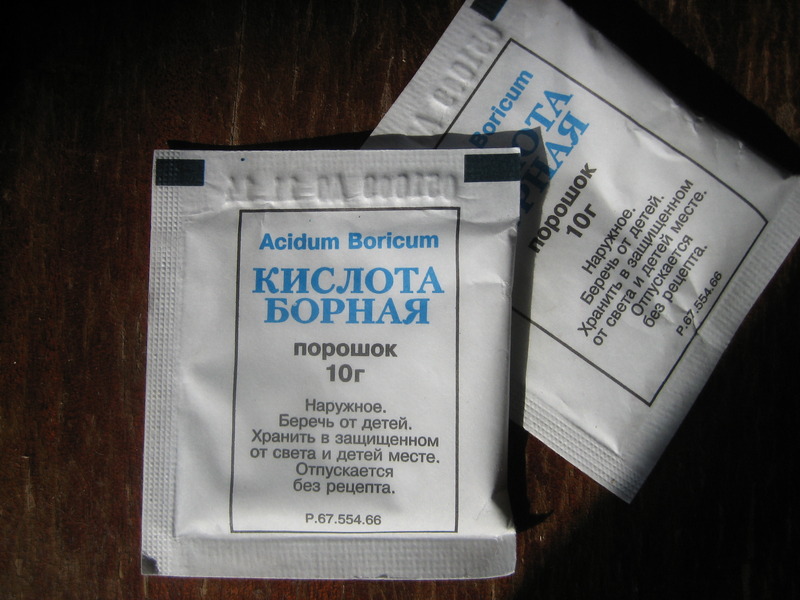
The most readily available, easy-to-use, and cost-effective boron fertilizer for tomatoes is boric acid. This formulation provides the micronutrient in the most readily available form for plants, allowing for easy and rapid absorption.
Spraying bushes with boric acid, diluted in the correct proportions, significantly improves the condition of the plants and has the following beneficial effects on tomatoes:
- activates flowering, increases the number of buds, prevents the formation of empty flowers and the shedding of already formed ovaries;
- increases plant immunity to fungal diseases: late blight, powdery mildew, leaf spot;
- prevents putrefactive processes on fruits in conditions of high humidity;
- Boron fertilizer promotes the transport of sugar along the stems, making tomatoes grow sweet and especially tasty;
- Pure boron, found in boric acid, increases the ability of tomatoes to synthesize and absorb other beneficial substances;
- If boric acid is used regularly and in the correct dosage to treat tomatoes, the harvest can be collected 1-2 weeks earlier than stated in the variety description.
Boric acid is especially useful for tomatoes grown hydroponically or in greenhouses. These tomatoes always grow weaker than those grown outdoors. Applying a boric acid mixture to the foliage will strengthen the plants in just a few days, increase foliar growth, and accelerate flowering. Boron fertilizer can also be used if the leaves of homegrown or greenhouse tomatoes begin to curl and then fall off. In this case, it is recommended to combine boric acid with urea and mullein. Some gardeners use boric acid to soak seeds before sowing for seedlings.
Video "Feeding"
This video will show you how to properly feed tomatoes with boric acid.
How to spray
The easiest and fastest way to deliver micronutrients to plants is foliar feeding (spraying). Performing this procedure on tomato plants requires no special skills or knowledge.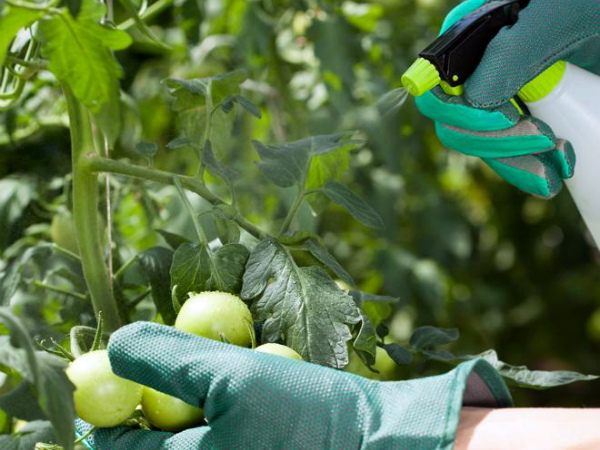
The main thing is the correct concentration of boric acid in the solution, which depends on the purpose of processing tomatoes:
- If you need to protect tomatoes from late blight and other negative factors, then the working solution is prepared in the proportion of 1 teaspoon of boric acid / 10 liters of water;
- If the purpose of processing tomatoes is to preserve flowers and ovaries, then boric acid is diluted in a proportion of 1 g / 1 liter of hot water, which is equal to 10 g / 10-liter bucket of water.
It's crucial that the acid crystals dissolve completely, otherwise leaf burn may occur. The proportions must be strictly observed, as excess boron negatively impacts tomato growth.
If you doubt your abilities, buy pre-diluted boric acid mixture in stores or slightly increase the amount of water when diluting. Preparing a boric acid solution is very simple: dissolve the required amount of powder in hot water, wait for the solution to cool, and then spray the bushes.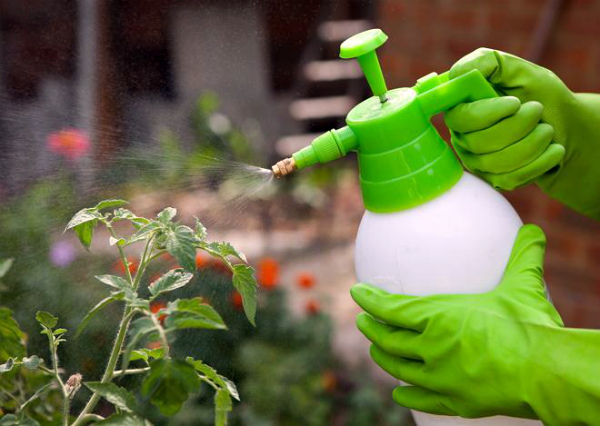
Spray tomatoes with boric acid when there is no rain or strong wind. The best time to apply is in the evening or early morning, before the sun shines. Use a spray bottle with a fine mist tip. When spraying the acid solution on tomatoes, pay equal attention to all parts of the plant—spraying not only the leaves but also the flowers and any developing ovaries.
When to spray
Boron plays a vital role in the formation of buds and ovaries, improves the quality and flavor of the fruit, and protects the bushes from external factors. In short, it is essential throughout the entire tomato growing season. Therefore, foliar boron applications should be performed several times, both routinely and as needed. The main routine treatments for tomatoes are:
- The first time before flowering, at the very moment when the buds have not yet opened, but are just forming - spraying the bushes at this time enhances the growth of buds and promotes abundant flowering;
- The second time, boron fertilizer is applied during the mass flowering of tomatoes - treating the bushes during this period prevents the flowers from falling off and accelerates the formation of ovaries;
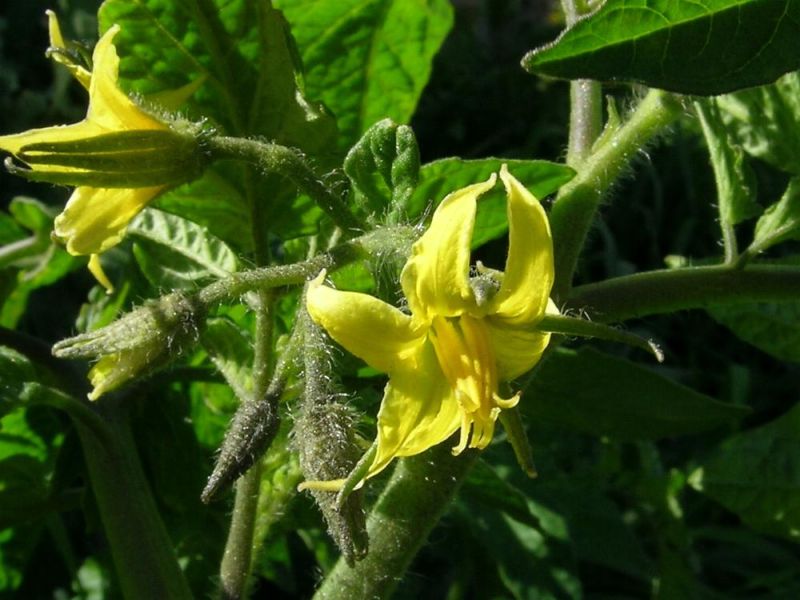
- The third time tomatoes are fed is at the beginning of fruiting, when the fruits have just begun to acquire the color characteristic of the variety. During this period, boron feeding prevents spoilage of tomatoes, accelerates their ripening, improves their taste and presentation (the pulp becomes sugary and not watery).
A boron-based tomato fertilizer can be used not only according to a planned schedule, but also in special cases requiring immediate micronutrient application. These situations typically arise when tomatoes are planted in poor sandy loam or sandy soil, where boron doesn't typically accumulate and crops experience a constant deficiency. Boron deficiency in the soil can be visually determined by the appearance of the plants:
- green leaves begin to curl at the edges - in this case, the stems need to be treated with the solution, and the foliage should be sprayed generously with a spray bottle;
- yellowing of the leaves begins at the base of the bush, while the top remains green - if at this stage you do not use a boric acid mixture for spraying, the bush will lose color and leaves, which will lead to its death;
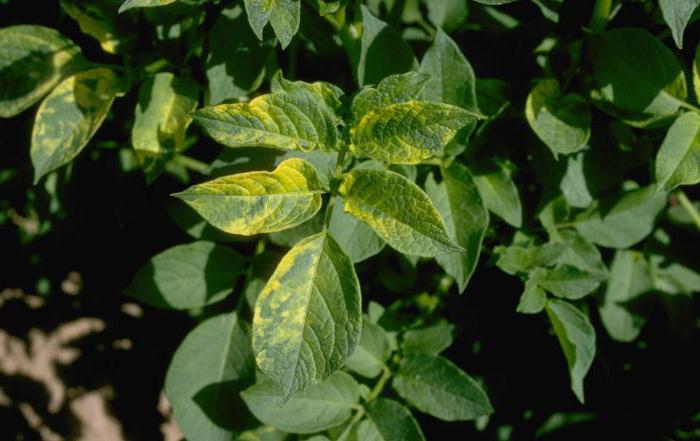
- the veins on tomato leaves become dry, turn black or turn yellow – this is also a sign of boron deficiency;
- brown or light spots on the tops indicate that the plants need to be fed;
- flowers begin to fall off even during flowering - in this case, boron fertilizer will also serve as first aid;
- healthy-looking ovaries are falling off – urgent treatment of the bushes is necessary, as a complete loss of the crop is possible;
- Tomato stems often suffer from a deficiency of microelements: they turn black at the base, or dry out at a time when the fruits are not yet ripe;
- the stems may also exhibit increased fragility (young shoots break when bent), which also indicates a lack of boron in the soil;
- Fruits indicate a microelement deficiency by developing brown or blackened spots, dying tissue, and a white, mold-like coating (a sign of late blight) – in this case, it is recommended to add more iodine to the boron mixture.
Boron fertilizer is a highly effective and essential micronutrient for tomatoes. Its correct and measured application allows for impressive results in growing this crop, reducing maintenance and fertilizing costs. But its most important benefit is protecting plants from any adverse factors, resulting in high yields.
Video "Leaving"
From the video you will learn how to properly care for tomatoes.