
How often and how to properly water tomatoes
Content
Watering seedlings
Determining how to properly water tomatoes isn't always easy. Various factors influence the frequency and amount of water needed. First and foremost, consider the weather conditions in your region.
Tomatoes grow best in southern regions, as they thrive in sunlight, warmth, and moisture. In other areas, they are planted in greenhouses rather than in open ground to prevent excess moisture from seeping into the soil and to control the air temperature.
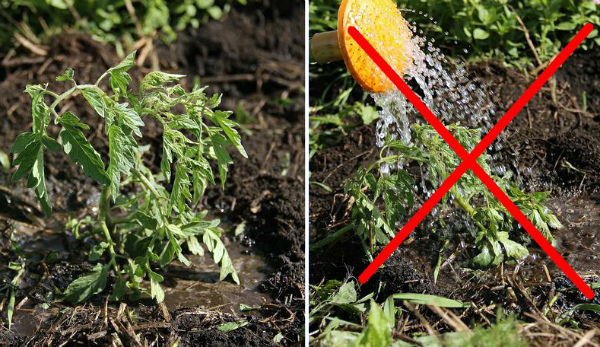
Tomato seedlings should be watered at the roots to prevent moisture from getting on the leaves or stems. It's also not advisable to use cold water if the seedlings are young. The root system is still very sensitive to environmental changes at this stage. Therefore, it's best to warm the soil in the sun before watering.
Watering frequency will also depend on the growing conditions of the tomatoes. In a greenhouse, the soil doesn't dry out as quickly, so you can water less frequently than for seedlings grown outdoors.
Be sure to follow a watering schedule. Avoid allowing the soil to become too wet or dry out. Excess moisture can encourage fungal growth on the plant's stems and foliage, while overly dry soil can lead to plant decline.
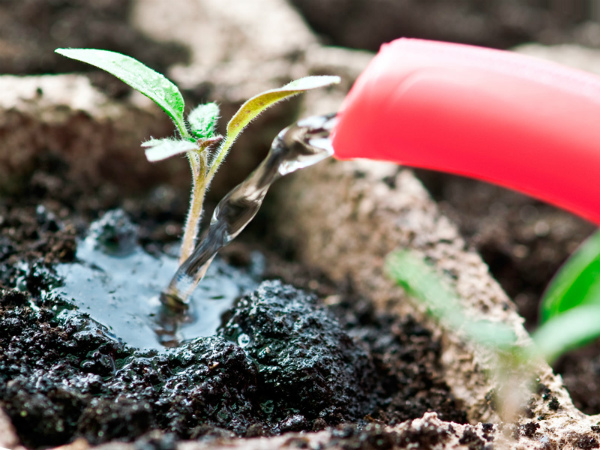
Watering tomatoes requires special attention during cold weather. Cold air can lead to plant diseases if the soil was overwatered the day before. The moisture in the soil begins to cool, chilling the root system. As a result, the plant is less nourished, begins to weaken, and may produce a smaller harvest later in the season.During cold and rainy periods, it is better to reduce watering of the bushes to a minimum.
The optimal water temperature for irrigation in warm weather is 18 degrees, and in cold weather, when there is insufficient moisture in the soil, it should be heated to 25–30 degrees.
When the weather gets hot, you can water the seedlings every 2-3 days. This is best done in the evening, a couple of hours before sunset, or early in the morning. Also, be careful not to let water get on the surface of the plant, especially during the day when the heat sets in. After watering, you can mulch the soil under the plant with straw or prepared compost. Loosen the soil every 2-3 weeks to improve water flow to the roots of the tomato seedlings.
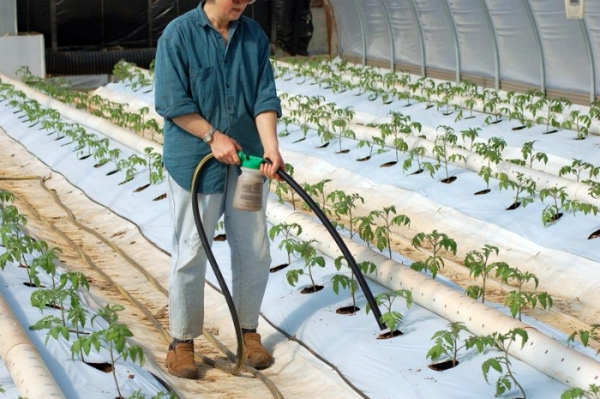
The appearance of the bushes may indicate a lack of moisture in the soil: the leaves begin to turn yellow and gradually wither, and the ovary or inflorescence may begin to fall off.
Once you've determined how often to water your tomatoes, try to stick to the schedule.
Watering in a greenhouse
Watering tomatoes in greenhouses is significantly easier. The design itself allows for a more stable air temperature and creates a unique microclimate indoors.
Humidity in a greenhouse typically ranges from 60% to 75%, except during particularly dry summer periods. Therefore, it's crucial to know how much water to add to the soil for healthy tomato seedling growth.
Tomatoes grown in a greenhouse can be watered less frequently, as the moisture is not blown away by the wind and the soil is not exposed to direct sunlight. While moisture still evaporates, it happens much more slowly, and sufficient humidity also prevents the soil from drying out.
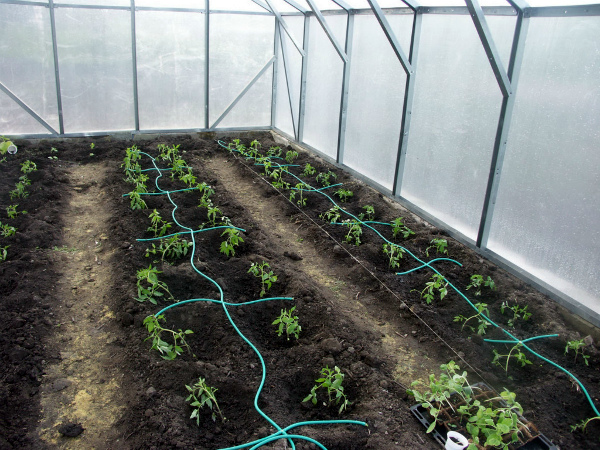
The crop should be watered only as much as necessary to moisten the soil, preventing water from pooling on the surface. If moisture doesn't reach the soil, the stem will begin to rot, followed by diseases.
In a greenhouse, to ensure normal growth, you can organize stable soil moisture using an automatic or drip irrigation system.
While the automatic method is typically used for industrial greenhouses, the drip method is the most suitable for watering vegetables at home.
To do this, hoses or thin tubes are laid along the rows of tomato plants. They have small holes in them that allow water to reach the roots.
A drip system can be built yourself or purchased from a specialist store. In addition to watering, it can help evenly distribute liquid fertilizers and other products along with the water.
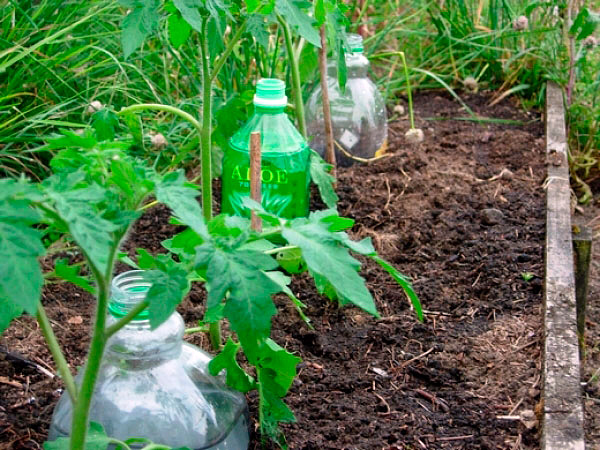
So how much water should you add to the soil for seedlings?
When planting, add about half a bucket of liquid to each hole. Then, leave the plants for a week to allow them to take root and become accustomed to their permanent location. No additional watering is required during this time.
When the seedlings begin to grow actively, they will begin to absorb moisture from deep within the soil. Before flowering, you can water the soil a couple of times a week, 3–4 liters at a time. Once flowering begins, you should water 5–6 liters once a week.
When the ovaries begin to set and the fruits gradually begin to ripen, water the plant twice a week. Make sure the soil isn't too wet. When the fruits begin to redden, reduce the amount of water to prevent them from cracking as they ripen.
Video: "Rules for Watering Tomatoes in a Greenhouse"
In this video, you will learn how to properly water tomatoes and how to determine when it is necessary.
Watering in open ground
Monitoring moisture levels when tomato seedlings are planted outdoors is significantly more difficult. This is because the weather is variable, which can affect moisture evaporation from the soil and changes in ambient air temperature. For this reason, gardeners want a precise answer to the question of "how often to water tomatoes for normal growth." Of course, there is no definitive answer. This process is situational, as the current soil conditions must be taken into account.
In stable, warm weather, you can water the soil every other day. Typically, watering should occur when the top layer of soil begins to dry out. In open ground, this happens more frequently than in a greenhouse. Besides sunlight, wind also dries the soil, removing moisture from the soil. If the weather is very windy, watering should be done more frequently.
It's essential to ensure the seedlings always have enough moisture, especially once the buds have already formed. If they dry out during this period, they may fall off, and there may be no harvest at the end of the season.
When watering in open ground, it's easier to use folk remedies for spraying the bushes. To speed up tomato growth, you can add a little iodine or boric acid to the water.
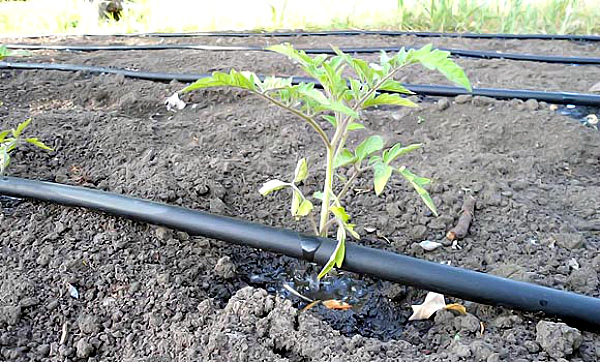
It should be remembered that plants planted in open ground should be watered exclusively at the roots. If droplets fall on the foliage, they will refract sunlight when it hits them. As a result, the sun will burn the tomato leaves and shoots, as the droplets act as a lens.
Tomatoes grown outdoors can be watered using drip irrigation for more uniform distribution. Drip irrigation will help prevent plant rot and blossom-end rot. This system will also reduce the risk of tomato diseases.
To avoid having to constantly loosen the soil before watering, you can use mulch. Place mown grass around the stems to cover the soil well. Mulch will also help prevent the soil from being disturbed by the stream of water during watering.
Generally, it's best to use river water for irrigation if the site is located near bodies of water. However, in other cases, it's advisable to collect rainwater and let it settle. Tap water is too hard, and if you have an alternative, it's best to consider a substitute.
Video: "How to Water Tomato Plants Outdoors"
See what the process of watering tomatoes planted in the ground looks like.