
How to prune tomatoes: tips from the pros
Content
Why is leaf pruning necessary?
Tomatoes, especially tall varieties, tend to branch heavily and produce a huge amount of foliage. When the plant needs to focus on fruit development, excess leaves are removed. Furthermore, the lower green layer, touching the ground, acts as a bridge, accelerating fungal infections not only of the vegetative organs but also of the precious fruits.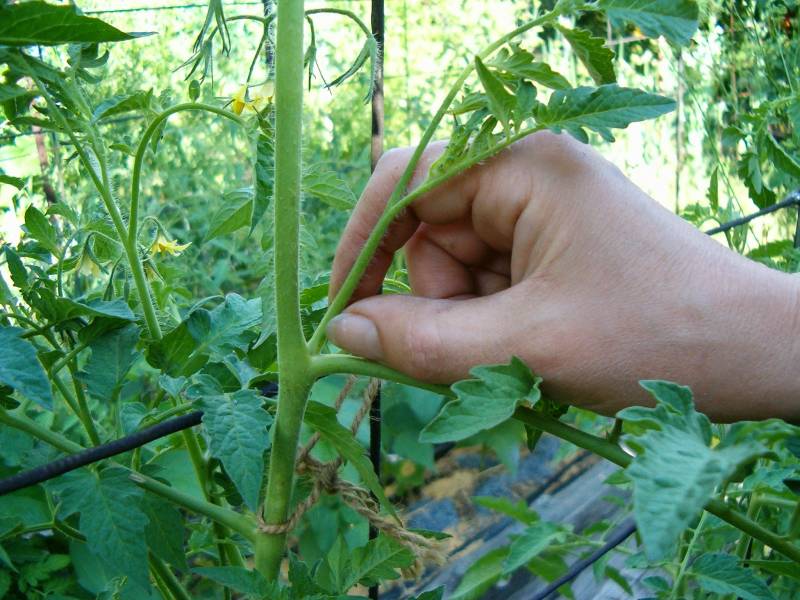
The more light they receive, the faster the ripening of already formed tomatoes will occur. This is another reason to use this technique. Now all that's left is to figure out how to prune tomatoes properly.
Video "Leaf Trimming"
From this video you will learn how to prune tomatoes correctly.
Which leaves need to be trimmed?
Regardless of the variety, remove the lower leaves of tomatoes that touch the ground and shade the root zone. Gradually, the trunk is bare down to the first fruit cluster. In dense plantings, remove all or some of the leaves that shade or touch neighboring plants.
In addition to leaves, you also need to remove any excess side shoots—side shoots. Low-growing varieties are often trained with three stems, while taller varieties are trained with one or two.
With a single-stemmed form, all stepsons must be removed; with a two-stemmed form, the shoot growing under the first flowering brush is left; for the third stem, the strongest of the lower stepsons must be left.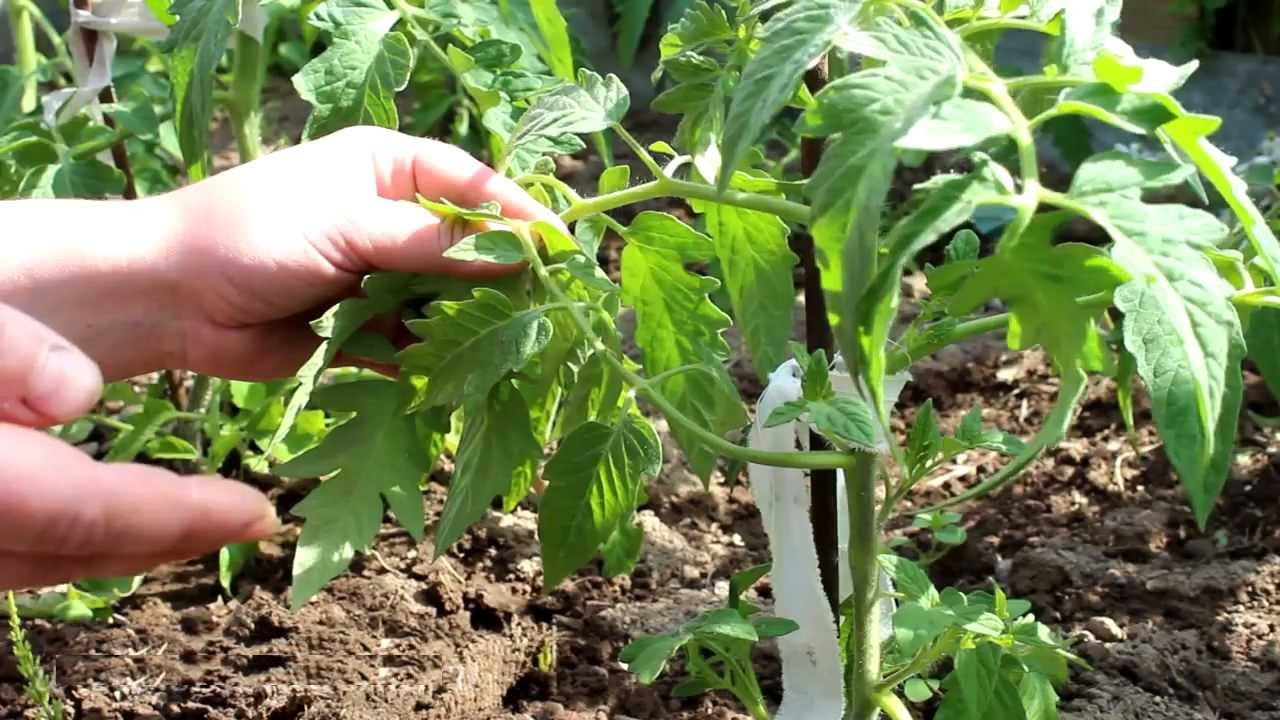
If tomato plants aren't pinched, they develop numerous shoots and new flower clusters. The more shoots there are, the slower the fruit sets and ripens. All the leaves growing above the fruit clusters contribute to the fruit's nutrition only during the ovary formation stage. When the fruit reaches a sufficiently large size, two or three feeder leaves located directly above the cluster contribute to the supply of photosynthetic products. Later, this function is completely transferred to the fruit itself. To improve the bush's light, all excess foliage is removed.
Tall indeterminate tomato varieties continue to grow stems, produce leaves, and produce new flowers throughout the season. By pinching off the top of the plant, you can stop its growth and redirect its energy toward mass gain and fruit ripening.
When and how to prune
Knowing how to prune tomatoes properly allows you to begin stripping the bottom of the trunk just a week after planting the seedlings outdoors. Remove no more than two leaves at a time to avoid stimulating the plant's regeneration and distracting it from ripening the fruit.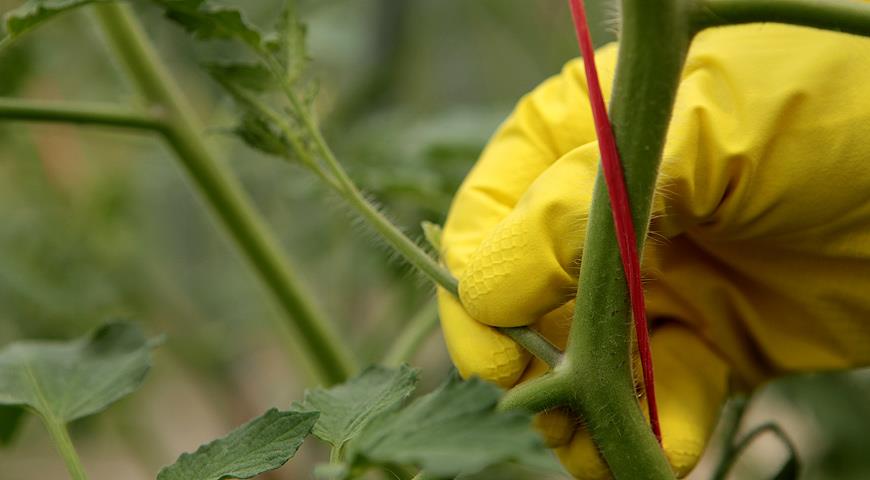
Stepchildren should be removed when they are no larger than 5-6 cm. This operation is best performed in the first half of the day in dry weather. By the end of the day, the sun's rays will dry the resulting wound, preventing pathogenic infections. Leaving a 1-1.5 cm stub when removing the side shoots can inhibit the formation of other unwanted shoots in that spot. Remove the side shoots at least once a week. Monitor fruit formation at the same time. Once all the fruit has set in the cluster, all the leaves underneath can be removed. One plant needs 12 fully developed leaves.
The central stem of tall tomato varieties can be pruned after the sixth cluster has formed, leaving 2-3 leaves before it. This usually occurs in late July or early August.
Step-by-step leaf pruning
For better understanding, let us divide the above process into stages.
The first step is to remove all lower (down to the first cluster), yellowed, and partially damaged leaves. This will promote better fruit development and prevent disease.
In the second stage, side shoots and leaves between the fruit clusters are removed. This procedure improves ventilation and light exposure for the bush, directing all the plant's energy toward fruiting.
In the third stage, it's necessary to stop the growth of tall varieties and the formation of new ovaries, concentrating the plant on the rapid ripening of existing fruits. To do this, prune the shoot tip.
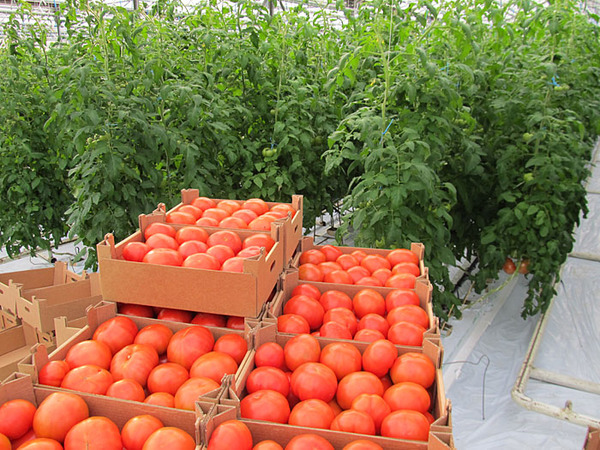
By promptly removing excess leaves, you can monitor the health, quantity, and ripening time of the future harvest.
Video "Pruning"
This video will show you how to pinch out side shoots from tomatoes.