
Bordeaux mixture for tomatoes: instructions for use
Content
Dosage
To prepare Bordeaux mixture, you must strictly adhere to the prescribed proportions. If you don't have a basic understanding of how to dilute Bordeaux mixture correctly and mess up the proportions, you risk destroying your entire garden bed. Bordeaux mixture comes in different concentrations: 0.5%, 1%, and 3%. To prepare a solution of the minimum concentration, take 100 g of copper sulfate and 75 g of lime, and dissolve them in 10 liters of water.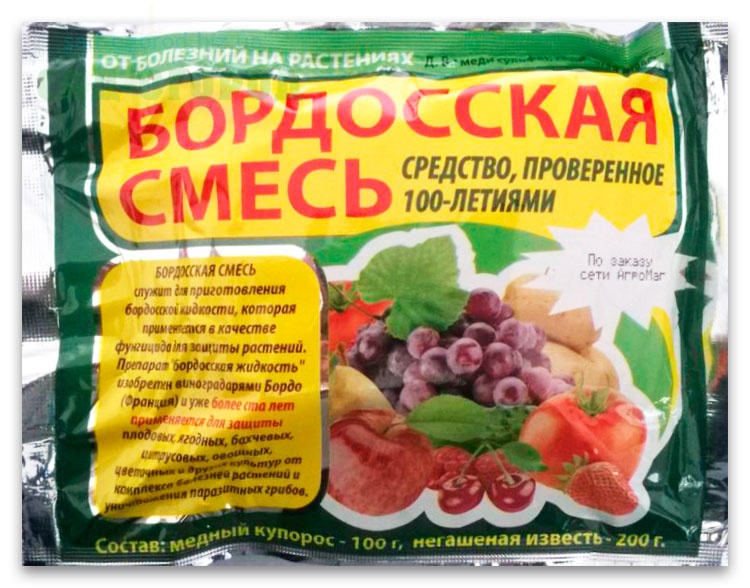
If you plan to prepare a 1% solution, then use the same 100 g of copper sulfate for the same amount of water, but add 150 g of lime. If you need a 3% Bordeaux mixture for spraying tomatoes, then use 300 g of copper sulfate and 450 g of lime for the standard 10 liters of water.
Video "Cooking"
From the video you will learn how to prepare the mixture.
Calculation of consumption
For any vegetable crop, including tomatoes, there is an optimal dosage of the preparation used to treat beds or a garden plot:
- If you plan to use the solution to protect young fruit trees, then you will need at least 2 liters per tree;
- to process crops that are actively bearing fruit, you will have to use at least 10 liters of liquid;
- If you need to spray bushes, be prepared to spend at least 1.5 liters of solution per bush;
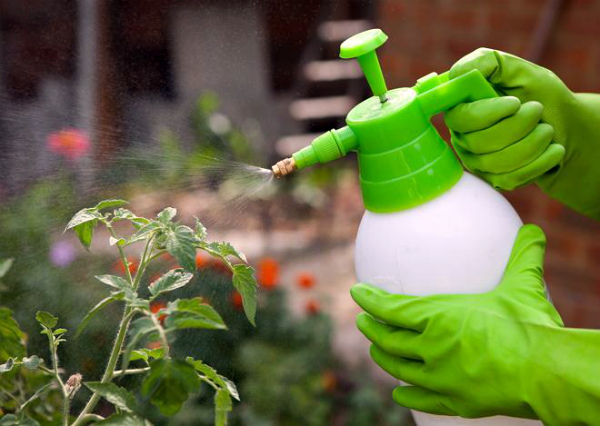
- To spray tomatoes, you need to prepare 2 liters of liquid per 10 square meters of beds.
Compound
As mentioned earlier, Bordeaux mixture is typically diluted with copper sulfate and lime, in strictly defined proportions. Avoid preparing the solution long before intended use: the ingredients are packaged in separate sachets for good reason—the mixture is prepared immediately before use.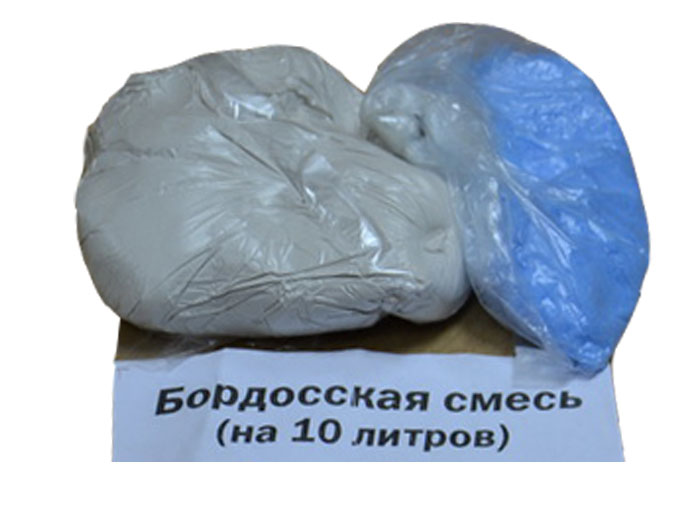
As we've already mentioned, the ratio of ingredients is crucial: if the amount of lime is insufficient, you can cause chemical burns to your plants.
Preparation
Despite only two components (water is not included in this case), preparing the mixture is not simple: too much active ingredient concentration can have negative consequences for plants, while too little can have no effect. It's crucial to follow the correct order, not to mention the correct quantities of ingredients:
- To prepare the solution, use only a non-metallic container;
- Dissolve 10 g of copper sulfate in warm water and stir the solution thoroughly;
- as soon as the substance is completely dissolved, the resulting mixture should be topped up with cold water so that the total volume of the resulting mixture is 5 liters;
- in a separate bowl, you need to dilute about 130 g of slaked lime in 1 liter of water, thoroughly mixing the resulting substance until it reaches the consistency of liquid sour cream;
- Now it’s time to add water to the lime mass so that the final volume is also 5 liters;
- After this, the lime solution must be filtered through several layers of gauze (this will help to avoid clogging the apparatus);
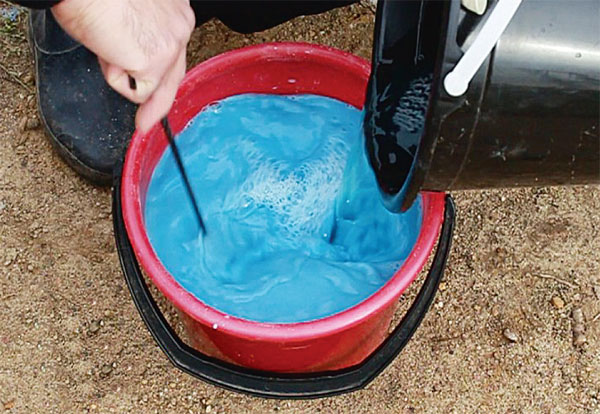
- At the end of the preparation process, the copper sulfate solution is slowly poured into the lime solution while constantly stirring (never the other way around!).
That's it; the Bordeaux mixture is ready. All that remains is to test the acidity of the mixture. To do this, dip any metal object—any nail or piece of wire—into the solution. If the metal turns red after contact with the solution, you need to add more lime solution.
There are several restrictions that must be observed during the preparation of the mixture:
- You cannot change the rules and add lime to copper sulfate - this will lead to a significant reduction in the quality of the resulting solution;
- You should also not mix components that have different temperatures;
- dry components of the mixture must not be mixed together;
- when the solution is completely ready, do not add water to it;
- Do not add dry copper sulfate to the prepared lime solution.
Precautionary measures
As mentioned earlier, the prepared solution can not only protect plants from fungal infections but also pose a threat to the health of both the beds and the gardener. Therefore, following basic safety rules is essential:
- use protective equipment when working with the prepared mixture – gloves, respirators, etc.;
- while working with the mixture, it is prohibited to smoke, consume liquids or food;
- You cannot cultivate beds located in close proximity to the fruits that you plan to harvest in the next 2-3 weeks;
- You should not treat plants during the period of active flowering and ovary formation;
- The last treatment of your tomatoes with prepared Bordeaux mixture should be carried out no later than 2 weeks before the expected harvest.
-
As gardeners' long-standing experience shows, despite its venerable age, Bordeaux mixture remains as effective and popular among farmers as it has been for decades. Just as it was decades ago, gardeners continue to choose this product, mindful of its effectiveness and affordability.
Video: Tomato Processing
From the video you will learn how to treat tomatoes with this mixture.