
Planting tomatoes in a polycarbonate greenhouse: soil preparation and planting time
Content
General planting rules
If the greenhouse is already installed, the next step in growing tomatoes is soil preparation. This is crucial, as the yield largely depends on the quality of the soil, and in a permanent greenhouse, as we know, there's no choice of site. Once you've decided on the area to be planted, remove the top layer of soil to a depth of approximately 10 cm. This is the depth at which most harmful microorganisms and plant debris from previous crops accumulate. If you're using raised beds, you can simply add new soil on top without removing the underlying layer.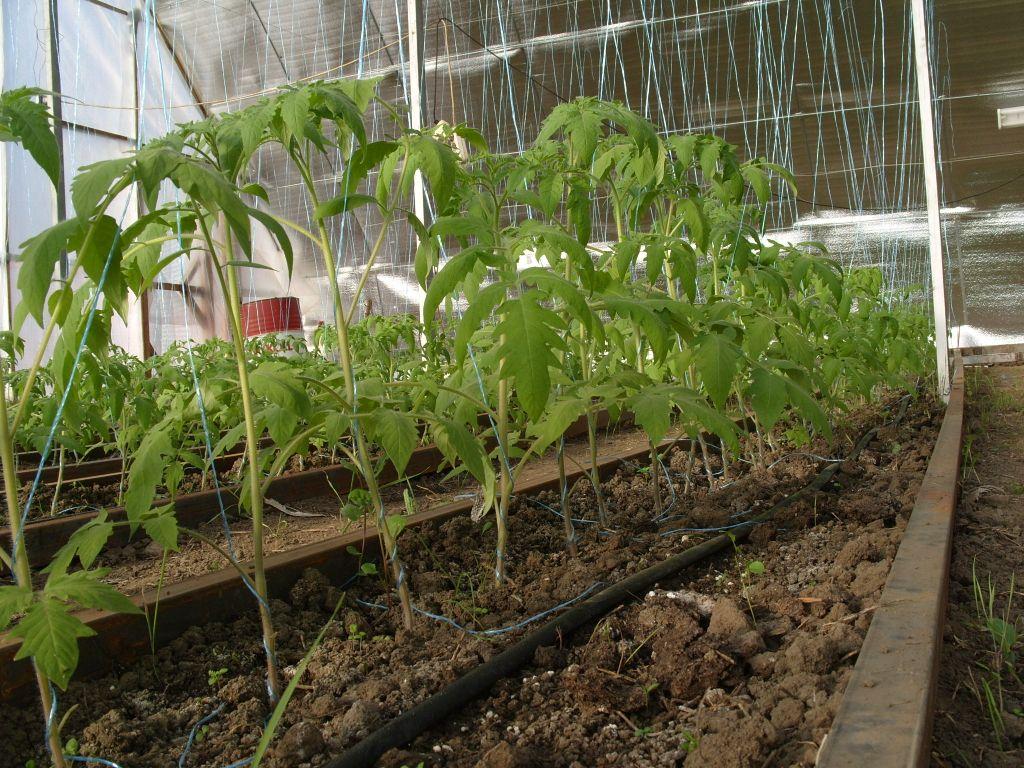
Next, the fresh soil must be disinfected. A solution of potassium permanganate or copper sulfate is suitable for this purpose; copper-containing insecticides are preferable as they kill fungal flora. Then, the area should be deeply dug, adding organic and mineral fertilizers: peat, sawdust, humus, and ash. Fertile loam with a neutral pH is considered the best soil for tomatoes, and this is the composition you should strive to create in the greenhouse.
The main purpose of planting tomato seedlings in a greenhouse is to protect them from adverse weather conditions, so attention should first and foremost be paid to creating a comfortable microclimate. However, it is important to remember that excessive fanaticism can cause significant harm to plants:
- thus, high air and soil humidity caused by excessive watering can cause rotting processes in plants and lead to the development of fungal diseases;
- One of the main problems with growing vegetables in greenhouses is the sharp fluctuations between night and day temperatures, which prevents plants from adapting and developing normally. This is especially true for cold regions; for example, in Siberia or Yakutia, this difference can sometimes be as much as 20°C.
- During the day, there is a risk of plants overheating, so the greenhouse must be ventilated daily.
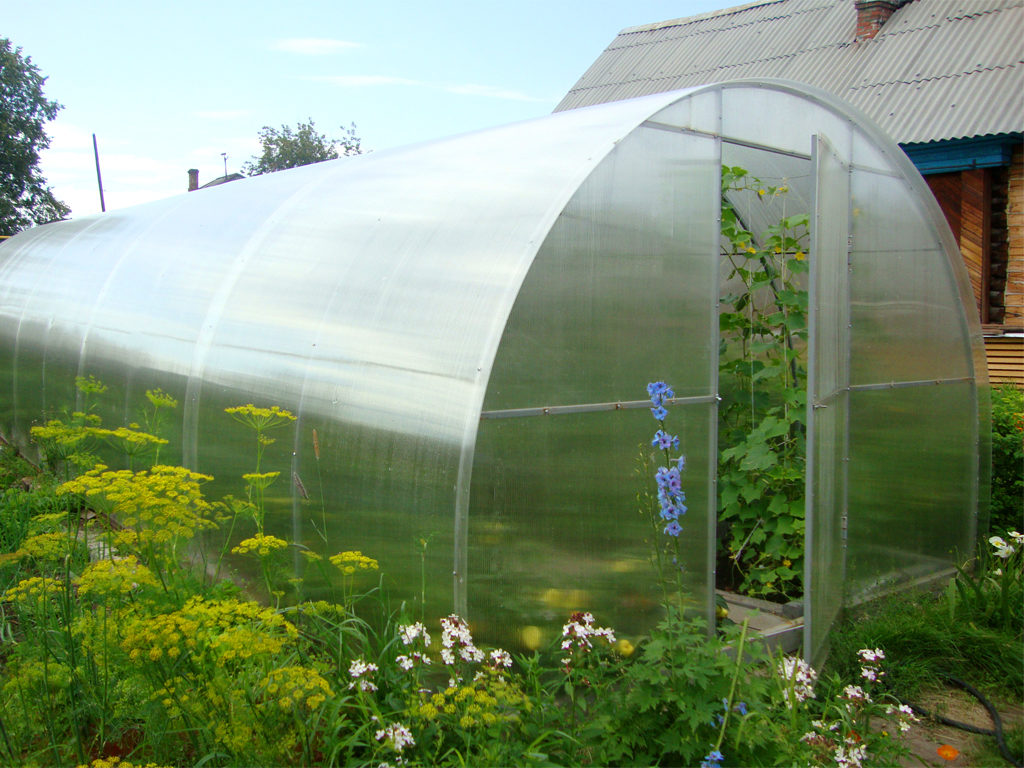
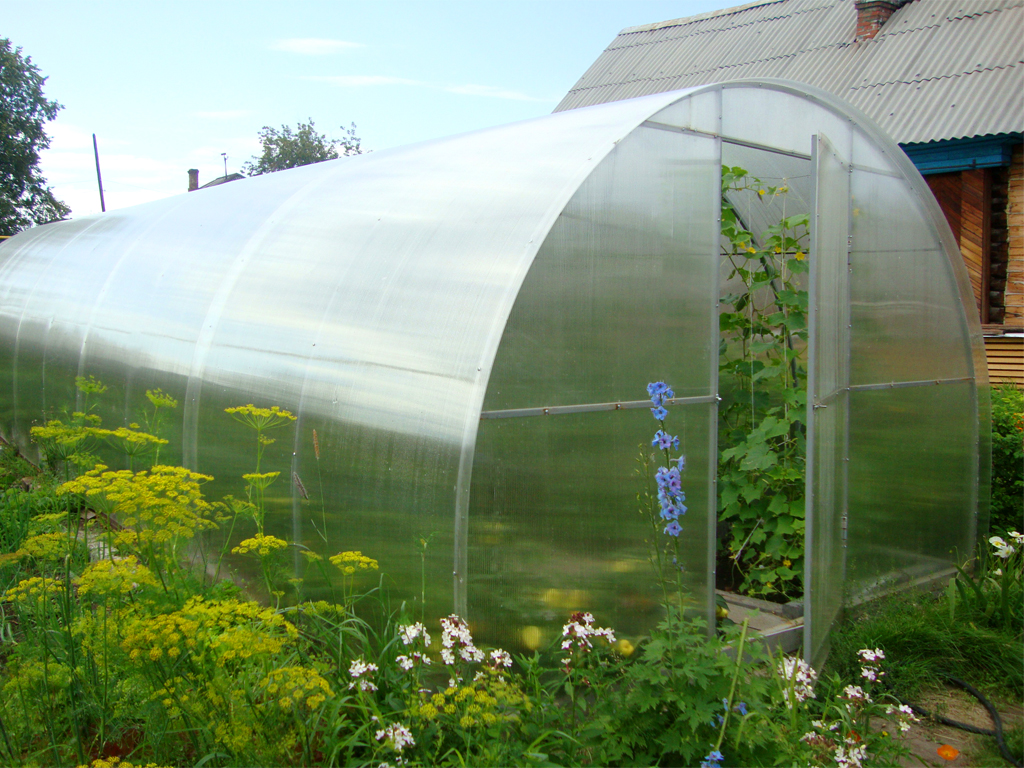
Choosing the right variety is equally important. It's believed that hybrid tomatoes, especially intermiddle-type ones, grow best in greenhouses. These varieties have a long (2-6 months) fruiting period, and polycarbonate greenhouses provide comfortable conditions for the plants throughout this period.
Video: Growing Indeterminate Plants in a Greenhouse
This video will show you how to grow tomatoes in a greenhouse like this.
Planting diagram
Planting tomatoes in a polycarbonate greenhouse follows a pattern, the choice of which depends on the size of the structure. Naturally, to maximize space, everyone tends to plant the plants a little more densely than in open ground, so the most acceptable patterns are as follows:
Double-row tape system. It is used in a bed at least 1.5 m wide (the length can be adjusted). Plants are planted in two rows, spaced 30-40 cm apart for low-growing varieties and 60-70 cm apart for indeterminate varieties.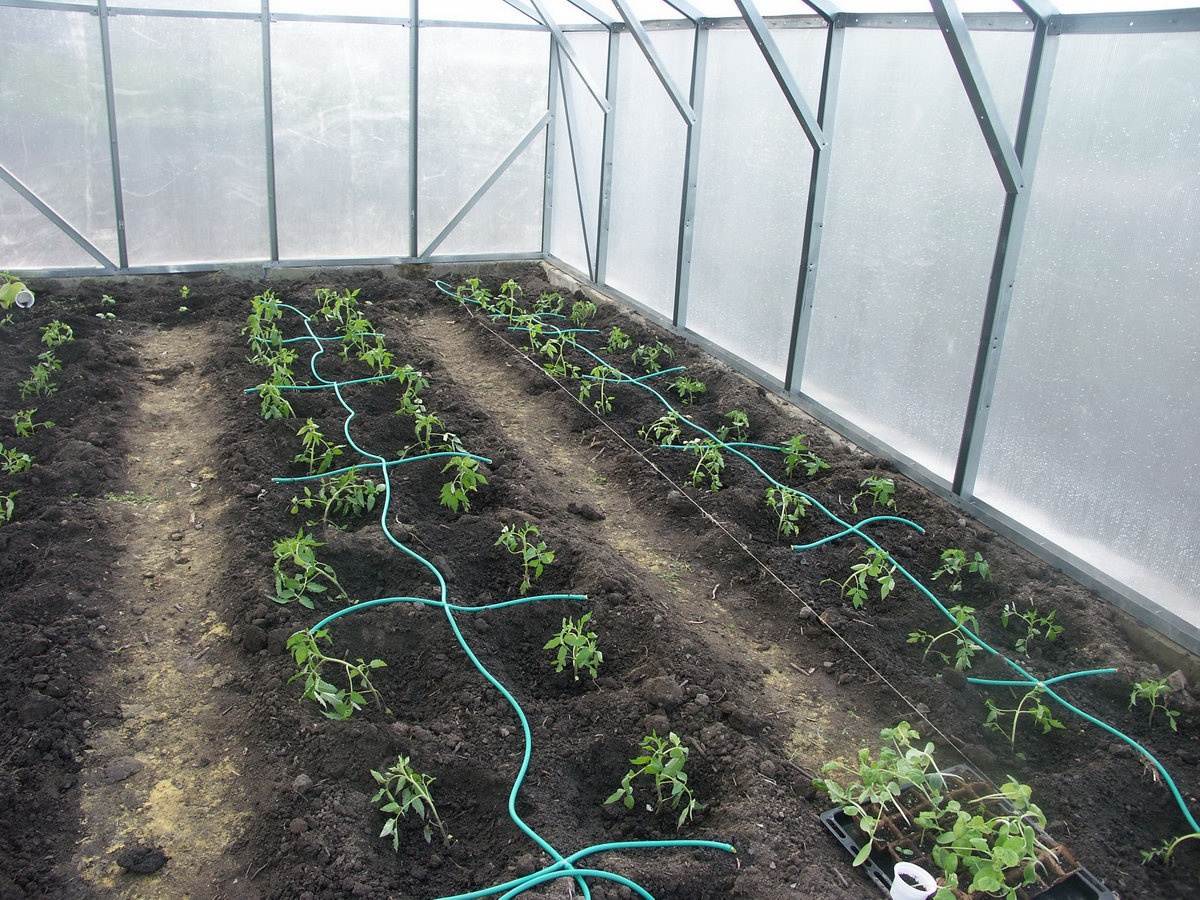
Checkerboard. With this pattern, tomatoes are planted in two rows, spaced 50 cm between rows and 30-40 cm apart for tomatoes that form two or three stems (determinate), and 75 cm between rows and 50-60 cm between plants for tall (indeterminate) tomatoes.
In a narrow greenhouse, where plants are located near the walls of the greenhouse with a passage between the beds, bushes can be planted in a zigzag pattern - this is when the distance between bushes is increased, and between rows is reduced.
Distance
Each tomato variety has its own planting algorithm and pattern. To avoid misplacing the plant spacing, carefully read the instructions on the seed packaging, where reputable manufacturers always provide the recommended pattern. Adhering to these recommendations is essential for proper plant development.
If the distance between plants is less than recommended, the plants will be crowded and will not be able to grow to their full potential, which will, of course, impact the yield. If the distance between plants is too large, you shouldn't expect a large harvest, as the plants will overextend their foliage, which will negatively impact the number of ovaries.
In addition, fruits hidden in dense foliage ripen more slowly.
If there is no information about the recommended planting pattern, then the following general rules should be followed:
- low-growing tomatoes should not be planted closer than 30 cm from each other; for tall tomatoes, this distance is 50 cm;
- the distance between rows should be at least 80 cm; in greenhouses, where the bushes can be approached from two sides, a distance of 60 cm between rows is acceptable;
- the distance from the edges of the greenhouse border should be 10-20 cm;
- When planting low-growing and tall varieties in a greenhouse at the same time, the bushes must be planted so that the tall ones do not shade the low-growing ones. As a rule, low-growing tomatoes are planted along the walls (there is no possibility of planting tall ones there), and indeterminate ones - in the center of the greenhouse.
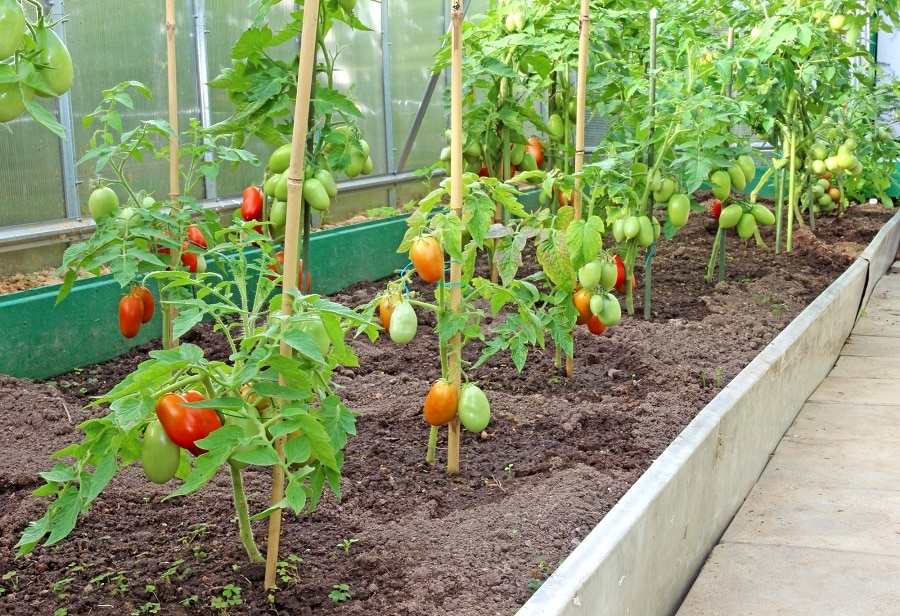
And most importantly, even if you need to save space, try to place the bushes so that you can easily approach them and provide them with proper care, including watering, loosening the soil, hilling, and other activities.
Planting in a greenhouse
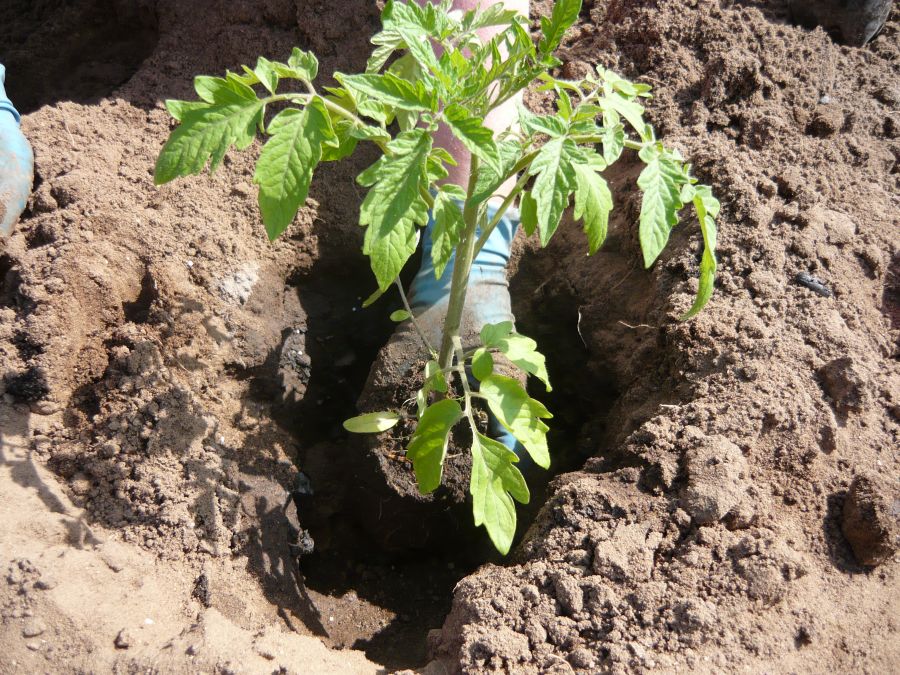
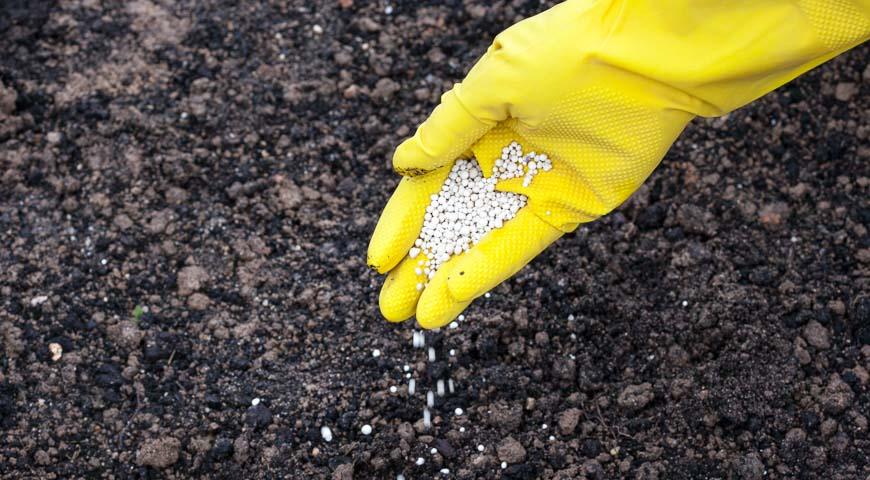
Shortly (1-2 days) before planting, the seedlings should be watered thoroughly. Even if they were grown in disposable peat pots, a generous watering will help the roots spread out, speeding their establishment. Transplant the seedlings with the root ball, placing them in the center of the hole, with mineral or organic fertilizers added to the bottom: superphosphate (1 teaspoon per hole) and ash (1 tablespoon each).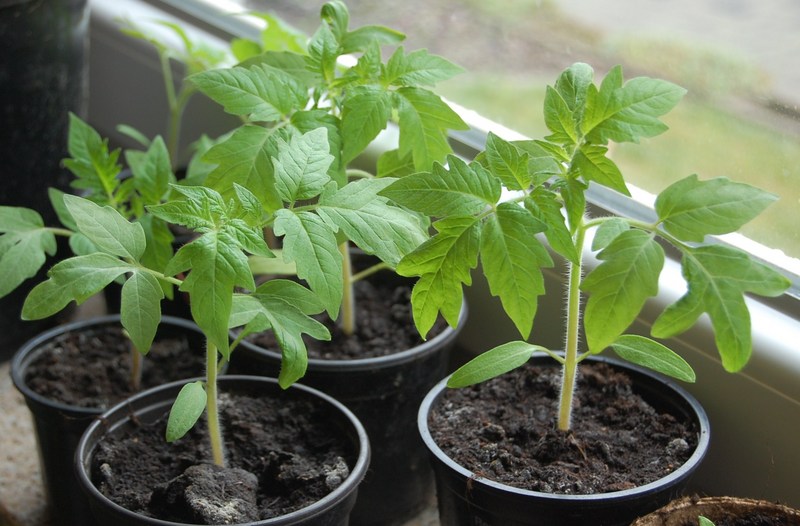
By the time you plant tomatoes in the garden, the seedlings should be 55-60 days old. It's great if the seedlings have already formed their first flower clusters; these plants will establish themselves more quickly and successfully.
The soil (bed) must be warmed before planting. The optimal soil temperature, when seedlings can be safely planted, is considered to be 15-17°C. If the greenhouse is unheated, you can speed up soil warming by covering the bed with plastic film.
When planting tomatoes in a polycarbonate greenhouse, the timing depends on the climate and the type of structure:
- In a heated polycarbonate greenhouse, tomatoes can be grown all year round, but you should not ignore the natural cycle of plants - it is best to plant seedlings in the spring, in the third ten days of April;
- in unheated greenhouses with a thick (double) film covering, seedlings can be planted in the first ten days of May (after the 5th);
- The seedlings are planted in a non-insulated film greenhouse in the second half of May.
It's important to understand that these are average planting times, which may vary by region. In southern latitudes, for example, seedlings can be planted 1-2 weeks earlier, while in Siberia, 10-12 days later.
Which greenhouse to choose?
If you're choosing between film and polycarbonate, be aware that both options have their pros and cons. The advantages of film include:
- costs less;
- in case of damage it can be easily replaced;
- In winter, this covering is removed without worrying about insulating the soil—the snow will warm the ground.
However, such a greenhouse is considered temporary, as growing vegetables in it is only possible in the spring and summer. In northern regions, such as Siberia, even spring cultivation is impossible, as the soil there takes a long time to warm up. Therefore, film greenhouses can only be used in regions with a southern or temperate climate, and as temporary shelter while tomatoes are growing.
Polycarbonate isn't exactly a cheap material, but it's durable and virtually wear-free. The minimum warranty period for the coating is 10 years, but its actual lifespan is much longer. It provides excellent protection for plants from ultraviolet radiation, boasts high thermal insulation properties (retaining heat within the structure for a long time), and is ideal for winter greenhouses with a permanent heating system.
But polycarbonate also has its disadvantages:
- On hot days, the temperature in such greenhouses reaches its maximum value, and even ventilation holes do not help;
- If the greenhouse is not designed for year-round cultivation (there is no heating), then the soil in it must be covered for the winter, otherwise the ground will freeze deeply, and this circumstance will prevent you from planting vegetable crops in early spring.
Therefore, when choosing a greenhouse, one should consider the climate. For example, for summer greenhouses in mild and moderate climates, polycarbonate is not necessary; it can be replaced with a more economical film. Meanwhile, in colder regions—in the North, the Urals, and Siberia, where temperatures are much lower—it makes sense to install polycarbonate greenhouses even for spring and summer vegetable growing.
Video: Planting Tomato Seedlings
This video will show you how to properly plant seedlings in a greenhouse.