
What is the scheme for growing tomatoes in a greenhouse?
Content
Basic rules
Training a tomato plant requires special attention during the growing season. While it's possible to train tomatoes into two stems when growing outdoors, training them into a single stem is acceptable in a greenhouse. This is especially true for tall and hybrid varieties. Medium-sized tomato plants are typically trained into two stems in a greenhouse, while in the open field, three stems are used. To train the second stem, take the first shoot. This shoot will produce a shoot that, like the main stem, will produce high-quality flower clusters. The result will be a several-kilogram increase in yield per tomato plant, a significant benefit when growing tomatoes in a greenhouse made of polycarbonate or other material.
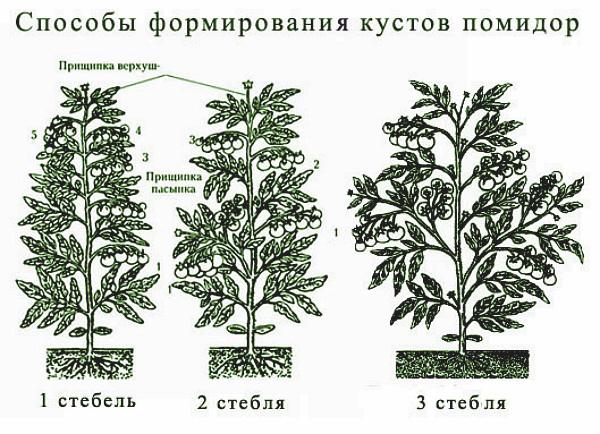
Three ways to shape tomato bushes
The rules for pinching out side shoots, that is, mercilessly removing extra side shoots from each bush, are not that complicated:
- It's best to schedule the removal of side shoots for early morning on a warm day. This way, the sun will allow the wounds to dry before evening, allowing them to begin to heal.
- For safety, it's recommended to wear rubber gloves when performing all work. Dissolve potassium permanganate in a basin. Dip your hands in it each time you move on to the next tomato plant. This will protect your plants from infection.
- It is recommended to remove shoots that are 4–5 cm long. Breaking them off at the base of the stem is unacceptable. A good practice is to pinch off shoots, leaving a 15–20 cm long column in place of each stem. If side shoots that have grown longer than 7 cm are not removed, the plant will not only experience stress but may even die. Remember that side shoots inhibit normal growth and fruit development by robbing the plant of valuable nutrients.
- Don't shape a tomato plant if it was watered or fertilized the day before. Wait at least two days.
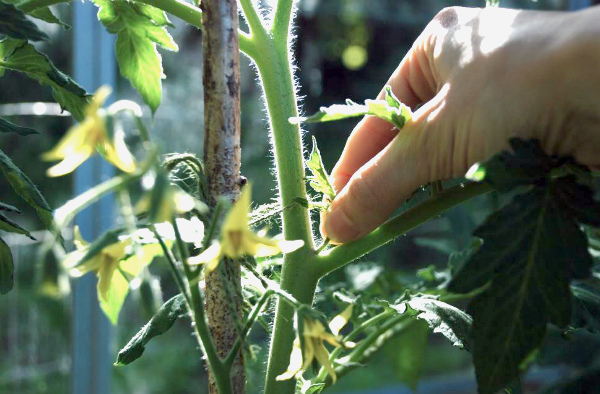
The rules for shaping a bush in a greenhouse differ slightly from those used for open ground. This process should begin when the bush produces its first flower cluster. For tall tomato varieties, this cluster appears above the 10th or 11th leaf, and then clusters appear after three leaves. Side shoots can usually be found below the flower cluster. To properly remove side shoots from a greenhouse made of polycarbonate or other material, inspect the plantings once a week and remove the shoots. As many gardeners have shown, the first side shoot of indeterminate varieties can be pinched out in a greenhouse, leaving the cluster with flowers. To do this, leave a couple of leaves in the direction of the side shoot's growth, and then break off the shoot above these.
How to shape bushes
The order of the work depends on what kind of bush you are going to form in the greenhouse.
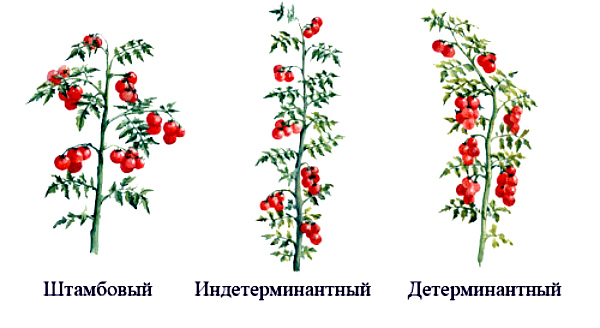
Different types of tomato plants
Experts divide all tomatoes grown in greenhouses into the following types:
- tall or indeterminate varieties that grow indefinitely and are capable of producing an excellent harvest in protected soil conditions;
- semi-determinate or medium-sized;
- determinate or low-growing, which can limit growth on their own;
- superdeterminate or short - low-growing crops with an early ripening period both in a greenhouse and in a garden bed.
The pinching scheme will depend on the type of tomato and how many main stems you plan to develop.
To begin the work, tie the bush to a secure support. It's best to insert wooden stakes into the ground before planting, then tie the plants to them with rope or twine (some scrap cloth cut into strips will also work).
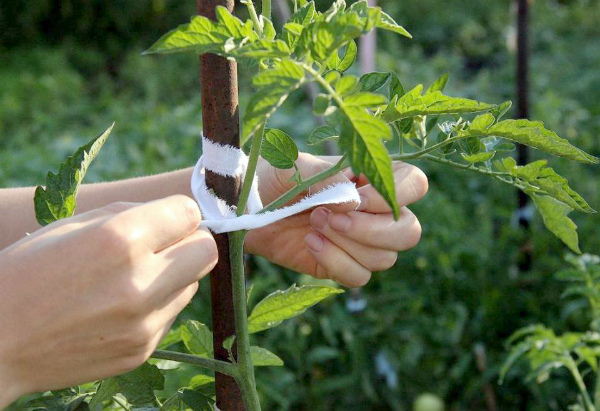
To form plants you will need the following materials and tools:
- rope or twine;
- trellises for tying up tomatoes;
- high wooden poles;
- garden shears;
- rubber gloves;
- a basin of water;
- potassium permanganate.
The formation scheme for determinate and indeterminate varieties is somewhat different, and we will discuss this further.
Determinant
It's believed that determinate tomato varieties can grow without side shoots. However, shaping tomatoes is still necessary. This should be done in 2 or 3 stems. The side shoot located under the first cluster is left for the second stem. For the third stem, the shoot located under the second flower cluster is left. Only properly formed side shoots should be removed.
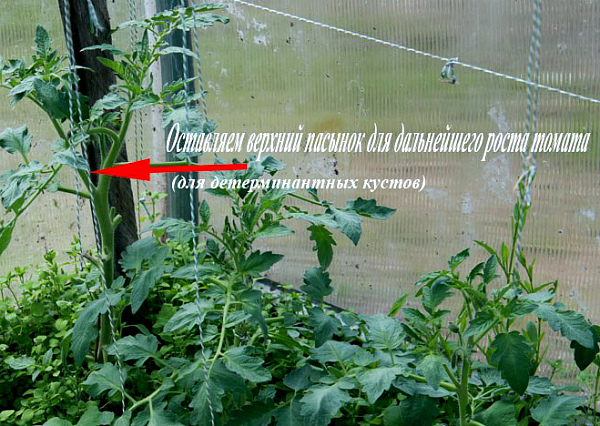
Technology of forming a determinate tomato bush
Properly pruning determinate tomatoes requires creating a backup shoot. The top shoot will be able to become the main trunk when needed.
Properly shaping crops into 2 or 3 stems maximizes harvest yield. If seedlings are scarce, grown side shoots are successfully used; these will already have their own root system after 3-4 days of planting. For dense plantings, it's recommended to grow plants into a single stem, while for plants spaced more than 60 cm apart, shaping into 2-3 stems is recommended.
Indeterminate
Indeterminates can grow indefinitely, sometimes reaching a height of 7-8 meters. These vegetable crops are trained into single or double stems. The latter is appropriate if the area is large and weather conditions are favorable. Any side shoots detected should be trimmed off. Lower leaves also need to be removed. As they grow, inspect the plants and remove 1-2 leaves weekly. Removing lower foliage, which eventually provides no benefit to the plants, should be done before the first vegetables form. Waiting for the leaves to fall off on their own can result in unpleasant fungal infections of your favorite crops.
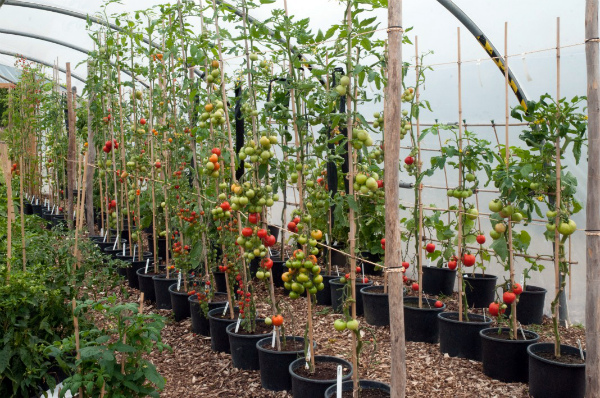
So, in practice, there are three possible ways to carry out pinching of indeterminate varieties.
The advantages of single-stem pruning, where all shoots are removed, leaving only the top, are simplicity, more frequent planting, and, consequently, a larger harvest. Disadvantages include the need for a high greenhouse and the need to purchase a large number of seedlings.
The second option is intermediate. It involves leaving the side shoot under the first inflorescence and pinching it out after one or two flower clusters have emerged. The advantages include the ability to harvest more fruit from the lower part of the plant and slightly slowing growth. The disadvantages include additional staking and pinching of the second stem, which should be done in a timely manner.
When forming two stems, a shoot is left under the first inflorescence, removing the others, and tying it to the main stem. The advantages of this method are that few seedlings are required, most of the fruit ripens from the bottom, and the bush's growth can be effectively controlled. The disadvantages are that it increases the strain on the plant, and the distance between crops becomes wider during planting.
In all three options, planting seedlings at an angle has proven to be effective.
Video: "Forming Tall and Medium-Growth Tomatoes"
This video demonstrates tactics for cultivating tall and medium-sized tomatoes in a greenhouse.