
Growing tomatoes in a greenhouse
Content
Preparing the soil in the greenhouse
Before planting tomatoes in a greenhouse, the soil must be prepared. Otherwise, the vegetables will grow poorly. The entire process should be completed before early March, when the soil begins to thaw rapidly. A greenhouse accumulates heat due to sun exposure, so it's important to choose a location with maximum sun exposure. Even the slightest shade will reduce the yield.
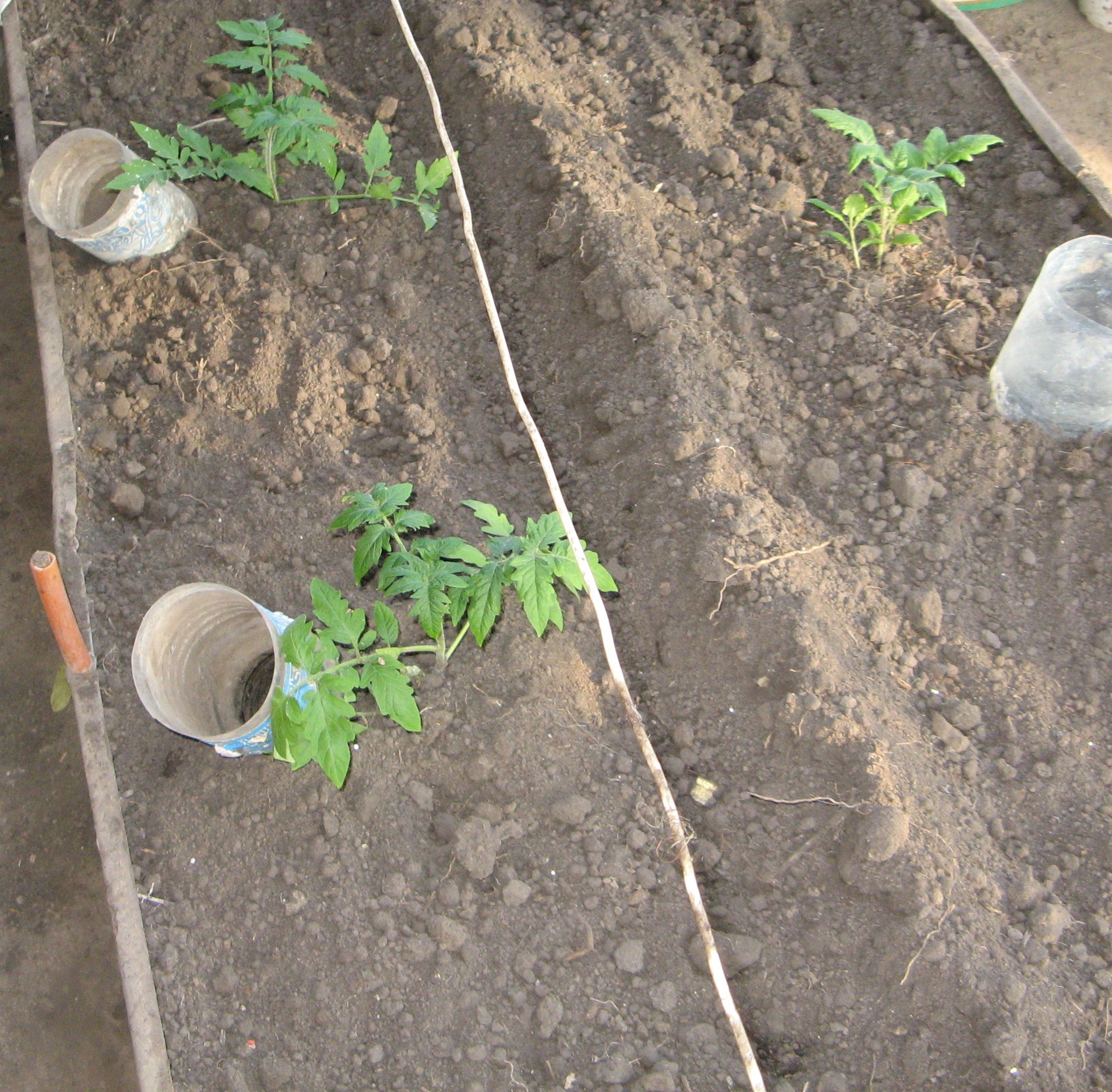
The greenhouse must have vents on the side walls to ensure sufficient fresh air flow. Without proper ventilation, proper flowering is impossible.
Soil type determines the success of greenhouse tomato cultivation, but any greenhouse soil requires fertilization. If the soil is predominantly loamy, then a bucket of compost, peat moss, and wood shavings should be added per square meter.
To effectively use peat soil, one bucket of humus, sawdust, and turf soil per square meter is sufficient. Also add half a bucket of sand, a tablespoon of potassium sulfate, and two tablespoons of superphosphate. After applying the mixture, the area should be dug over. It's important to remember that late blight can attack a greenhouse through contaminated soil. Therefore, be careful when using soil where potatoes or tomatoes were previously grown.
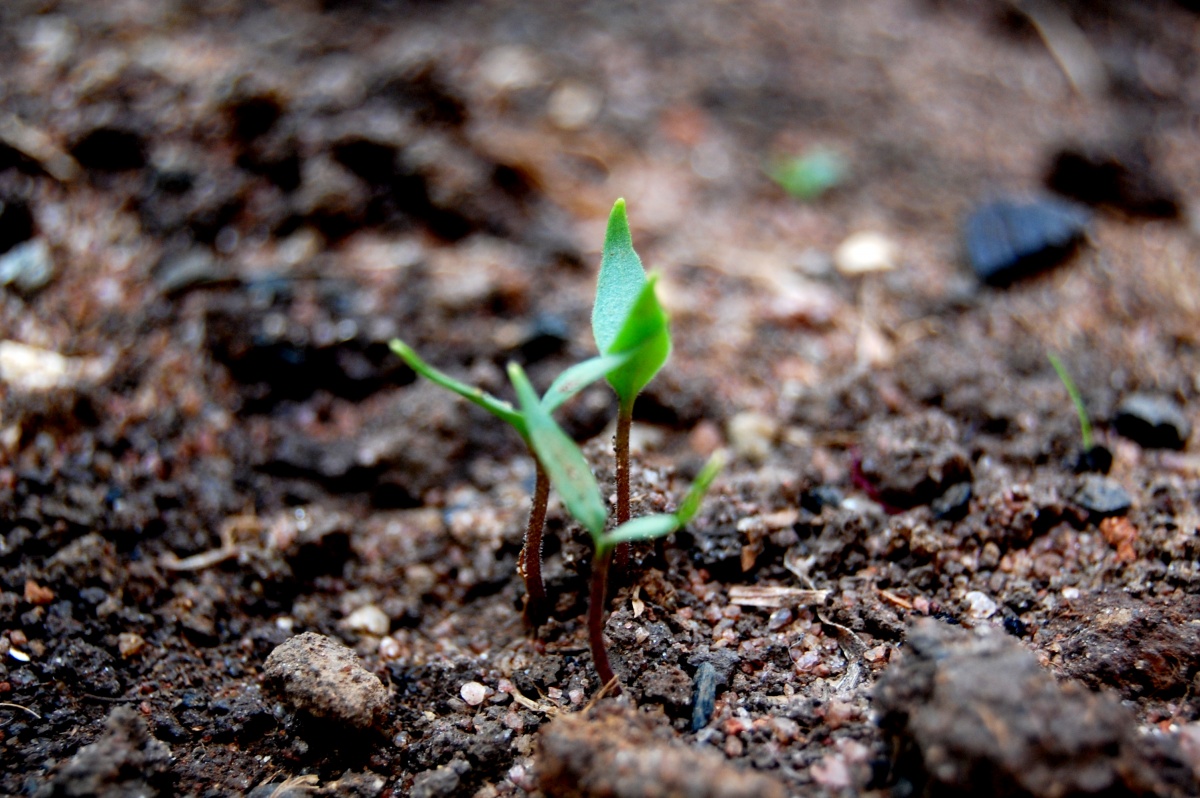
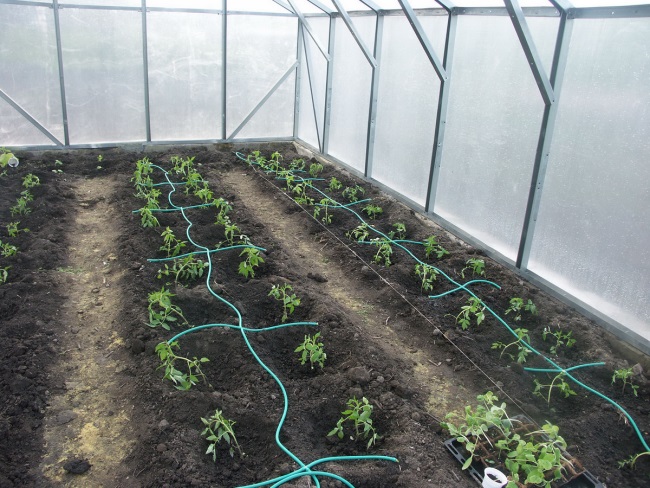
The beds also need to be prepared in advance, following the layout. This work should be completed at least 7 days before planting the tomato seedlings. The beds shouldn't be too wide; 90 cm is sufficient. The height of the plant shouldn't exceed 40 cm.
It's best to space the beds 60 cm apart. Immediately before planting the seedlings in the soil, they should be generously watered with warm potassium permanganate (1 g per bucket of water). A liter of the solution should also be added to each hole.
Mulching the soil will reliably protect tomatoes from adverse growing conditions and pest attacks. Pests such as ants, while harmful, also benefit the soil by loosening it.
Video: "Greenhouse Tomato Growing Technology"
The video's author explains in detail how to grow tomatoes in greenhouses and indoors.
Preparing seeds for sowing
To ensure good results from growing tomato seedlings, you need to prepare the seeds. Seed treatment can help prevent various diseases. To do this, simply place the seeds in a cloth bag and soak it in a potassium permanganate solution (1 g per glass of water).
How long? 20 minutes is enough. Afterward, rinse the seeds with clean water and place them in a special fertilizer solution. After 12 hours, remove the seeds and place them in a warm place.
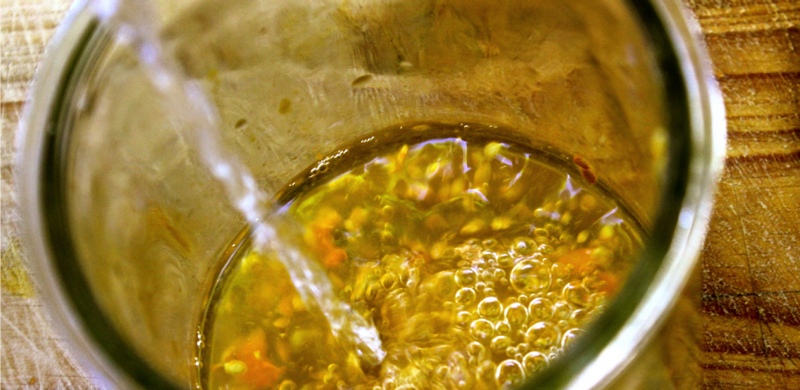
When sowing, maintain a distance of 2 cm between seeds. Place a bag of seeds in a nitrophoska solution (1 teaspoon per liter of water), then in clean water without rinsing. Leave the seeds in the water for 24 hours. Next, place the seeds in the refrigerator. For how long? 48 hours. The seeds must be moist, as they do not tolerate dryness well. After this procedure, the seeds can be sown in the soil.
Hybrid seeds don't require any preparation for planting. However, they should be planted only in prepared soil.
The seedling container should be at least 5 cm high. Water the soil generously and compact it lightly. Dig holes 1.5 cm deep and 7 cm apart for planting.
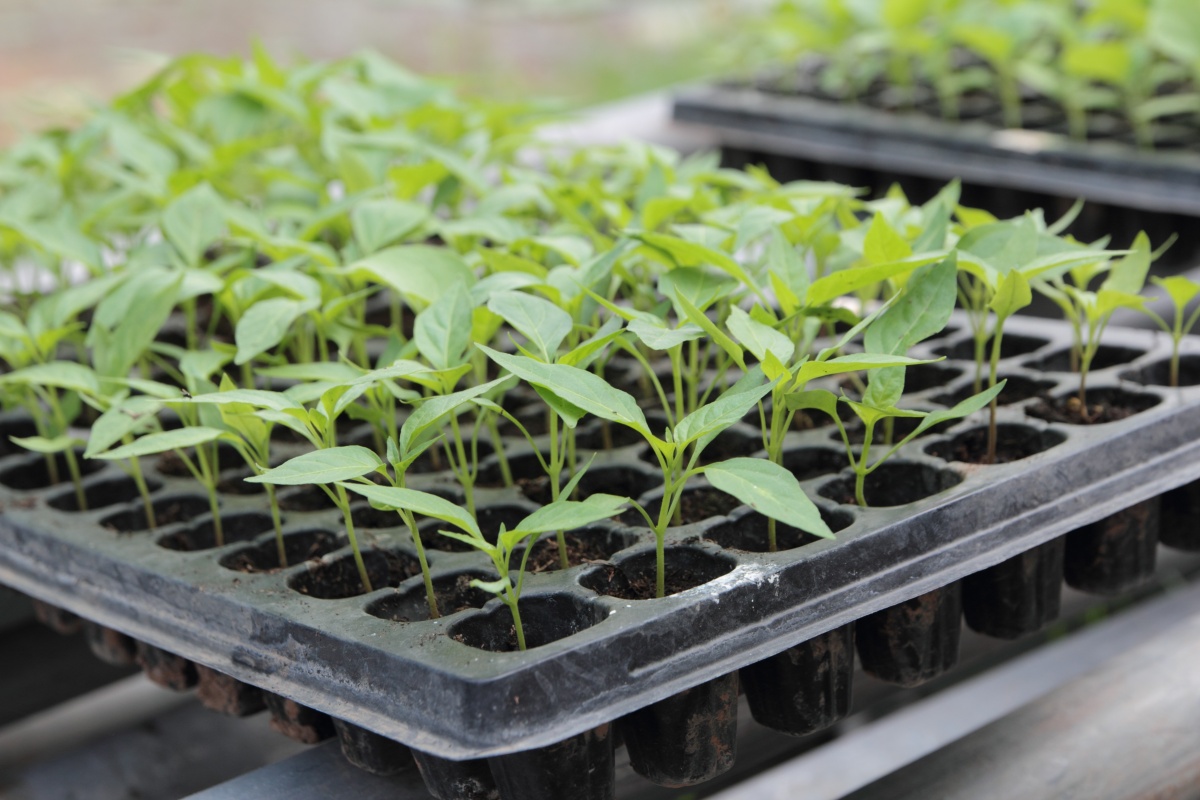
Place the container with the seeds in a bright, warm spot. After 5 days, cover the container with plastic sheeting. The seedlings can be transplanted and grown in a greenhouse as early as February.
Planting and care
Greenhouse vegetables are planted vertically from seedlings. For tall-stemmed seedlings, there are specific transplanting methods:
- Make a double hole (one located at the bottom of the other) that matches the size of the pot. Place the plant in this hole and cover it with soil. The seedlings will take root in less than two weeks.
- Plant tomatoes in a greenhouse in a staggered pattern, spacing them 60 cm apart. Water these seedlings only after 2 weeks.
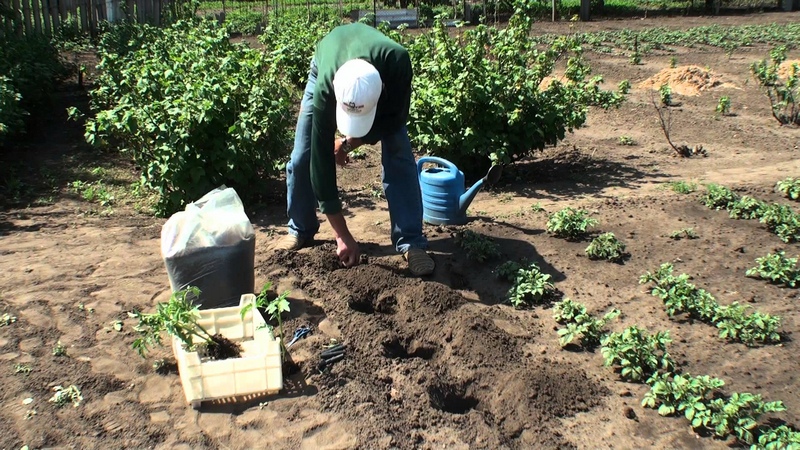
Mulch will help protect planted seedlings from pests and parasites. This procedure is essential, as even ants won't bother your tomatoes after it's applied.
An important component of growing vegetables is proper plant care.
Rules for caring for tomatoes in a greenhouse
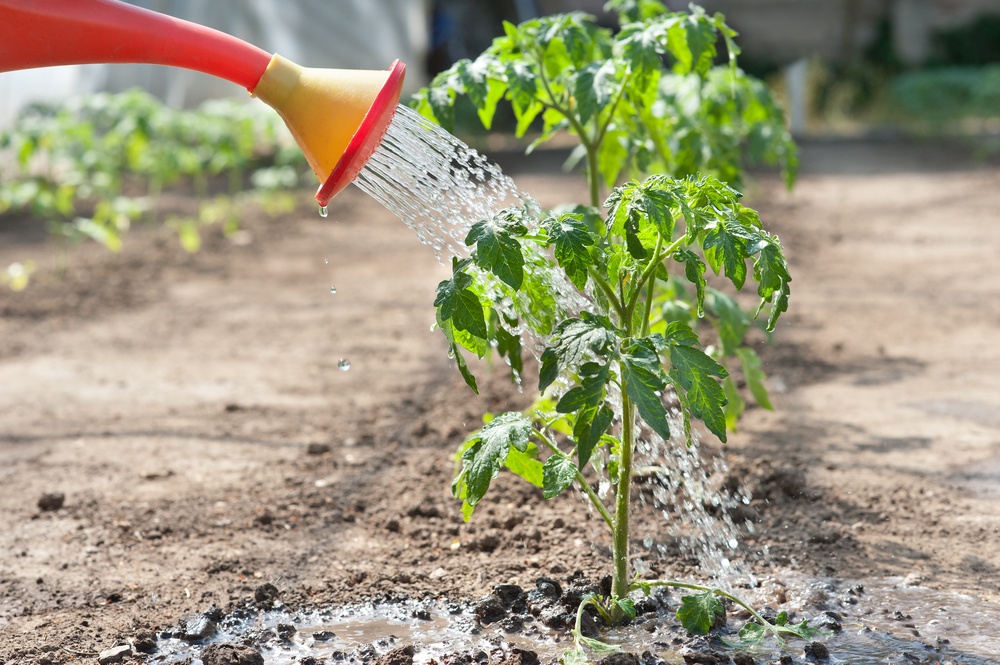
- Watering should be avoided as soon as the crop is exposed to open ground conditions. Moisten the soil only after 10-14 days. Water should be prepared: settled and at a temperature of 20°C (88°F). Cold water is very harmful to the plant. Until flowering, water the vegetable every four days. How much water is required per square meter of area? Tomatoes should have sufficient moisture, up to 5 liters per unit area. Once flowering occurs, increase the watering amount to 13 liters per square meter. Morning watering will prevent condensation.
- Staking is necessary regardless of the vegetable type and variety. If tomatoes are growing stationary for more than 12 days, they can be staked. During this time, a 2-meter support is sufficient for each bush. Typically, the plant is trained into a single stem, leaving up to seven flower clusters.
- Ventilation will ensure a proper microclimate in the greenhouse, which has a positive effect on the plants. The plant tolerates an open window; you can even lift the ends and the film. Be sure to ventilate the greenhouse every couple of hours, especially during flowering. On a hot day, the temperature in the greenhouse should be 26°C (79°F), and on a cool day, 20°C (68°F). At night, the temperature should be maintained at 16°C (61°F).
Pinching out stepsons
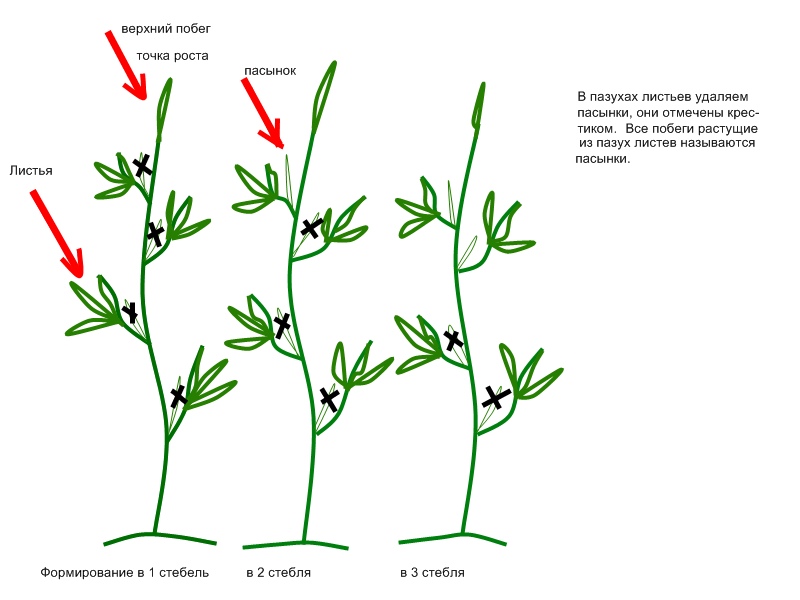
It's generally accepted that only the lower stem should be left, while the other side shoots should be removed. This procedure is best performed when the weather is cool. The best time to do this is in the morning. The side shoots can be either trimmed or torn off. The main thing is to remember to disinfect.
Top dressing
Plants require 3-4 applications of fertilizer during their development. The first application is best done 20 days after planting the seedlings. Ideal fertilizer, mullein, and nitrophoska are used as the starting materials.
After 10 days, apply another fertilizer with potassium sulfate and "Plodorodiye." Fertilize the tomatoes for the third time on the 13th day after the previous application. Ash and superphosphate are used as the starting materials.
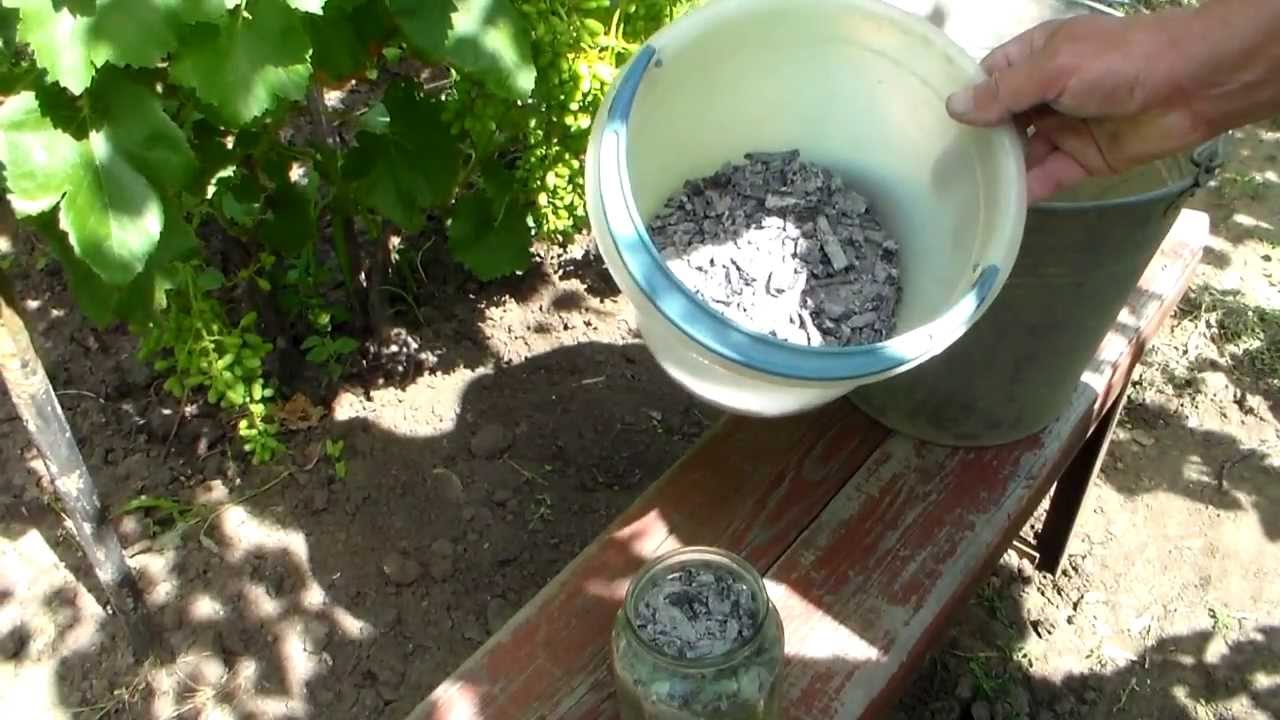
The final feeding is optional and is used to strengthen the crop. Proper timing between nutrient applications is the key to an excellent harvest.
Prevention and treatment
Tomatoes are a favorite crop for various fungi, aphids, ants, and worms. These vegetable pests must be controlled. To prevent pests, such as ants, from damaging the crop, preventative measures are essential. There are many folk remedies for pest prevention, including mulch.
Ants in a greenhouse aren't just harmful. Paradoxically, they're also beneficial. They loosen the soil and enrich it with humus, nitrogen, and potassium. They also destroy other pests that infest tomato plants.
At the same time, ants consume seeds and young shoots of crops and facilitate the spread of aphids. As a result, vegetables grow poorly and may even die altogether. When they bite, ants inject a venom that triggers allergies.
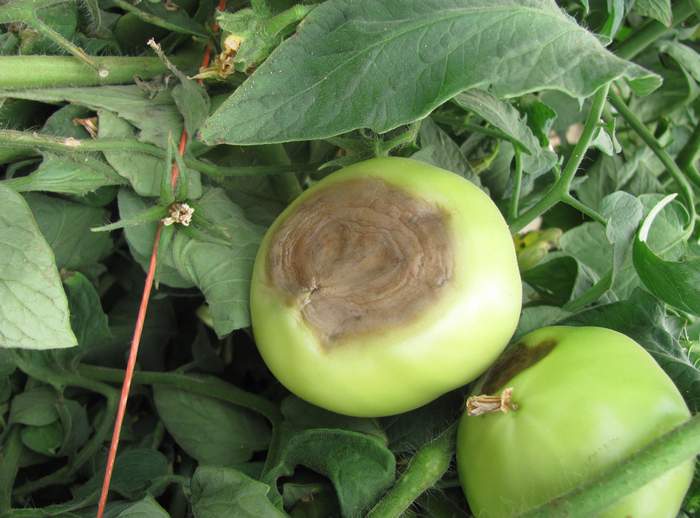
Failure to take preventative measures predetermines treatment of plants for parasites. Ants, for example, are "afraid" of both physical removal and chemical pest control. You can also get rid of garden pests using folk remedies.
Harvesting
Early-planted tomatoes and their early-ripening varieties allow you to harvest as early as June. You can even harvest the fruits daily, but be sure to remove the stems.
If cold weather sets in, the fruits can be picked green: they will ripen perfectly on a windowsill or in a wooden box.
The efficiency of tomato cultivation will be ensured by:
- Correct and timely pinching out of side shoots;
- Watering plants with warm water;
- Systematic fertilization with nutrients;
- Correct temperature conditions of the soil and greenhouse;
- Sufficient space between beds.
Growing greenhouse vegetables is an interesting endeavor for both beginners and experienced gardeners. Achieving positive results is easy, but it all depends on the amount of effort you put in. You can determine why your vegetables aren't growing well by their appearance. Perhaps the tomatoes need feeding, or they are being attacked by ants.
By building a greenhouse on your property, you can harvest your first crop as early as June. With proper care, a single plant can yield up to 10 kg of juicy fruits. No matter how many years you've been growing tomatoes, you can achieve effective results on your first try.
Video: Growing Tomatoes and Cucumbers Together in a Greenhouse
This video will show you how to properly grow tomatoes and cucumbers together in a greenhouse.