
Fertilizing tomatoes during flowering in a greenhouse: proven methods
Content
What fertilizers are needed?
High-quality tomato development in greenhouse conditions is impossible without mineral fertilizers. The most important nutrients for tomatoes are nitrogen, phosphorus, and potassium. Main attention should be paid to ensuring sufficient phosphorus: fertilizing tomatoes with it is essential, otherwise they will not be able to properly absorb nitrogen or other microelements and nutrients. The main signs of phosphorus deficiency include the appearance of characteristic purple-violet spots on the undersides of leaves, gradual curling of leaves along the midrib, and a noticeable delay in fruit formation.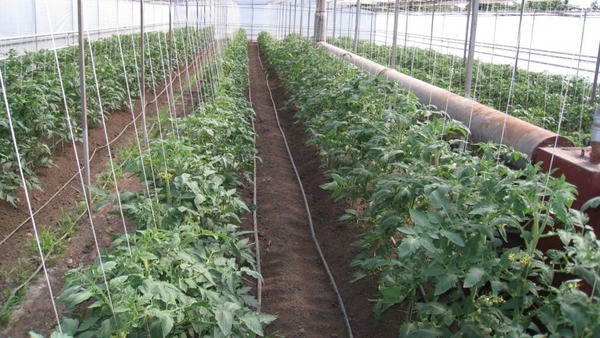
When planning tomato plant feeding, remember that greenhouse tomato plants consume large amounts of the trace element potassium. This trace element is beneficial for the formation of strong stems and helps plants absorb and process carbon dioxide. If the plants lack potassium, ammonia nitrogen gradually accumulates in their lower leaves, causing them to wilt and eventually die.
Sometimes, ordinary yeast is used to feed greenhouse tomato plants. Surprisingly, it's a source of many micronutrients essential for tomatoes. This solution can be used twice per season. Prepare the solution as follows: take one packet of dry yeast, mix it with two tablespoons of granulated sugar, and dilute with a small amount of warm water. Let the mixture sit for a while, then mix it with 10 liters of water. A standard garden watering can will fill half a liter of the prepared solution. The positive effects of the mixture will be noticeable within a few days – the plants will become stronger and develop faster.
In addition to the established list of fertilizers, you can add specific fertilizers based on the condition of the tomatoes in your greenhouse. Typically, the crop sends clear signals to the gardener about micronutrient deficiencies simply by their appearance:
- If the veins on the leaves, as well as their undersides, change their natural color to purple, this means that the tomato bush is in dire need of phosphorus - spray such bushes with a superphosphate solution, and they will return to their original color;
- Blossom end rot is a characteristic sign of calcium deficiency. Such bushes should be treated with a solution containing calcium nitrate.
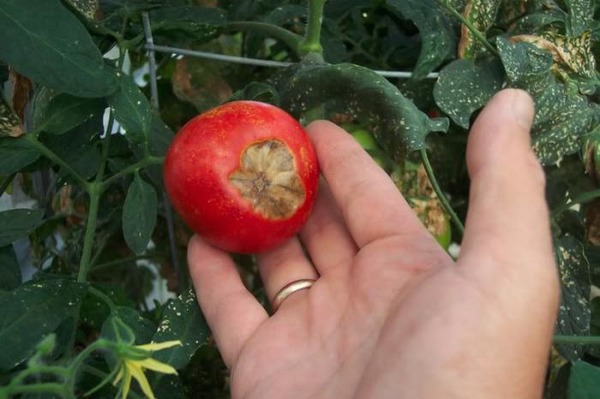
- If the plant becomes thin, pale, or yellow, this indicates a nitrogen deficiency. Treating the bushes with a urea solution or "green tea," the recipe for which you'll find below, will help combat the problem.
Video "What to Feed"
This video will show you how and what to feed tomatoes in a greenhouse.
When and what kind of fertilizing is done
Fertilizing tomato plants requires several times during their life cycle, with many people applying the first feeding immediately upon transplanting the seedlings into the greenhouse. Pre-dug holes are filled with humus (compost can be used), along with ash. Humus is essential because it contains a significant amount of nutrients, while ash is essential for its microelements, which have a beneficial effect on the development and fruiting of the plant.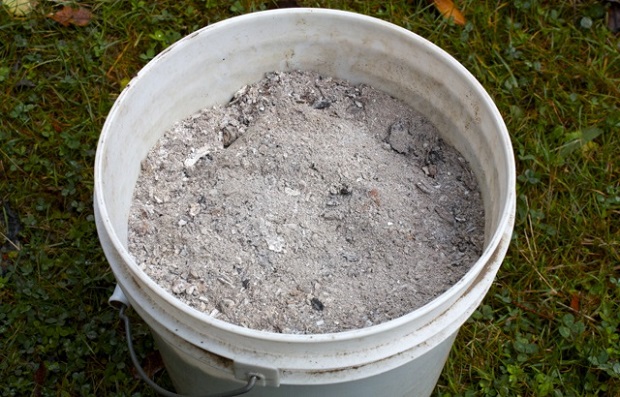
Once the tomatoes are planted, the need for further fertilizing arises. Many gardeners endlessly debate the ideal solution. Some believe it's best to fertilize greenhouse plants no earlier than 14 days after transplanting. However, if you prefer to support plants weakened by transplanting, you can fertilize them with a specially prepared solution called "green tea." It's easy to prepare: pick any herb, including weeds (nettle, plantain, etc. are suitable), take a bucket of mullein, and 250 g of wood ash. To obtain 50 liters of solution, you'll need about 5 kg of finely chopped greens, which, along with the ash and mullein, are added to water and left to steep for several days. After this time, the total volume of the solution should be brought to 100 liters. The resulting solution is added to the tomatoes, using about 2 liters per bush.
It's noteworthy that farmers refrain from feeding greenhouse plants with mineral fertilizers immediately after planting. This is because such mixtures have an uneven effect on the crop: some lead to lush foliage, while others stimulate flowering.
Therefore, it is worth limiting yourself to organic matter or feeding the bushes with complex fertilizer.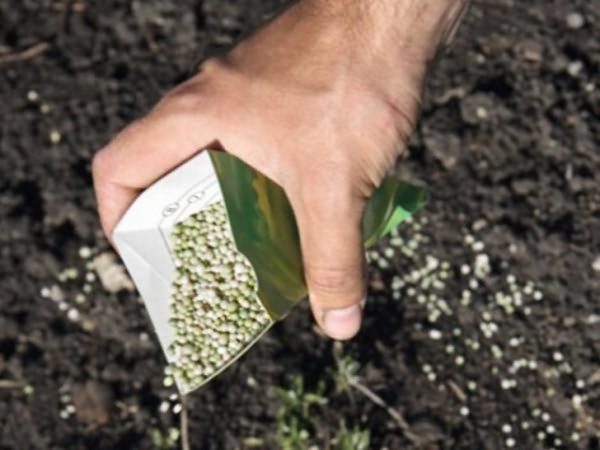
If the soil in your greenhouse is highly nutrient-dense, you can skip fertilizing newly transplanted seedlings. In this case, the approximate frequency of fertilizing your tomatoes will be as follows:
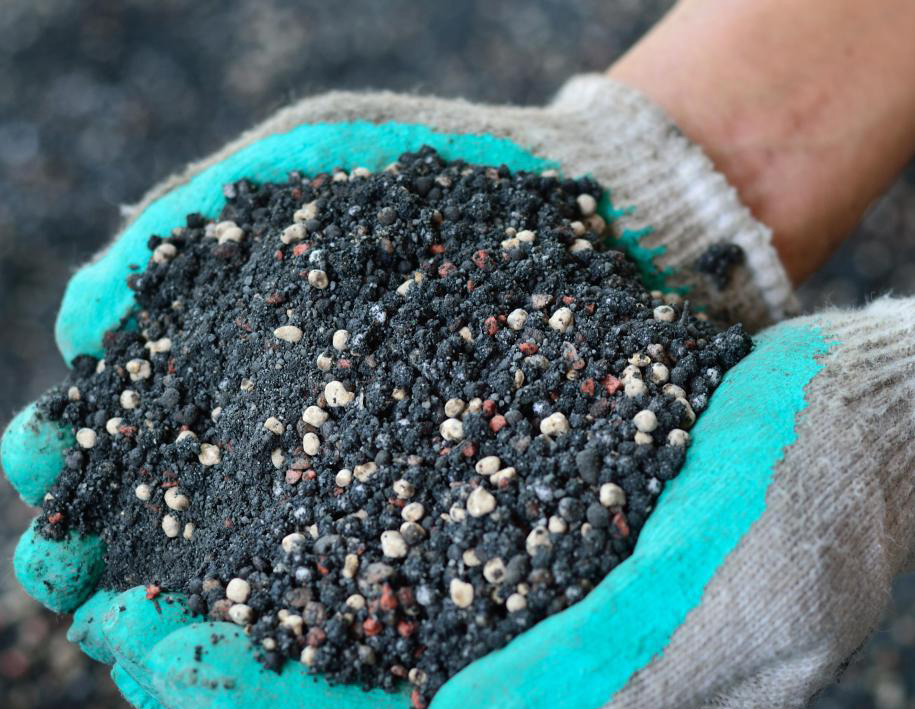
- Tomatoes are first fed two weeks after transplanting the seedlings to their permanent location in the greenhouse. For this purpose, mineral fertilizers are used (40 g of phosphorus, 25 g of nitrogen, and 15 g of potassium), dissolved in a bucket of liters of water. The solution should be prepared so that each tomato plant receives approximately 1 liter.
- The next time the question of what to feed tomatoes arises is when they bloom heavily, especially in a greenhouse. This occurs much earlier than in open ground. Fertilizing at this stage is essential, as the plants need nutrients to ensure good fruit set. The optimal solution is as follows: for every 10 liters of water, add half a liter of liquid mullein and bird droppings, along with 1 tablespoon of potassium sulfate. Calculate the application rate so that each tomato plant receives 1.5 liters. If organic mixtures are unavailable, you can use a nitrophoska solution—1 tablespoon per 10 liters of water is sufficient. Water each plant so that it receives approximately 1 liter. During this period, it's also a good idea to preventatively spray the plants with a calcium nitrate solution—this will protect your tomatoes from blossom-end rot. For an effective solution, 1 tablespoon of the product per 10-liter bucket will be enough;
- When the ovaries begin to form, you can feed the tomatoes with a solution of boric acid (10 g), wood ash (2 l), and hot water (10 l). This "cocktail" is left to steep for 24 hours, then the tomato plants are watered at a rate of 1 liter per plant. This solution effectively helps tomatoes produce a crop faster and also accelerates ripening.
- Fertilize greenhouse tomatoes again when the active fruiting period begins – this will help speed up ripening and improve their flavor. This time, use 1 tablespoon of sodium humate and 2 tablespoons of superphosphate. Dissolve the fertilizer in 10 liters of water and apply according to the standard procedure.
-
In any case, there is no definitive fertilizing schedule that works for all tomatoes. Each gardener relies on their own experience and the specific characteristics of the tomato varieties grown in greenhouses.
Foliar feeding
The benefits of standard root feeding are undeniable, but foliar spraying is also beneficial: plant leaves and stems are treated with special solutions. This treatment provides the plants with micronutrients not found in the soil. If tomatoes are deficient in specific micronutrients, they can be sprayed with solutions specifically formulated with those micronutrients. This type of feeding produces immediate results, noticeable within a few hours of application. However, applying the same substances to the soil will not show results for at least one to two weeks.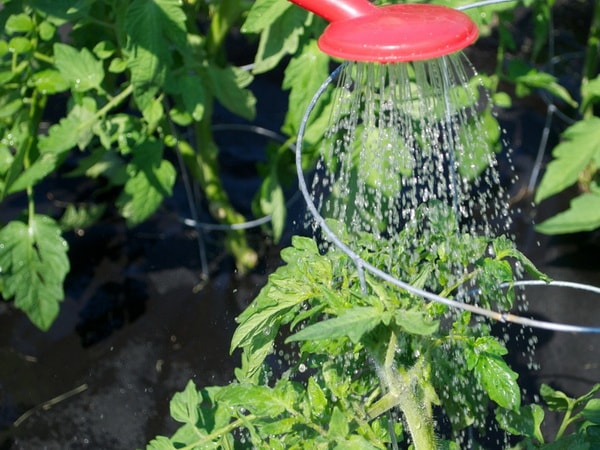
During the active flowering period of tomatoes, in addition to standard root feeding, you can support the plants with additional spraying using a solution of boric acid and wood ash extract. The latter is prepared as follows: pour 2 cups of ash into three liters of hot water and let it steep for several days. Next, filter the infusion to remove any sediment and add water to bring the volume to 10 liters.
At first glance, it might seem that fertilizing tomatoes repeatedly is a thankless and time-consuming task. The plants should be perfectly happy with the nutrients already present in the soil after autumn and spring preparation. Indeed, if the soil in the greenhouse isn't depleted and the gardener is careful to follow the planting sequence, they will get a good harvest. However, with regular fertilizing, the harvest will be much more abundant and tastier. 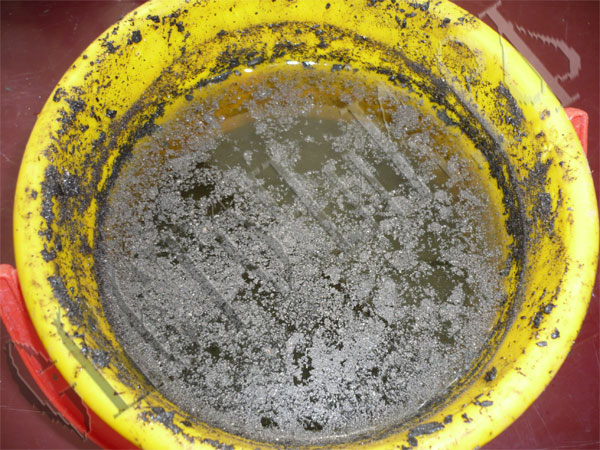 Moreover, caring for young plants brings real pleasure to a true gardener – it’s so nice to see how tomatoes come to life under your hands, filling with strength and health.
Video: "First Fertilizing of Tomatoes"
From this video you will learn how and what to use for the first feeding.