
How to plant tomatoes in a greenhouse correctly
Content
Preparing soil and seeds
Growing tomatoes in a greenhouse differs from similar operations carried out outdoors. These differences begin with the preparation stage. This stage consists of two sub-steps: proper soil preparation and seed preparation. Let's look at each step in more detail.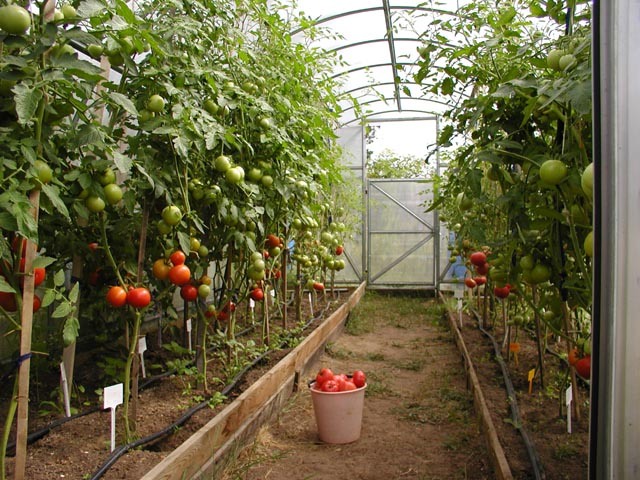
Soil, both in greenhouses and open fields, plays a vital role in the growth of crops and fruit ripening. Manure-based soil is typically used in greenhouses. This is because it's not always possible to install a greenhouse structure on top of black soil. Therefore, soil is brought into the greenhouse separately. The soil added should be high-quality, previously fertilized with natural additives. This will prevent chemical contamination of tomatoes. Despite the somewhat higher cost of such soil, purchasing it will save money on fertilizers applied during the growing season to restore soil fertility.
Preparing the soil for tomato beds is done as follows:
- First, remove the top layer of soil from the bed. This should be approximately 20 cm;
- During the soil removal process, a trench is formed. Its length should extend along the entire length of the plantation;
- Add compost to the bottom of the resulting trench. It should be left to decompose for three years. Remember that the compost should not contain hay or straw, as these components increase the time it takes to decompose in the soil.
- approximately half of the ditch should be filled with humus;
- After this, either new soil or soil that was removed when digging the ditch must be poured on top of the humus.
This is the simplest soil preparation method. If you want to further increase your chances of success when growing tomatoes in a greenhouse, additional preparations are recommended. To control weeds, use disinfected soil.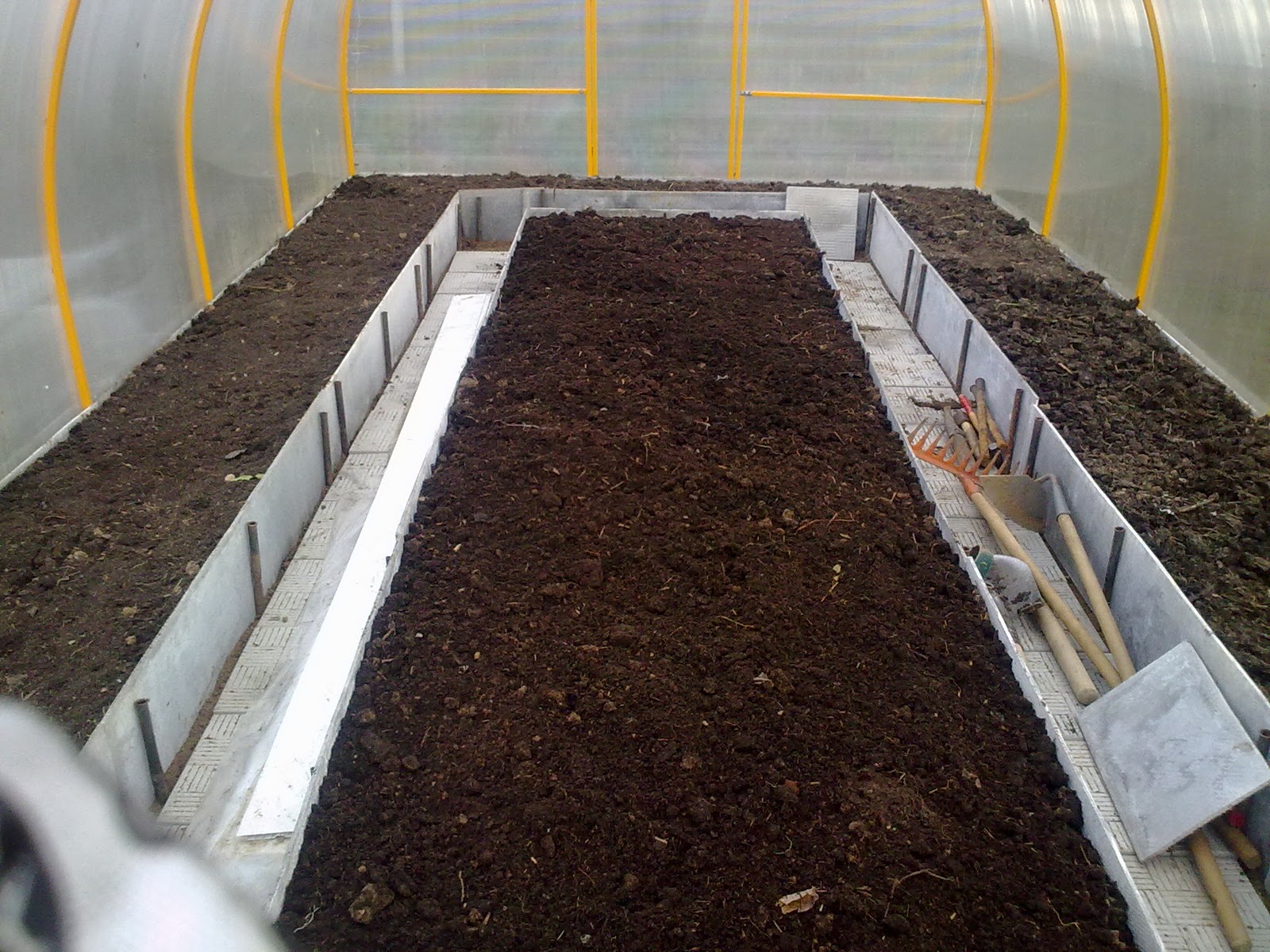
It's important to remember that the main indicator of soil fertility is the presence of earthworms. They are the ones who can best prepare the soil for the next gardening season. Therefore, it's recommended to stock the soil in the greenhouse with earthworms, which you'll have to dig up yourself.
Properly prepared soil will ensure a future excellent tomato harvest. But it's also important to properly prepare the seed. Since greenhouse tomatoes are most often grown using seedlings, this procedure significantly increases seed germination. It will also ensure tall, strong seedlings that can be planted in a greenhouse.
We select seed material as follows:
- First, decide on the variety (early, mid-season, or late). The choice of variety directly determines when to sow the seeds and plant the seedlings in the greenhouse soil. Remember that choosing a variety should be based not only on taste but also on its agronomic characteristics;
- The seeds must be visibly unfrozen and of good quality. There should be no plaque or mold on them;
- Next, the seed material must be sorted by size, discarding all unsuitable seeds.
Select the largest seeds, free of visible defects. Properly calibrated seeds will ensure uniform tomato germination.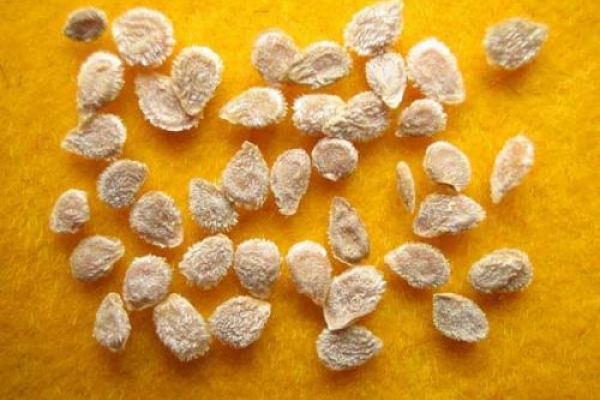
Once the highest-quality seed has been selected, it is disinfected. For example, the seeds can be soaked in a weak solution of potassium permanganate or calcined. In the latter case, they must be heated at 50°C for three days. Then, before sowing, it is recommended to treat the seeds with a growth stimulant.
The planting material prepared in this way can be used to grow seedlings. They can also be planted in open ground. However, experienced gardeners recommend growing tomatoes in a greenhouse using the seedling method.
Video: How to Grow Tomatoes in a Greenhouse
This video discusses 5 rules for growing tomatoes in a greenhouse.
Sowing technology
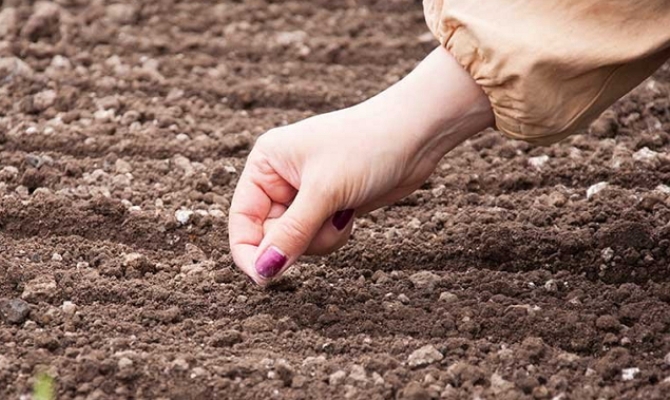
Tomato seeds can be planted in greenhouse soil or for seedlings in early March. Seed planting is carried out as follows:
- Use a thin stick or knife to make furrows in the ground, approximately 1.5 cm deep. The distance between them should be 2.5 cm;
- we fill them with seed material;
- then sprinkle soil on top of the seeds.
After the seeds have been planted in the greenhouse, the temperature should be maintained at 23-25°C. When the first seedlings appear in the beds, it's a good idea to provide them with supplemental lighting using phytolamps. If the lighting has been properly provided, the seedlings will be bright green.
It takes about 20 days from planting the seeds to the development of the first true leaves. The seedlings require moderate watering. Remember to ventilate the greenhouse regularly.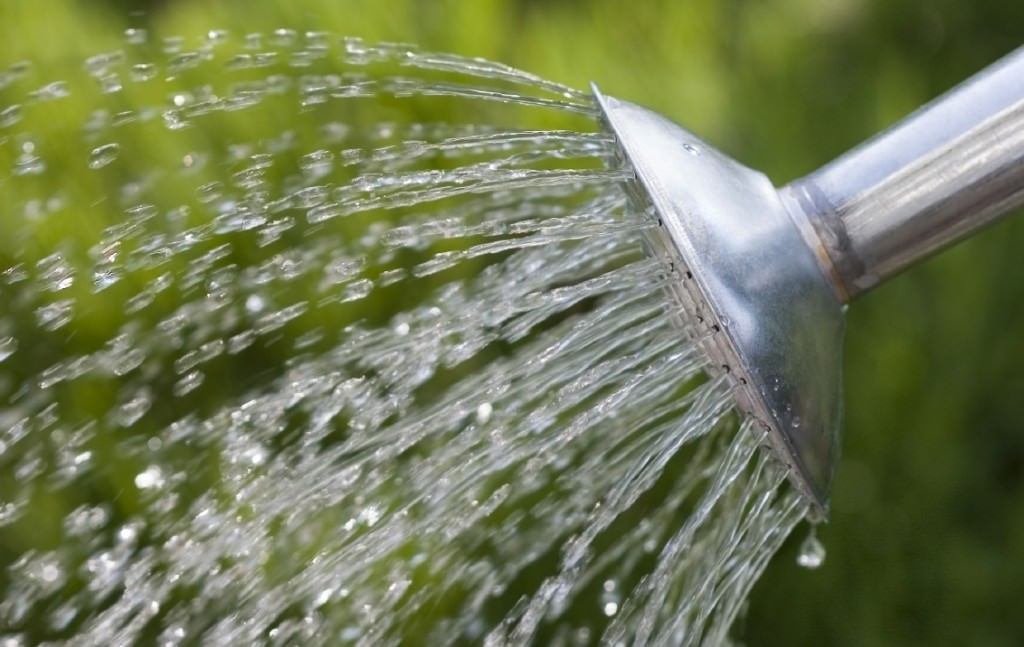
To obtain seedlings, tomato seeds should be planted as follows:
- First, determine the planting time. It's important to keep in mind that seedlings need 50 to 70 days to grow. This period begins with the recommended time to plant them in the greenhouse. In a heated greenhouse, planting occurs in April. In this case, sowing seeds for seedlings occurs in February. In an unheated greenhouse, transplanting occurs in May (the first ten days). Therefore, sowing in this case occurs in mid-March.
- It is most convenient to grow planting material in separate containers, the height of which is approximately 15 cm;
- The selected containers are filled with the substrate. It should be compacted. After this, the surface of the soil mixture is leveled;
- Next, use a knife to make furrows into which the seeds are placed. They should be covered with soil on top.
Immediately after planting, water the containers. Afterward, place them in a room with a temperature of 25°C. Before transplanting to the greenhouse, care for the plants is as follows:
- During the first two days of planting, round-the-clock artificial lighting is required;
- When the first shoots appear, the room temperature should be lowered to +15°C. This will prevent the seedlings from stretching excessively;
- Watering should be done as the soil dries out. It should be moderate. Tomatoes should not be watered until the first true leaf appears. Only sprinkling the soil with water is permitted;
- The room should be regularly ventilated, while avoiding drafts.
To transplant seedlings, prepare individual peat pots or plastic cups. Each plant is carefully removed and its root is pinched. This procedure helps form a well-branched rhizome.
Picking tomato seedlings for subsequent planting in a greenhouse can be done in the following ways:
- Each plant is planted in a separate cup. This will result in a strong and tall bush;
- Two plants are placed in a single container. When they reach a height of 10 cm, the stems of the bushes are tightly tied together with nylon thread. This results in a bush with two roots. Here, the top of the less developed plant also needs to be pinched. This method significantly increases the tomato yield.
Hardening off seedlings should begin approximately 14 days before planting them in the greenhouse. To do this, the containers should be brought outdoors. Initially, they should be placed on the balcony for 2-3 hours. Then, gradually increase the time the seedlings are exposed to the open air to 24 hours.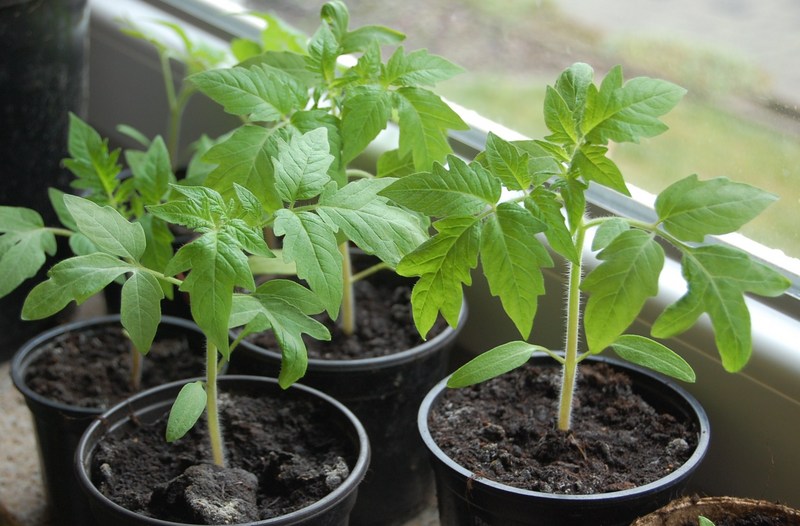
After this, the seedlings can only be planted in a greenhouse.
Transplanting
Once the seedlings have developed, they should be transplanted into a greenhouse. The greenhouse planting pattern is determined by the tomato variety. Remember that to get an excellent harvest, plantings should not be too dense. However, they require sunlight.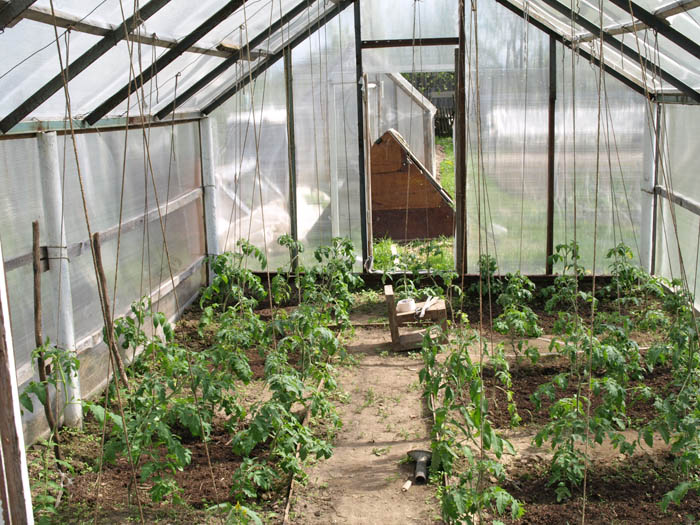
There is no single correct answer to the question "how to properly plant tomatoes in a greenhouse," as there are a wide variety of planting patterns:
- For low-growing, early-ripening varieties that form several stems, the distance between tomatoes should be 40 cm, and between their rows - 50 cm. It is recommended to use a checkerboard pattern when creating two rows;
- For determinate varieties that form 1 stem, the distance between their rows is 50 cm, and between plants – 25 cm.
- Indeterminate tall varieties should be planted in a staggered pattern in two rows. The distance between rows should be 80 cm, and between adjacent plants – 60 cm.
Once the planting pattern has been chosen, the seedlings are transplanted as follows:
- Dig holes in the soil, 5 cm deep. The roots shouldn't be too crowded in the holes. These holes should be prepared approximately two weeks before planting. This is done to ensure the soil is thoroughly warmed. Otherwise, there's a risk the seedlings won't establish in their new location.
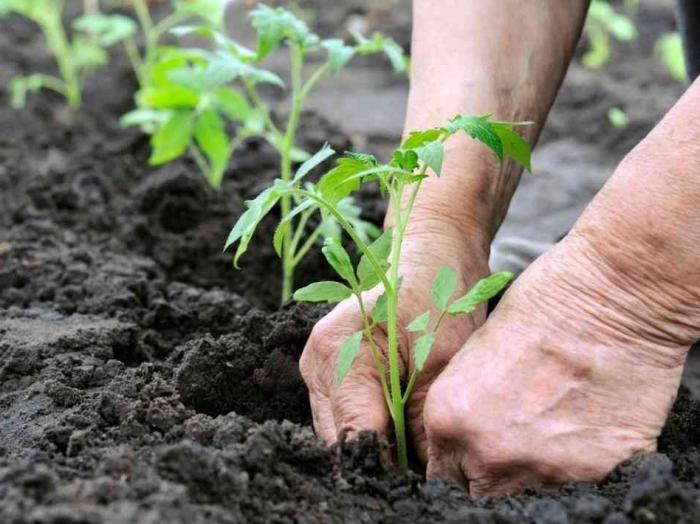
- We remove the young plant and place it in the hole. Remember to act carefully so as not to damage the bush's root system;
- The seedlings in the hole are covered with soil so that they are not pressed down too much, but the stem must be stable.
After planting, moderate watering is necessary. Misting the soil with water is recommended. This type of watering should be done initially. Once the seedlings have established themselves, water every 4-5 days. Approximately 4 liters of water should be applied per square meter. This procedure is usually performed at the roots in the morning. During the flowering period, it is recommended to increase the frequency of watering by 2-3 times.
The greenhouse should be ventilated approximately 1.5-2 hours after watering.
Another important aspect of tomato care is pinching out side shoots. These side shoots weaken the plants and should be removed. This procedure is performed in the morning. Tomatoes can be propagated using the removed side shoots. The first feeding should be done two weeks after planting.
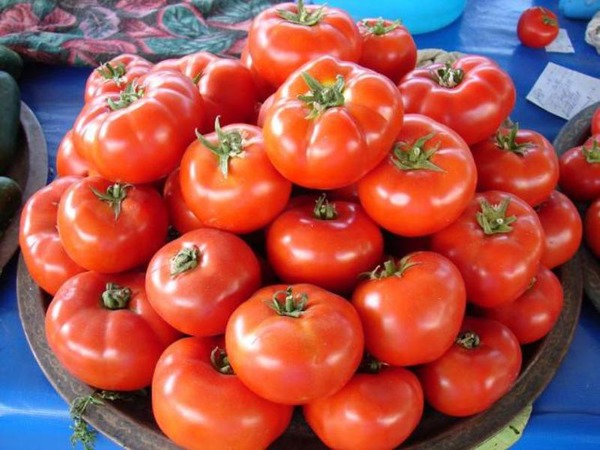
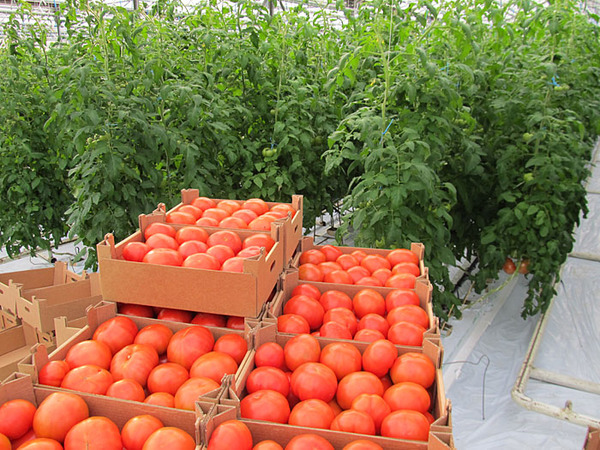
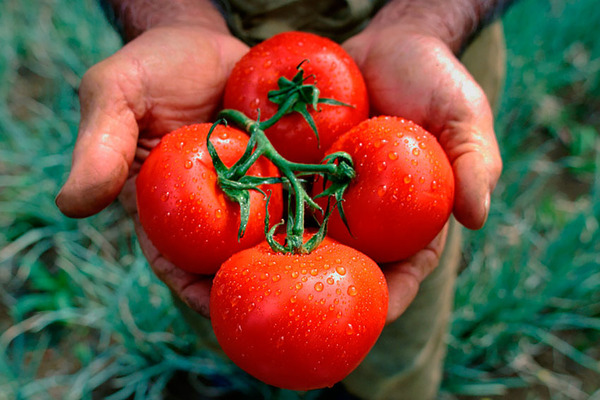
Growing tomatoes in a greenhouse is a challenging task. The key is proper planting and care. If done correctly, the harvest will be abundant and delicious. This is a true reward for any gardener.
Video: "Greenhouse Tomato Growing Technology"
In this video, a farmer shares his experience growing tomatoes.