
Very large tomato Pink Honey
Description
Novosibirsk breeders successfully developed the Pink Honey tomato. For ordinary consumers, this variety's characteristics boil down to three key features:
- large fruits;
- pink peel;
- honey taste of surprisingly juicy pulp.
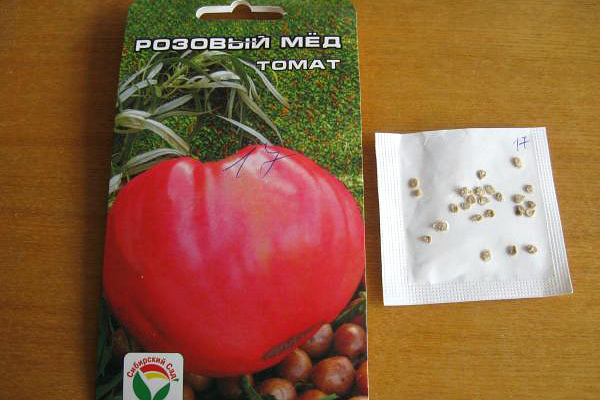
True farmers are interested in a more detailed description of the variety. Pink Honey is a determinate variety. This means that the plant's growth is limited, ending with a flowering shoot, from which the fruit appears. The maximum height of this variety's bush reaches 1 meter. Its distinctive features include high yields, despite its low growth rate.
Under favorable conditions, it is possible to obtain fruits weighing up to 1.5 kg.
The Pink Honey variety is not considered a hybrid. Although it has weaker disease resistance than hybrid varieties, it can be harvested in large quantities once the season is over. This variety ripens mid-early, so you won't be able to harvest early fruit. Ripe tomatoes can be harvested in the second half of July.
A description of this tomato wouldn't be complete without mentioning its benefits. The variety's recognized advantages include:
- increased commercial value of tomatoes;
- excellent taste;
- versatility of application;
- the possibility of growing in areas where the climate is not very comfortable.
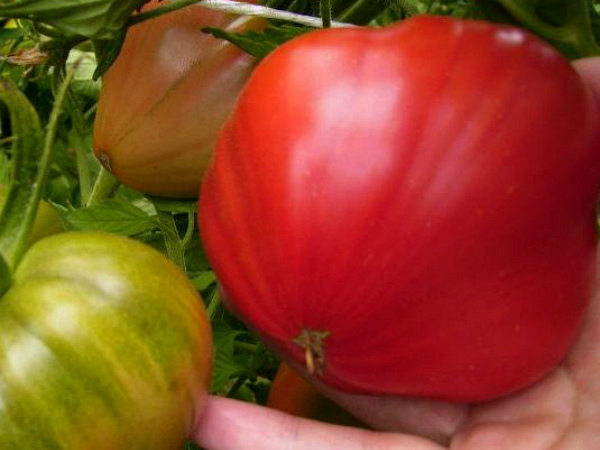
Furthermore, tomato fruits transport well, ripen in 110–115 days, and are resistant to cracking. Yields for this variety reach 5.5–6 kg per square meter of usable area.
Use of fruits
Tomatoes contain tyramine, which converts into serotonin after entering the human body. This element is a great mood lifter and helps cope with stress.
Tomatoes are beneficial for those with cardiovascular problems, kidney problems, or osteochondrosis.
Experts do not recommend using this variety for canning. It's best to eat the vegetables fresh. They are also suitable for making fresh, healthy and savory salads, sauces, tomato paste, and juices.
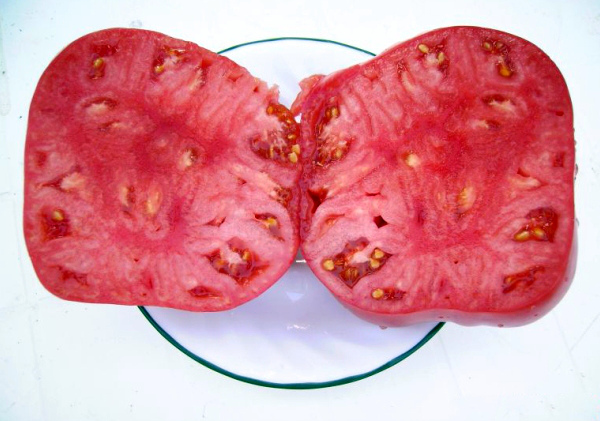
Since ripe, honey-flavored fruits become soft and don't store well when ripe, it's recommended to make juice from them. Here's how:
- Fresh and ripe fruits are washed and cut into large slices.
- Next, they are placed in a juicer.
- The resulting mass is transferred to a saucepan and brought to a boil.
- Then add sugar and salt to your taste.
The finished juice is poured into pre-sterilized jars and sealed. This juice keeps well. It's recommended to run the fruit through a juicer a couple of times, and then place the remaining pulp in jars and seal them. Come winter, it's ready for cooking.
If you like sweet and juicy tomatoes, feel free to choose this variety for planting.
Care Features
Before sowing, it's recommended to treat the seeds with a seed dressing and growth stimulant. This will help speed up germination. A temperature of 23–25°C (73–77°F) is ideal for sowing. Sow so that the finished seedlings can be transplanted within 55–60 days.
Agronomists recommend planting no more than three tomato plants per square meter. If possible, such tomatoes should be planted in the shade, as direct sunlight will weaken them and leave them with few leaves. This will result in vegetable diseases, requiring additional treatment.
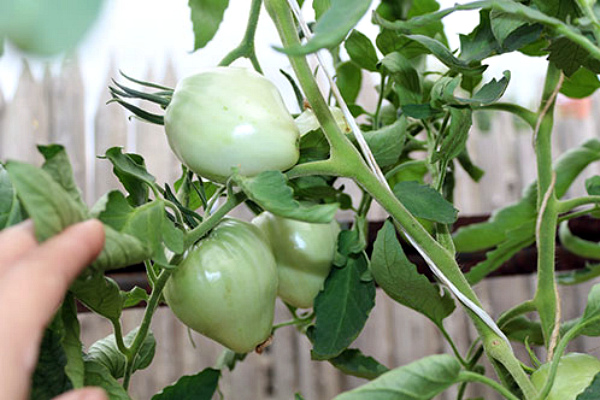
This variety requires training with 2-3 stems. This allows for a much larger harvest of your favorite vegetables. Since the bush itself isn't particularly strong but needs to support large fruits, it needs to be supported by tying it up.
This variety of tomato doesn't tolerate drought well. If such conditions occur, it's worth using fruit set stimulants. Timely watering is also essential. It's best to water the vegetables under the bush. To make this easier, leave small depressions when planting the seedlings. Each bush should receive about one bucket of water. Experts recommend morning watering, although some novice gardeners prefer evening watering. Watering your crops in the morning prevents disease development. These plants can withstand high temperatures well.
Fertilizing with complex fertilizers is recommended. The first application should be made a week after planting. The second application should be done a couple of weeks later. The third application should be made when the plants begin to bloom. Fertilizing should be done 2-3 times per month. Nitrogen and organic fertilizers are used to promote the growth of green vegetative parts. Chicken manure and cow manure should be diluted with water at a ratio of 1:20. Phosphorus and potassium fertilizers promote rapid ripening of vegetables and a pleasant taste. Treatment with potassium permanganate solutions, phytosporin, boric acid, and copper sulfate will help maintain plant health and prevent disease. Excessive pesticide application, which can sometimes occur, is indicated by the presence of unripe fruit at the top.
Video "Pink Honey Tomato Variety"
We offer you a review of the Pink Honey variety. You will find out whether the information on the seed packaging is accurate.