
Description and features of agricultural technology for the high-yielding Puzata Khata tomato
Content
History of the Puzata Khata tomato
The variety was developed by a group of breeders led by Vladimir Kachainikov in 2012. Just one year later, it was added to the State Register and recommended for gardeners throughout the country. The manufacturer is listed as Aelita, which produces seeds under its own brand.
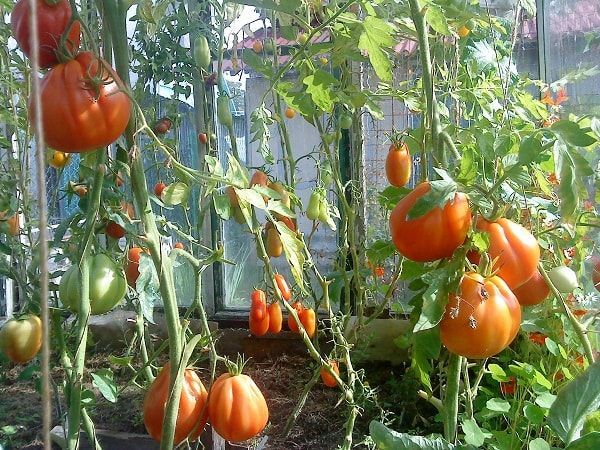
Video: Planting Tomatoes in the Ground
In this video, an expert will explain how to properly plant tomatoes in open ground.
Characteristics and description of the variety
This variety has become a favorite among gardeners thanks to its characteristics. These include not only the interesting fruit shape, but also its yield and distinctive flavor.
Description of the bush
An indeterminate variety, the bushes reach 1.5–1.7 meters, depending on growing conditions. The branches are medium-thick and covered with small, dark green leaves.
Main qualities of fruits
A large-fruited variety distinguished by the shape of its fruits. Visually, they resemble a purse, thanks to their pear-shaped, heavily ribbed structure. Unripe tomatoes are light green, but when ripe, they turn a reddish-orange hue.
The fruit weighs between 300 and 800 grams, depending on the soil and the frequency of fertilization. The skin is strong and resistant to cracking, and the flesh is juicy and rich in beneficial micronutrients.
Productivity and scope of application
A high-yielding variety, yielding 9 to 11 kg per square meter. These tomatoes are not suitable for canning due to their hollow interior. The fruits are widely used to make juice, which is consumed fresh or canned. They are ideal for salads, freezing, and stuffing.
Advantages and disadvantages
- long shelf life;
- resistance to transportation conditions;
- high yield;
- fruit size;
- original form;
- useful composition of the pulp;
- resistance to infectious diseases.
- demanding of soil composition and fertilizers;
- need for tying.
-
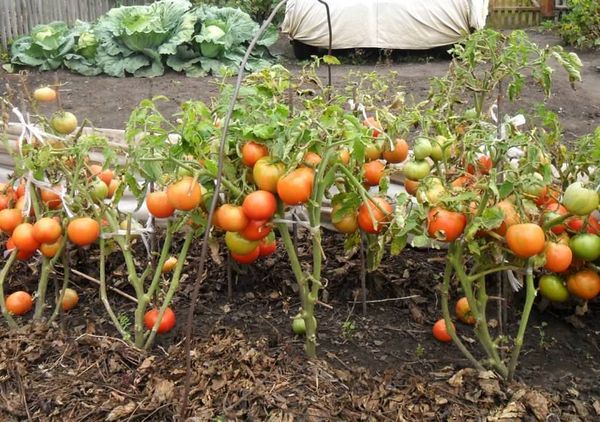
- From 1 m2 the variety yields from 9 to 11 kg
-
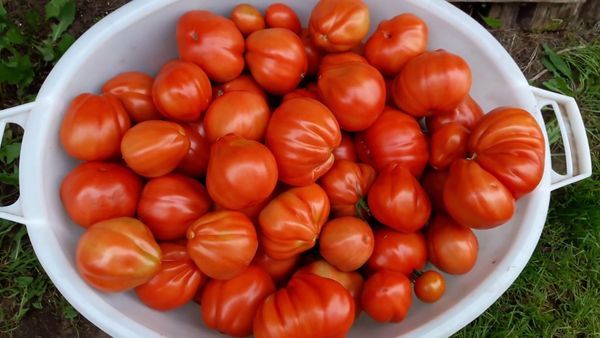
- The variety has a long shelf life
-
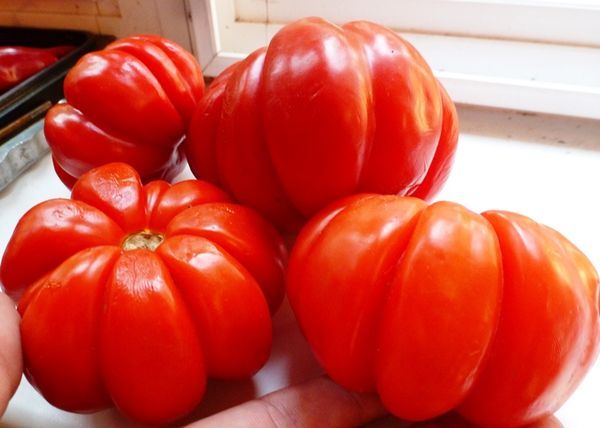
- The weight of the fruits ranges from 300 to 800 g.
Features of agricultural technology for the Puzata Khata tomato
Tomatoes are relatively easy to grow and care for. However, there are a number of agricultural practices that, if followed, will increase yields.
Seedling period
Puzata Khata tomatoes are a cultivar, not a hybrid. They are grown from store-bought or home-grown seeds. In the former case, you should purchase the seeds from a specialist store. It's recommended to carefully inspect the packaging for defects, as well as the description and expiration date.
To make your own, take a ripe, but not overripe, tomato and cut it into quarters. Scoop out the contents of the seed chambers and place them in a glass jar. It's important that the juice completely covers the seeds, as adding water is prohibited. Cover the jar with a lid (or a napkin) and leave for 24 to 48 hours to ferment.
The resulting material is poured into a sieve and thoroughly rinsed under running water. The seeds are then checked for quality. Dissolve 0.5 teaspoon of salt in a glass of water, drop the seeds in, and shake. Discard any that float to the surface, and keep those that sink to the bottom. The selected seeds are placed on a napkin, dried for 5-7 days, and placed in paper bags until the seedling season begins.
The day before sowing, place the seeds in a growth stimulator, such as "Zircon," "NV101," or "Epin." Fill the prepared container with steamed soil. Place the seeds at a depth of 1-1.5 cm, cover, and moisten with a spray bottle. Cover the container with plastic wrap and place in a dark, warm place. When the first shoots appear, remove the covering and place the container on a brightly lit window. When 2-3 true leaves appear, transplant the seedlings into individual pots.
At this stage, plants require weekly fertilizing. Use "Baikal" and "Siyanie" fertilizers. Before planting outdoors, harden off the seedlings for two weeks by placing them outdoors.
Planting in open ground
Transplanting seedlings to their permanent growing location begins at the end of the last month of spring. This prevents damage to the root system from late frosts.
The seedlings are ready for transplantation at the stage of 55 – 60 days.
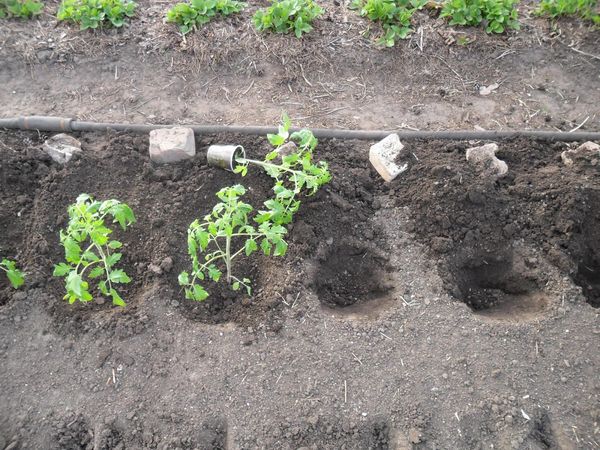
Plant in rows 60-70 cm apart, with pits 40 cm apart. Moisten the pit, carefully transfer the seedling, and fill with soil. Don't compact it too much, then water generously and mulch with compost.
Further care
It is recommended to tie up the plants at planting time or 7 days after planting them in open ground. To do this, install trellises near the holes and carefully tie the stems to them. The plant may break under the weight of the fruit, so this procedure is mandatory.
The Puzata Khata tomato variety allows for two different bush formation methods: single-stem and double-stem. If planted using a 4-plant-per-square-meter (m²) pattern, the plant is grown as a single stem. All other side shoots are removed. When planting three seedlings per m² (m²), the bush is formed into double stems. To achieve this, one side shoot is left at the bottom of the first flower cluster.
The frequency of watering depends directly on weather conditions. If there is no rain, water is added weekly. After each application, the soil ball is loosened to prevent it from hardening. This improves air circulation and prevents root rot.
Gardeners' reviews confirm that tomatoes respond well to regular fertilizing. After transplanting into open ground and until mid-July, nitrogen-containing fertilizers (ammonium nitrate, urea) are applied to the bushes. The first fertilizing is done two weeks after planting, then when the first buds appear, and during the fruit set stage. From the second half of July, tomatoes require two-component fertilizers containing potassium and phosphorus.
The Puzata Khata variety is highly resistant to infectious diseases, but plantations are treated with fungicides (such as Fitosporin) as a preventative measure. Infusions of wormwood, celandine, and garlic are also effective in controlling pests. Akarin, Iskra Zolotaya, and Inta-Vir are also effective.
Reviews from gardeners
I chose tomatoes based on reviews and photos. The results met my expectations, and I had no problems planting them. I managed to harvest up to 120 kg during the season.
This was my first time growing this variety, so I wasn't expecting a bountiful harvest. However, thanks to the heated greenhouse, I was able to harvest juicy, large fruits until late autumn.
Puzata Khata tomatoes are highly valued among gardeners due to their appearance and taste. If all agricultural practices are followed, the plants will reward you with a bountiful harvest of juicy, large tomatoes.