
A review of the best-yielding tomato varieties
Content
How to choose a variety
When choosing a tomato variety, it's important to consider many factors that affect the yield of the vegetable crop. First, you need to decide in advance where you'll plant the vegetables and purchase seeds based on the growing conditions. Growing tomatoes in open and protected soil is significantly different – even the highest-yielding tomato varieties for garden beds won't produce high-quality fruit when planted in a greenhouse. Conversely, greenhouse varieties won't produce the expected yield when grown in a garden.
When purchasing tomato seeds, consider the flavor characteristics of each particular variety. Some tomatoes develop their flavor best immediately after pickling, others develop their flavor after pickling or canning, and some are delicious when unripe, while ripened tomatoes have a rather ordinary and uninspiring taste.
It's also important to decide what kind of tomatoes you'll be growing for what purpose. If you're growing them for pickling, you should choose smaller tomatoes with sweet, firm flesh. If you're growing them for canning, it's best to choose smaller tomatoes with a firm, non-split skin. The choice of salad varieties is limitless—tomatoes come in a wide variety of shapes, colors, and flavors. They're not suitable for canning, but they have a very meaty texture and excellent flavor.
The shape and size of the bush also influences yield to some extent. Dwarf varieties require less care, but they produce fewer fruits. The yield of these varieties can only be increased by planting more beds. Taller varieties require staking and support, but they also yield more. Furthermore, tall plants conserve space.
When choosing productive tomato varieties for outdoor cultivation, it's important to consider their ripening period. If you want to have fresh, home-grown tomatoes on the table from early spring until winter, you'll need to plant a wide variety with varying ripening times. Finally, the most important factor affecting yield is climate adaptability. It's important to understand which tomato varieties thrive in a given climate. For example, varieties intended for southern regions are very difficult to grow in northern latitudes – at best, the yield will be minimal, and at worst, the plants will be unable to develop due to the cold, and the yield will be zero. Therefore, for northern regions, it's best to choose tomatoes bred specifically for cold climates, selected from Siberia.
Video: "Overview of Many Tomato Varieties"
Video review of popular fruit tomatoes.
The best tomatoes of 2020
Tomatoes can be classified according to different parameters:
By yield
High-yielding tomato varieties are those that yield 5 kilograms or more per square meter of planting. It's worth noting that many recently developed Dutch and similar domestic varieties can yield up to 20 kg per square meter of planting, but these hybrids are primarily grown commercially in greenhouses. For high yields of open-ground tomatoes, it's best to plant varieties specifically suited to these conditions:
- Waterfall – a tall, early-ripening tomato with dense, oblong fruits of a bright orange color, capable of producing a yield of 6-8 kg with proper care;
- Anastasia – a tall (100-130 cm) mid-season variety with bright red, sometimes burgundy, medium-sized fruits (170-200 g), under the right conditions it is possible to harvest up to 12 kg;
- Raspberry Giant – an early variety with very large (up to 500 g) pink fruits, due to which a high yield is achieved, resistant to diseases and pests;
- Nastena F1 – an early-ripening, tall (120-150 cm) hybrid with large (up to 300 g) red fleshy fruits, tolerates low temperatures and high humidity well, is resistant to diseases, and is very high-yielding – 16-18 kg from 1 meter of planting;
- Diabolik – compact and fairly tall bushes (100-120 cm) with red oblong fruits weighing (120-140 g), tomatoes are easily transported, suitable for harvesting, not susceptible to diseases, when grown for industrial purposes they yield 400-600 centners per hectare of area.
Experienced vegetable growers admit that extremely productive tomato varieties lack excellent flavor and aroma. This is because all the energy of such plants is focused on producing multiple fruits, rather than concentrating sugars and nutritional fiber.
By bush type
According to the height of the bush, tomatoes are divided into:
- determinate (low-growing) – their height is 50-100 cm, they do not require removal of excess shoots and tying;
- indeterminate (tall) - bushes of such tomatoes can grow up to 2 meters, often require the installation of supports and bush correction, in turn, they are divided into standard types (with strong compact bushes) and non-standard types (with thin stems, prone to lodging and requiring supports);
- There are also medium-sized tomatoes, the height of which varies in the range of 80-110 cm.
The most productive and low-growing varieties:
- Sanka – an ultra-early hybrid variety with compact bushes (30-40 cm) and round red fruits;
- Rio Grande – a high-yielding tomato with powerful bushes up to 60 cm high, the fruits are smooth, elongated, small (100-120 g), universal purpose – suitable for canning and processing;
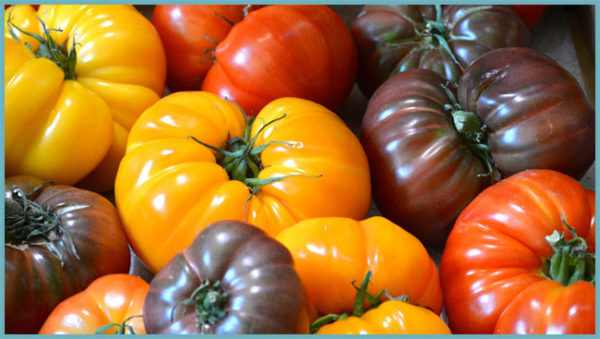
- Bagheera F1 – an early, low-growing hybrid with large (180-220 g) fruits, suitable for any processing and transportation.
Among the mid-season tomatoes, the high-yielding "Volgogradsky 5/95" stands out. This standard plant grows 70-120 cm tall and produces smooth red fruits weighing 80-150 g. The fruits are easy to transport and have a long shelf life. Among the tall, high-yielding tomatoes, the following stand out:
- De-Barao - this variety has many hybrids that differ in shape and color, but what unites this tomato variety is the invariable sweet taste of fleshy fruits, reaching a weight of 300-400 g, in which there are practically no seeds;
- Tarasenko 2 – a late-ripening hybrid, tall stems (up to 2 m) with multi-fruited clusters on which are located many small (30-40 g) fruits with a total weight of up to 3 kg.
Many vegetable growers prefer standard tomato varieties, as they do not require tying and are less demanding in terms of care.
By size
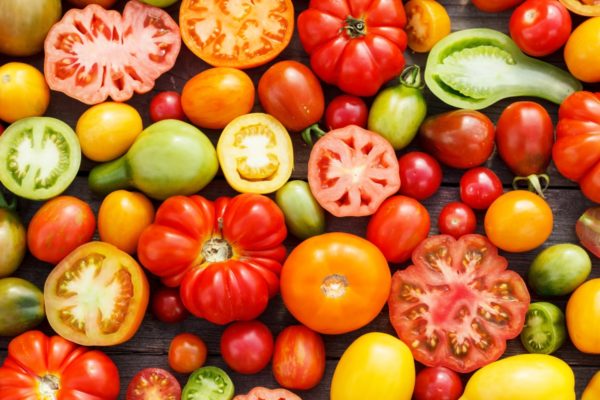
Based on fruit size, tomatoes are classified as large (300-400 g), very large (up to 700-1000 g), medium, small, and very small (cherry). Large-fruited varieties include:
- Wonder of the Earth – the fruits are elongated, heart-shaped, reaching a weight of 400-500 g, and have dense, sweetish pulp;
- St. Andrew's surprise – a tall (up to 2 m) salad variety with very large (400-700 g) fruits, the color of the tomatoes is raspberry, the pulp is fleshy and juicy, there are practically no seeds;
- Bull's heart – a mid-season tomato with very large (400-600 g) fruits with dense, sweetish flesh;
- Raspberry Giant – the fruits are large (600-800 g), flattened, with tender pulp, almost no seeds.
The following can be classified as small varieties:
- Wonder of the World – small fruits resembling lemon in shape and color, the weight of tomatoes is 50-100 g, up to 50 pieces can be collected from one bush;
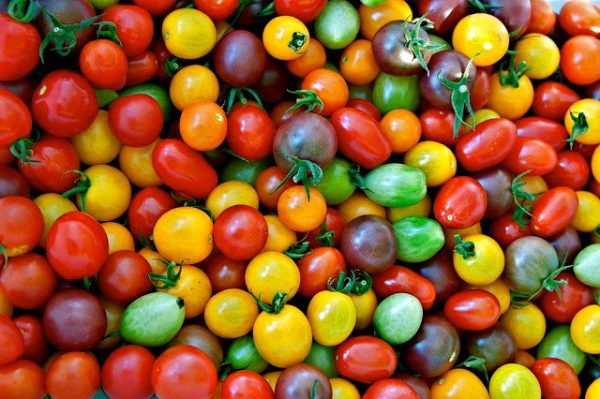
- Black Moor – a mid-season hybrid with small brownish fruits weighing 30-50 g, suitable for canning;
- Tarasenko 2 – tall bushes with heavy clusters, each of which bears more than 35 small (50-60 g) fruits.
Ornamental miniature tomato varieties known as "cherry" tomatoes boast excellent flavor. These tomatoes are successfully grown both in garden beds and in pots on balconies. Among the most popular are: Polden', Green Pearl, Lemonchik (yellow), Yantar', and Honey Drop.
By stability
When talking about tomato resistance, it's not disease resistance that's most often implied, but rather tolerance to low temperatures. Which tomatoes can be grown in cold climates is a question of particular interest to residents of northern regions. For these regions, it's best to choose Siberian-bred varieties whose seeds are adapted to these conditions.
The following tomato varieties are hardy:
- Shuttle – a frost-resistant variety of Siberian selection, it is not afraid of pests, diseases and transportation, ripens in 80-100 days, the fruits are small (up to 60 g);
- Hospitable – large-fruited (300-500 g) tomato, low bush – up to 80 cm, resistant to temperature changes;
- Killing power – a high-yielding hybrid of Siberian selection, the fruits are medium-sized (up to 150 g), unpretentious in care, even at low temperatures it produces a yield of 5-6 kg;
- Triumphant – a mid-season standard variety of Siberian selection, the bushes are low-growing (40-50 cm), the fruits are small - up to 100 g;
- Snow Fairy Tale – a unique hybrid of Siberian selection, the bush of which is literally strewn with small fruits, and the stems do not require tying.
There are also several varieties bred in Ukraine, but these seeds are also adapted to northern or central conditions: Priusadebny, Gospodar, Sonyachne kolo, and others.
By the duration of ripening
Depending on the ripening period, tomatoes are classified as early, mid-season, and late-ripening, but recently many hybrids have been developed that are called “early ripening.”Early-ripening tomato varieties are those with a ripening period of up to 100 days. These include Dubok, Bely Naliv, Alfa, Amursky Shtamb, Valentina, and Don Juan, which ripen in 95-98 days.
Mid-season tomatoes include those that reach full maturity in 105-115 days: Pink Elephant, Hybrid 35, Volgogradsky, Gigant 5, Akulina, Tsarevna, and many others. It's worth noting that most tomatoes are mid-season, and when choosing seeds, gardeners often encounter these varieties. Late-season tomatoes are those that require 117 to 130 days to ripen. These include De Barao, Chudo Sveta, Titan, Sakhar Brown, and others. Late-season tomatoes aren't very popular, but unlike early-season tomatoes, they have a longer shelf life.
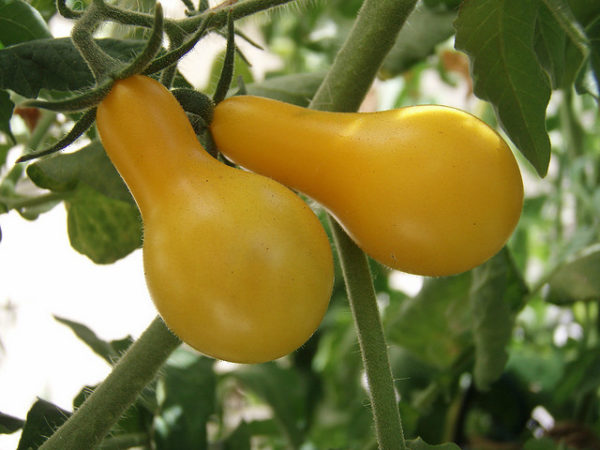
The most popular varieties are early ones, with a ripening period sometimes limited to 70 days. The seeds of these tomatoes are adapted to low temperatures and tolerate even light frosts. These include Sanka, Krasny Sever, Krasnaya Shapochka, Nevsky, and many others.
By storage duration
Only certain tomato varieties possessing a special gene that inhibits ripening can preserve for long periods. These are typically late-ripening hybrids, bred specifically for shelf life. These tomatoes are harvested at the initial stage of ripeness (when they are just beginning to turn brown), and fully ripen later at a temperature of 18°C.
Such hybrids are:
- Radical, Lazarus, Dominator – the fruits of these varieties can be stored for more than 1 month;
- Farm pickling, Giraffe – fruits can be stored for up to 4 months;
- Long Keeper, Lazybones, New Year's – they perfectly retain their taste until the New Year.
It's fair to say that long-lasting hybrids have fairly thick skin and a less pronounced flavor and aroma, as they ripen artificially. However, this is the only way to get fresh, home-grown tomatoes in winter.
Video "A Selection of the Most Popular Varieties"
A video selection of the most popular tomatoes will help you make your choice.