
Rules for planting and growing large-fruited tomato Babushkino
Content
History and description of the Babushkino tomato
Even the origin of this variety has given rise to a host of myths. It's likely that it was developed based on the officially recognized "Babushkin Podark" variety. In any case, the two cultivars are quite similar in their descriptions.
The Babushkino tomato is a mid-season variety; its full maturation cycle from the moment the first shoots emerge takes 120–125 days. It grows equally well in open ground and homemade greenhouses. The quality of the harvest directly depends on proper care, soil fertility, and other factors.
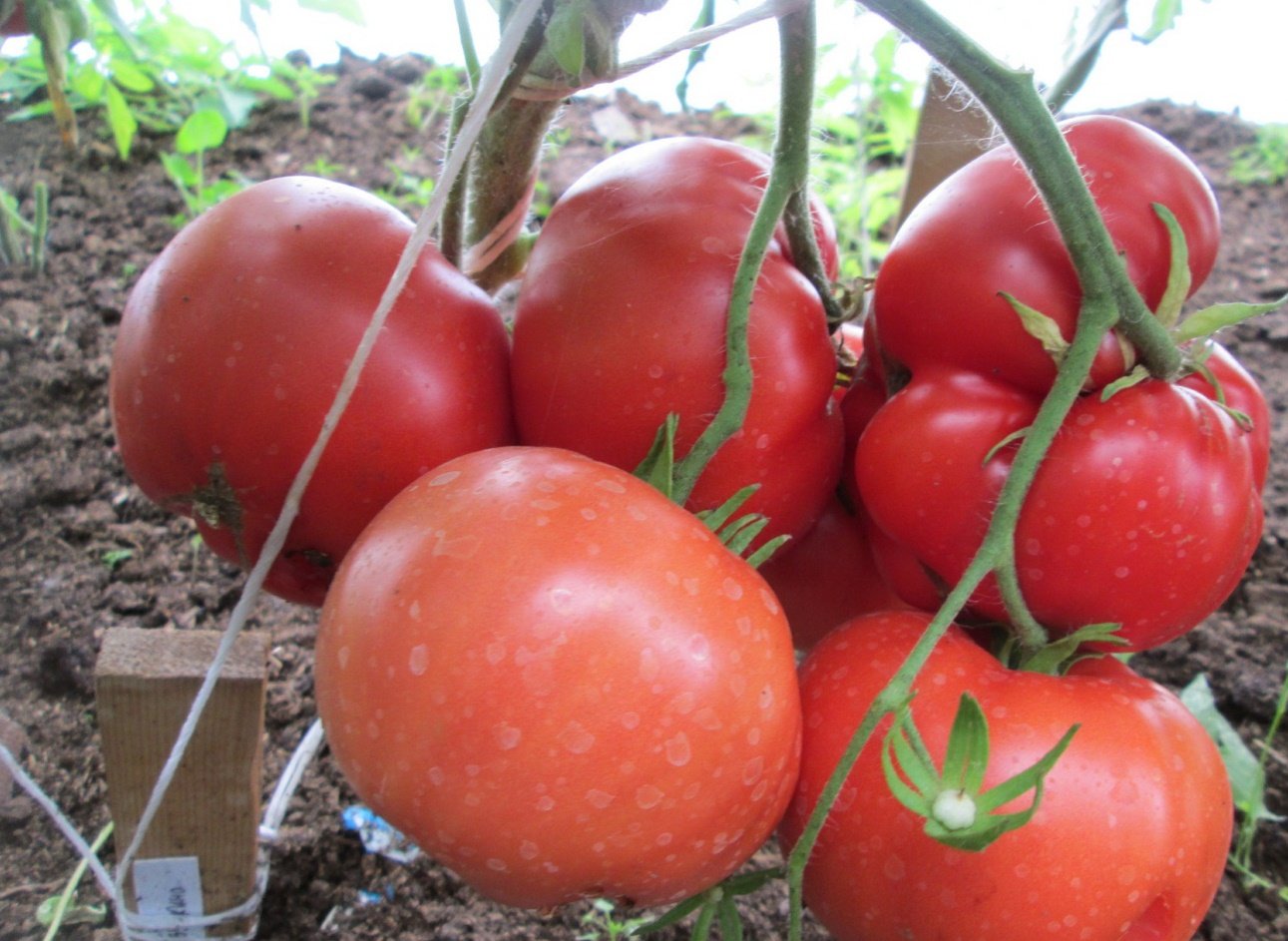
Vegetative form
The plant is an indeterminate variety, grows to 2 meters or more, and therefore requires special support. This will help protect the plantings, as the fruits are large and can damage large, heavy clusters. Each cluster produces 3–4 tomatoes. The medium-sized leaves have the classic tomato shape.
Description of fruits
Approximate description of the tomato variety:
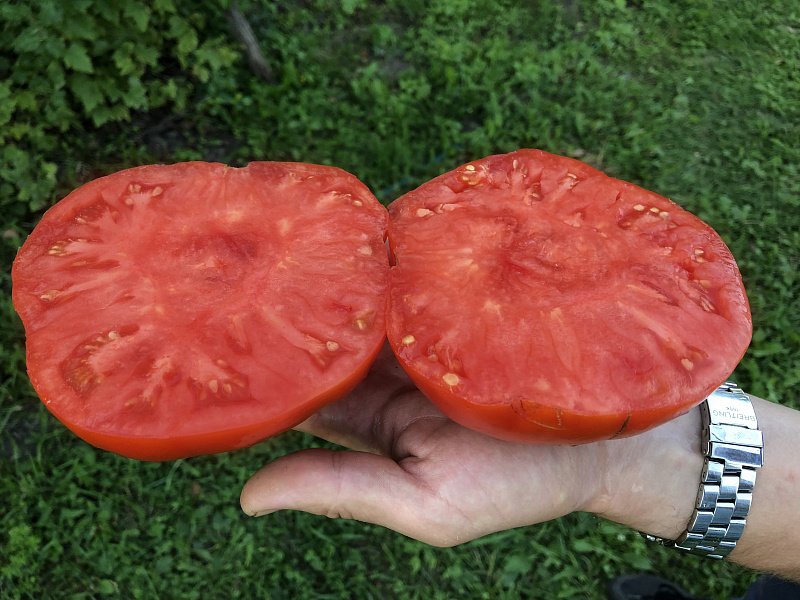
- The color is red, the shape is flat-round.
- The taste is traditional for tomatoes – sweet with a sour aftertaste.
- The skin is thin, which poses a drawback: the harvest can crack during transportation. The larger the fruit, the deeper the cracks, dividing the tomato into two halves.
- The pulp has a pleasant aroma, is moderately dense, fleshy, and contains few seeds.
The fruits can be picked when they are ripe and green; they will gradually ripen on their own.
Characteristics of the variety
Since the variety isn't listed in state registers, there's no need to talk about any standards. The main characteristics of the Babushkino tomato can be learned from the stories of vegetable growers who have been growing it for years and can compare it to other crops.
Productivity and fruiting
Yield levels depend on several factors. These include:
- soil at the planting site;
- amount of feeding;
- care provided.
Depending on the conditions, the plant may either produce a high yield or fail to impress. To achieve good results, the soil must be fertilized regularly and generously with a balanced fertilizer.
The variety is quite flexible and, depending on the conditions, produces tomatoes weighing 200–250 g, while in others they can reach 400 g. There have been specimens weighing 600 g.
-
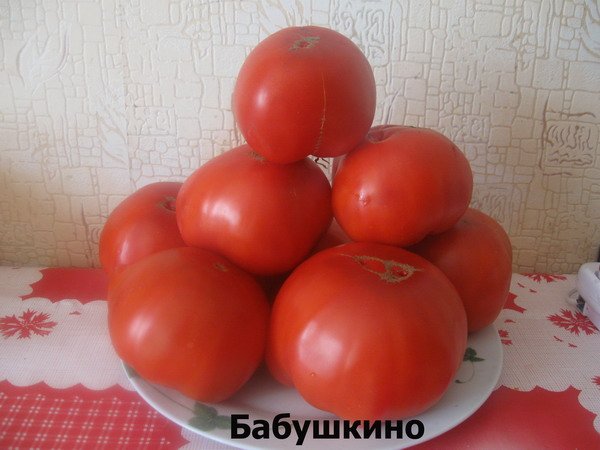
- The color of the tomatoes is red
-
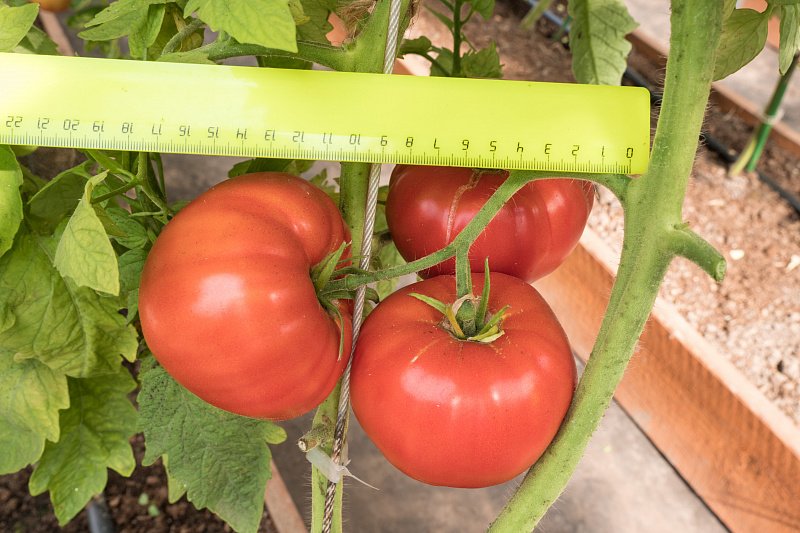
- The fruits of this variety are large and fleshy.
-
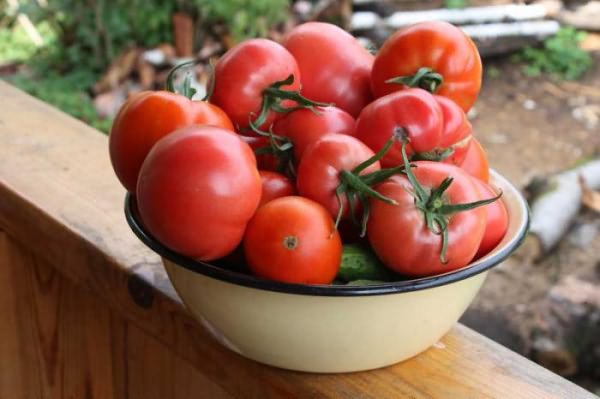
- Babushkino is a high-yielding variety
Application of fruits
The crop is a salad vegetable. It is not well suited for market sale due to its rapid deterioration. However, when the harvest is abundant, the harvested tomatoes are used to make sauces and ketchups, pastes, and juices.
The fruits retain a rich red color even when heat-treated, without the need for any stabilizers.
Resistance to diseases and pests
Unfortunately, breeders have not yet succeeded in developing a tomato variety equally resistant to most plant diseases. Numerous photographs of the Babushkino variety found online reveal traces of fungicide sprays on the foliage and fruit.
Like most others, this crop also requires preventive measures against diseases and pests.
- The affected plant must be removed to prevent it from transmitting pathogens to its neighbors.
- When the emerging ovaries become visible, the initial spraying is carried out.
- The treatment is repeated every 2–3 weeks, depending on the weather.
- Fungicidal preparations should be changed annually, alternating several pieces to increase effectiveness.
- To prevent dew, it is recommended to pluck off all the leaves at the bottom.
- The soil must be constantly fertilized, adding potassium, magnesium and phosphorus to strengthen the plant's immunity.
Video: "Description of the Babushkino Tomato"
This video presents the varietal characteristics of the crop.
Advantages and disadvantages of the variety
The crop's widespread popularity among gardeners suggests its advantages outweigh its disadvantages. Much depends on the seed material, which often has to be purchased secondhand. To avoid getting a pig in a poke, we recommend contacting partners of a trusted agricultural company.
- pleasant taste of fresh tomatoes;
- stable good yields subject to agricultural standards;
- abundant harvest, large fruits;
- resistance to diseases with timely implementation of protective measures;
- versatility of application.
- tendency of fruits to crack;
- the appearance of yellowness in the lower part;
- large amounts of fertilizers;
- a small percentage of seeds – it is difficult to organize the preparation of seed material;
- the need to tie up shoots.
Features of agricultural technology for the Babushkino tomato
This mid-early variety requires seedlings. Those who have grown tomatoes before will find it easy to grow.
Planting seedlings
The timing of sowing seeds depends on the local climate.
- If in your area tomatoes are usually planted in open ground in mid-May, plan to plant the seeds for early spring.
- For colder climates, sowing is done at the end of March.
Fertile soil is required (preferably purchased from a specialist store). Sowing is carried out according to the following scheme:
- the seeds are wrapped in a damp cloth and left in a warm place for three days;
- the soil is collected in a suitable container and compacted;
- After soaking, the seeds that have sprouted are spread out over the surface at a distance of a couple of centimeters from each other and watered with warm water;
- cover the container with plastic wrap (or transparent glass) and place it in a place with a temperature of 25–27 °C.
Once the first sprouts emerge, it's a good idea to lower the temperature slightly and move the container to a brighter location. This will speed up the seedlings' growth.
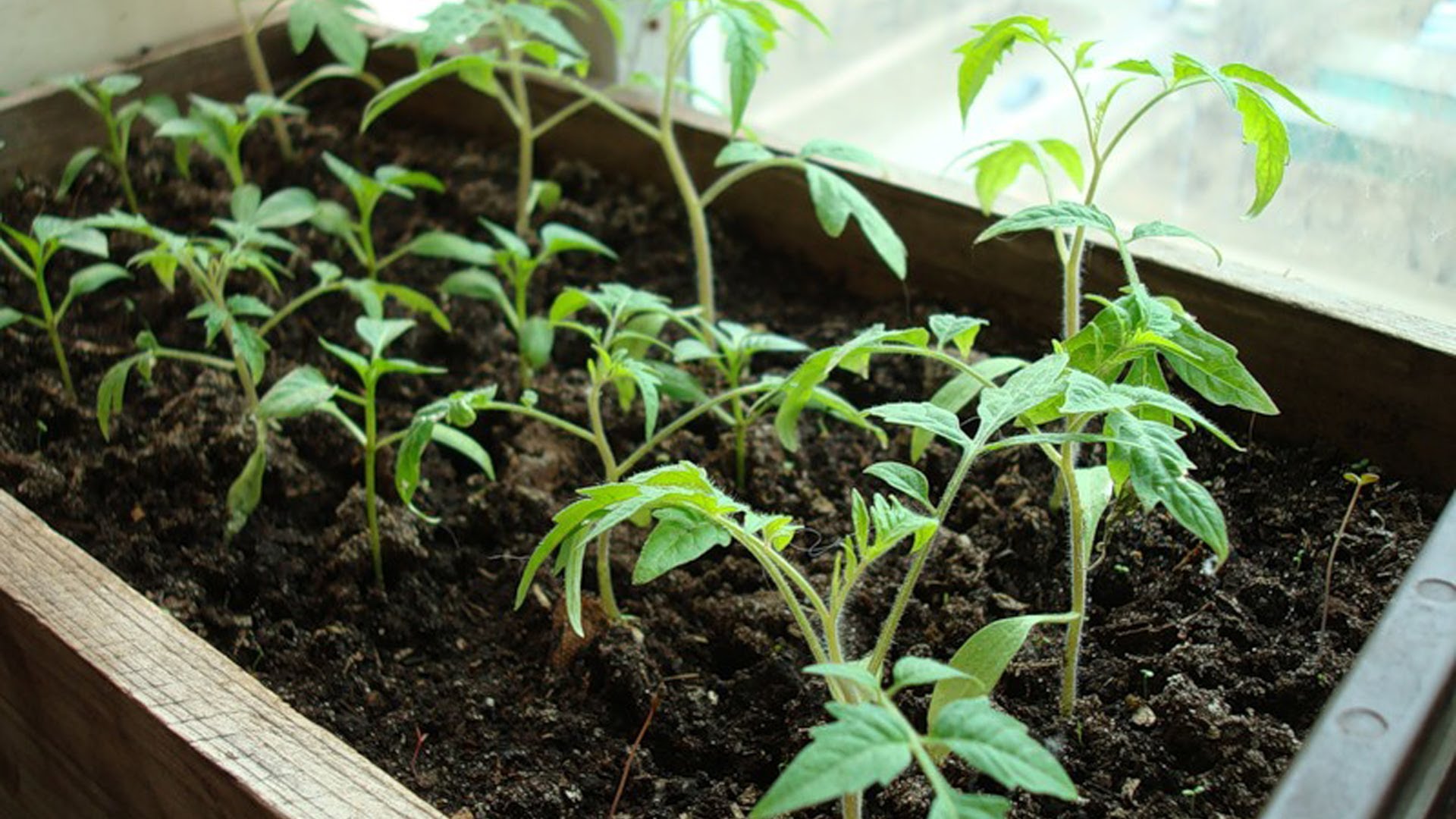
When the plant's first pair of true leaves forms, transplant the seedlings. This is done as follows.
- Prepare individual containers for each bush and fill them one-third with soil.
- Carefully remove the seedling from the soil, tear off a third of the bottom of the root (to stimulate the growth of the root system), and place it in a new container in the soil to the depth of the cotyledon leaves.
- Compact the soil around the plant, water it and place it on a lighted windowsill in a cool room.
While the tomato is growing, monitor the humidity and add more fertile soil if necessary.
Tomato transplant
Tomatoes should be planted outdoors when the crop is no longer at risk of frost. The following requirements apply to the future location:
- wind protection;
- nutritious soil - light, loose;
- absence of unfavorable predecessors - tomatoes do not take root well after nightshades.
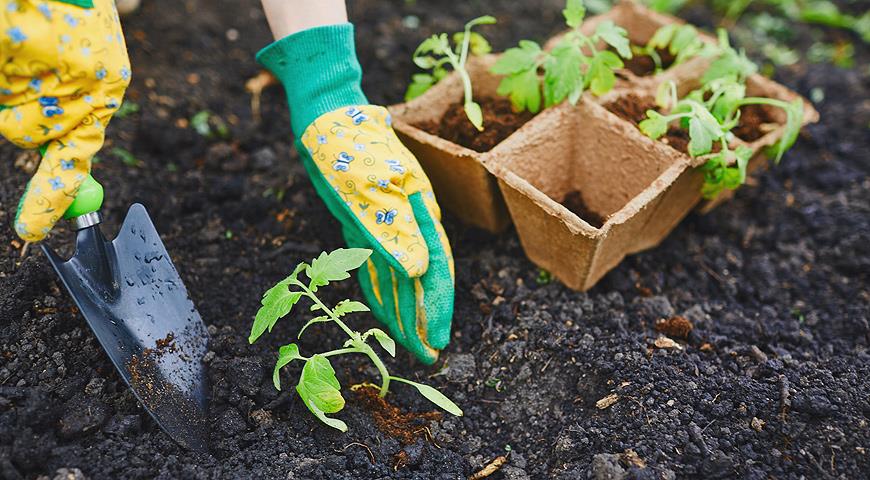
Furrows are made in the soil into which the crop is transplanted. Sufficient space is left between the plants to allow for:
- it was convenient for the gardener to move around;
- the plants did not create shade for each other.
The roots are covered with pre-prepared fertile soil rich in nutrients.
Aftercare of tomatoes
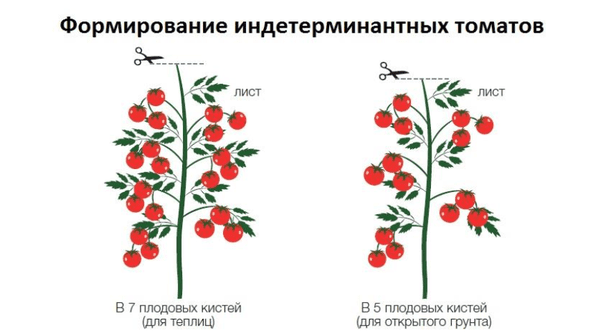
Please note that the Babushkino variety is a tall plant, so it's important to plan ahead for supports to tie the clusters to. To prevent the bushes from bending, tie them while they're still young, and secure the shoots later.
Care will require following the rules:
- Tomatoes require constant but infrequent watering—nutrients are absorbed only in dissolved form. The water shouldn't be cold. Water generously, but moderately, so the beds don't "drown."
- The soil is loosened periodically, allowing more access to water and air. Weeds are removed.
- Fertilizer is applied several times: before planting, during flowering, and during fruiting. Peat, manure, and organic and mineral fertilizers are added to the soil.
- Spraying is used for prevention.
- When growing in greenhouses, ventilation is essential.
- To ensure a bountiful harvest, frequent pinching and removal of excess foliage that blocks the fruit from the sun is required.
Reviews from gardeners
The yield was impressive from the first year. This variety is the most prolific of all I've grown. I grew it in a greenhouse. The fruits weigh 300–400 g.
I grew them in a greenhouse at my dacha. The bushes grew to the size of the roof. I grew three trunks. I harvested 35-40 per bush, 13 kilos from one and about 10 from the other.
Although growing this variety requires some practice and time, the rewards of the end result are well worth the effort. Those who have achieved success at least once have given the tomatoes glowing reviews and have been sure to plant them again and again in subsequent years.