
What to do when tomatoes get fat in a greenhouse?
Content
Description of the process
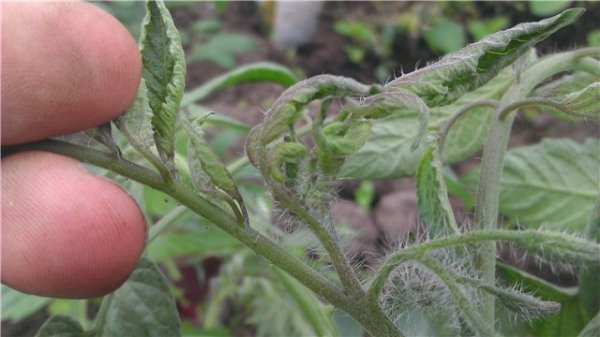
If your tomatoes are overripe, you can't expect a good harvest. Strong, healthy plants look vigorous, their stems are thick, and their leaves are juicy and green. Over time, the upper foliage begins to thicken and curl, which is the main sign of overripe. If left untreated, flowering will fail to produce fruit or will not occur at all, as the cluster weakens and stops developing. Sometimes, flower clusters continue to produce new shoots, which drain all the nutritional energy, and the fruit fails to form or ripen. Overripe plants produce very little fruit, and the gardener loses their harvest.
Reasons
Among the main reasons why tomato crops become fattened are the following:
- insufficient lighting;
- excessive fertilization with mineral or organic fertilizers, including manure;
- overwatering and high constant humidity;
- crowded and dense planting of plants in a greenhouse.
It should be noted that determinate tomato varieties with short flower clusters are not susceptible to shoot budding. Indented varieties with long flower clusters and hybrid varieties are susceptible to budding.
Video: "All About the Problem of Fattening Tomatoes"
An informational video with practical recommendations for gardeners on growing and treating tomatoes.
What measures should be taken?
As soon as you notice that your plant is becoming overweight, you need to address the situation immediately and take action. A number of agricultural measures are recommended:
- stop watering tomatoes for a week;
- provide the necessary lighting in the greenhouse;
- feed the bushes with phosphorus fertilizers from superphosphate extract (3 tablespoons per 10 liters of water);
- Fertilizing should be done both at the root, so that the plant does not delay its growth, but only on moist soil and no more than 1 liter per bush, and foliar in the form of spraying with a solution that has not been settled, excluding nitrogen;
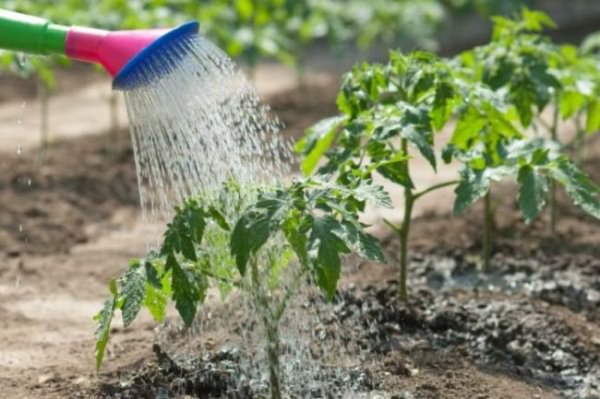
- It is good to add microelements to the fertilizer, especially magnesium and potassium;
- raise the daytime temperature to 25–26°C, and at night – to 24°C;
- remove some of the leaves that block the light above the flower cluster, but no more than 1 leaf every 2 days, so as not to cause stress to the plant;
- Force pollination of tomatoes by shaking each bush, but only in dry weather;
- Do not ventilate the greenhouse for 7 days; only in case of extreme heat is it recommended to keep the vents in the greenhouse open at all times.
Fattening can manifest itself in different ways.If a tomato's leaves are pointing upward, the fruit will be small and the flowers will fall off quickly. This means the plant hasn't been watered enough. In this case, ventilation and lowering the temperature in the greenhouse will help increase the yield.
Sometimes a bush develops properly, the flowers don't fall off, and the leaves barely curl, but the fruit develops well only on the first cluster. In these cases, tomatoes should be harvested before they're ripe to improve fruit development on the remaining clusters. Immediately after harvesting, the plant should be thoroughly watered—10 liters per square meter. The temperature in the greenhouse should be reduced to 17 degrees Celsius, and side shoots and leaves should not be removed. In hot weather, tomatoes are grown outdoors, as ventilation will not help.
Prevention of fattening
The following preventative measures will help avoid fat gain:
- Treat the bushes against pests and diseases with special agents in low dosages once every 2 weeks;
- It is not recommended to plant seeds for open soil in a greenhouse;
- be sure to pinch off the top and remove side shoots;
- frequently ventilate the greenhouse during hot periods;
- choose the right variety, paying attention to hybrids, which produce 30% more yield in a greenhouse;
- It is not recommended to plant tomatoes together with cucumbers, since they require different maintenance and care;
- tie up the bush correctly, wrapping the rope around the stem - make 1 turn for every 2 internodes so that the plant does not slip;
- side shoots should be removed when the shoot height reaches 3.5 cm and do not leave stumps, otherwise the plant will begin to waste nutrients;
- Do not apply fertilizers in advance, especially manure, but monitor for magnesium deficiency and, if the leaves turn yellow, feed with magnesium sulfate.
Prevention must be carried out constantly - this will help to avoid fattening of tomatoes and get a good harvest.
Video: "Fattening Tomatoes"
The video talks about why tomatoes get fat.