
What to do about yellow spots on tomato leaves
Content
Why are the leaves on the bushes covered with spots?
Tomato leaf spots are the most common problem encountered when growing this vegetable crop. These symptoms can indicate a number of diseases or factors that can lead to very serious consequences, so before taking action, it's important to determine what caused the spots.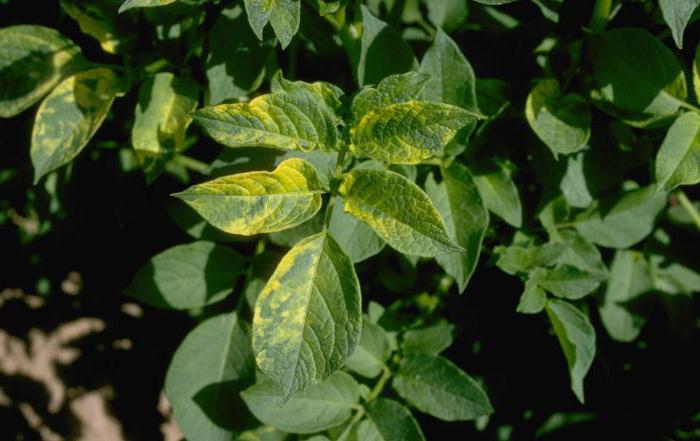
It's worth noting that leaf spots are more common in greenhouse tomatoes, as greenhouses have higher temperatures and humidity, which are ideal conditions for the development of fungal diseases. Therefore, the main causes of leaf spots on tomatoes are fungi and poor plant conditions.
Video "Reasons for Appearance"
This video will tell you why tomato leaves turn yellow.
Diseases of tomato plants
All possible tomato diseases are usually classified by the type of pathogen:
- fungal: late blight, cladosporiosis (mold), powdery mildew, septiosis, fusarium, gray rot and others;
- viral: leaf curl, mosaic;
- bacterial: bacterial cancer.
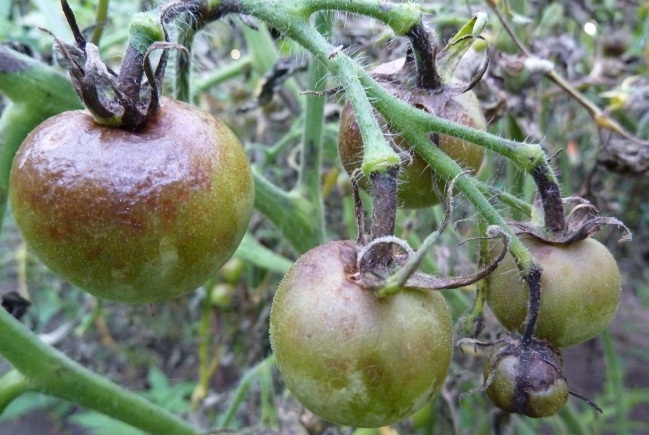
Tomato diseases can also be caused by improper cultivation practices and practices, including improper watering (over- or under-watering), sudden temperature fluctuations, and nutrient deficiencies or excesses. These factors contribute to the development of most fungal diseases, each of which we'll examine in more detail.
Late blight
Late blight typically attacks outdoor tomatoes towards the end of the gardening season, when rainfall is frequent, nights become chilly, and mornings become foggy and dewy. The fungus becomes active especially quickly amid excessive humidity and temperature fluctuations. For greenhouse tomatoes, the risk of late blight persists throughout the season, as temperature and humidity regulation are often difficult.
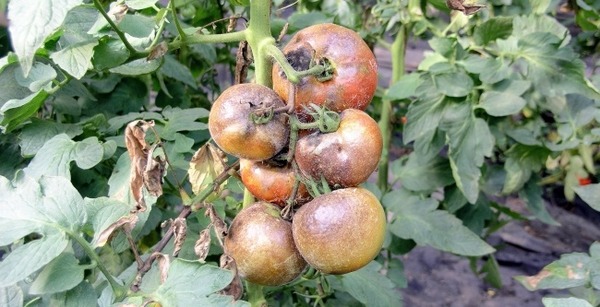
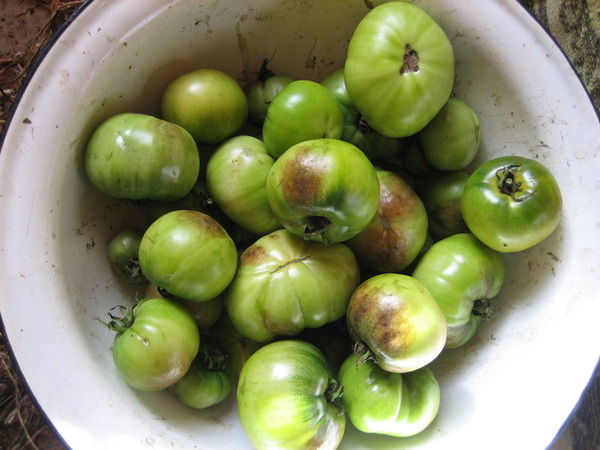
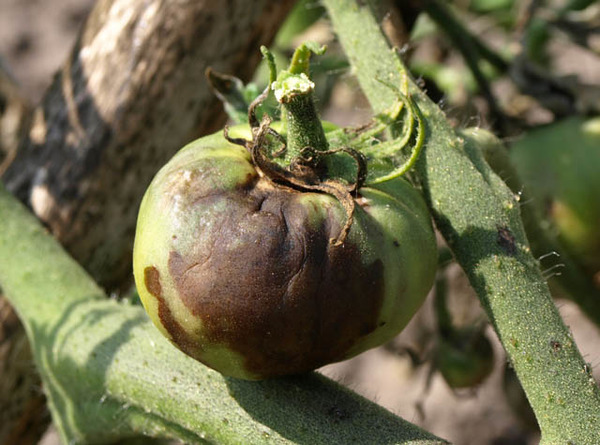
At the initial stage, late blight manifests itself as a slight white coating on the underside of the leaf. Over time, brown oval spots form on the damaged areas, which soon spread to the stems. Within a few days, tissue necrosis occurs, and the diseased plant completely dries up and dies. To combat the fungus, the bushes are treated with fungicide solutions (Bravo, Quadris), copper sulfate (1 tablespoon per 10 liters of water), and a 10% salt solution. The fungus persists well in the soil, so after harvesting tomatoes, the soil should be disinfected and the diseased plants burned.
Plant damage from sunburn
White spots caused by excessive sun exposure most often appear on young tomato seedlings. They occur because seedlings grow weak and pampered indoors, and when first exposed to bright sunlight, the young leaves immediately become sunburned. It's impossible to restore sunburned leaves, as they are no longer able to fully participate in photosynthesis, so it's important to prevent sunburn. To prevent this, seedlings should be placed on a sunny windowsill as soon as they sprout. As the plants grow, pots or boxes are taken outside daily to acclimate and harden off. Seedlings placed on the windowsill are turned once a week to ensure exposure to sunlight from all sides.
Brown spot of tomatoes
If yellow spots appear on tomato leaves on top and brown spots underneath, the plants are infected with brown spot. This fungal disease begins in the lower layers of the plant and affects only the green parts, leaving the fruit unharmed. If the leaves are not immediately treated with biological fungicides, the spots will increase in size and merge, forming large yellow patches.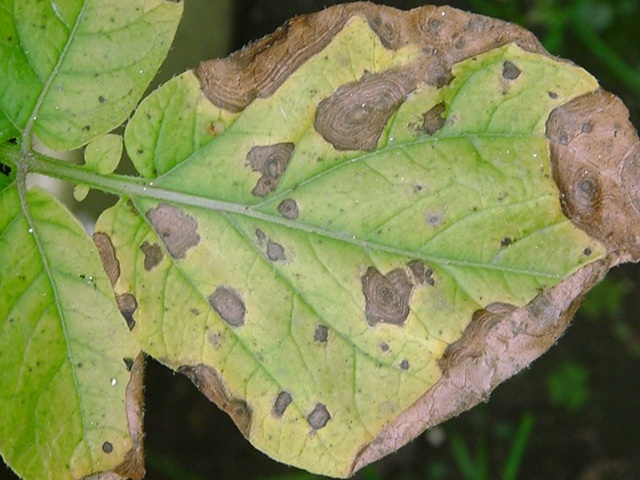
Such leaves are unable to participate in photosynthesis and provide nutrition to plants, so they must be removed and destroyed (preferably by burning). The disease cannot be cured. The only preventative measure is removing diseased leaves, which can infect healthy plants, and treating them with fungicides (Bravo, Ditan, copper oxychloride) as a preventative measure.
Cladosporiosis
Cladosporiosis, also known as leaf mold, is another fungal disease that can appear on leaves. The first signs appear as a dark coating on the underside of the plant. Gradually, the coating turns yellow, and the spots become larger.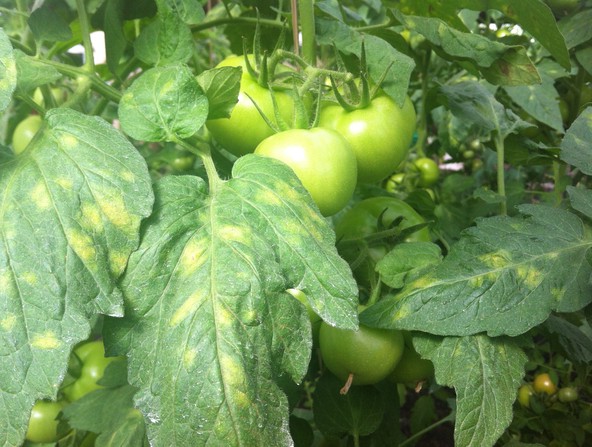
In advanced cases, the spots spread to the upper part of the bush and stems, and completely damaged leaves dry out. To combat Cladosporiosis, use the same treatments as for any other fungal diseases: fungicides (Barrier, Bordeaux mixture, copper sulfate). After harvesting, water the soil with a disinfectant solution and destroy plant debris.
Powdery mildew
A white or grayish powdery coating on leaves, resembling mold, is a sign of powdery mildew in tomato plants. This disease is also fungal in origin and can appear not only on leaves but also on stems, flowers, and fruits, even ripe ones. Conditions that favor fungal activity include high temperatures (heat), insufficient watering, and high humidity. Powdery mildew often appears in weather conditions where rain alternates with heat.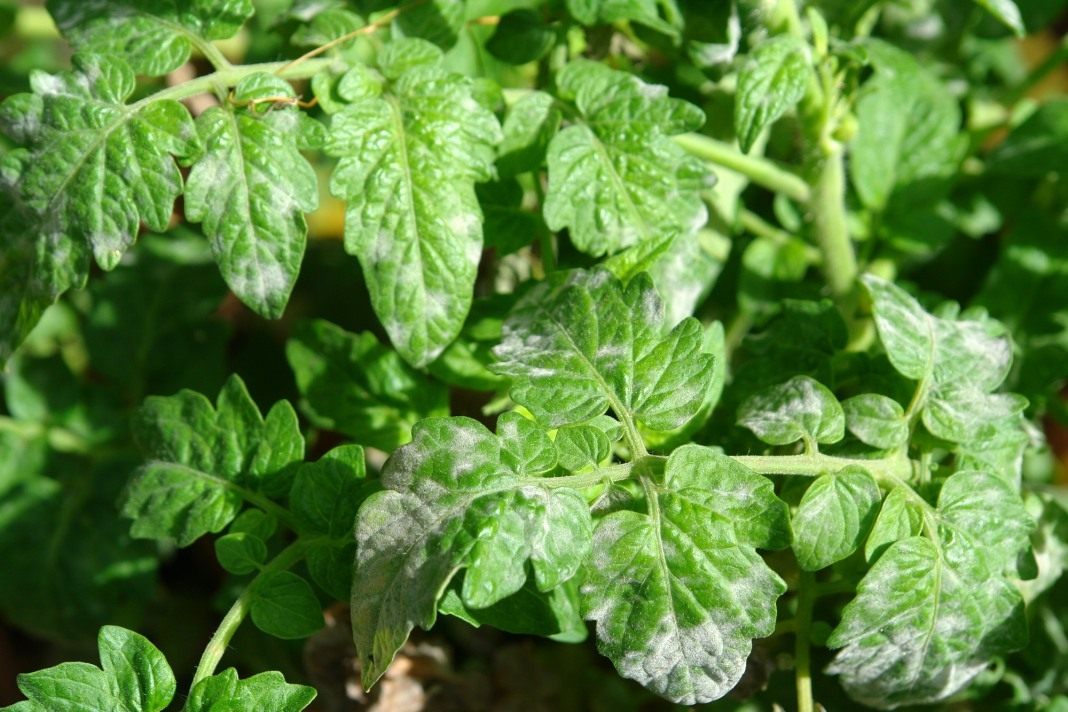
The first signs of the disease appear as small spots on the leaves. The affected area soon expands, and the spots become covered with a moist substance. Fruit damage is accompanied by cracking, rotting, and the appearance of brown spots under the skin. Flowers affected by the fungus turn black and fall off. Fungicides (Bordeaux mixture, copper sulfate) and folk remedies are used to treat tomatoes: a soda-soap solution (5 g soap, 25 g soda per 5 l water), potassium permanganate (2.5 g per 10 l water), whey, and an iodine solution (10 ml per 10 l water).
Septoria
The disease is especially active in cold, rainy, and windy weather. The fungus spreads from the lower part of the bush, infecting older foliage first.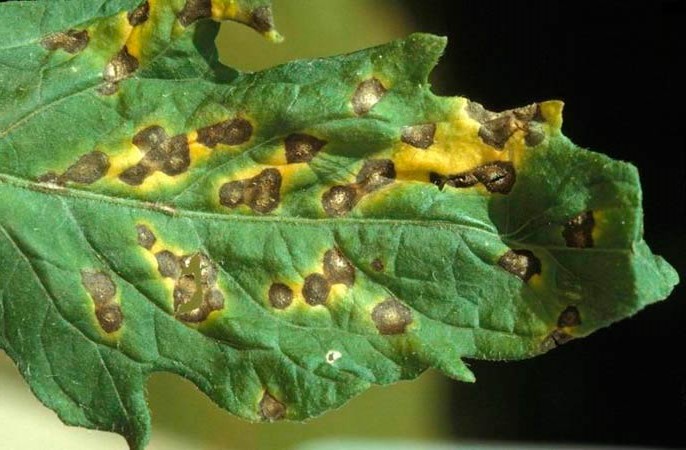
The first signs of the disease are a small yellow spot that rapidly enlarges on the leaf blade, developing distinct dark edges. Soon, the leaves dry up, the stem begins to turn yellow, and the plant dies. Diseased leaves should be removed, and healthy ones treated with copper-containing fungicides (Horus, copper sulfate, copper oxychloride).
Alternaria
A fungal disease that occurs due to temperature fluctuations and high humidity. In advanced cases, it can lead to complete or partial crop loss, as it affects not only the leaves but also the fruit. Symptoms include isolated black spots on yellowing leaves, tissue necrosis, and complete leaf death. On fruit, Alternaria blight manifests as sunken spots and blackened areas. Control measures include fungicides, crop rotation, and proper soil tillage.
Fusarium wilt of tomato
A fungal disease that causes severe chlorosis of the leaves. The plant appears weakened and drooping, the leaves turn yellow, and the roots rot. The fungus most often attacks tomatoes grown in the south, as the conditions there are favorable for its development.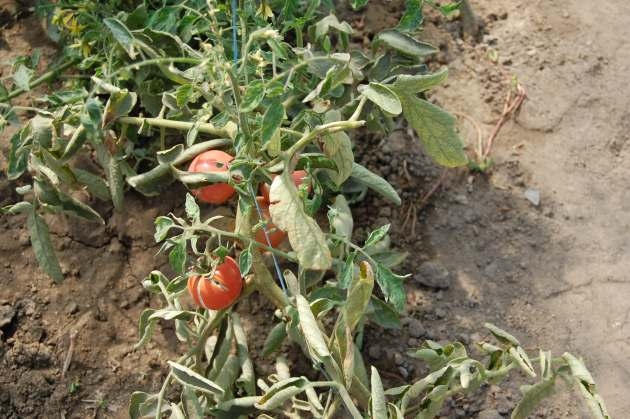
The fungus enters the plant through the roots from the soil, so the most effective disease control measure is disinfection of the area. Affected plants should be sprayed with fungicides (Fitosporin, Fundazol).
Poor growing conditions
Spots on tomato plants often appear when the plants aren't provided with the proper conditions or are under constant stress. In this case, spotting can be caused by:
- sudden change in weather (prolonged rains, cold snap);
- transfer to another place;
- mechanical damage, weakening of the root system;
- deficiency of macro- or microelements: zinc, boron, copper, sulfur, molybdenum, as well as nitrogen or magnesium.
The problem of nutrient deficiency can be easily solved with additional feeding.
Damage to the root system
Mechanical damage or root rot is a fairly common cause of leaf spotting. Roots can be damaged during repotting or by improper loosening.
Signs of root damage include yellowing of the foliage at the base of the plant. This problem resolves itself as the roots grow back over time. However, if the roots are rotting, the bush is unlikely to be saved except by applying fungicides.
However, it's also important to know that plants naturally experience leaf dieback, and tomatoes are no exception. In small numbers, lower leaves may turn yellow and die. If the spots don't spread, there's no cause for concern.
Video "Tomato Diseases"
This video will tell you about tomato diseases and their treatment.