
Copper wire – protecting tomatoes from late blight
Content
Phytophthora and how to combat it
Late blight is a fungal plant disease that primarily affects nightshade crops. Until the 1970s, only one strain of this disease was known, and it died during the winter. Today, two strains exist that, when crossed, produce winter-resistant spores. These spores overwinter successfully in infected tubers not harvested from fields or in piles of unburned tops. Precipitation carries the spores into the soil, infecting healthy tubers, and the wind carries them to the above-ground parts of plants.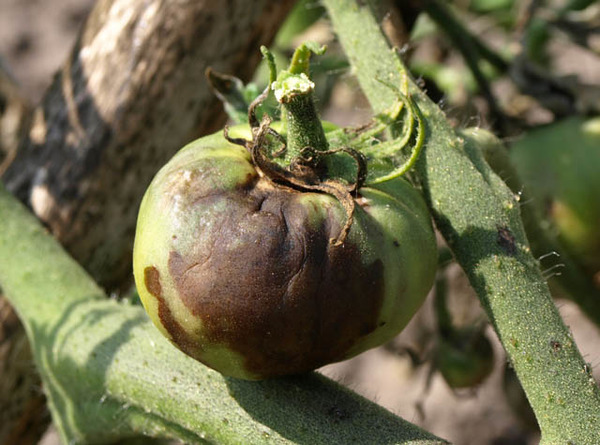
All parts of the tomato plant are susceptible to infection. Brown spots, which merge as they grow, appear on both stems and petioles. On leaves, the disease appears as irregularly shaped grayish-brown spots. During periods of high humidity, the spots on the leaves become covered with a white, velvety, oily coating. If the fruits have not yet developed, the inflorescences, sepals, and peduncles are affected, drying out and turning black. On the formed fruits, brownish spots appear under the skin, enlarging over time. Seeds may also be infected.
Late blight develops during periods of high humidity and wide fluctuations in day and night temperatures. This typically coincides with the fruiting and harvesting season. It's crucial that the plant develops and forms properly, and that its metabolic processes are functioning normally.
Video "Description"
This video describes a tomato disease.
The effects of copper on plants
Since 1931, scientists have been studying the effects of copper on plants. Research has shown that copper significantly influences tomato development, enhancing growth and improving fruit formation. Copper has been found to be an essential element for all plants, and cannot be replaced by any other element. Tomato plants that receive insufficient copper salts have poorly developed root systems, curled leaves, may lack flowers, or may develop a dark bluish-green color.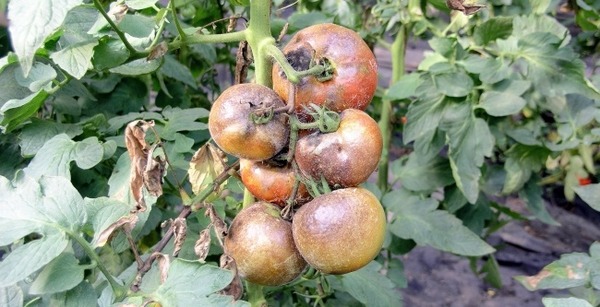
Copper is involved in such important processes as protein synthesis and nucleic acid metabolism. Copper ions form stable complexes with amino acids, which are stronger than similar compounds of other metals. Copper ions stimulate the initial stages of ammonia absorption by plants and play a crucial role in nitrogen metabolism. A deficiency of copper compounds causes various nitrogen metabolism disorders.
Copper is also a component of natural protein catalysts—enzymes. It turns out that when copper ions bind to a protein molecule, the catalytic properties are enhanced, producing enzyme molecules with high oxidative capacity.
Copper, found in enzymes, actively forms organic compounds (organic acids). The accumulation of organic compounds improves plant nutrition and increases crop yields. Copper ions influence photosynthesis, and more than half of them are found in chloroplasts, located in plant leaves. Copper has a stabilizing effect on chlorophyll.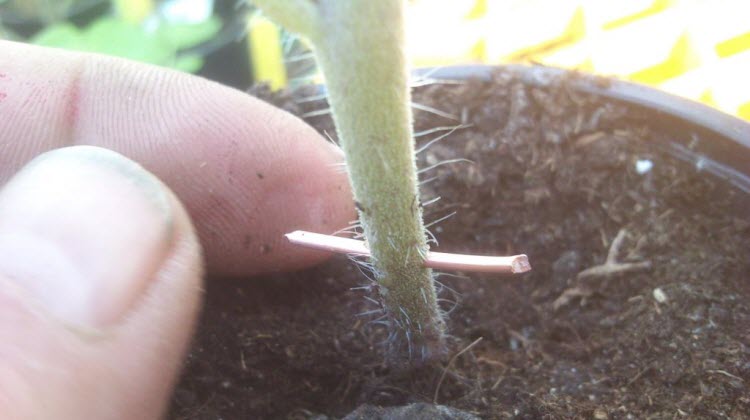
The increased respiration and protein synthesis rates induced by copper ions enhance plant resistance to adverse conditions and diseases, including fungal ones. Therefore, copper is widely used to prevent and combat late blight.
Using copper wire
One way to use copper is to use copper wire to prevent late blight on tomatoes. Copper wire can be used in several ways. For each application, the wire must be thoroughly cleaned of any plastic residue and sanded.
- Before planting, wrap the seedling roots with copper wire. You'll need a 50 cm long piece of wire with a diameter of 0.5 mm.
- You can place a piece of copper plate or wire under each bush. This will enrich the soil with copper ions every time you water.
- The most effective method is considered to be piercing tomato stems with a piece of copper wire. As the sap moves through the stem, copper ions are naturally distributed throughout the plant, benefiting the plant, including increasing resistance to late blight. This method has specific requirements. Piercing should be done two weeks before or two weeks after planting the seedlings in the ground. During this time, the plant will fully adapt to the changes and will not experience stress during the next manipulation.
If piercing is performed on seedlings that have not yet been planted in the ground, the wire should be inserted 1 cm below the first true leaf. If the procedure is performed on seedlings that have already been planted and adapted, the wire should be inserted into the stem 4-5 cm above the mounded soil around the tomato plant, or 9-10 cm in rainy summers.
Video "Ways to Fight"
This video will show you how to combat this pest on tomatoes.