
Causes and methods for eliminating brown spots on tomato leaves
Content
General information
High humidity and temperatures in greenhouses contribute to the disease's development. Spots typically appear on the undersides of lower leaves. Initially, they are gray in color and gradually turn brown. The spots feel velvety to the touch, and their shape is indistinct.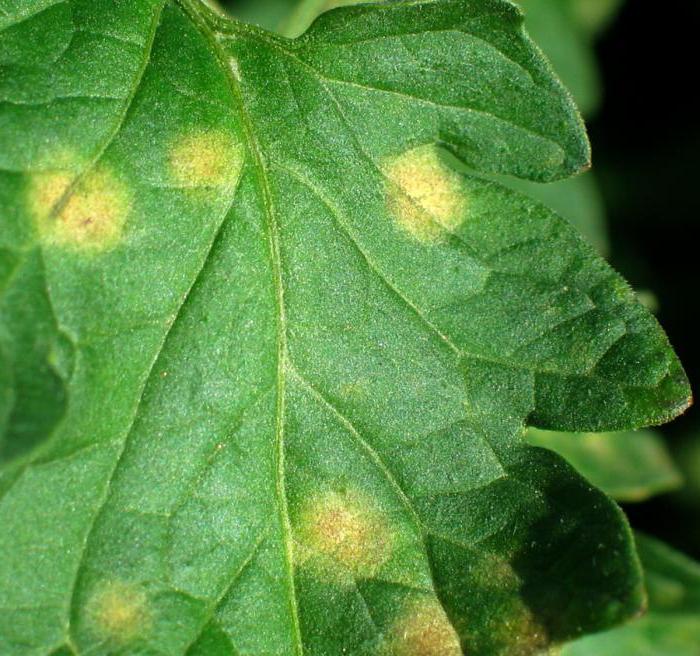
After some time, spots appear on the other side of the organs. At first, they are not very noticeable, as they are light green. But over time, the spots turn brown with a yellowish tint, and may even lighten. Their shape is usually unclear. The spots are not very large: the maximum size is usually 0.01 meters. Starting from the lower leaves, Cladosporiosis gradually spreads throughout the plant. This is facilitated by the spread of pathogenic spores during watering.
Video "Tomato Diseases"
This video will tell you about the most common tomato diseases.
Determining the cause
Identifying brown spot in your garden is fairly easy. The main symptom is the appearance of typical spots on tomato leaves. The disease is caused by high humidity and temperatures in the greenhouse. It spreads quickly.
Methods of struggle
Brown spots have appeared on my tomatoes. What should I do about them? There are several basic methods for combating tomato wilt. This disease, especially on greenhouse-grown plants, should be addressed immediately after the first signs of the disease appear.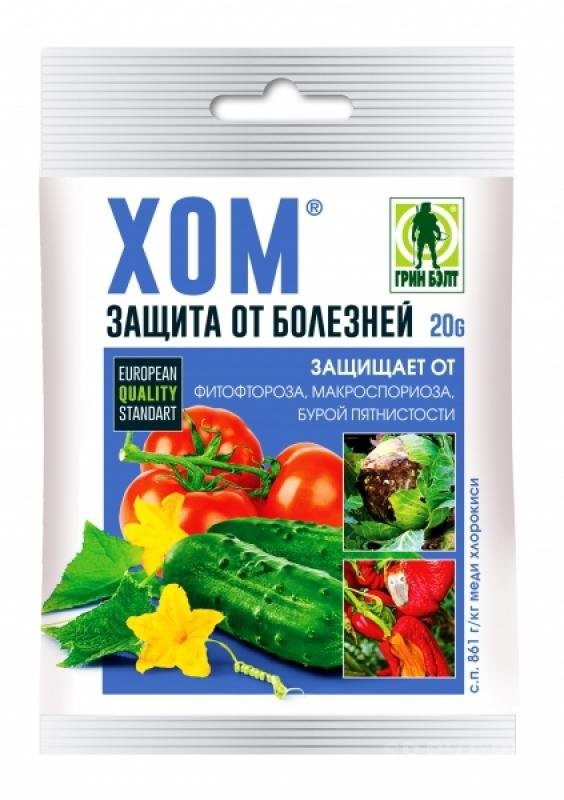 The disease can be combated with the drug "HOM," which is readily available at specialized retailers. Furthermore, creating the most favorable conditions for crops in the greenhouse is crucial: maintaining the correct humidity and temperature levels. For example, at humidity levels of 70% or less, brown spot on tomato leaves does not develop.
Spots on crop organs can also appear as a result of a plant infection by a viral mosaic. This disease can only be controlled by destroying the affected plants and treating the seeds with a 1% solution of potassium permanganate before planting.
Leaf spots often indicate a deficiency of certain plant nutrients. If reddish-blue veins appear on the leaves, the plant needs nitrogen fertilization.
Are the upper leaves of greenhouse-grown plants turning yellow, and are the fruits showing signs of rotting? This means the plant is signaling the need for fertilization with copper, calcium, and iron.
White spots that appear on the leaves, fragility of the plant and a crooked top are signs of boron deficiency.
Leaf necrosis and inward curling of leaf tips are symptoms of magnesium deficiency.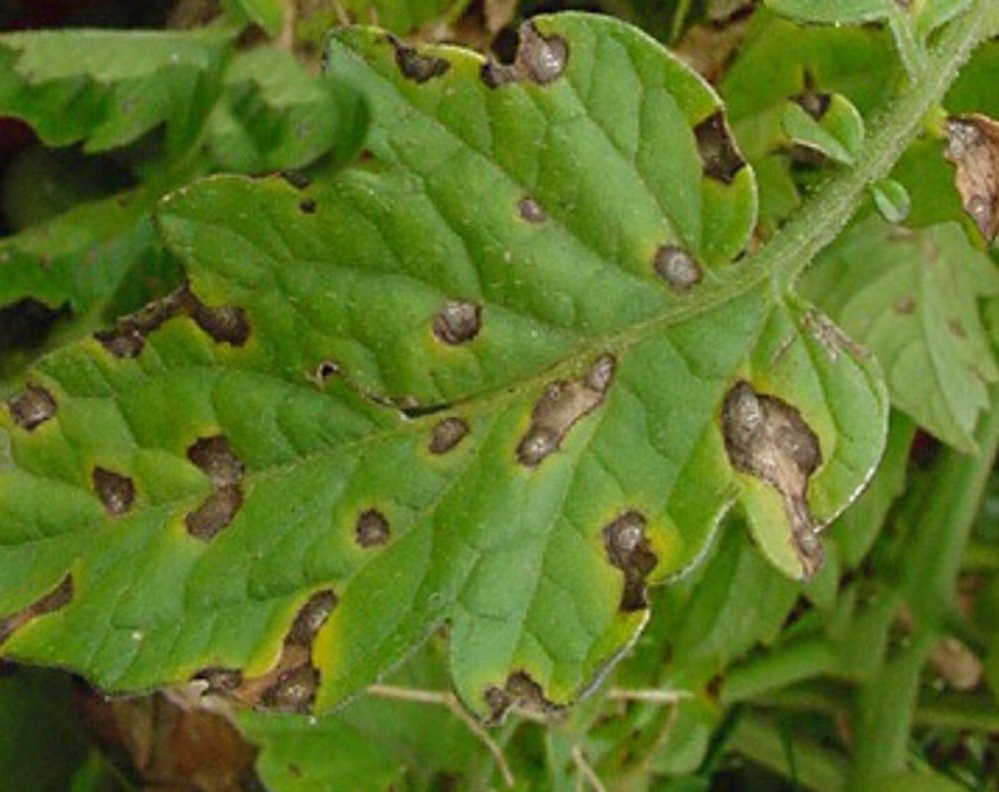
Fertilizing plants with a mixture containing a comprehensive range of nutrients can help correct the situation in a greenhouse. The key is to promptly detect the spots and eliminate the underlying cause. Only the right actions will help preserve the tomato harvest.
Spots can also appear as a result of macrosporiosis. Symptoms of the disease appear not only on the plant's leaves, but also on petioles, shoots, and fruit stems. Even the fruit is affected. The spots enlarge over time.
Why does the disease manifest itself in a greenhouse? Mechanical damage to the fruit may be the cause. In this case, the following will help:
- isolating tomatoes and potatoes from each other;
- burning of all plant residues after harvest;
- removal of all sick individuals;
- digging up the area.
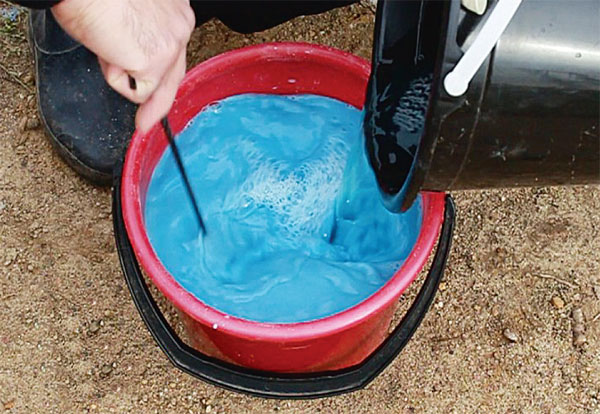
Treating the plants with chemicals such as polycarbacin or Bordeaux mixture can also help. This procedure should be carried out several weeks before planting the seedlings. Buying the chemical ahead of time is not recommended, as it may lose some of its properties. It's better to use fresh ones. Macrosporiosis can affect plants of any age.
Consequences of the disease
Plants with leaf spots in the greenhouse gradually dry out and eventually die. The disease develops under conditions of high humidity (over 90%) and temperatures of at least 22°C. The effects of the disease become apparent a month after the first signs appear. During this period, plants stop growing, ovary formation, and fruit production ceases.
Diseased vegetables may drop or ripen prematurely. Tomatoes produced on unhealthy plants weigh significantly less than those produced on healthy plants.
Fruit damage is especially dangerous during the ripening period.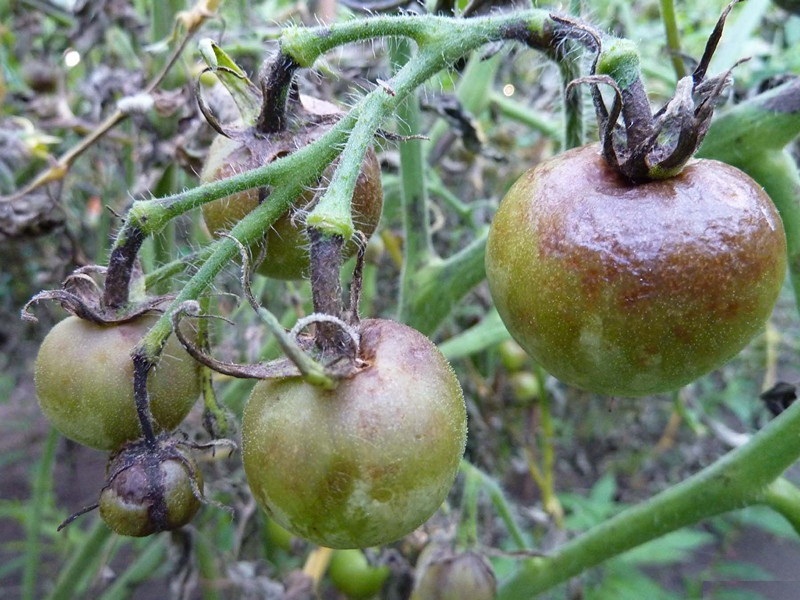
When infected, the seeds of the fruit lose their characteristic shine and become dark in color. In this case, the germination of such seeds is impossible. If a black coating appears on the seeds under high humidity, this is the first sign of candidal sporulation.
Preventive measures
The following measures will help prevent the appearance of spots on tomato leaves and the infection of the plant with diseases:
- Creating acceptable humidity in the greenhouse (reducing humidification).
- After harvesting, disinfect the inside of the room and the soil with copper sulfate. To do this, simply dilute 50 grams of the solution in a bucket of water.
- Choose the right tomato variety for planting (it’s good if the variety is resistant to cladosporiosis).
- Excellent results are achieved by systematically spraying tomatoes with organic products, such as "Effekton-O." Treatment should be repeated every 5 days. The concentration should be a few tablespoons per bucket of water.
- If spots appear on the leaves of tomatoes growing in a greenhouse, then you should not plant tomatoes in that greenhouse next year.
- The product "HOM," which is a copper oxychloride, can help combat plant infections. A simple application of 0.04 kilograms of the product per bucket of water is sufficient. Apply "HOM" by spraying the plants. Repeat the treatment weekly.
- Before planting, seeds must be treated with potassium permanganate.
- It's best to choose varieties that are resistant to leaf mold for planting. It's best to choose several varieties rather than just one. This way, you can both prevent the disease and increase the diversity of vegetable varieties in your garden.
-
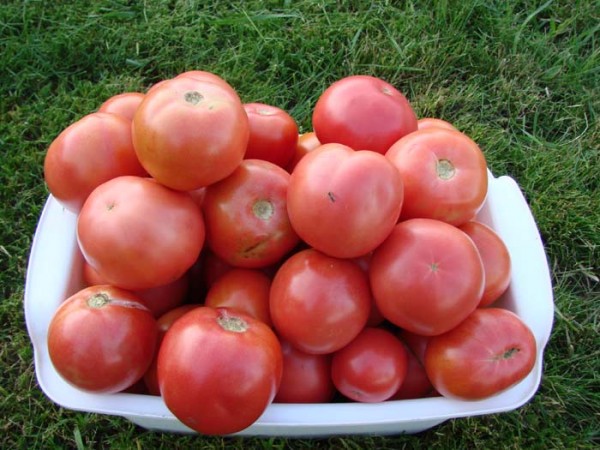
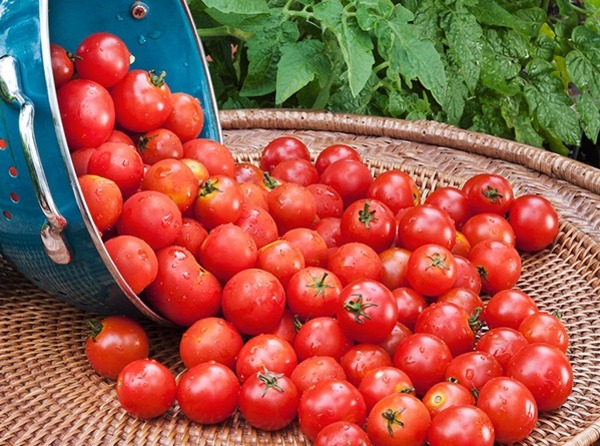
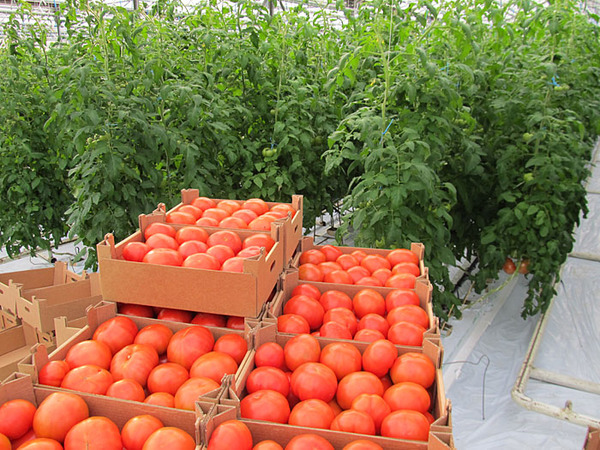
So, the answer to the question of why spots appear on tomato plants is ambiguous. The cause may be infectious diseases, which are the result of improper humidity and temperature in the greenhouse. Preventive measures should be taken as early as the seed preparation stage. Choosing the right variety for planting is also crucial. Failure to combat the disease early on can result in the loss of the entire vegetable harvest.
Video: How to Fight Tomato Diseases
This video will show you how to effectively and safely combat tomato diseases.