
What to do if tomatoes turn black?
Content
Reasons
Sometimes, perfectly growing bushes suddenly become covered in brown spots in midsummer. A coating appears on the leaves, sometimes they dry out and break, and the fruit rots or develops spots. Other times, the owner doesn't notice the problem, harvests the crop, and then strange spots appear on the fruit, and the tomatoes begin to turn black and rot. Fungal diseases are the most common cause.
Late blight develops in conditions of high humidity, often triggered by a sharp change in day and night temperatures. July and August are typically characterized by cold nights and dew, which stresses plants and makes them vulnerable. Fungal spores accumulate in the soil and easily spread to other objects. Late blight manifests itself as a gray coating on the underside of leaves, followed by brownish spots on the upper surface, and blackening of still-green fruits. An inattentive grower might notice only the blackened tomato, missing the early stages of the disease.
Gray mold is also a fungal disease; it first affects the stalk and then spreads to the entire fruit. Excessive nitrogen fertilizer combined with dry, hot weather can lead to an infectious disease called blossom-end rot. Initially, the fruit appears covered with gray spots, which then become increasingly darker, and the rot spreads throughout the entire tomato, starting from the top—hence the name.
There are known cases of tomatoes turning black due to a calcium deficiency or overly acidic soil. Micronutrient imbalances often lead to reduced or even lost tomato yields in the garden. However, greenhouse tomatoes most often turn black due to fungal diseases such as fusarium, cladosporiosis, and macrosporiosis. Once the spores reach the plant, the fungus spreads to the entire plant within a week to a month. Worst of all, if the greenhouse is growing only tomatoes or eggplants, cucumbers, or peppers, which are susceptible to the same diseases, the disease quickly spreads throughout the entire area, encountering no resistance.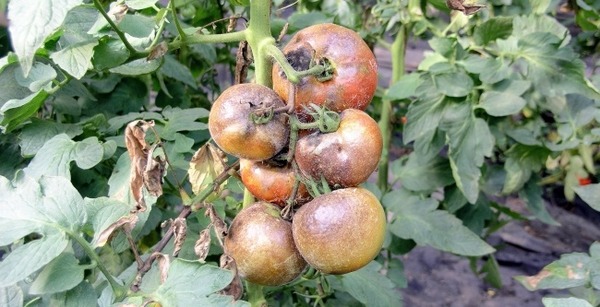
It also happens that tomatoes don't turn black while growing, but after harvesting, they suddenly become spotted, turn black, and become unusable. This can be caused by fusarium wilt or anthracnose. The plants were infected with the spores of these fungal diseases, which reached the fruit, but their effects became apparent somewhat later. Anthracnose, for example, causes barely noticeable, slightly sunken spots to appear on tomatoes, which then grow and darken, destroying the fruit. These are diseases of open ground.
Video "Reasons"
This video will tell you why tomatoes can spoil and turn black.
Methods of elimination
Before you begin treating the problem, you need to determine exactly why your tomatoes are turning black. If the cause is an excess or deficiency of mineral fertilizers, you simply need to restore the balance in the soil. If high soil acidity is the cause, you should add dolomite flour or at least wood ash.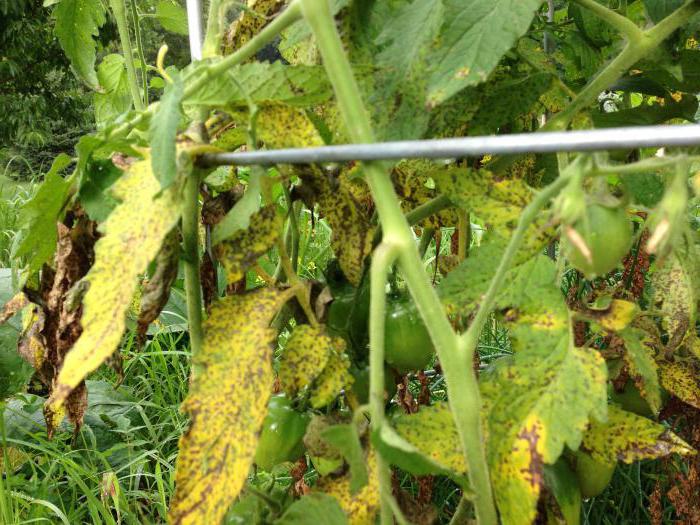
Any fungal disease can be controlled with fungicides. However, since tomatoes will be eaten, it's best to use fewer substances harmful to humans. Carefully inspect the plants, avoiding overcrowding in the greenhouse and garden. At the first sign of fungal diseases, remove and destroy the affected parts of the plants, and spray all the plants with calcium chloride or Bordeaux mixture, which are not absorbed by the fruit. The easiest and safest way is to spray the plants with salted water; it coats the surface of the plants with an impenetrable shield for fungal spores.
There are folk remedies that are effective against fungal diseases if they haven't progressed too far. Spray the bushes with a garlic infusion or a fermented milk solution. Lactic acid prevents the spread of spores. You can dilute kefir or whey with water and treat the bushes with this solution several times every week or two. All plant treatments are best done on a cloudy day.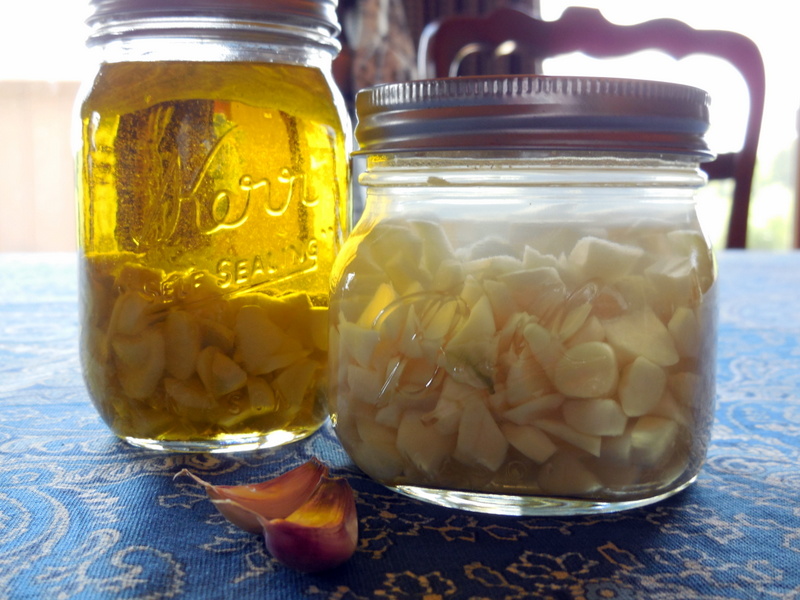
Copper sulfate increases plant resistance to disease. It's sprayed on bushes, and some gardeners pierce the stem with copper wire at a height of 10-15 cm from the ground. This means that all the sap rising above this point is enriched with copper ions. This creates a copper injection, which acts from within the plant against fungal infections.
Fungal spores accumulate in the topsoil, so it's important to follow crop rotation rules. Don't grow tomatoes in the same spot for more than three years in a row, and don't plant them after potatoes, eggplants, or peppers, which have the same problems. The soil around (and after) the plants should be thoroughly tilled, and the greenhouse soil should be changed as often as possible.
Pest control
Tomatoes can also turn black due to pests. The solution is obvious: you need to get rid of the pests. But this isn't always easy. Mole crickets, cutworms, whiteflies, and wireworms can cause significant damage to vegetables in the garden. Mole crickets prefer humus-rich soil and are often found near water. They build nests 15 cm deep, laying up to 300 eggs. It is precisely because of their activity that tomato leaves, branches, and fruits can turn black. Experienced gardeners recommend pouring a solution of vinegar and hot pepper into each hole, but first, all these holes must be found.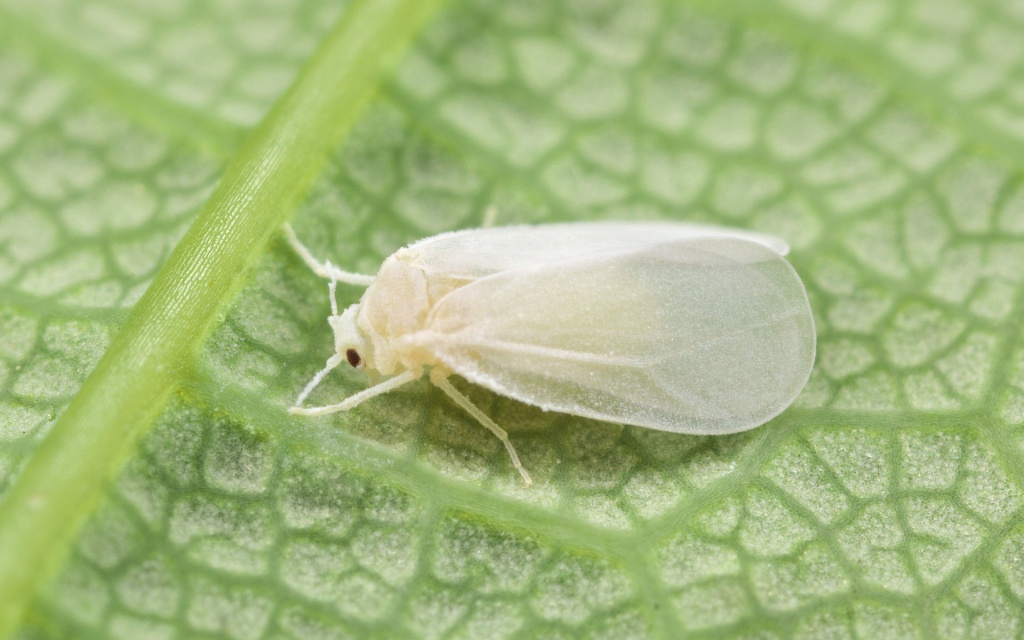
There are special biological treatments for cutworms and whiteflies, and it's recommended to collect the insects by hand. Wireworms are attracted by root vegetables with sticks inserted into them, specially buried in the garden. These are left for three days, and then destroyed along with the pests. Timely application of lime will help eliminate insect larvae and correct soil acidity.
Preventive measures
To protect your tomatoes from fungal diseases, you need to properly prepare the planting material at the seed stage, thoroughly dig the area, and perhaps even replace the topsoil. Don't overdo it with fertilizers, but never use manure on tomatoes; it won't do any good; it will only attract pests and cause infections. 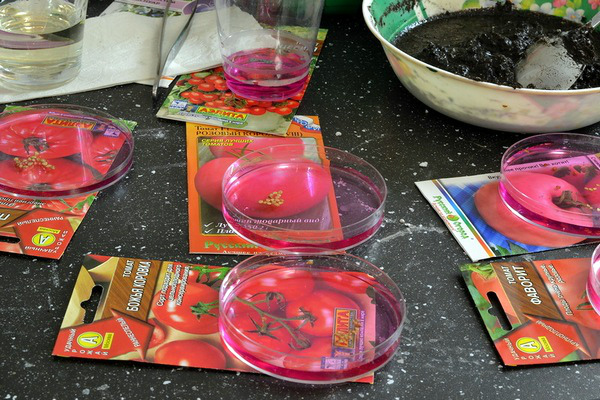 Before sowing, seeds must be disinfected by soaking them in a solution of potassium permanganate. Tomatoes should not be planted after their relatives, such as eggplants, peppers, or potatoes; it's advisable to change the location every three years.
Fungal diseases threaten tomatoes in shade and high humidity, so it is essential to monitor the growth of the bushes, promptly remove side shoots, and remove excess leaves. The lower leaves should be located at least 15 cm from the ground in mature bushes.
Watering should be done so that moisture does not reach the green parts of the plants, only the soil. Misting plants is permitted only for specific protective or therapeutic purposes, not during watering. After watering or rain, the soil should be loosened to ensure air always reaches the roots.
It is essential to weed the garden bed; weeds only promote the spread of infections, weaken plants by taking away their nutrients, and maintain shade and dampness.
Tomatoes should be planted in bright, well-ventilated areas. Potatoes should not be grown nearby, as this proximity can double the risk of fungal or infectious diseases, and both crops will lose quality.
In greenhouses, the soil should be treated with special antifungal agents before planting vegetables and changed frequently. Tomatoes should be tied up, ensuring that the leaves are at least 15 cm above the ground. Humidity levels should be monitored, temperature fluctuations and weed growth should be avoided, and wilted or dried leaves should be removed promptly. Damaged or infected plant parts should be removed as soon as possible to prevent them from spreading disease.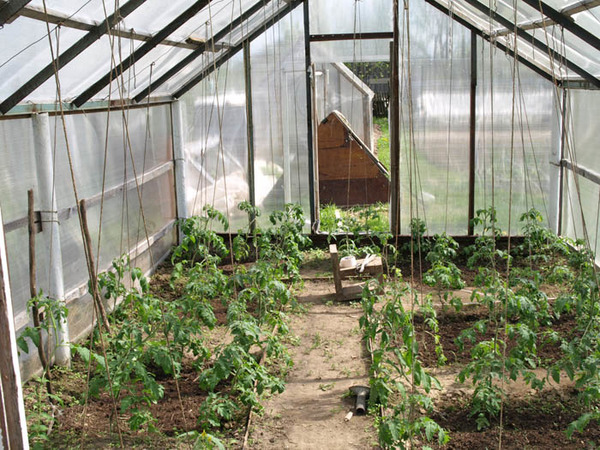
It is advisable to carefully inspect all plantings as often as possible; preventative or therapeutic measures should be started as soon as the first signs of infection are detected on tomato bushes.
Video "Tomato Pests"
This video will show you how to effectively control tomato pests.