
5 ways to make your own currant support
Content
Why do bushes need support?
A currant on a trellis is a shrub whose shoot growth direction sometimes needs to be adjusted. For example, a plant may be growing normally, but during the formation and ripening of its berries, the branches begin to sag under the weight of the fruit. In this case, it's necessary to take care of the currant bushes and construct a special support for them. Currants aren't the only ones who need this kind of "support." Such frames are also used for other shrubs: raspberries, viburnums, blackberries, and gooseberries. They're also sometimes used to create a neat shape for bushy flowers like roses or peonies.
If we take a closer look at the key advantages of adaptation to such, first of all, we can attribute the compactness of the plants.
Having a support will allow you to significantly save space in your garden area. Another important advantage is the proper crown formation. Therefore, a currant bush holder is an essential tool that every gardener will certainly appreciate.
Benefits of supporting currant bushes
Why use bush stands in gardening? They help you shape your bushes properly. Farmers typically use these devices because they offer several advantages:
- The branches of the bushes grow upward and don't "slump" on the ground. This way, the plant will continue to develop fully but won't grow chaotically. You'll get a decorative shrub, and harvesting it will be much easier in the future. Furthermore, in the fall, you can easily cultivate the soil around the bush;
- Berries ripening on currant vines won't droop. This means you'll end up picking clean berries, and they won't rot, which often happens when berries touch wet soil.
- the harvesting process will be significantly simplified;
- Heavy rains or strong winds can cause much less damage to shrubs.
The benefits of currant fertilizers will certainly influence the decision of an experienced grower. The main thing is to ensure your efforts don't go to waste, so purchasing a support or making one at home is crucial. The yield and health of your currant bushes are at stake, so there's plenty to be concerned about.
5 DIY Methods
Making your own currant supports isn't too difficult. Of course, similar devices are readily available at specialty stores. But why spend extra money when you can easily build an equally effective frame at home? The key is to understand the main types of these supports and determine which one is best for your currant bushes.
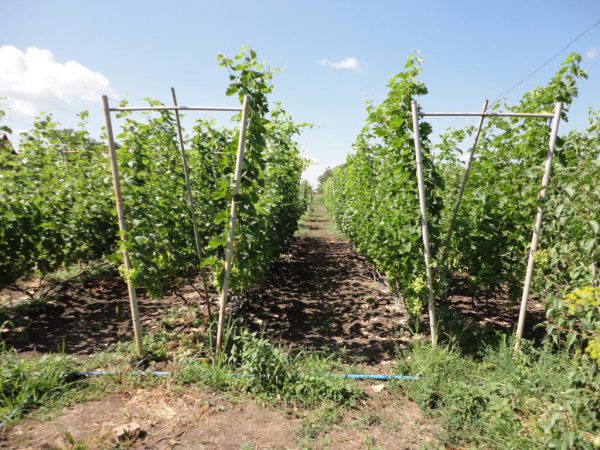
Making a stand from wooden stakes is considered a fairly simple method. If you follow all the expert recommendations correctly, such a device will become your faithful assistant for at least several years. The stakes should be driven into the ground around the bush. Use 4-5. Next, attach wire or strong twine to the resulting supports. Another similar method is to use forked stakes. They are driven around the bush, and then straight branches are placed on top. Sturdy branches cut from a fruit tree are often used as forked stakes.
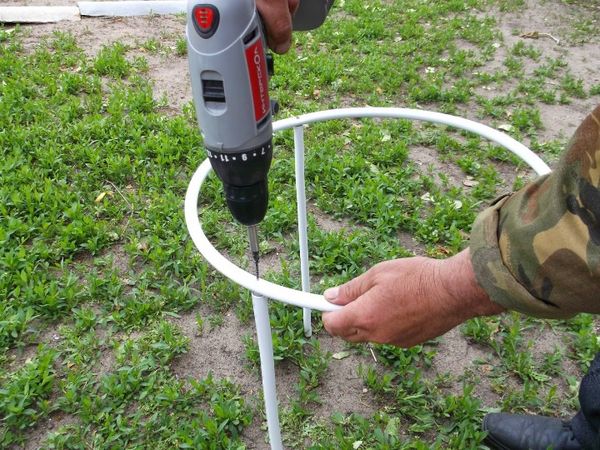
Metal supports are popular among experienced gardeners. For this purpose, use scraps of metal pipe. These serve as pegs: they are driven into the ground, and then the slats are attached to this structure. The whole thing is finally secured with screws. Plastic supports for currant bushes are also widely used. They are durable and have a decorative appearance.
Even seemingly damaged solar lanterns can be repurposed for gardening. Using this material will allow you to construct a fairly stable structure, but it's not suitable for heavy loads. However, if you need to support young currant bushes, a plastic structure is a good solution.
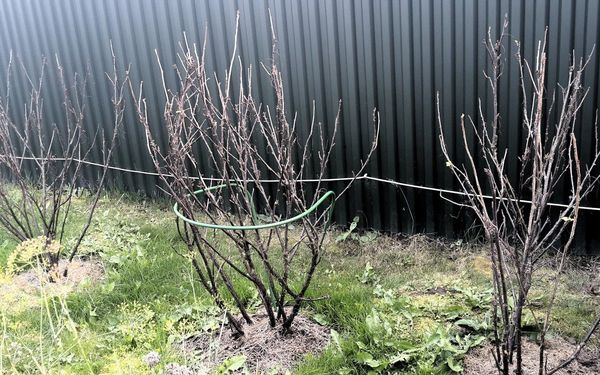
A support made of metal-plastic pipes is considered the most decorative and also quite durable. It is recommended to cut them into three equal pieces. The remaining material is formed into two circles. It is best to buy green pipes: this way, your structure will blend in with the green foliage of the currants. Remember: currants on a homemade trellis are an excellent solution for any gardener.
Video: "Supports, supports, and garters for garden shrubs"
This video will show you how to make high-quality supports, ties, and garters for your garden shrubs.