
When and how to properly prune currant bushes
Content
Why do they cut?
Pruning currant bushes isn't just about shaping the bush; it also improves yield by allowing sunlight to reach the berries. The quality of the berry harvest depends on when and how currant bushes are pruned. The first pruning is crucial, as it allows the currant bushes to develop strong, vigorous shoots, which in turn will yield a bountiful harvest.
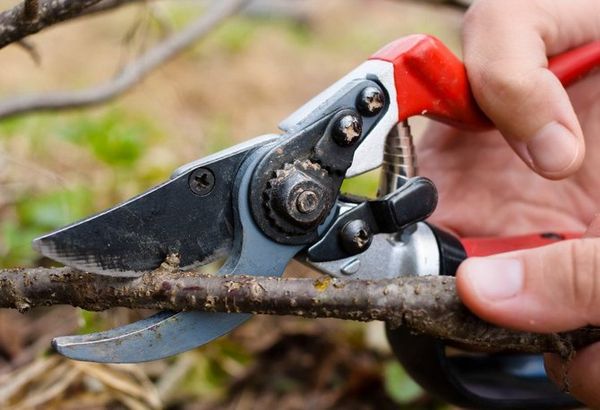
It is important to choose the right time to prune blackcurrants: if this procedure is carried out at the wrong time, the majority of the emerging shoots will be weakened, and the quantity and quality of the berries will be questionable.
Experienced gardeners strongly recommend not underestimating the importance of currant pruning: without this step in care, the crop cannot be grown. Otherwise, the plant weakens, inevitably becomes susceptible to disease, and becomes vulnerable to pest attacks.
In addition, pruning currant bushes provides the gardener with a sufficient amount of new planting material (saplings), thanks to which he can significantly increase his currant bed.
Basic rules of pruning
There's no definitive answer to the question of how to properly prune currant shoots: much depends on the purpose of the procedure:
- Sanitary pruning – in this case, weakened or damaged branches are removed. This thins the crown and improves ventilation;
- formative pruning - in this case, the main goal is to form a bush of the correct shape, so you can cut off all the excess shoots;
- Rejuvenating – designed to renew the plant and rid it of old branches. All shoots that have ceased to bear fruit are removed;
- Pinching – promotes better branching by cutting off the top of the shoot.
In summer
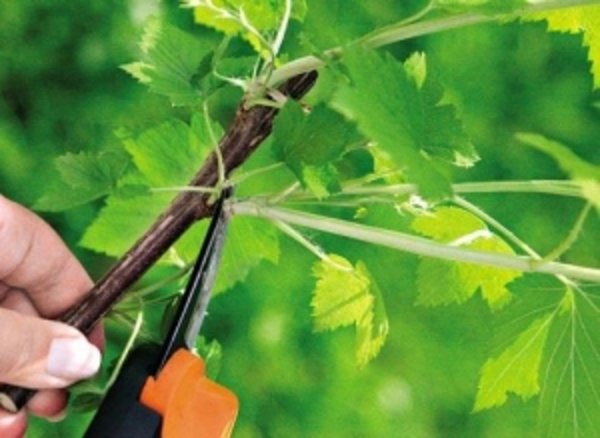
The only reason blackcurrants are pruned in summer is because pruning before flowering encourages the bush to form more flower buds. To achieve this, lightly pinch the tips of the shoots in the first days of July. This will encourage more flowers, larger berries, and allow the bush to branch more effectively.
In the fall
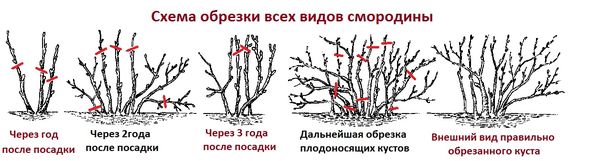
At this time, currant pruning is done to increase yield. To prune blackcurrants correctly, remove all branches that have stopped producing fruit, any emerging suckers, and any that are over six years old. Ultimately, each bush should be left with branches of varying ages.
This procedure can be performed annually after the bushes shed their leaves. During the first year of the plant's life, all shoots should be pruned just above the third bud. The following year, the currant pruning scheme will look like this: remove all excess shoots, leaving no more than five on the bush—these will form the foundation of the future bush. It's important to consider the planting density: the denser the bushes grow, the fewer skeletal branches should remain on each plant. By the end of the bush's third year, all shaping procedures will be complete: now you need to leave five shoots, and one- and three-year-old shoots are pruned above the third bud.
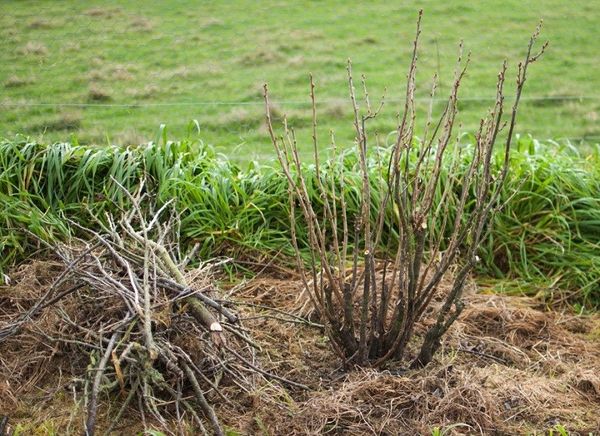
After the bush's fifth year, it needs rejuvenation. This requires completely removing all old shoots and pruning the young shoots according to their age.
Video: "Pruning Currants in Autumn"
This video will show you how to properly prune currant bushes in the fall.
In the spring
Many novice gardeners, taking their first steps in the challenging business of growing fruit bushes, wonder how to properly prune currants in the spring, and why it's necessary. We're happy to answer: at this time of year, currant pruning is done solely for sanitary purposes—removing all frozen or damaged branches to prevent them from sapping the bush's vitality. All this work must be completed in early spring, before the sap begins to actively flow and the buds begin to swell.
Pruning seedlings when planting
Proper pruning of blackcurrant seedlings requires the mandatory removal of the tops of all branches: leaving 2-3 buds on each. Let's note right away: there is no reason to worry - by the end of the current season, the seedling will form several new shoots.
It's widely known that the main crop begins on two-year-old branches. Therefore, when pruning, you can safely and ruthlessly remove all shoots older than four years, cutting them down to the roots and leaving no stumps. Note that the age of a shoot can be determined by the color of its bark: the older the branch, the darker it is. If for some reason you haven't been able to prune annually and as a result your currant bushes have become overly dense, don't take drastic measures and prune everything out in one fell swoop: spread the process out over several years.
Planting, pruning, and caring for currants are simple tasks that will reward you with a rich and healthy harvest of your favorite berry.
Video: "Pruning Currants After Planting"
This video will show you how to properly prune currants immediately after planting.