
Guaranteed bountiful harvest with the Natalie red currant variety
Content
Characteristic
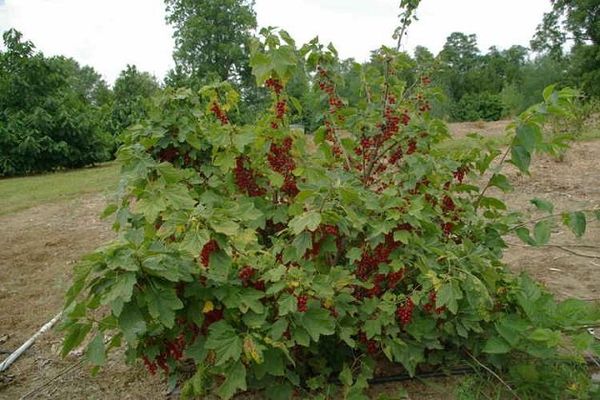
This self-fertile, mid-early variety is characterized by a dense, fairly compact bush of medium height. Its straight branches grow up to 1.5 meters, sometimes even higher. Young, green, hairless shoots have a red blush at the very tips, while woodier ones take on a grayish-brown color.
Along the entire length of the shoots, short petioles bear elongated brownish-gray buds that cling to the branch. From these buds emerge matte, leathery, slightly wrinkled, five-lobed leaves of a dark green color with a subtle bluish tint. The medium-sized leaves, well open to the sun, curl slightly downward at the very top of the shoots.
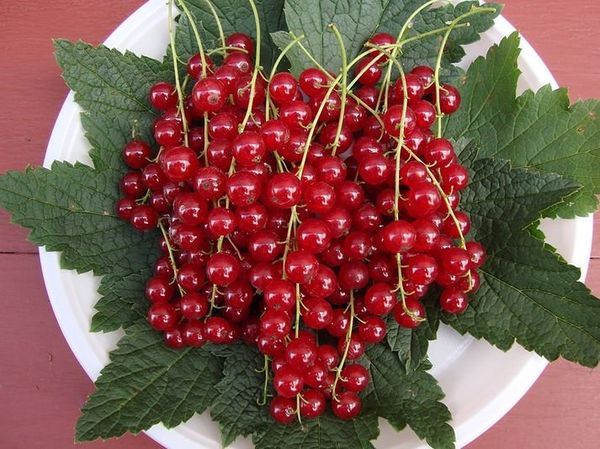
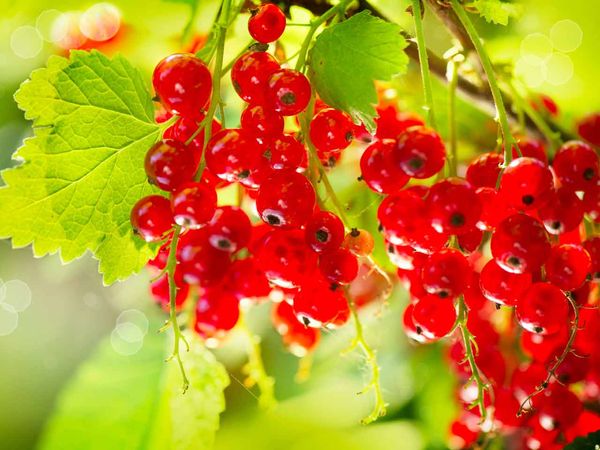
Quite large for a currant, the cup-shaped flowers with reddish-brown sepals are attached to a pubescent axial branch by small petioles. The entire cluster is 7–9 cm long. The clusters are evenly spaced along the entire length of the shoots, resulting in bright red garlands of berries gradually appearing across the bush as the fruit ripens.
The fruits ripen in the second half of July, an adult bush produces 3-4 kg of very useful sweet and sour berries with an average weight of about 1 gram.
Thanks to their dry peel and dense skin, the berries store and transport well; however, they should not be stacked in a thick layer to prevent the lower layers from being crushed. These versatile fruits are suitable for fresh eating, cooking, freezing, and drying.
The Natalie red currant variety is a winter-hardy, productive variety, resistant to most pests and diseases, and its fruiting period lasts at least 10 years.
Peculiarities
The compact, dense bush becomes more spreading over the years, as the branches bend further and further away from the center, under the weight of the fruit. Many consider this a drawback, but the main thing to consider before planting is to leave at least 1.5 meters of space between the bushes.
The formation of flowers and ovaries does not decrease after 3-4 years, as with most varieties of black currant, so shoots of this age do not necessarily need to be cut out. A healthy adult bush should have 15-20 shoots of different ages; over time, the bush grows laterally and can be divided into several – this is a form of simultaneous rejuvenation and reproduction.
The root system develops deep, so it's desirable to have a fertile soil layer that extends beyond the surface. Proper watering during fruit ripening ensures a good harvest next year; a lack of moisture will have less of an impact on the quality of the current crop than on the availability of the next one.
When harvesting, it's important to lift the berry clusters before plucking them. Pulling downwards can damage the fruit buds of the next crop.
History of selection
The 'Natalie' variety was added to the State Register of Breeding Achievements in 1991. It was created by crossing different varieties at the All-Russian Scientific Research Institute of Horticulture and Plant Breeding (VSTISP), and is credited to renowned Russian breeders V.M. Litvinova and N.K. Smolyaninova. This winter-hardy, undemanding variety easily tolerates temperatures down to -30°C (-32°F). If even colder winters are expected, the branches should be covered with plastic film, and the soil around the bush should be mulched to a depth of 25 cm with horse manure or peat and humus.
The creators do not recommend growing "Natalie" in the Far East, the lower Volga region, or the northern part of the country. However, gardeners' reviews indicate that, with insulation, the currants survive the winter without loss, provided there's enough warmth for the fruit to ripen.
Planting and care
You can plant seedlings in the fall or spring, as long as the soil is moist and warmed to 15 degrees Celsius. This currant prefers level or elevated sunny sites with fertile loam with a neutral or slightly acidic pH. Acidic or alkaline soils are not recommended.
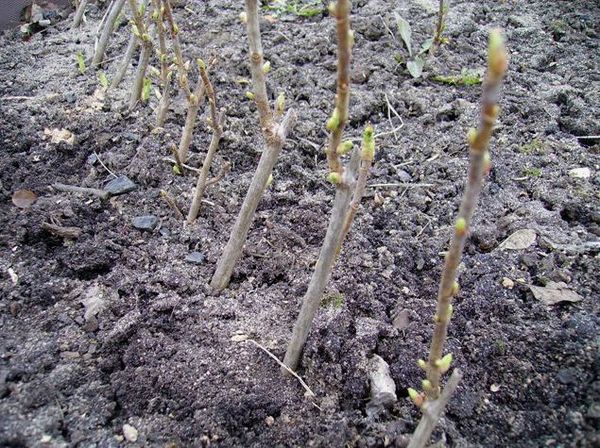
When choosing a seedling, pay attention to the root system. It should have three to four well-formed skeletal roots up to half a meter long, along with numerous, fresh lateral roots. The shoots should be straight and long.
It's best to prepare the soil in advance, clearing it of perennial grasses and all other weeds. You can mix fertilizer into the soil just before planting, but it's best to apply it while digging, spreading it evenly over an area of approximately one square meter per plant.
It's recommended to add several kilograms of compost or humus, a liter jar of wood ash, a couple of tablespoons of superphosphate, and one tablespoon of potassium sulfate. If the soil is too acidic, add lime. To make heavy soil more breathable, add peat or river sand.
Dig a hole about 60 cm deep and with a radius of about 60 cm. Add fertile (fertilized) soil, pour in half a bucket of water, straighten the roots, cover them with soil, lightly compact it, and water generously. It's important that after planting, the bush is firmly planted in the soil, the root collar is covered, and all roots receive plenty of water. Mulch can be applied to a depth of 0.5 m around the bush.
This variety thrives on mulch around all its roots, so gradually increase the area, bringing the radius to 1 meter around a mature bush. The most nutritious and convenient mulch is made from manure and river silt. 'Natalie' thrives on plenty of moisture (but not stagnant water), especially during the ripening period, so it will need to be watered frequently, even if rainfall is unavoidable.
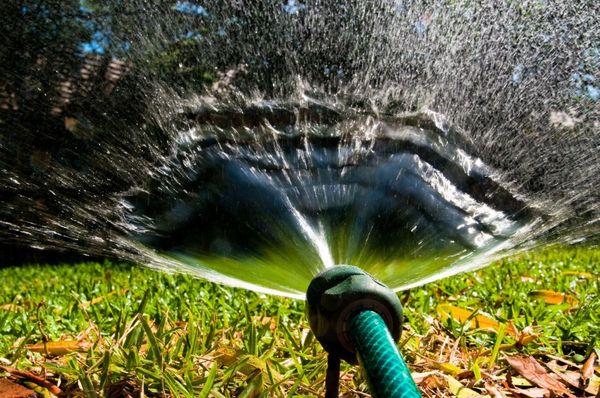
In dry summers, watering is usually done twice a week, pouring 1.5 - 2 buckets of water under each bush. This can be done in two stages - morning and evening. During the ripening of berries, currants are watered every other day.
Starting in their third or fourth year of growth, the bushes need regular feeding. Humus or compost is typically added in the spring, and superphosphate and potassium fertilizers are added in the fall. If you mulch with silt and manure, no further feeding will be necessary in the summer.
Weeding is essential; without mulching, you'll still have to loosen the soil to prevent crusting. Mulching will minimize weeding and loosening.
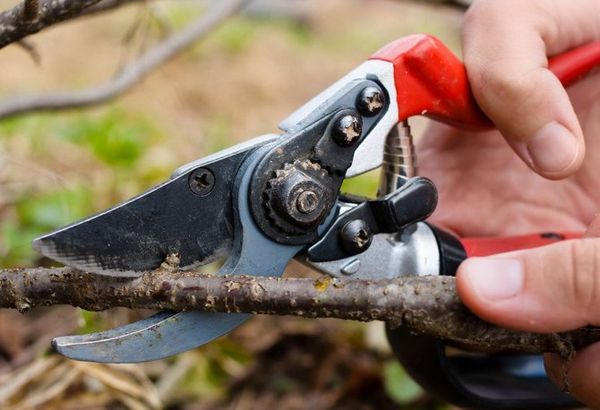
Currant bushes need to be pruned annually, usually in early spring before the sap begins to flow, or in the fall. Old, dry, or damaged shoots are completely removed, and the cut areas should be treated with garden pitch or wood ash. In the spring, frost-damaged branches, those growing inward, or those that have fallen to the ground are trimmed. Make sure the bush doesn't become too dense—air and sunlight must reach each branch unimpeded. Some gardeners recommend pruning shoots to four buds after planting, and then shortening them by a third annually in the fall, but it's unclear whether this improves the yield.
Diseases and pests of currants
The 'Natalie' variety exhibits excellent resistance to most pests and diseases. If you avoid overcrowding, overwatering, and keeping nearby weeds at bay, fungal diseases won't harm the currants. To prevent potential pest attacks (including aphids, gooseberry sawflies, and currant glassworms), periodically scatter wood ash and tobacco dust around the bushes and spray them with wormwood infusion.
Fallen leaves and pruned branches should be regularly collected and burned, and the soil around bushes should be dug up. Strong, healthy plants, protected by a strong immune system, will not be harmed by pests and diseases.
Video: "Beneficial Properties of Red Currants"
This video will tell you about the beneficial properties of red currants.