
When can currants be planted in a garden plot?
Content
Selection of seedlings
The key to successfully planting any berry crop is choosing the right planting material. Currants are propagated by cuttings, layering, and division. However, store-bought seedlings are often used as planting material. While gardeners are confident in the health of their home-grown cuttings and layering, store-bought seedlings may not be as high-quality as the seller claims.
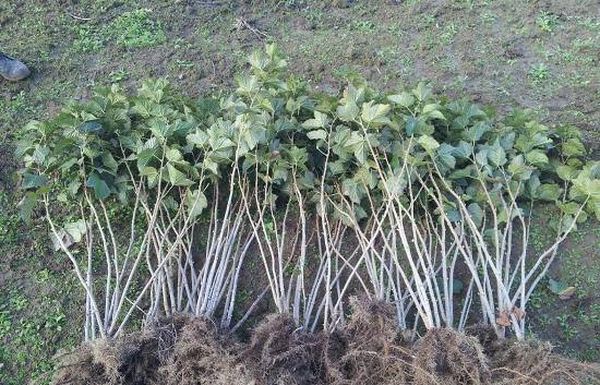
When purchasing currant seedlings in specialized stores or at fairs, you should pay attention to the following points:
- Plant appearance. A young bush should have a healthy appearance. Its branches should not be broken, deformed, or show obvious signs of disease;
- Variety characteristics. In this case, it's essential to inquire whether the variety is self-pollinating. If not, you'll need to plant bushes of other varieties nearby. It's also important to know the plant's mature size, planting and subsequent care requirements, and the fruiting period.
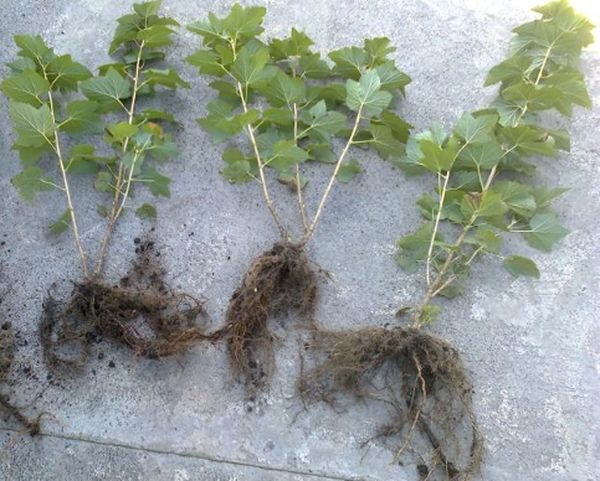
- Root system. All roots should be free of broken, rotting, slimy, or foul-smelling roots. Remember that the plant's adaptation rate and survival in the garden directly depend on the health of the root system. The root system should consist of at least three skeletal roots;
- Resistance to diseases and various pests. To simplify future care of the bushes, choose varieties that have good resistance to the most common diseases.
- age of the seedling. It is best to plant two-year-old plants.
Before purchasing, you should also ask the seller what climate conditions are suitable for growing the specimen you like.
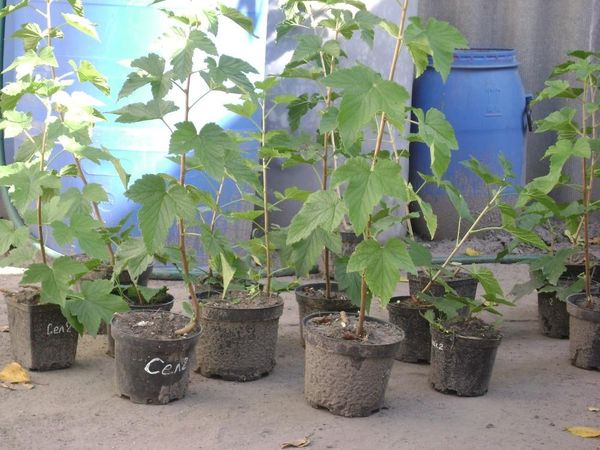
Many experts recommend planting several currant varieties at once. This approach will increase the yield of the bushes to a certain extent, as well as improve the quality of the fruit.
If you purchase a seedling with an open root system, it is recommended to immediately place it in the soil in which it will grow. But sometimes, the plant needs to be kept indoors for a while. In this case, place it in a bucket of water and keep it in a cool place. The roots should be completely submerged.
If the seller dipped the roots in a clay slurry to prevent them from drying out during transportation, there's no need to rinse this solution off. Instead, wrap the roots in a plastic bag. Remove them from the bag every day and spray them with water. The clay layer should be rinsed off only just before planting in the prepared holes. The clay slurry is easy to rinse off: soak the plant in water for a while. After a while, the clay will soften and fall off.
Sometimes seedlings are sold in pots. In this case, the plant is removed from the container before planting to allow the roots to air out properly.
Preparing the landing site
When choosing a location for currant bushes, it's important to determine the planting time. There are various answers to the question of when to plant currant bushes in our country. This procedure is carried out in both spring and fall. There is no fundamental difference between these two seasons.
However, some believe it's better to plant in the fall, when the plant's above-ground portion enters dormancy. This way, all the nutrients go to the root system, which receives everything it needs for quick and successful adaptation to its new location.
In any case, it's important to get the timing right, as early fall plantings can cause bud break during warm weather. However, if planted late, the seedling won't have time to adapt and will die. As we can see, there's no definitive answer to the question of "when is the best time to plant currants."
If planting in spring, the currants should be shaded for the first week, as young seedlings are very sensitive to direct sunlight. If you purchase seedlings with a closed root system, they can be planted anytime from March to November.
Once you've decided on a suitable location, you can choose a suitable plot. To ensure your currant bushes thrive, consider the following when choosing a plot:
- This crop is considered a sun-loving plant. However, it can also be planted in partial shade. The plant should receive no more than three hours of dappled shade per day. Therefore, it is best to choose central areas of the garden. Planting seedlings near fences and buildings is permitted, but a distance of 1.5 meters from the building to the plant should be maintained.
- the size of the area selected for currants is determined depending on the number of plants;
- Avoid marshy soil, as this can increase the risk of fungal infections. The soil should be well-drained.
- The site may be located next to a tap or a body of water.
As for soil, each variety prefers certain types. For example, blackcurrants grow best in slightly acidic soils. Therefore, if the soil is highly acidic, an acidifier is added. Old plaster, chalk, or cement can serve this role.
If all site selection requirements have been taken into account, then future bush care will be simple, and the harvest will be abundant.
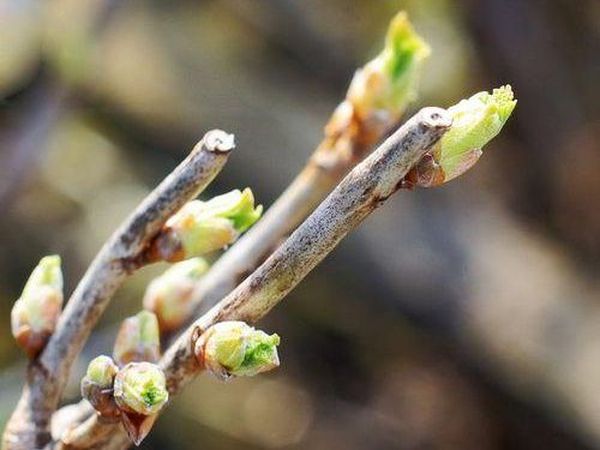
Planting technology
Once a location for the currant bushes has been determined, the question naturally arises: "How to plant the currant seedlings?" First, you need to determine how many bushes will be planted in a given location. When purchasing varieties with small, compact crowns, the plants can be planted much closer to their neighbors.
If the bushes grow to a sufficient height and have a spreading crown, the distance between adjacent seedlings should be increased. On average, this parameter should be 1-2 meters, and when planted in rows, up to 3 meters.
Currant bushes should be planted in holes that have the following parameters:
- diameter – about 55 cm;
- depth – about 45 cm;
- the distance between the holes is no less than 1.5 and no more than 2 meters.
A prepared mixture of superphosphate, humus, and potassium sulfate should be placed at the bottom of the planting holes. In addition to this mixture, compost or well-rotted manure can be placed at the bottom of the holes. You can even add crushed eggshells. Ash is also used. However, it is quickly washed out of the soil by groundwater. Therefore, this type of fertilizing will need to be repeated several times.
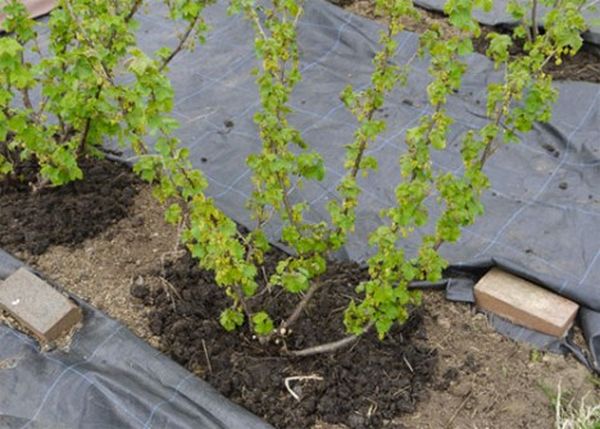
You should dig holes and add fertilizer a couple of weeks before planting. This allows the soil to settle.
The seedlings are planted in prepared holes at a depth that is 5 cm deeper than they were planted before purchase or transplantation.
The technology for planting currant seedlings looks like this:
- the bottom of the hole is well watered before planting;
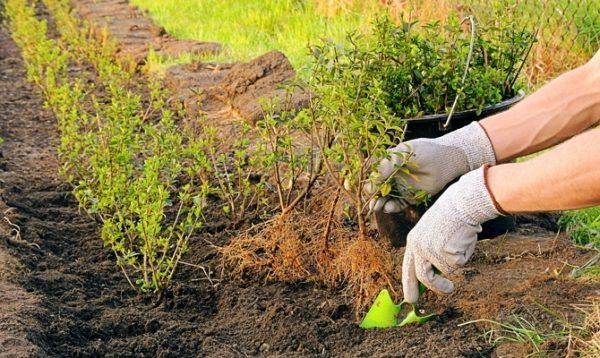
- The plant is placed in the hole. The seedling is positioned at a 45-degree angle. This angle will stimulate the plant to produce new shoots, resulting in a strong and sturdy bush. If the seedling is planted upright, it will become a single-stemmed bush.
- then the roots of the plant straighten out;
- then the seedling is deepened so that the soil level is 6 cm above the root collar;
- then the roots are carefully covered with soil;
- Once the hole is filled with soil, water it and gently compact it. About four buckets of water should be poured under each bush.
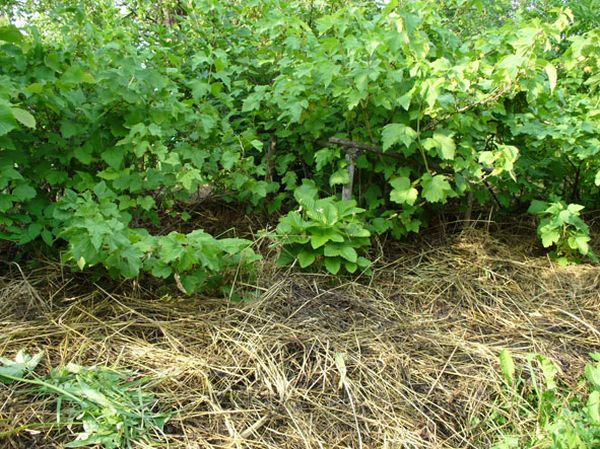
As you can see, this technique is difficult to implement independently. Therefore, currant planting should be done by two people. One person holds the seedling at the desired angle, while the other works on the roots and buries the underground portion of the plant. After planting, the soil under the bushes should be mulched.
You may find information that recommends pruning currant bushes after planting. Branches should be 10-15 cm above the ground. However, some experts argue that the bushes should be pruned by 1/3 or 50%. Proper pruning restores the balance between the above-ground and underground parts of the plant. Excellent growth of the above-ground part can be expected as early as the first year after planting.
Cut branches can be planted in moist soil. They will root easily.
When pruning seedlings after planting, mulching is done after this procedure is complete. It's worth noting that if the weather is dry, water the young plants after a few days. After this, mulch the soil again.
Further care
Once all the currant seedlings have been planted, they need to be properly cared for. Three factors are crucial for the growth and development of the crop:
- good and long-lasting lighting;
- excellent soil ventilation;
- abundant watering.
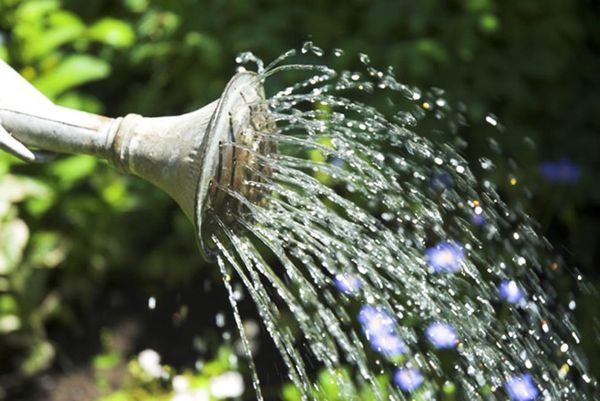
The most important step in currant care is watering. Bushes should be watered throughout the spring and early summer. Maintaining proper watering is especially important during dry and windy weather.
Plants are watered in the evening. Water is poured directly under the bush. This allows the roots to absorb all the moisture overnight. If watering is done in the morning or afternoon, the water evaporates very quickly, leading to a lack of moisture. Therefore, watering during these hours is useless. It's important to understand that even brief dry soil can cause a significant drop in yield. Approximately 3-5 buckets of water should be poured under each bush at a time.
Watering should be stopped once the fruit begins to color. At this point, water will act as a negative factor, as it causes the berries to crack. Cracks occur because the pulp, oversaturated with water, produces excessive cellular sap.
Mulching is done in the spring and also after planting. At this time, the soil under each plant is covered with dry grass or peat. Dry clods of soil are also acceptable. There's even a mulching technique that involves covering the ground at the base of the bush with newspapers. These newspapers serve as an excellent barrier to a variety of insects, which, after overwintering in the soil, begin to actively emerge.
When flowering begins, the newspapers can be removed, as this is when beneficial insects come to the surface. After flowering has finished, the newspapers should be returned to their original location.
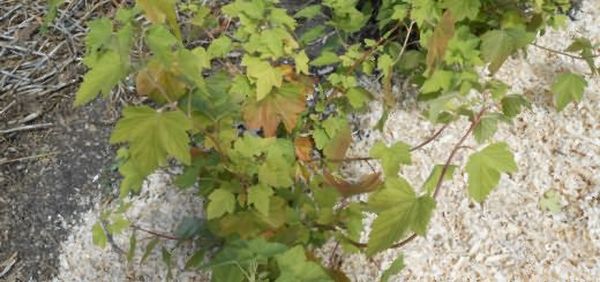
Mulching is done during the period when buds are swelling and the green cone is forming. In addition to mulching, young bushes need to be earthed up. This procedure is carried out in the fall and is done to a height of 15 cm. This mound of earth will allow young plants to survive the winter well. This rule applies to European varieties. All other varieties have good frost resistance.
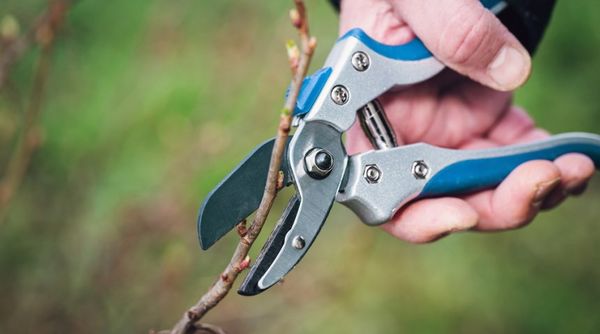
To increase fruiting, currant bushes need to be trained. Training begins immediately after planting the seedlings. In this case, pruning involves removing all branches. Only the stem with up to five buds should be left. Old branches that no longer bear fruit should be pruned from older plants. Branches typically stop bearing fruit at 5-6 years of age. Excess one-year-old stems should also be removed.
Pruning should create a wide base for the bush. The more spacious the branches are within the crown, the more evenly and abundantly the fruit will bear. A properly pruned bush has 16-20 branches.
As we can see, currant seedlings are easy to plant in a garden plot. Furthermore, subsequent care of the bushes requires no complex agricultural techniques. Therefore, even an amateur gardener can achieve excellent fruiting from currant bushes. The main thing is to maintain proper watering.
Video: How to Plant Currants
In this video, a specialist will tell you how to properly plant a blackcurrant bush.