
How to properly prune and shape gooseberry and currant bushes
Content
How to prepare tools
Pruning currants and gooseberries always begins with preparing the tools. Removing branches from bushes can be done with the following tools:
- garden saw;
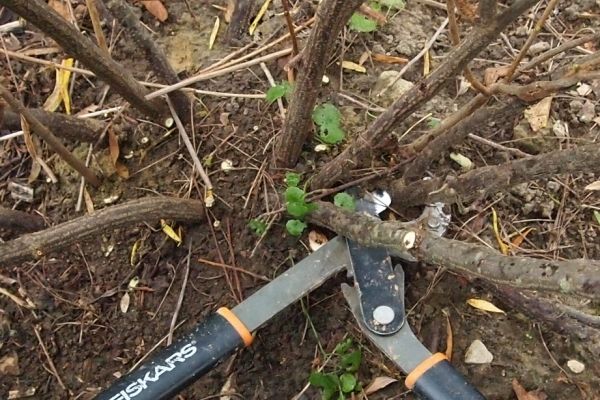
- lopper;
- pruning shears equipped with two sharp blades;
- Hedge trimmer. It is used to shape the bush;
- A garden knife. Allows you to effectively cut off annual growth.
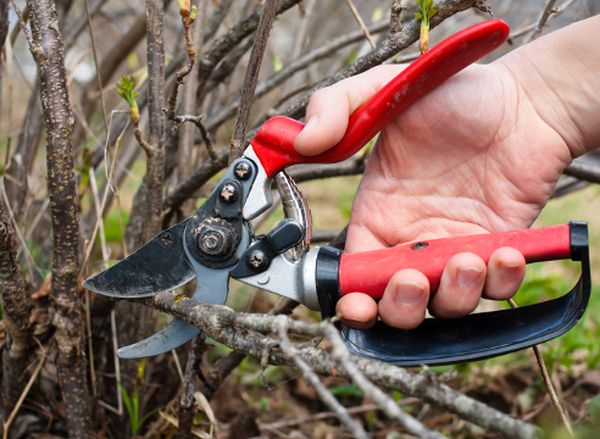
Pruning of plants with the selected tools is carried out according to a specific pattern.In this case, the instrument must first be cleaned of dirt and disinfected.It should also be sharpened to make an even cut in one go.
You'll also need garden varnish or RanNet paste for treating fresh cuts. This should be done within 24 hours of removing the shoots. All cuts larger than 7 mm in diameter should be treated.
Why trim bushes?
Pruning berry crops serves a specific purpose. When performed correctly, it accomplishes the following:
- bush formation;
- Rejuvenation of mature plants. Even old bushes can be rejuvenated;
- extension of the fruiting period and life of crops;
- Standardizing the number of shoots. This allows for the proper distribution of nutrients within the plant;
- Creating optimal conditions for fruiting. This significantly increases the yield of pruned bushes;
- prevention of diseases and parasites;
- giving the bushes a well-groomed and decorative appearance.
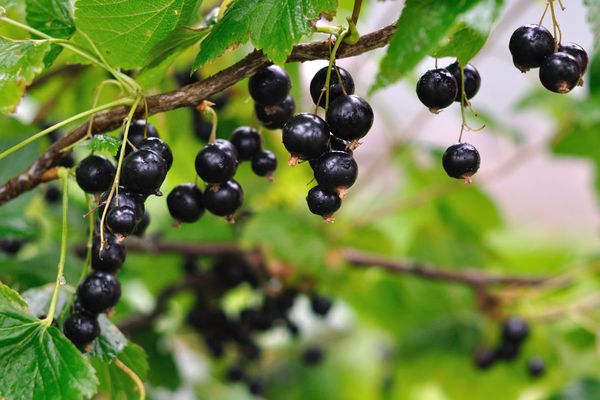
Pruning the branches of berry crops is a mandatory maintenance that any novice gardener should carry out from the moment the seedlings are planted in the garden.
Pruning and shaping black currants
To perform this procedure, it's important to know when to prune currants and gooseberries. This variety of currant, like other varieties, is recommended to be pruned in early spring (early April) or fall (October-November). Fall is the best time to prune. If for some reason this is not possible, the operation is performed in late winter – early February.
Plants can be pruned when the air temperature has not yet risen above 8°C. In winter, this procedure should also be performed during rain or snow.
For blackcurrants, the full growth cycle takes six years. It's worth noting that pruning currant and gooseberry bushes in the fall or spring is always done immediately after planting the seedlings. At this time, the entire branch should be pruned. Subsequently, 2-3 developed buds should be left on each branch. As a result, by the end of the first year, the bush should consist of 5-6 one-year-old shoots.
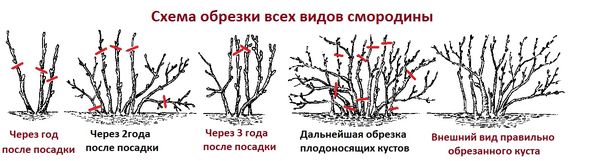
The following (second) year, secondary branches are pruned. Four to eight buds are left on them. The tops are trimmed, as are weak, broken, and infected branches.
In the third year, approximately ⅓ of the mature perennial shoots are pruned. Only one-year-old branches should be left.
Blackcurrants reach their peak yield between 2 and 5 years of age. To achieve abundant fruiting, the plant should have 10 to 15 perennial shoots of varying ages by this time.
In the 6th or 7th year, prune back all shoots older than 5 years. Don't remove all such branches at once. It's best to spread the pruning over 2-3 years. This will give the currant bush time to develop strong shoots.
For older plants, the ends of branches should be trimmed to rejuvenate them. In this case, the plant should also be thinned thoroughly, removing all old and fruit-bearing branches.
This pruning scheme will help maintain abundant fruiting and produce a large and tasty harvest from each bush.
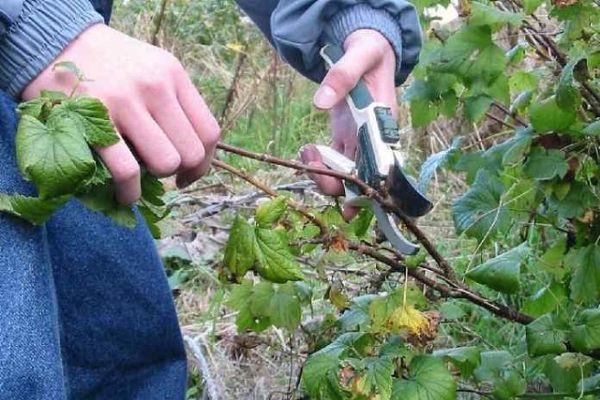
Pruning and shaping red and white currants
Red and white currants form longer-lasting skeletal branches than black currants. Therefore, old shoots should be pruned in the 7th to 8th year. Five- or six-year-old branches require rejuvenation pruning by removing lateral branches.
It's also worth noting that spring (April) pruning for these varieties is also different. This is because fruit buds are formed at the top of the branches. Meanwhile, the bouquet shoots grow near the annual growth. They bear fruit for approximately four years. It is not recommended to prune the one-year-old basal and lateral shoots located at the top of perennial branches.
Each year, the bush is trained to consist of the four most viable branches from the first year of growth. During pruning, the desired shoot is shortened according to the chosen pattern. Only the immature shoot tips need to be removed.
Old, diseased, or broken branches should also be pruned. This can be used to rejuvenate both mature and older plants. Rejuvenation is typically performed on bushes aged 5–8 years. At this age, white and red currant bushes should have 12 branches of varying ages.
Pruning and shaping gooseberries
Gooseberry pruning is also performed in spring (April) and fall (October-November). However, this variety is characterized by the formation of short-lived skeletal branches. Therefore, fall and spring pruning for gooseberries and black currant varieties follow the same pattern. For long-lived varieties (such as Yubileyny or Russky), shoots are removed at 7-8 years of age. This is a mandatory stage in the cultivation of the bushes.
Experts recommend pruning the branches of this berry crop in the fall. This is also the recommended time to plant gooseberries outdoors. When planting, trim the branches of the seedlings as short as possible. Strong, healthy branches should contain four buds after pruning, while weak branches should contain no more than two.
Every year, new shoots should be pruned. Three to five of the most developed branches should be left intact. It's also worth noting that many varieties of this crop are prone to dense growth. Therefore, thinning should be done with particular attention.
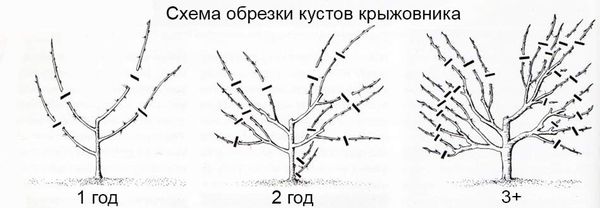
Just like with currants, zero branches should be pruned only at the tops, which have not yet ripened. Fruit ripening occurs on one-year-old fruit-bearing branches and shoots. Fruiting in this crop occurs at 2–5 years of age. This period directly depends on the varietal characteristics of the plant being grown. Therefore, branch removal occurs after 4–7 years.
During pruning, it is necessary to remove all large, broken, and dry shoots to prevent not only thickening and waste of nutrients, but also to reduce the risk of plant damage by pathogenic microflora or parasites.
As we can see, pruning currant and gooseberry bushes is an essential part of proper care for these berry crops. A bountiful harvest directly depends on proper timing and pruning.
Video: Pruning Berry Bushes
In this video, an expert will explain how to prune currants, gooseberries, and other berry bushes in spring.