
A miracle of breeding: a hybrid of gooseberry and blackcurrant
Content
History of the hybrid
The first experiments in crossing gooseberries with currants were conducted by I.V. Michurin, but neither he nor his followers from various countries were able to achieve viable results. Breeders had several goals: eliminating gooseberry thorns, increasing the size and yield of currant berries, and achieving resistance to bud mites and double-flowering. The German breeder Rudolf Bauer solved this problem in the 1970s. By 1989, the hybrid was ready for commercial cultivation. Its name is derived from the initial syllables of the German names for currant and gooseberry. This new variety has been cultivated in the former USSR since 1986.
Preferences and requirements
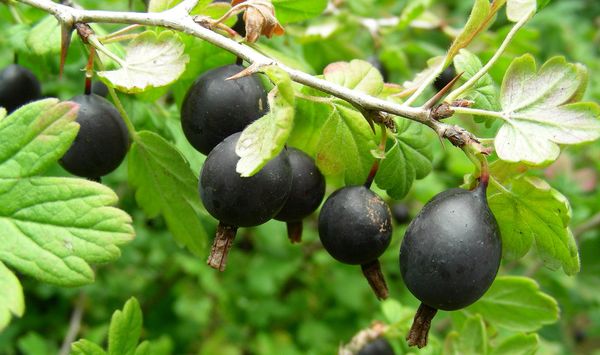
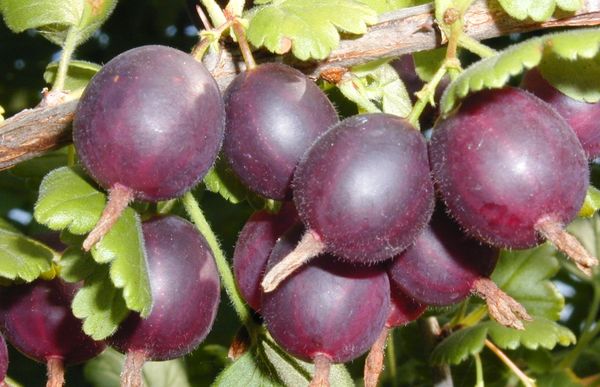
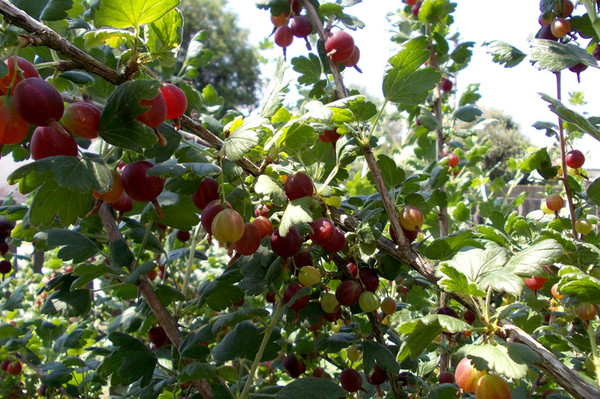
This currant-gooseberry hybrid is a perennial shrub reaching 1.5-2 m in height. It grows quickly and bears fruit in the 2nd to 3rd year after planting. A mature bush typically consists of 15-20 branches of varying ages, forming a spreading crown up to 2 m in diameter. Jostaberry inherits its currant-like leaf shape, but lacks the characteristic scent. The trunks are smooth and thornless. The berries are the size of cherries, black with a purple tint, and grow in clusters of 5-6. They ripen unevenly over 2-3 weeks. Ripe berries do not fall off. The root goes 30-40 cm deep.
Jostaberry is often grown as an ornamental plant and to create hedges, as it's easy to maintain, grows quickly, and retains its foliage until late autumn. For consistent fruiting, it requires loose soil rich in organic matter and potassium, as well as regular moisture. It thrives in full sun, so choose an open, well-ventilated site for planting. It also needs to be spacious enough to accommodate the future size of the bush.
This hybrid plant is self-fertile, however, without close proximity to the parent forms, the promised 10 kg per bush will not be achieved.
Landing features
This shrub is planted in early spring (before the sap starts to flow) or early fall. The hole should be spacious, approximately 50x50x40 cm. Fill it halfway with a fertile mixture of half a bucket of compost, 0.5 liters of sifted wood ash, 100 g of phosphorus-containing fertilizer, and soil. Place the seedling on this fertile bed, carefully distributing the roots throughout the hole, cover with soil, and pour a bucket of water over it.
Once the soil settles and compacts around the roots, add more soil. After planting, prune the seedling, leaving no more than 2-3 buds on each shoot, with the top bud facing outward. Given the enormous size of the future bush, the distance between the next bush should be at least 2-2.5 meters. It's best to choose a location for this hybrid near gooseberry and blackcurrant bushes.
Reproduction
Jostaberry is propagated by layering, cuttings, and division. In the first case, in the spring, well-developed one- or two-year-old branches are bent to the ground, placed in pre-dug 10-centimeter-deep trenches, secured with a metal pin, and covered with soil. The exposed top is lightly pinched. When the layering grows shoots 10-12 cm tall, they are earthed up, filling them halfway with soil. In the fall of the same year or the following spring, the layering is separated from the mother plant and planted in prepared holes.
To propagate by cuttings, cut the middle section of 2- and 4-year-old shoots. The cuttings should be 15-20 cm long and contain 5-6 buds. They are planted 50-60 cm apart at a 45-degree angle. Only two buds should be exposed.
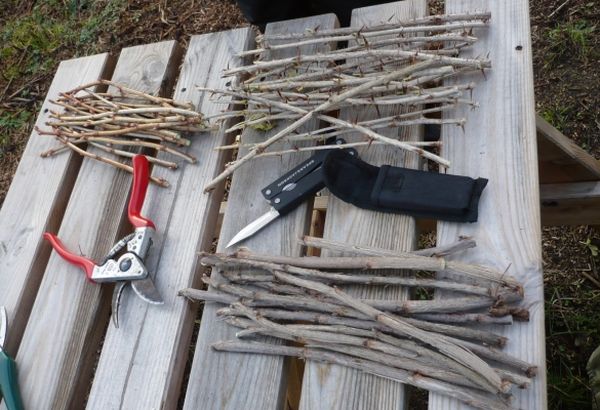
This plant is propagated by division only if it is being replanted. The dug-up bush is cut with sharp pruning shears into sections consisting of 1-2 shoots and a well-developed root. Before planting, the cut sections should be sprinkled with wood ash.
Care
Jostaberry does not require annual formative pruning. In early spring, before the sap begins to flow, and in late fall, after the leaves have fallen, remove dried, broken, and frost-damaged branches. If the bush is very dense, thin it out to allow more light. It's best to completely remove any branches that are inconveniently growing or low-growing and replace them with new ones.
The soil around the tree trunk should be mulched with peat, humus, or compost. This helps maintain moisture and eliminates the need for weeding and frequent tilling. Moreover, this mulch will enrich the soil with essential nutrients. During berry ripening, the bushes can be fertilized with a 10% mullein solution or 1% bird droppings.
In the fall, apply potassium fertilizer or 0.5 liters of wood ash under the bush. Watering should be frequent, but not too heavy. 20-30 liters of water is sufficient to moisten the root zone. This hybrid is resistant to anthracnose and powdery mildew, and is not affected by bud mites. Therefore, chemicals are not necessary for protection. Spraying with urea, micronutrient fertilizers, and folk remedies that combine protective and nourishing properties are beneficial. This shrub tolerates severe frosts well, so winter shelter is not required. For insulation, add organic matter under it in the fall. This hybrid grows and bears fruit for 20 to 30 years, requiring little care and generously sharing its harvest.
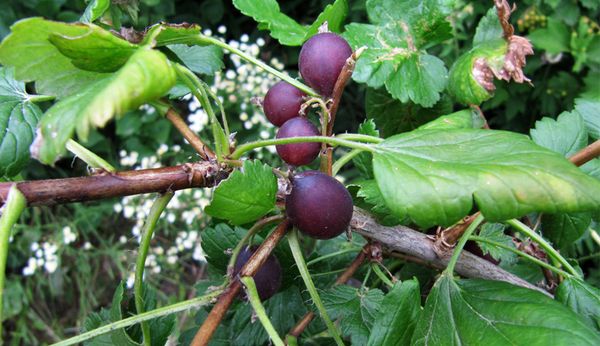
Other blackcurrant-gooseberry hybrids are currently known worldwide—Rike, Krondal, Zvyagina hybrid, and Kroma. However, they are rarely grown in the CIS.
Video: Planting and Caring for Yostaberries
In this video, an expert will talk about the yoshta plant, its care, and planting.