
Highly disease-resistant currant variety Hercules
Content
Description
The Hercules variety, sometimes called Heracles, was developed relatively recently thanks to the research of breeder L. Zabelina. This variety is suitable for growing in both Siberian conditions and warmer regions of our country.
Hercules is an upright, tall shrub with a medium-density crown. It is formed from thick, light-brown shoots. The plant produces single, medium-sized, rounded-ovoid buds.
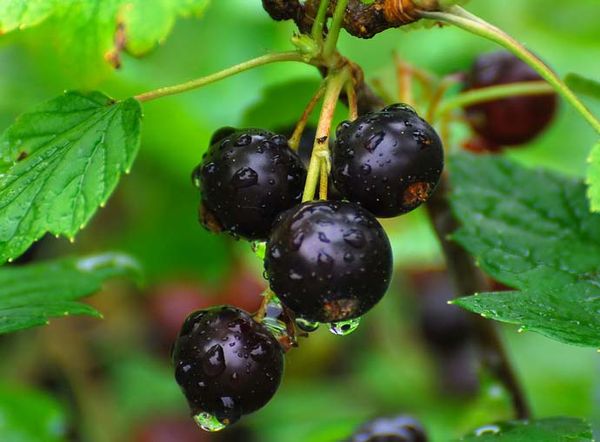
Three-lobed leaves form on the branches. They are quite large, smooth, and dense. The leaf blades are bright green. The shrub produces medium-sized flowers with creamy sepals edged in pink.
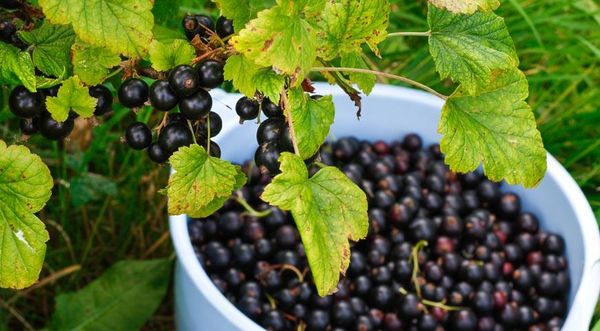
Hercules is a large-fruited blackcurrant variety. Its fruits weigh approximately 3.6 grams. They are uniform and round in shape. The skin is slightly shiny and has a slight bloom. It is elastic but thin. The berries of this variety have the following chemical composition:
- sugars – 8.7%;
- dry soluble substances – 18.4%;
- ascorbic acid – 177 mg/100 g.
The fruit has a sweet and sour flavor. This variety is highly productive. If all agricultural practices are followed, up to 11.1 tons of fruit can be harvested from one hectare.
Agricultural technology of the variety
Blackcurrants of this variety should be planted in a well-lit area. If the plant experiences insufficient light, the yield will decrease. The berries will also lose sugar content.
In addition, the bushes require some wind protection (especially on the north side). Therefore, planting seedlings along hedges or fences is an excellent solution.
The area chosen for growing should not have standing water. If water does stagnate, drainage will be necessary to ensure proper cultivation. Otherwise, the plant will be weak, prone to disease, and possibly die.
This variety is completely undemanding regarding soil composition. Once a suitable site has been identified, you can begin planting and growing Heracles.
Landing
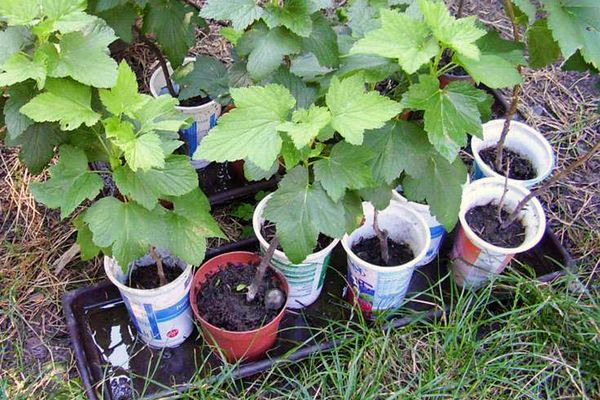
Seedlings of this variety should be planted according to the following rules:
- the depth of penetration into the soil is approximately 5-10 cm;
- the branches of seedlings should be cut by half or two-thirds;
- for one bush the feeding area is 1-2 sq.m.;
- a distance of 1-1.5 meters should be maintained between two adjacent seedlings;
- During planting, add organic fertilizer to the holes. This can be either horse manure or humus. Mineral fertilizers are also necessary. Adding 100 g of wood ash to the holes is sufficient. This can be replaced with potassium sulfate (30-40 g) or double superphosphate (70-80 g).
Cross-pollination isn't necessary. However, it can significantly improve the flavor of the fruit and increase its yield. Therefore, it's best to plant several different varieties at once.
Trimming
Pruning increases fruit production and berry size. Pruning also helps prevent a wide variety of diseases.
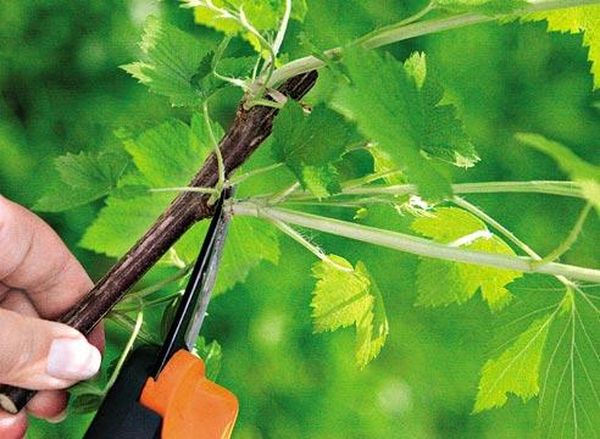
The first pruning is done on young seedlings. Their branches are cut back by two-thirds. This will allow the seedlings to develop bushier growth. Subsequent prunings are carried out as needed. They are usually carried out in early spring (April), before the buds open, and in autumn. In the latter case, the procedure is performed after the harvest and before frost.
Periodic thinning pruning is performed to prevent insect pests and infections and to increase harvest yields.
Pruning of Hercules is carried out according to the following rules:
- Branches are cut off right at the ground. Leaving stumps is not recommended;
- All branches that are spreading along the ground or located very close to it must be removed;
- diseased shoots, as well as those that are about five years old, should be cut off;
- Among the young stems, the upright and strongest ones are left. Therefore, all crooked and weak branches should be removed.
When rejuvenating a bush, it's recommended to remove a few of its oldest shoots each year. If you remove too many at once, the bush will experience shock.
When pruning is done correctly, the currant bush should have three branches of each age left:
- three five-year-olds;
- three two-year-olds;
- three one-year-olds.
It is desirable that the plant have approximately 15 branches.
Care
To ensure the Hercules blackcurrant variety produces good fruit, it requires specific care. The main agricultural practices that should be implemented when caring for this variety of blackcurrant include the following:
- pruning;
- loosening the beds;
- weeding;
- watering;
- application of fertilizers.
This crop prefers well-drained soil. Therefore, the soil around the bushes should be loosened regularly. If the soil becomes too compact, the currants will develop more slowly, resulting in a reduced yield.
Loosening is done only on the surface. Avoid digging too deep, as this can damage the root system. This crop's roots are located close to the soil surface.
Weeds should be prevented from growing, as they are a source of various infections.
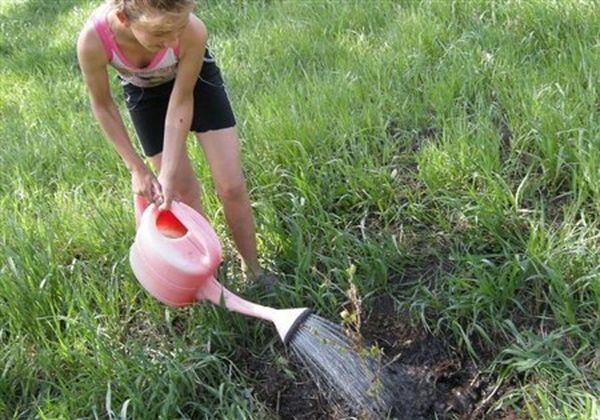
Watering the bushes should be done approximately 2-3 times a week. A bucket of water should be poured under each plant. This is done twice: morning and evening. Watering is especially important in July and August, as these are the months when fruiting is most active.
After the plantings have been watered, the soil is loosened. Experts recommend mulching the soil with horse manure. This is especially important before winter. This will help the plant survive the winter well.
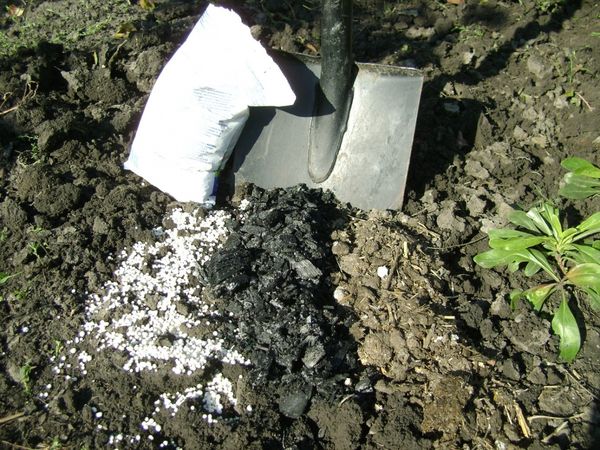
To ensure good fruiting, Heracles requires fertilization with mineral and organic fertilizers. Nitrogen fertilizers should be added to the soil in the spring. In the summer, organic fertilizers are recommended. In the fall, after harvesting and preparing the bushes for winter, superphosphate should be applied. Potassium chloride is also a useful fertilizer.
To ensure better absorption by the root system, fertilizers should be diluted in water and applied with watering. It's worth noting that each fertilizer has its own concentration, which is indicated by the manufacturer on the packaging.
Advantages and disadvantages
The Hercules variety has the following advantages:
- excellent and stable fruiting;
- easy care;
- good winter hardiness;
- technological properties of berries;
- good dessert taste of fruits;
- self-fertility;
- resistance to septoria and anthracnose.
The disadvantages here include the susceptibility of the bushes to attacks by bud mites.
The Hercules blackcurrant variety is an excellent choice for growing anywhere in the country. It's easy to care for, and the yield is almost always excellent.
Video: "Protection of Currants from Diseases and Pests"
This video will teach you how to protect currants from diseases and pests.