
Currant Sybille - description of a productive variety
Content
Characteristic
The variety was bred in the South Urals Research Institute of Polytechnical Design and registered in 2008. Finnish were used for crossing "Bredtorp” and Siberian ""Dove seedling."
The variety is frost-resistant, self-fertile, and ripens mid-early. The bush is of moderate height, medium spreadingThe leaves are small, wrinkled, five-bladed with sharp curved teeth.
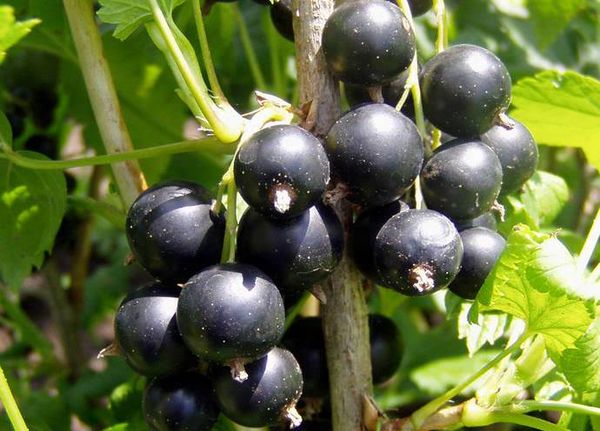
The berry cluster is single, up to 6 cm long. The berries are large (average weight - 2 g), round, almost black with a small number of seeds, excellent aroma and sweet and sour taste. The stalk is long, moderately thinThe berries are picked dry. The yield is high—up to 3 kg per bush. It tolerates short-term drought well. It is weakly affected by diseases. It is resistant to powdery mildew, but requires anthracnose and septoriaThe main pest is the bud mite.
Care and propagation
Multiply ""Sibilla" can be propagated by layering and cuttings. It's best to choose a well-lit location for planting. It will also grow and produce fruit well in partial shade, but the berries won't attain the maximum sugar content. The soil should be fertile and slightly alkaline, and the site should be well-drained, with no standing water.
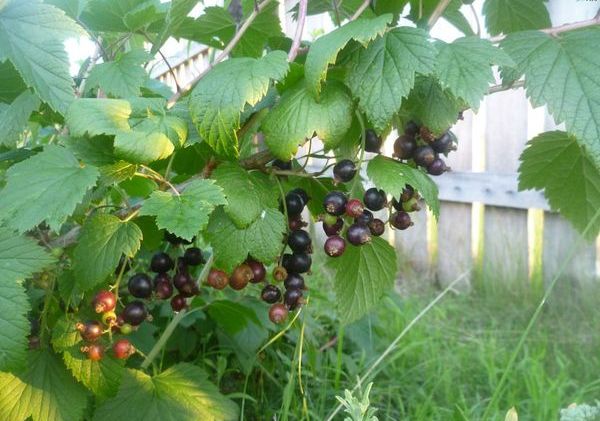
Despite the fact that ""Sibyl" is highly self-fertileGrowing other blackcurrant varieties nearby increases the number of berries set. Its drought tolerance should also be taken seriously, as the root system of all currant varieties is shallow and requires moderate soil moisture.
Watering is especially important during the period of berry formation and growth. In spring and fall, the bushes should be treated with fungicides or folk remedies to prevent fungal diseases. Particular attention should be paid to controlling bud mites. To do this, in early spring, before the buds open, the bushes are doused with boiling water. At a later stage, colloidal sulfur or chemical preparations can be used.
Advantages
Strengths of the variety:
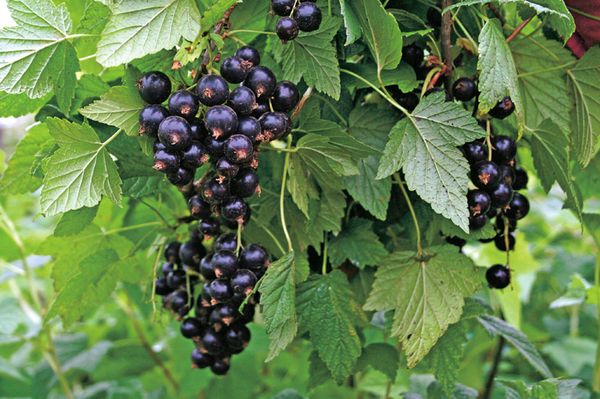
- excellent quality of berries - large uniform sizes, dessert taste, pleasant aroma;
- dry separation of berries allows for machine harvesting, freezing and long-term storage of berries without loss of commercial quality;
- high yield;
- self-fertility, thanks to which it bears fruit well in more northern regions, where the flowering period falls during a season with unfavorable weather conditions, which makes pollination by insects difficult;
- frost resistance allows Sibylla to easily withstand frosts down to -30 degrees without additional shelter;
- high resistance to powdery mildew, average resistance to other diseases.
The variety has no obvious flaws. Occasionally, uneven berry size may be observed.
Video: "Large and productive currant Sibylla"
In this video, you will hear an expert's opinion regarding the Sibylla currant variety.