
Dangerous diseases and pests of red currants
Content
Diseases
Diseases of red currant, like other representatives of the family, are divided into 2 groups:
- viral;
- fungal.
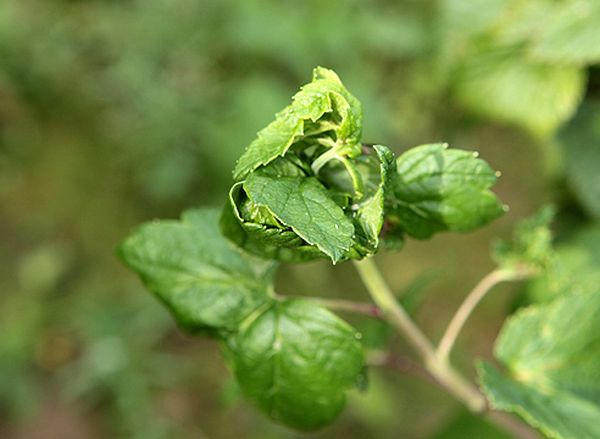
Viral diseases are rare, but the consequences are fatal - infertility and death of bushes. There's no treatment for these plants—there are no effective antiviral medications, and folk remedies are ineffective. At the first sign of infection, these shrubs should be immediately uprooted and burned to prevent the spread of viruses.
This group of diseases includes:
- Currant terry or reversion most often affects black currants;
- Symptoms: flowering is delayed by a week, and the petals on the flowers have an elongated narrow shape and are purple or dirty pink color, leaves from five-lobed degenerate into three-lobed ones with large, sparse teeth and thickened veins;
- The striped mosaic appears in early June as a yellowish pattern around the large veins of the leaf blade.
These diseases are caused by contaminated planting material and transmission by sucking insects (mites and aphids). Fungal diseases are much more common but treatable. Early diagnosis and the selection of an effective treatment are key.
Goblet-shaped rust
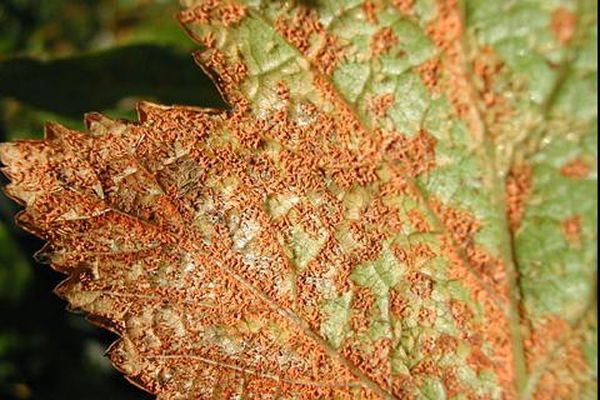
Currant leaves, petioles, young shoots, and berries are susceptible to damage, where the disease manifests itself as orange or yellowish spots. Symptoms are most pronounced. goblet-shaped Rust spots are visible on the leaves. Black dots can be seen in the center of the bright spots on the upper surface of the leaf, and yellowish pads containing fungal spores form underneath, opposite the spots. The damage to leaves and berries leads to their death. Shoots distorted by the disease will not be able to produce fruit properly.
In spring, the fungus Puccinia ribesicaricis Kleb parasitizes currants, and for subsequent stages of development and successful overwintering, it migrates to sedge thickets. Burning the sedges is an effective preventative measure against the rust pathogen. Affected plants are treated with fungicides (Fitosporin-M, Previkur, Skor), a 1% solution of Bordeaux mixture. The first spraying is carried out after flowering, with subsequent ones at two-week intervals, but no later than 20 days before berry harvest.
Spheroteka
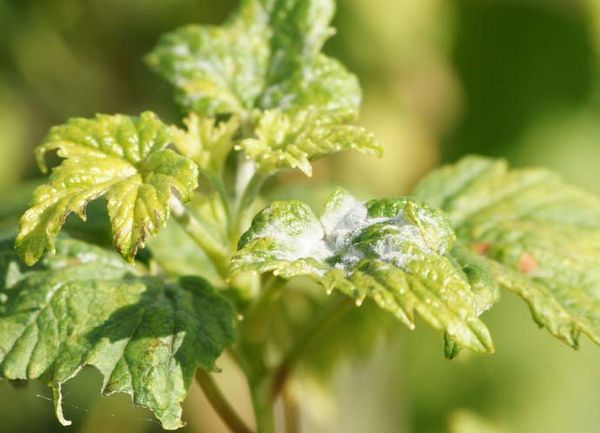
Another, more common name for this disease is powdery mildew. Initially, leaves, young shoots, and berries are covered with a grayish coating, which darkens over time, becoming like a brown felt. The fungus deforms branches and leaves, and affected berries often become unusable. recurrent The disease has become so common that many simply ignore it. And in vain, because powdery mildew greatly weakens plants and can lead to their death.
The active phase of the disease occurs with increased humidity in warm and hot weather, a contributing factor being an excess of nitrogen in the soil.
Antifungal drugs are used to combat it. "Topaz", "FundazolDuring bud break, the bushes and the surrounding soil can be treated with copper sulfate. Folk remedies are also effective.
Here are some recipes:
- Soak 0.5 liters of wood ash in 3 liters of water for 24 hours, add laundry soap and spray the affected bush with it;
- Add 1 liter of whey and 40 drops of iodine to 10 liters of water. Frequent spraying with this mixture will boost the plant's immunity and prevent powdery mildew.
Anthracnose
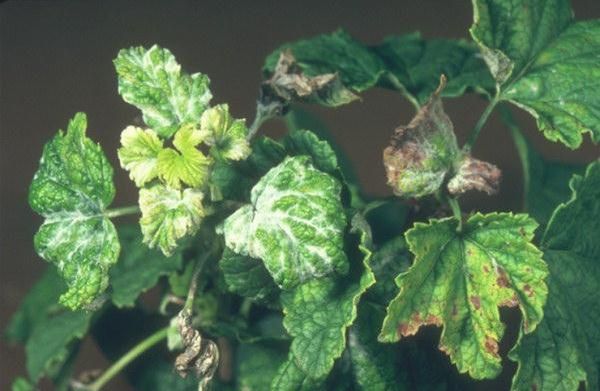
The disease is caused by the fungus Colletotrichum orbiculare, which thrives in hot, humid weather. Brown spots appear on the leaves, eventually spreading to cover the entire leaf blade. Elongated brown dents form on the stems, impeding sap flow.
Affected leaves gradually fall off, and the bushes may become completely bare except for the tips of the shoots. Treatment involves three sprayings with fungicides at 10-20 day intervals (cuproxate, copper oxychloride, and similar preparations). Before treatment, all affected leaves must be removed and burned.
Pests
Probably every gardener has thought about what part of the harvest is lost due to gluttony insect pestsEverything is edible—leaves, buds, and shoot cores. To preserve your harvest, you need to know the currant's main enemies and how to combat them.
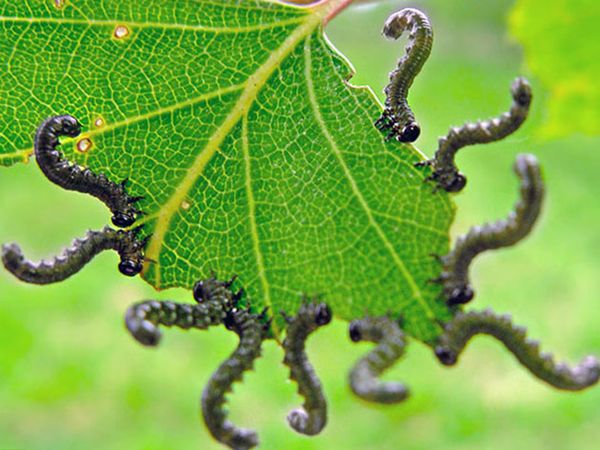
Currant beetle
Currant narrow-bodied The emerald beetle eats away at the shoots of currants and gooseberries from the inside. The copper-green beetles appear in late May to early June, feed on leaves, and lay eggs on the bark. one- and two-year-old shoots. The hatched larvae burrow into the shoots and create tunnels in them.
The legless larvae, 20 mm long, with flat, pale yellow bodies, remain in the same location throughout the winter. In the spring, they pupate and transform into beetles, which emerge, gnawing sickle-shaped tunnels in the branches. Some of the affected branches die, while the surviving ones produce weak growth and stunted, small berries.
During spring pruning, remove all underdeveloped and suspicious branches and burn them. This can reduce the larval population by 50%. In early summer, the beetles can be shaken off onto plastic spread under the bush and destroyed. It's best to choose morning or evening hours and cloudy days when the beetles hide under the leaves. A solution of this chemical is effective. Actellica (15 ml per 10 liters of water), which the bushes are sprayed with 3 weeks after the end of flowering.
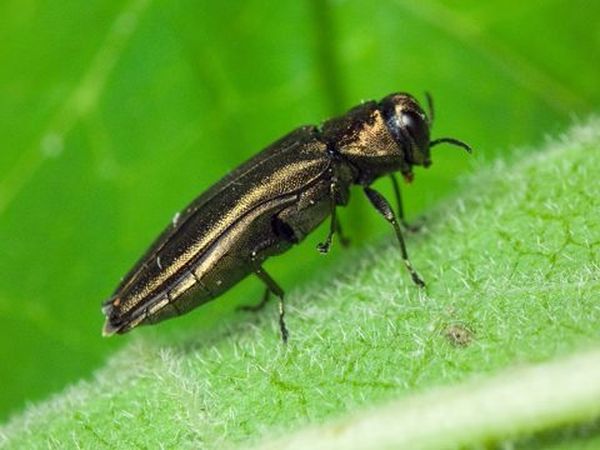
Gooseberry sawfly
There are 2 types of gooseberry sawfly - yellow and pale-footedTheir larvae, hidden in dense cocoons, overwinter under currant and gooseberry bushes at a depth of 10-12 cm. In early spring, they pupate, and by the time of flowering, adults emerge, resembling small wasps. Females lay eggs along the main veins of the leaf on the underside. Soon, they emerge. false caterpillars and begin to eat the leaves.
U pale-footed they are sawflies solid green, at false caterpillars The yellow sawfly's body is covered with black warts.
During the summer, 2-3 generations of these pests are born, and numerous colonies of them can destroy all the leaves on a bush in 1-2 weeks. This leads to reduced shoot growth, smaller berries, and reduced winter hardiness.
Digging the soil around the bushes in the fall will destroy some of the overwintering larvae. After flowering, the caterpillars can be collected by hand. Insecticide treatments also produce good results. Decis and Inta-Vir.
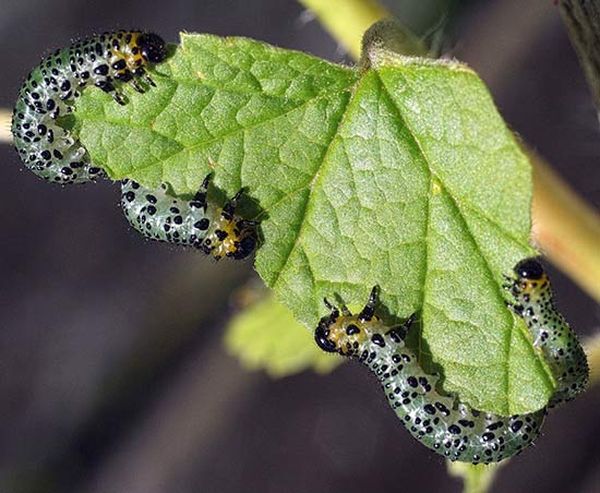
Currant bud moth
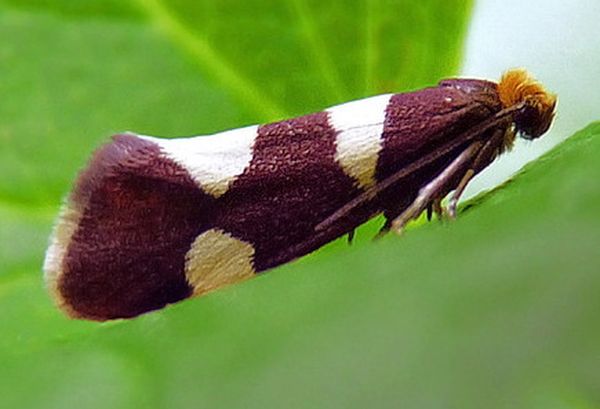
This is a small butterfly with a wingspan of up to 17 mm, yellow-brown in color with white spots and a transverse stripe. It's not the adults that pose a threat, but the caterpillars, which overwinter in crevices in the bark at the base of the bush. They are 9 mm long and change color three times: first they are red, then yellow-brown, and before pupation they become dirty green.
When currant buds begin to swell, the caterpillars emerge from their cocoons and crawl up the stems to the terminal buds, where they burrow into them and eat out the core. A single caterpillar can damage up to seven buds. The affected plant stunts growth and loses yield.
During the swelling of the buds, currants must be treated with one of the insecticides (Karbofos(Chlorophos, Nitrofen). Butterflies that appear after flowering are controlled with a 1% solution of Aktara.
General methods of currant prevention
First and foremost, you should select disease-resistant varieties for planting. It's also important to pay attention to the health of the seedlings when purchasing them. When propagating currants yourself, select planting material only from healthy plants. Since most pests and fungal spores overwinter in the soil or on dry organic matter, the tree trunks should be thoroughly cleared of fallen leaves and dug over in late fall.
Annual pruning of currants significantly reduces pest populations, boosts immunity, and prevents disease development. Preventative spraying with fungicides and insecticides minimizes the risk of disease and pest infestation.
Spraying with non-chemical folk remedies and micronutrient fertilizers boosts plant immunity. They are very effective as a preventative measure, but not when red currants are already diseased, and only chemical treatments can provide effective treatment.
Video "Currant Pests"
This video will tell you about currant pests and how to control them.