
Pros and cons of growing the Zarechnaya early plum
Content
History and description of the variety
Zarechnaya Rannyaya is an early-ripening domestic plum developed at the Michurin All-Russian Research Institute of Hydrogeology and Plant Protection. Three varieties were involved in the breeding process: Krasnaya Dessertnaya, Volzhskaya Krasavitsa, and Eurasia 21. From these varieties, Zarechnaya Rannyaya inherited its outstanding flavor and marketability. The new variety was first discovered in 1985, but it wasn't until 1988, after extensive varietal trials, that it was added to the state register and zoned for the Central Black Earth Region.
The Zarechnaya rannyaya plum tree is compact and low-growing (up to 2 m), with a neat, rounded crown of medium density. Branches with short internodes are slightly curved and directed upward. The bark is rough, brownish in color, with small grayish lenticels. The leaves are quite large, round-oval or boat-shaped.
The surface of the leaves is matte, slightly concave, and bright green, with smooth edges. The plum tree produces small, pure white flowers, which have a greenish underside when in bud.
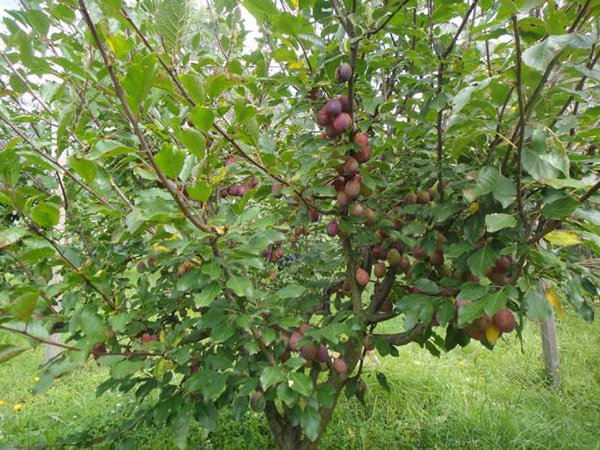
This plum variety is characterized by high winter hardiness, both in terms of wood and buds. It is easy to grow, virtually disease-free, and can grow and bear fruit in any soil except clay soils, though it demonstrates best productivity in its designated region.
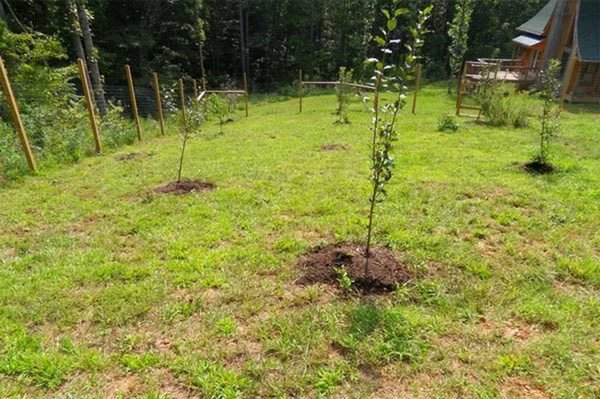
An important requirement for high yields over many years is ample space and good light. Seedlings should be planted in a sunny, wind-protected location, as even a little shade affects the size and flavor of the fruit.
Fruiting characteristics
Zarechnaya Rannaya is an early-bearing variety. The trees begin bearing fruit 3–4 years after planting. The fruits also ripen early, in the second half of July. Depending on the regional climate, these dates may vary: in the south, the first half of the month; in cooler regions, the third ten days of July. Fruiting is continuous and regular year after year.
The yield is quite high—around 15 kg per small tree, and this figure increases every year. There is a slight drawback: this plum variety requires pollinators. To maintain good productivity, it is recommended to plant plums such as 'Etude,' 'Renklod Tambovsky,' or 'Volzhskaya Krasavitsa' nearby.
The fruits of the Zarechnaya rannaya variety are distinguished by their exceptional taste and appearance. They are quite large (40–60 g), beautifully rounded-oval in shape, with a distinct ventral suture on the side. The skin is loose, easy to remove, and has a rich purple-blue color with a thick bluish coating, which, when removed, reveals subcutaneous dots.
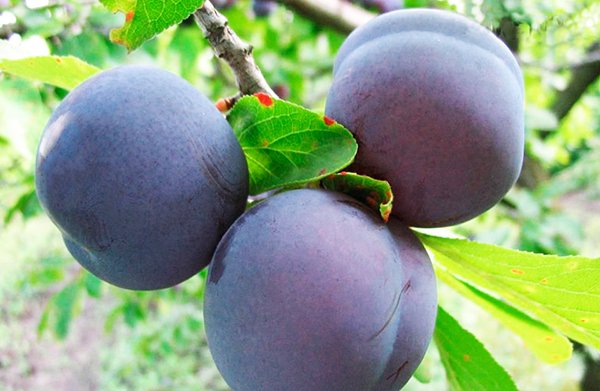
The plum's flesh is very juicy, with a pleasantly fibrous texture and a beautiful amber color, with reddish veins that appear when fully ripe. Tasters describe the taste as dessert-like, with a light, barely perceptible tart aftertaste.
The small stone separates easily from the pulp, making the fruit versatile. This plum is widely used both in home cooking and industrially in the production of marmalade, pastilles, compotes, juices, and preserves. It is also suitable for drying and making alcoholic beverages.
Pros and cons
The plum variety Zarechnaya rannyaya is highly valued in home gardening for its numerous advantages:
- early fruiting of trees (in 3–4 years);
- high-quality commercial appearance of fruits (size, shape, intense skin color);
- exceptional dessert taste and juiciness;
- wide possibilities of harvest utilization;
- early ripening period (mid-July);
- the compactness of the trees makes it easier to care for and harvest the fruit;
- increased winter hardiness of buds and wood;
- annual yield in any climate and weather conditions.
The plum tree has no significant drawbacks, except for some requirements regarding its location (warmth, protection from wind, and shade). Another disadvantage of the Zarechnaya rannaya tree is its inability to self-pollinate, which necessitates planting several varieties of trees in the same plot.
Video "Zarechnaya Early"
In this video, an expert will discuss the benefits of the Zarechnaya Rannyaya plum variety.