
All about growing Tula black plum
Content
History of the variety's development
As its name suggests, the plum's origin is in the Tula region. The exact history of its origin is unknown. Presumably, the Tula Black plum is a seedling from an accidental pollination of the well-known Hungarian Domestic plum variety, given their very similar appearance.
The culture was first discovered and described by a certain agronomist G. Ya. Serebro. Nowadays, this plum is grown throughout the central part of the country, although it has become widespread in the Tula and neighboring Kaluga regions.
Video: Plum Tree Planting Instructions
This video will show you how to plant plum trees correctly.
Main characteristics
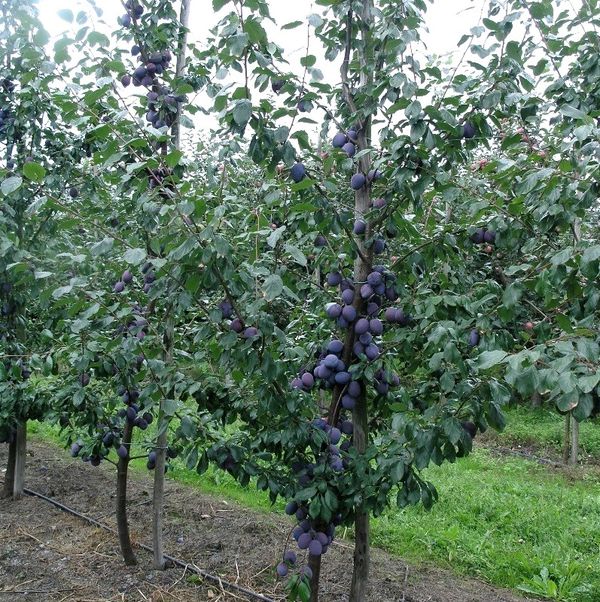
Tula Black plum trees grow small, from 2.5 to 4 m. The dense oval crown consists of dark green, lanceolate leaves with serrated edges.
Fruiting is mixed—the harvest is formed primarily on bouquet branches and partially on young one-year-old shoots. The first fruits appear on the trees 5–6 years after planting. Grafted seedlings produce a harvest a year earlier.
The plum does not need pollinators, as it is self-fertile, but proximity to any “domestic plum” tree can significantly increase productivity.
Like all home-bred fruit crops, the Tula Black plum has its own unique characteristics. While exceptionally winter-hardy (easily withstanding temperatures down to -35°C), this plum can be susceptible to frost damage during thaws or sudden temperature changes.
Flower buds are also not very winter-hardy, less so than the wood. Since the tree blooms early, harvest losses due to recurrent frosts are common. In dry summers, without supplemental watering, the fruits may fall off without ripening. Despite all this, the trees have a high resilience and are considered long-lived among domestic plums.
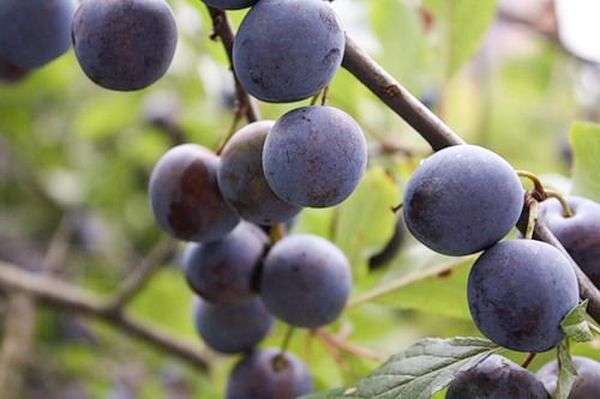
The Tula Black Plum ripens late, in mid-September. Its fruits are not particularly large. They average 15–20 g, although some weigh up to 30 g. The fruit is ovoid. The skin is thin, and its color is not black, as the name suggests, but rather dark blue with a reddish tint, which becomes apparent after the thick, bluish coating is removed. The pit is small and easily separated.
The plum's flesh is greenish-yellow (turning amber with reddish fibers when overripe), with a sweet-tart flavor, rated 4.1 by tasters. The taste and appearance of the fruit depend largely on the region's climate: plums grown in the south have a higher sugar content, while those grown in low-sun conditions (shade, cloudy weather) tend to be more acidic.
The fruit's primary purpose is processing. They produce excellent alcoholic beverages, as well as preserves, juices, and jellies.
Care Features
Caring for the Tula Black Plum consists of standard procedures, each with its own unique features. Watering should be done regularly, at least six times a season, if there's no rain. Failure to adhere to this regimen can lead to crop loss, as drought causes the plum to shed flowers, ovaries, or ripening fruits.
Watering of an adult tree is carried out according to the following schedule:
- 1st time immediately after flowering ends;
- 2nd – after 2 weeks;
- 3rd – after another 2 weeks;
- 4th – during the filling of the fruits (this watering cannot be skipped, since it is at this time that fruit buds are formed for the future harvest);
- 5th – immediately after harvest;
- 6th – shortly before wintering (mid-late October).
For better rooting, young seedlings are watered frequently, as the soil dries out.
It's crucial to keep the tree trunk area clean, removing weeds and loosening the soil regularly. This simple procedure helps prevent disease and pest infestations. The tree trunk area can also be mulched.
Since the plum tree's crown is quite dense, annual pruning is necessary until the tree reaches maturity. Uniform light will allow the fruit to grow sweeter and larger.
Fertilizing of young trees begins two years after planting—until then, the fertilizer placed in the planting hole is sufficient. Two to three applications are made throughout the growing season: before flowering, during fruiting, and in the fall. Plums respond well to both organic matter (humus) and mineral fertilizers.
In spring, plum trees should be treated with copper-containing preparations: copper oxychloride (0.2%) or copper sulfate (1%). These products protect the tree from fungal diseases and prevent fruit spoilage. For the winter, the trunk should be whitewashed and wrapped in a protective material (to ward off rodents), and the area around the trunk should be covered with a thick layer of organic matter.
Pros and cons
The advantages of this variety include:
- good yield (up to 35 kg from an adult tree);
- annual fruiting for many years;
- self-fertility;
- resistance to major diseases;
- high regenerative capacity of trees;
- The fruits have a very good taste and are versatile in their use.
Plums also have some disadvantages: a tendency for fruit to fall off during hot periods, low winter hardiness of flower buds, and dependence of the fruit's taste on climatic conditions.