
Chemical and folk fertilizers for plum fruiting
Content
Terms and conditions of submission
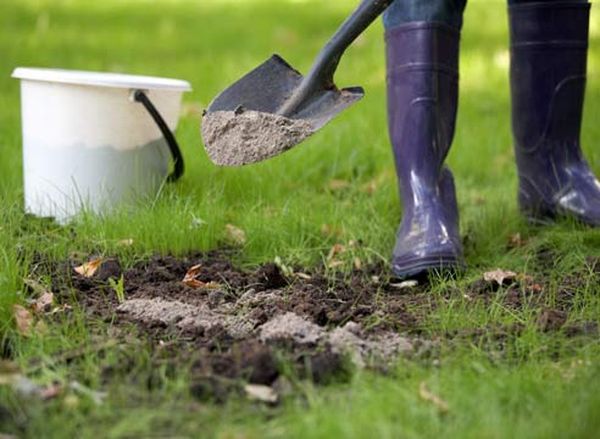
Alkaline chernozem or humus-rich loamy soils are suitable for growing plums. As a rule, the soil is thoroughly prepared before planting, adjusting its structure and acidity if necessary. Ash, peat, compost, and even sand are added to very heavy clay soil. Acidic soil is amended with lime and dolomite flour.
The planting hole itself is enriched with organic and mineral fertilizers so that the seedling practically does not need additional feeding for the first 3 years of its life.
Plums require the following micronutrients most: nitrogen, potassium, phosphorus, magnesium, and, to a lesser extent, calcium and iron. A small amount of nitrogen can be added the year after planting. This is usually done by spraying the tree's crown or mulching the area around the trunk with organic matter. Only in the fourth or fifth year of life should the young tree be fed with small amounts of fertilizer several times: nitrogen fertilizers are predominant in the spring and early summer, and potassium-phosphorus fertilizers in the fall.
When the tree begins to bear fruit, the amount of fertilizer is increased. Typical times for fertilizing a mature tree are:
- spring – before flowering begins;
- June – when the fruits ripen;
- in the summer after harvest or at the very beginning of autumn.
Dry matter is spread on the soil surface under digging, 10–20 cm away from the trunk. For liquid application, holes or furrows are dug around the perimeter of the crown, even extending slightly beyond its boundaries.
Fresh manure should not be added to plum trees; rotted manure (like wood ash) must be added after 2–3 years. Sowing green manure has a beneficial effect. The tree trunk circle and the spaces between rows can be occupied by sowing rye, mustard, phacelia, and vetch, which can then be dug up in the summer.
The amount and frequency of fertilizing directly depend on the soil condition: fertile soil requires less than poor soil. The condition of the tree's leaves will indicate a deficiency of a particular element. For example, if there's a nitrogen deficiency, the leaves will turn pale and develop yellow spots, while if the tree lacks magnesium, the leaves will develop a brown border and the veins will turn the same color. A potassium deficiency will cause the leaves to turn brown and curl.
Video: "How and with what to fertilize fruit trees"
In this video, an expert will explain how and with what to properly fertilize plums and other fruit trees.
Chemical fertilizers
Organic fertilizers include rotted manure, compost, shredded grass and leaves, sawdust, and peat. Mineral fertilizers commonly used include urea, potassium chloride, potassium magnesium sulfate, phosphates, and superphosphates. Gardeners who don't want to bother mixing individual components purchase ready-made fruit tree mixes (such as "Yagodka" or "Ispolin Bakhodny").
Fertilizing plum trees in the spring during the first 1-2 years is usually limited to spraying with a urea solution. To prepare it, dissolve 20 g of urea in 5 liters of water. After 1-2 flowering periods, the trees can be sprayed with a nitrophoska solution (30 g of the substance in 10 liters of water).
To help young trees survive the winter and ensure a good harvest, they are generously watered (up to 20 liters) with potassium sulfate and superphosphate, dissolved in a bucket of water, towards the end of summer. 70 g of wood ash can be added to this fertilizer.
Otherwise, a mature plum tree should be fertilized during fruiting. Before flowering, thoroughly loosen and water the soil under the tree, then pour up to 2 buckets of a solution made from 30 g of urea and potassium sulfate dissolved in 10 liters of water into the prepared grooves.
Fruit ripening is the second essential stage of fertilizing. One tree should receive up to 30 liters of a solution of nitroammophoska and urea (40 g and 30 g, respectively, dissolved in 10 liters of water).
After harvesting, up to 20 liters of fertilizer prepared from 30 g of potassium sulfate and 40 g of superphosphate (per 10 liters of water) are poured under each tree.
In the fall, when digging up the garden, dry substances are usually added: potassium magnesium sulfate and something containing phosphorus.
Folk remedies
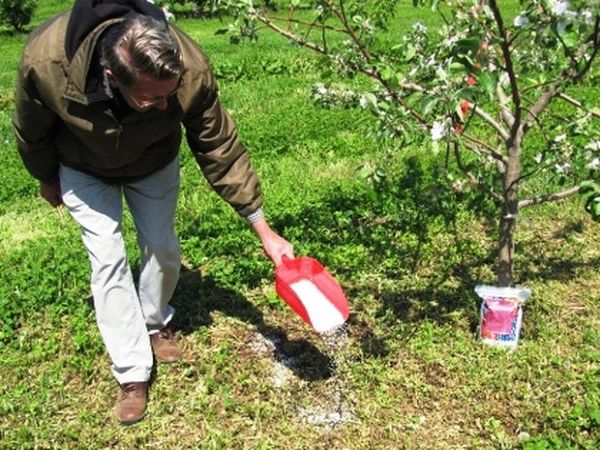
How to feed a plum tree in the spring, and whether it's necessary if it's growing in fertile soil—this is a question that novice gardeners often ask. If the annual branch growth is less than 40 cm, the tree is clearly lacking nutrition. There are folk methods and remedies that have been tried and tested for generations.
In early spring, the tree needs to be encouraged to grow. A solution of fermented cow manure (1 liter of manure per 10 liters of warm water) or chicken manure (1 kg of manure per 12–15 liters of water) works well for this purpose. These fertilizers are applied before flowering, after moistening the soil around the tree trunk.
Fertilizing a mature plum tree after flowering can be done several times during the summer with a saltpeter solution. To do this, dilute 25 grams of saltpeter in 10 liters of water and then pour the solution directly under the roots.
A well-known recipe is yeast feeding: 20 g of yeast is mixed in 1 liter of water, left to infuse, and then diluted with another 10 liters of water just before use.
Eggshells are great for deoxidizing soil and enriching it with calcium and other nutrients. Just make sure to crush them thoroughly before applying.
Some gardeners pour up to 1 liter of the following nutrient mixture under the tree: bread crusts soaked for a week (3/4 of a bucket is filled with water) with the addition of milk whey, diluted with 3 buckets of water.
It is good to mulch the tree with compost containing rotted sawdust.
Properly feeding a fruit tree means providing it with the necessary nutrients to ensure it has the strength to grow and bear fruit. The key is not to overdo it, as this can cause harm to the tree.