
Why you should plant the Eurasia plum in your garden
Content
Description of the variety
The Eurasia plum variety is characterized by a relatively early onset of fruiting, early ripening, and abundant yields. Its remarkable characteristics don't end there. Eurasia is also frost-resistant, resistant to most common diseases with proper care, and produces large, tasty fruits that can be stored for up to three weeks.
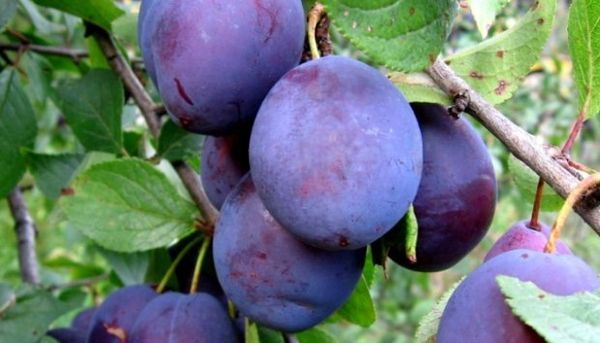
This tall tree with a semi-spreading crown is beautiful—the brownish-gray trunk and branches stand out against the rich green foliage. The branches grow very quickly, while the trunk thickens slowly. If allowed to grow unchecked, the tree can exceed six meters in height. The medium-dense crown consists of numerous young branches covered with small, oblong, pointed leaves with serrated edges.
In spring, the tree, covered with numerous small white flowers, looks beautiful and attracts bees with its aroma. However, for fruit formation, nearby pollinating varieties are needed. These typically include Renclode (Soviet, Kolkhozny, or Urozhainy), Volzhskaya Krasavitsa, Pamyat Timiryazeva, Rekord, and Mayak.
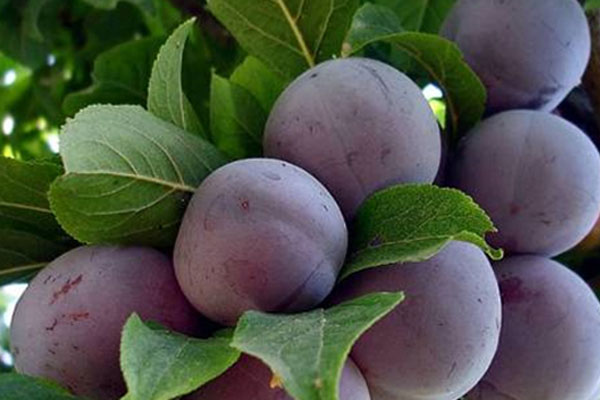
Round fruits weighing 30–40 g ripen over 3–4 weeks, starting at the end of July. When fully ripe, they have a burgundy, thin, yet firm skin with a waxy coating. The flesh is yellow-orange, sweet and sour, with a wonderful plum aroma.
Pros and cons
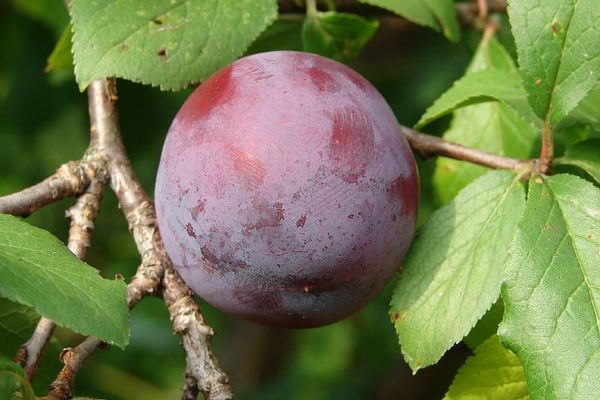
The Eurasia plum boasts a variety rich in advantages. These include early ripening, frost resistance, and large, tasty table fruits (with controlled harvesting, they can reach 50 grams in weight). A three-year-old tree can already produce its first harvest, a five-year-old can yield 20 kg, and after eight years, at least 40 kg of tasty and healthy fruit.
However, there are certain disadvantages to keep in mind when planting a plum tree in your garden. Another variety that blooms at the same time should be planted nearby. Regular pruning is required every year, not just sanitary pruning. This variety is so moisture-loving that watering should be done regularly to compensate for any shortcomings in the weather.
Certain diseases (such as clasterosporium) will threaten your tree if you don't take preventative measures. And some consider the soft flesh of ripe fruits a drawback. Nevertheless, Eurasia has many fans among gardeners who grow plums for themselves or for sale.
Landing features
Choose a sunny location for the plum tree, with deep groundwater and protection from the wind. The slowly growing trunk won't withstand strong gusts of wind, which can cause damage. The soil should be neutral, loamy, and fertile; its quality and structure are improved during soil preparation. In regions with cold winters, it's best to plant the tree in the spring, after the snow melts, and prepare the hole in the fall. It should be dug up to 80 cm wide and up to 90 cm deep.
The excavated soil is mixed with humus or compost (2-3 buckets) and lime. If the soil is acidic, add superphosphate and potassium sulfate; clay if the soil is too sandy; and peat (sand) if the soil is clayey. Immediately before planting, add urea, wood ash, and compost.
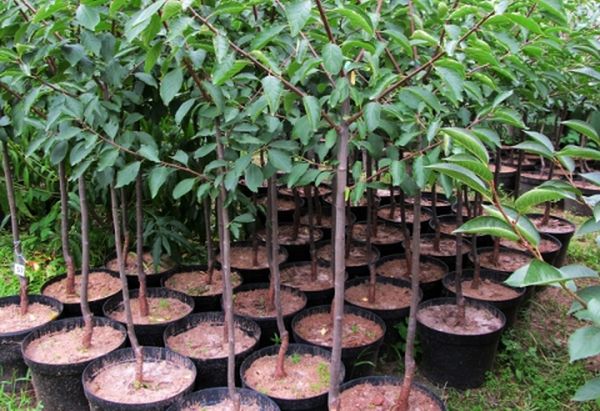
It's best to purchase a seedling from a professional. Choose a sturdy, robust tree with a well-developed root system and undamaged bark. Before planting, you can dip the roots in a clay-manure slurry. Drive a sturdy stake into the center of the hole, form a mound of soil, and place the seedling on the south side of the stake. Carefully cover the roots, compact the soil, water generously, and mulch the area around the trunk. The root collar should remain above ground level (3-5 cm).
Necessary care
If the planting hole is well-drained, you won't need to fertilize for the first two years, but you should prune it right away. Remove all the leaves from the seedling and cut it back to 70 cm from the ground. Fast-growing branches should be trimmed in the summer. In the fall, perform the mandatory pruning: shorten the trunk by a third, and all shoots by two-thirds. By the age of four, the tree should be fully formed; it is usually trained into tiers.
Three skeletal branches of the lower tier are left, then the second and third tiers are formed higher up, also consisting of 3-4 branches. If necessary, they are tied to the trunk so that their angle with the trunk is approximately 50°. All shoots and the trunk are regularly pruned, restraining the overall growth of the tree but encouraging the formation of branches. Throughout the plum tree's life, pruning is carried out in the spring and then in the fall.
Watering should be regular, otherwise the fruit will crack and the shoot tips will wilt. Young trees should be watered every 10 days (2-3 buckets of water), while mature trees should be watered every two weeks (4-6 buckets). After watering, the area around the trunk should be loosened and mulched.
Starting in the third year of growth, fertilizer is applied 3-4 times a year. In the spring, ammonium nitrate is added during tillage. During flowering, trees are watered with a solution of urea and potassium sulfate (2 tablespoons per 10 liters of water). After flowering, water with nitrophoska dissolved in water (3 tablespoons per 10 liters). In the fall, superphosphate (up to 100 g) is added during tillage. If necessary, lime the soil in the fall.
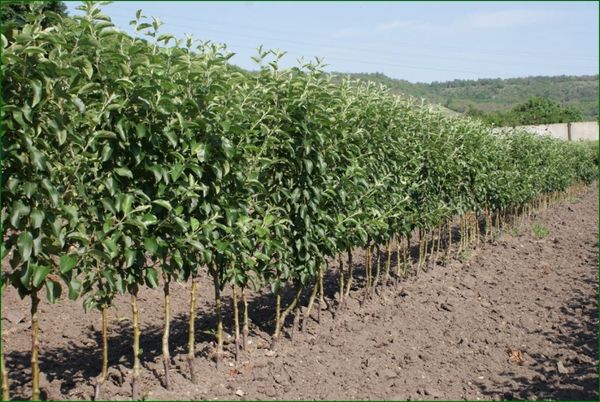
Plums respond well to foliar feeding, which serves as an effective disease preventative. It's important to keep the area around the tree trunk clean and avoid leaving fallen fruit behind. It's best to cover young trees for the winter.
Harvesting
The harvest is collected as it ripens throughout August and stored in boxes or baskets.
If the berries are picked a week before they are fully ripe, they can be stored for three weeks at 0 to +1°C, and transported at this temperature. The berries are used to make delicious, aromatic jams, juices, liqueurs, and marmalades. They can be dried and dried, but they are not suitable for compotes or freezing due to the looseness of the pulp. The pits are easily removed only from fully ripe berries.
Video: Plum Tree Care
In this video you will hear useful tips on caring for plums.