
A detailed description of the author's plum Etude
Characteristics of the variety
The industrial plum variety Etude was developed by hybridizing two other plum varieties, Volzhskaya Krasavitsa and Eurasia-21. The variety was included in the state register in 1985.
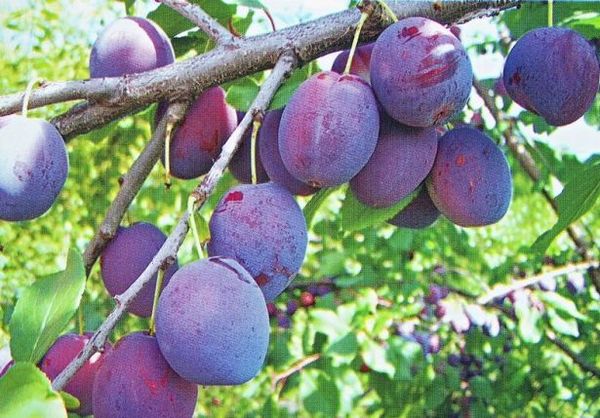
Etude trees are small, reaching a maximum height of just over 2 meters. The trunk, like the skeletal branches, is completely covered in rough, dark-brown bark, while the shoots are brownish-brown. The buds are also brown, quite small and not pressed against the shoots. The leaves are round, pointed at the top, and a beautiful emerald green. The flowers themselves are quite large, white, with oval petals. The plum tree blooms in late May.
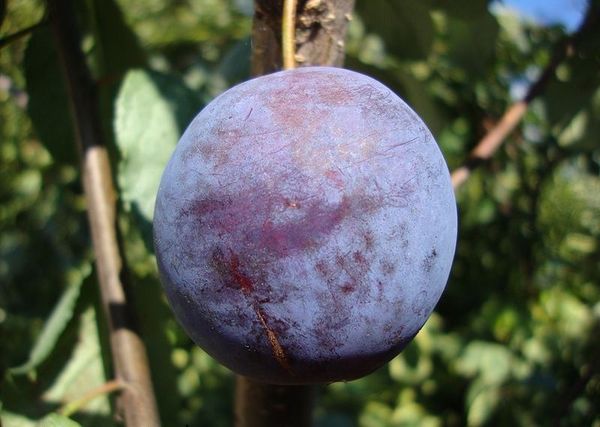
The fruits of the Etude plum are not very large – their average weight reaches 30 g. They have a neat oval shape and are covered with a tough, reddish-purple skin. Inside is a medium-sized pit. The flesh of this tree's fruit is greenish-yellow, very juicy and tender. The plums are quite sweet in taste, although there is a noticeable tartness. Their tasting score is not very high—only 4.3 points—but this doesn't stop many farmers from choosing this variety for their plots.
It's also worth noting that this plum variety ripens quite quickly—they can be harvested as early as late August. The trees produce fruit consistently, yielding up to 20 kg of beautiful fruit each year. They begin bearing fruit quite early—the first harvest can be collected by the fourth year after planting. Furthermore, the fruit is excellent for transport and has a long shelf life, maintaining its marketable appearance and flavor for up to two months under proper conditions.
This industrial variety is ideal for growing in small spaces, given the plant's medium size. Furthermore, these plums make excellent preserves.
Planting and care
Before planting a seedling, you need to choose a location and prepare the planting hole. It's best to plant your plum in a well-lit spot protected from drafts (they can kill the plant). A gentle slope facing south is ideal for this. Also, keep in mind that the tree will thrive best in loamy soil, which is light and breathable.
In principle, trees can be planted in small areas, but the distance from one plant to another should be at least 3 m.
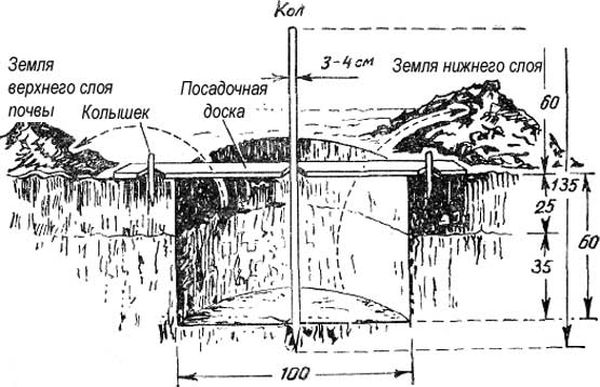
Now let's move on to preparing the planting hole. It shouldn't be too deep, approximately 50 x 70 x 60 cm. After digging the hole, fill it with a layer of soil mixed with fertilizer to ensure the plant receives sufficient nutrients during its first year. The nutrient mixture should fill approximately two-thirds of the hole. All preparations should be carried out several weeks before planting to ensure the soil is properly saturated with nutrients.
After this, carefully place the seedling in the hole, spreading its roots out first. Cover it with soil and compact it. Immediately after planting, it is recommended to mulch the area around the tree trunk and water it thoroughly. For the first few years, tie the seedling to a stake driven into the center of the hole to prevent it from breaking in strong winds.
Caring for the Etude plum variety is quite simple, but it's important to follow some basic rules to achieve maximum results:
- Watering. The plant needs to be watered generously and frequently. Ideally, 1-2 times a week. Each tree requires approximately 20 liters of water.
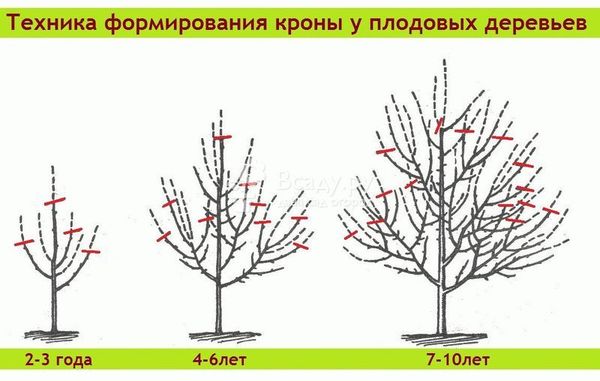
- Pruning. Several times a year, pruning is necessary, removing old or broken branches. This is done to reduce the risk of disease and ensure healthy branches have access to sunlight. Remember to sterilize tools and treat cut surfaces with garden pitch to prevent infection.
- Fertilizers. These should be applied regularly, starting in the plant's second year. In the spring, use nitrogen-containing fertilizers (to promote growth), and in the summer and fall, use fertilizers containing potassium.
- Mulching. Occasionally mulch the soil using sawdust, peat, or humus.
Due to the variety's characteristics, it can be left uncovered for the winter. Also, given its excellent disease resistance, preventative treatment against diseases and pests is unnecessary (but if you want to be on the safe side, you can still do so).
Video: How to Care for Fruit Trees
This video will teach you how to properly care for fruit trees in your garden.