
What 16 plum tree diseases can ruin your entire garden?
Content
- 1 Description and danger of diseases
- 1.1 Brown spot
- 1.2 Shot hole or clasterosporium
- 1.3 Red spot or polystigmosis
- 1.4 Fire blight
- 1.5 Witch's broom plum
- 1.6 Gummosis or gummosis
- 1.7 Plum dwarfism
- 1.8 Plum pockets or marsupial disease
- 1.9 Coccomycosis
- 1.10 Milky shine
- 1.11 Monilial burn or gray mold
- 1.12 Fruit rot
- 1.13 Rust
- 1.14 Sooty mold
- 1.15 Cytosporosis
- 1.16 Sharka or smallpox
- 2 Video: "Signs of Plum Moniliosis"
- 3 Control measures and prevention
Description and danger of diseases
Diseases common to plums also threaten other fruit trees. This is because stone and pome fruits are susceptible to common diseases. This species-specific fussiness of fungal life forms threatens the integrity of entire plantings, even if only one plant is affected. In terms of spread rate, some diseases can rival scab and quickly deprive a gardener of a harvest.
Brown spot
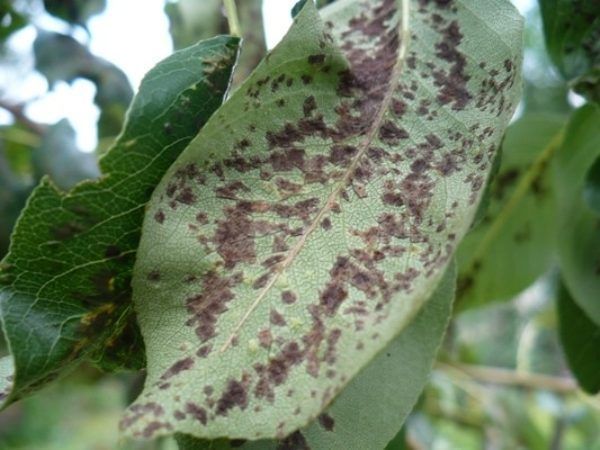
The essence of this disease is reflected in its eloquent name: symptoms manifest as brown, reddish, and ocher-colored spots on the leaf tissue. The leaves are also affected by dark spots—the pathogen's spores. In the later stages, the affected areas become brown. The spots spread across the plum leaves, leaving no healthy areas.
The diseased and deprived of nutrients, the plates curl up and fall off. In addition, the danger of the disease lies in the fact that the fungus spoils the fruit – the development of brown spotting provokes deformation of plums and prevents them from ripening.
Shot hole or clasterosporium
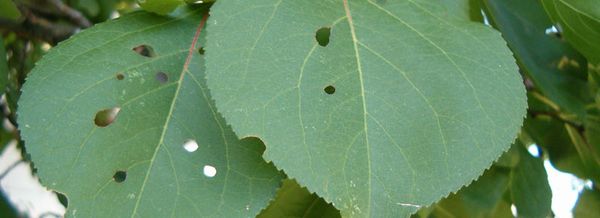
A distinctive symptom of plum leaf spot is holes in plum leaves. The initial stage of the disease is similar to brown spot. However, in this case, dry, depleted areas of the leaves fall off, forming holes. The disease affects various parts of the tree. Fruit loses its characteristic shape, and affected areas of branches turn red. This is accompanied by cracking of the bark and can trigger active resin secretion.
Red spot or polystigmosis
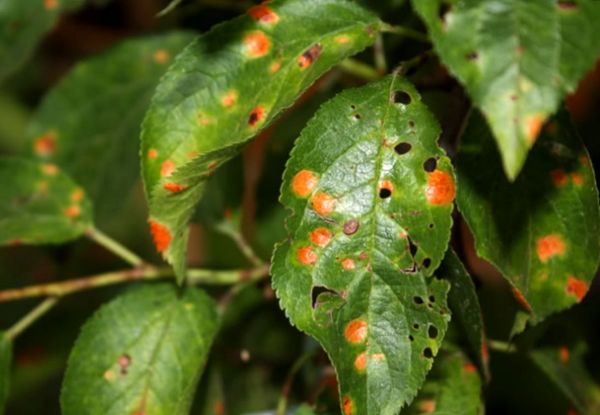
It attracts attention with its vibrant color. The fungus that causes this disease colors the affected tissue areas red and yellow. Over time, these growths harden, become shiny, and develop into growths on the plum leaves. Flower blossoms drop, which directly impacts the harvest. A distinctive feature of polystigmosis is that it negatively impacts the plant's winter hardiness.
Fire blight
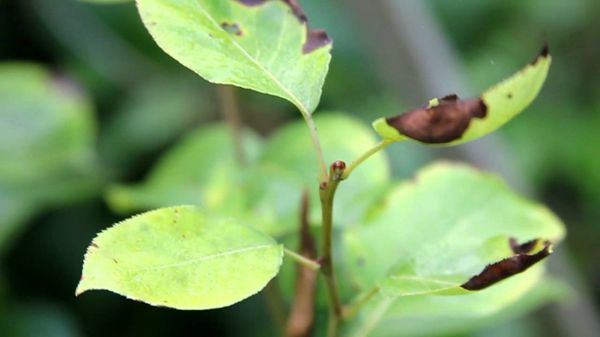
The pathogen begins its attack on the inflorescences, drying them out and turning them brown. The disease then spreads throughout the plant, affecting the leaves, branches, and trunk. The affected crown darkens and becomes curled, while the bark cracks and becomes covered with ulcers. At first glance, the diseased plant looks as if it has been damaged by fire. Fire blight spreads quite quickly, quickly infecting all stone fruit crops in the garden.
Witch's broom plum
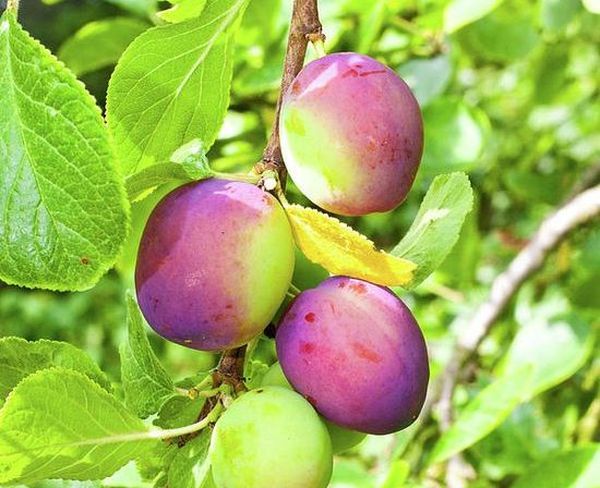
A fungal disease named for the abnormal crown development. The pathogen causes mutation and subsequent growth of clusters of thin shoots. These shoots are sterile and covered with weak, small leaves with an unnatural coloration compared to healthy areas.
In summer, towards the end of the season, a gray coating forms on the leaves of the witch's broom. This coating is made up of parasitic fungal spores. This condition leads to a significant thickening of the crown, which in itself creates favorable conditions for the development of harmful microorganisms.
Gummosis or gummosis
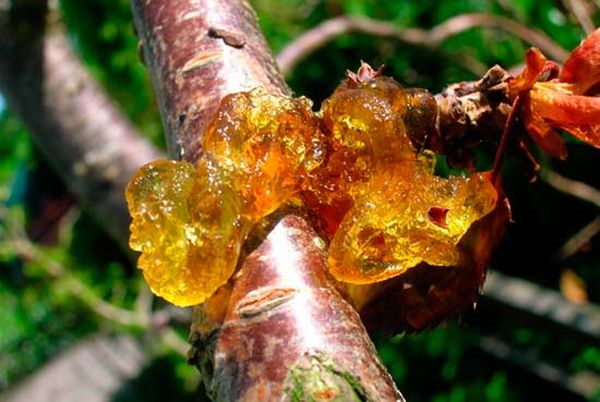
There's no definitive reason why plants secrete a viscous, sticky substance. Gummosis isn't infectious in origin and is most often the result of exposure to unfavorable factors. Resin secretion is often accompanied by diseases such as plum clasterosporium. Additionally, gummosis can be triggered by:
- a difficult winter;
- failure to comply with crop care rules;
- unsatisfactory soil condition (high acidity, excess fertilizers and moisture).
Plum dwarfism
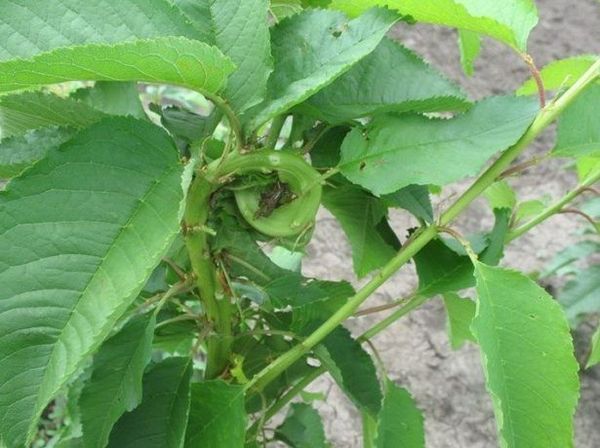
A viral disease primarily caused by insect pests. By entering the sap system, the pathogen inhibits the growth of garden crops. Characteristic symptoms of infection include stunted growth and leaf deformation. The leaves become narrow and form rosette-like clusters at the tips of shoots. Both the skeletal and foliar parts of the plant rapidly die. Unfortunately, it is impossible to save an infected tree—it is uprooted and burned.
Plum pockets or marsupial disease
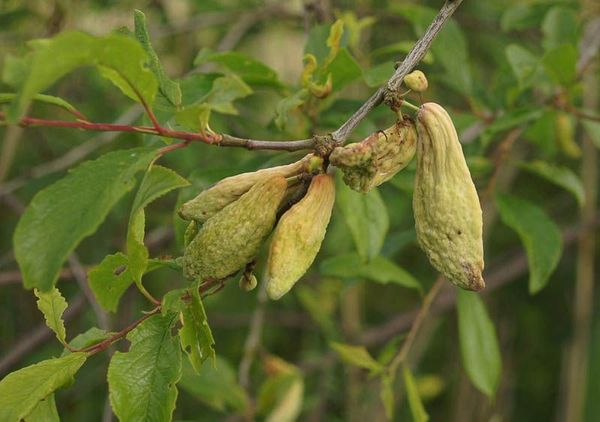
In addition to the crown and outer tissue, plum diseases also have a detrimental effect on the fruit. In this case, the fungal infection manifests itself directly on the fruit, distorting its appearance. Affected plums develop fleshy tissue and become deformed. These trees typically lack pits, and the fruit itself becomes sack-like.
Depending on the stage of development, the fruits change color from green to brown, after which they become covered with fungal spores that look like a waxy coating.
Coccomycosis
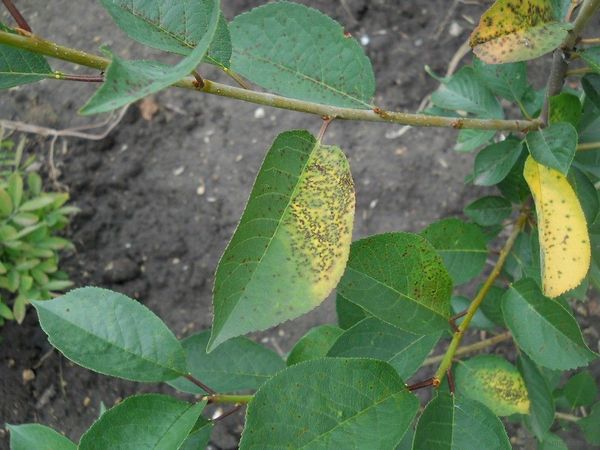
The activity of coccomycosis pathogens occurs in mid-summer. The disease manifests itself as small spots that form on plum leaves. The color of these foreign inclusions can vary from brown to purple. As the affected areas grow, the leaf blade turns yellow, darkens, and dies completely.
A characteristic feature of the disease, which distinguishes coccomycosis from other fungal diseases, is the presence of light pink spores on the underside of the leaves. Fruit from affected plants fail to develop and dry out.
Milky shine
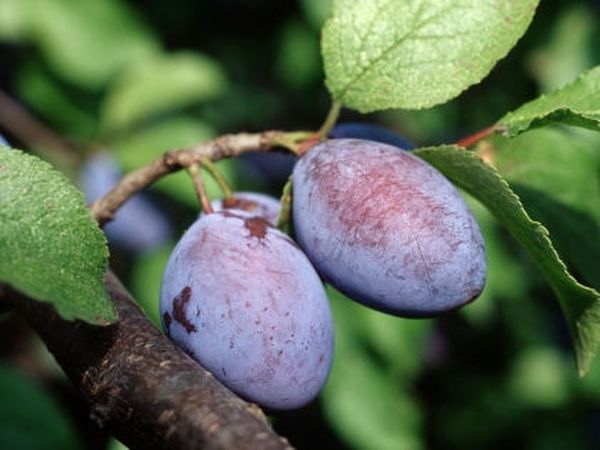
A beautiful-looking but devastating disease that attacks both leaves and branches, as well as the bark. The bark darkens, and fungal colonies form on its surface, forming purple, orange, or brown plates.
The crown takes on a silvery hue, and the leaves begin to shine or shimmer with a mother-of-pearl sheen. This process leads to gradual branch dieback, and ultimately, the tree dies. There is no cure.
Monilial burn or gray mold
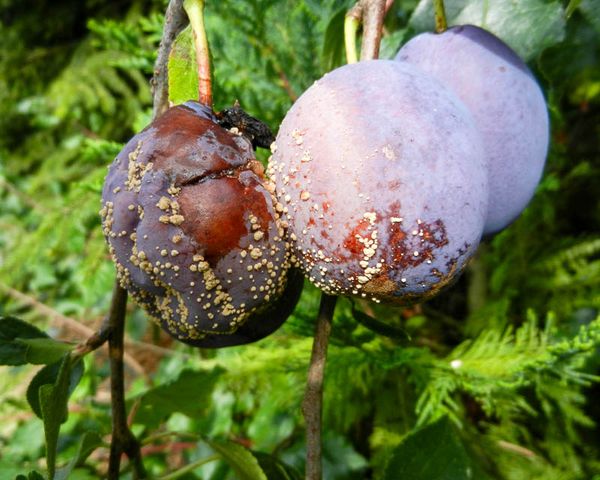
The disease known as moniliosis has several stages of development. Initially, the fungus attacks the foliage and flowers of its victim. The inflorescences wither and fall off, leaving a dark, shriveled crown that appears scorched. The next stage is characterized by fruit rot. Round, brown spots form on the fruit, dotted with gray pimples—the spores of the pathogen.
Signs of plum moniliosis can also be found on the bark of the affected plant, in the form of clusters of moniliasis spores and gum streaks. Due to its rapid spread, the disease is quite difficult to control.
Fruit rot
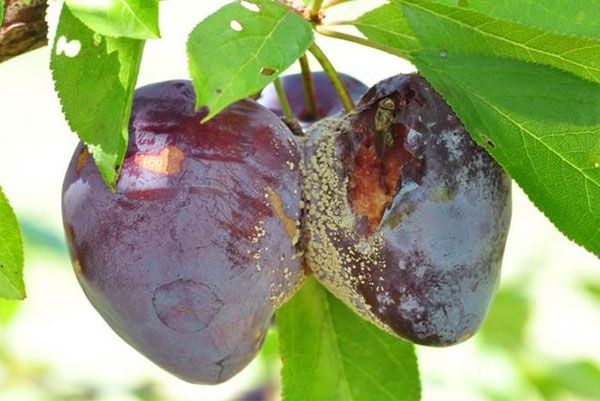
A disease similar to moniliosis, characterized by widespread rotting of the harvest. Fungal colonies also form on the fruit, but the infection process is different. Fruit damaged by birds or insects is most often affected by rot.
Rust
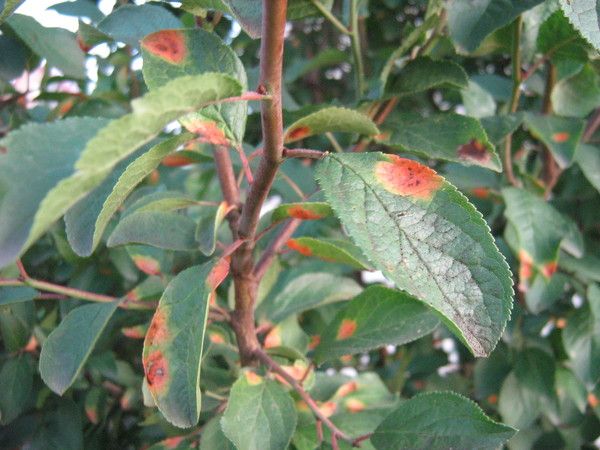
Plum infection is accompanied by the appearance of rust-colored lesions on the leaves. This disease is characterized by round spots located between the veins. By the end of the summer, the rust marks darken and thicken, after which the leaves wither. Rust, like polystigmosis, significantly reduces winter hardiness.
Sooty mold
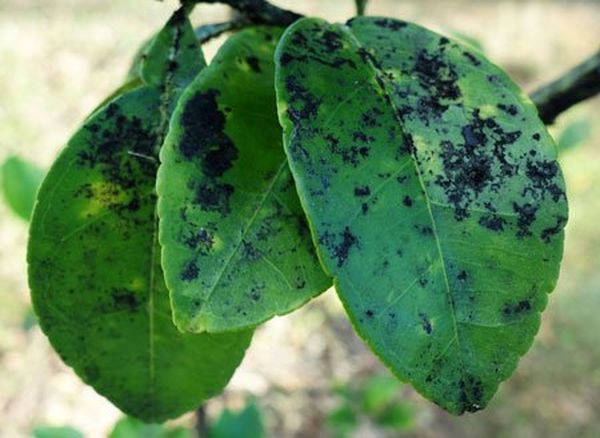
Like powdery mildew, this fungus almost completely covers a part of the plant with spores, forming a thick layer of plaque. Due to its color, this disease is also called "black spot." The pathogen colonies covering the leaf blades hinder photosynthesis and the plum's adaptation. Consequently, the overall health of the tree deteriorates: immunity is weakened and growth is slowed.
Cytosporosis
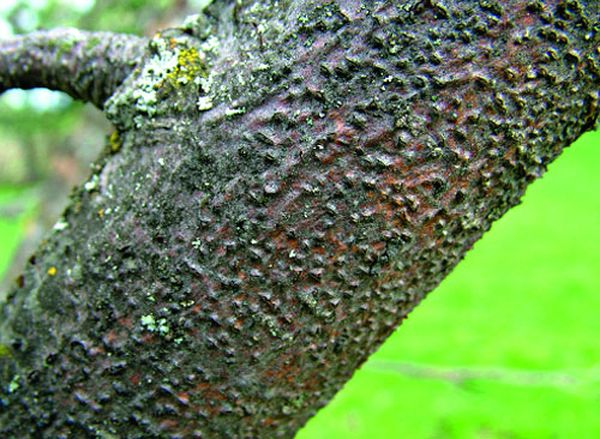
The infection can affect individual parts of the crop or the entire plant. The pathogen, which penetrates tissue through cracks and other mechanical damage, causes necrotic processes and drying out of the infected specimen. The presence of shiny black formations under a layer of dead bark is a characteristic sign of Cytosporosis.
Sharka or smallpox
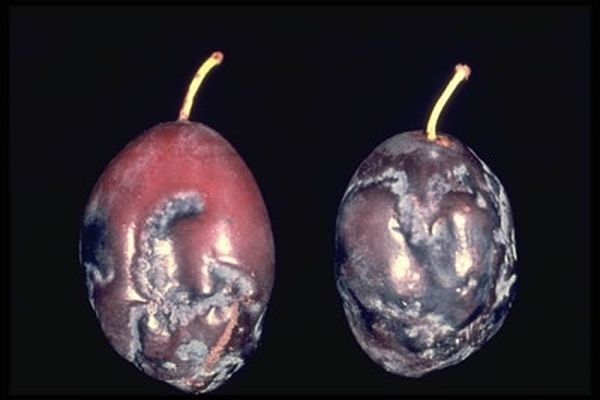
The first signs of pox are the typical symptoms of chlorosis, namely, a change in foliage color, resulting in a marbled pattern. Indentations appear on the plums' surface, the flesh darkens, becomes firmer, and loses its nutritional value. Since pox is caused by a virus, there is no treatment for it.
Video: "Signs of Plum Moniliosis"
In this video you will learn about plum moniliosis and how to treat it.
Control measures and prevention
Almost all curable diseases of fruit trees are caused by various microscopic fungi. Therefore, if holes, spots, hardening, or an unnatural coating suddenly appear on plum tree leaves, the appropriate and effective treatment is to remove all infected parts and then treat them with antifungal agents.
In the case of this crop, care and strict adherence to instructions are required, since plum is highly sensitive to copper and its compounds.
Experienced gardeners have learned firsthand that the best cure is prevention. Adhering to basic agricultural practices will help keep your garden healthy with minimal effort. This requires:
- "feed" the plant correctly;
- to prepare for winter;
- control pest populations;
- regularly carry out preventative treatment with fungicides;
- if necessary, thin out the crown and treat the cuts with pitch;
- keep instruments clean.