
Top Black and White Mulberry Varieties
Content
White varieties
The mulberry tree is native to East Asia. It is an easy-to-grow, tall, slender tree with a dense crown and very strong branches. Its leaves are serrated, oblong, and a rich, dark green. They turn yellow in autumn and fall off for the winter.
Black mulberry, like white mulberry, grows actively in urban areas, in parks and on the slopes of ravines, and is frost-resistant. The white mulberry is named not for the color of its berries, but because this tree species has light (gray) bark. The fruits, however, can be white, pink, or yellow. They are unusually juicy and sweet.
Now let's move on to a description of the most famous and popular varieties among the white variety.
Mulberry Black Baroness
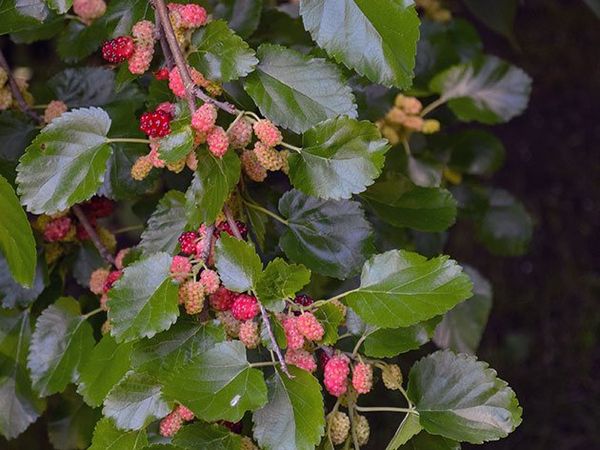
When blooming, the fluffy, light-green inflorescences are arranged alternately in a striped pattern, resembling a spikelet. It produces black fruits with a subtle aroma and a sweet, even cloying, taste, completely devoid of sourness.
Baroness berries are quite large – 3.5 cm – and remain marketable for 6–12 hours. They ripen in June–July. They are frost-hardy.
White honey mulberry
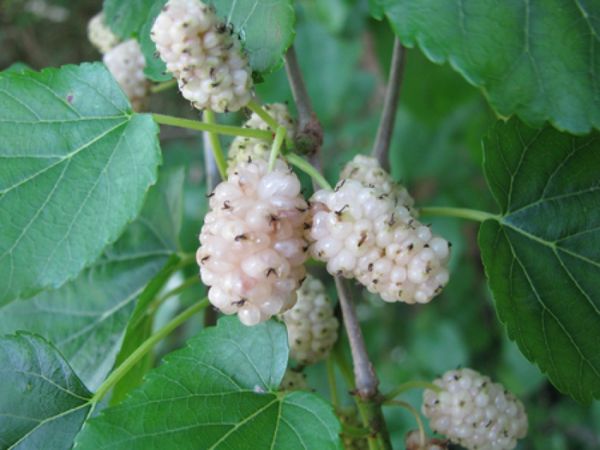
It's an early variety, ripening in early June. There are no special care secrets. The tree is undemanding, grows in any soil, and produces a bountiful harvest. After planting, the honey mulberry begins to bear fruit after 4–5 years.
White mulberry trees have characteristic features:
- rapid growth;
- long-lived (lives 200–300 years);
- easily tolerates drought;
- grows in almost any soil.
Smolensk pink mulberry
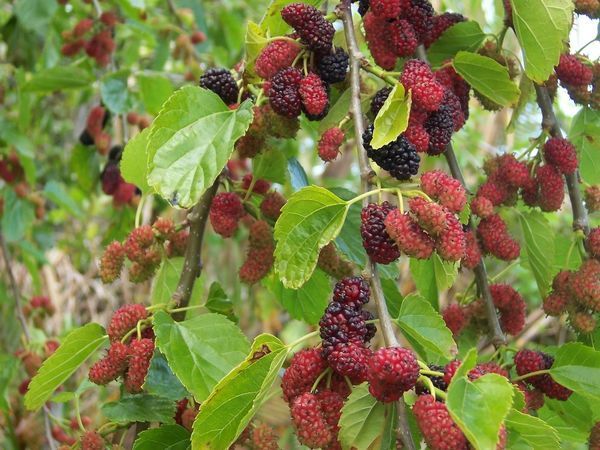
An early variety with pink, sweet fruits with a subtle sourness.
Male trees of this variety do not produce fruit, but they do have beautiful spring flowers. Interestingly, many white mulberry varieties that do not produce fruit can only be used as ornamental plants, such as hedges or alleys.
Shelley variety
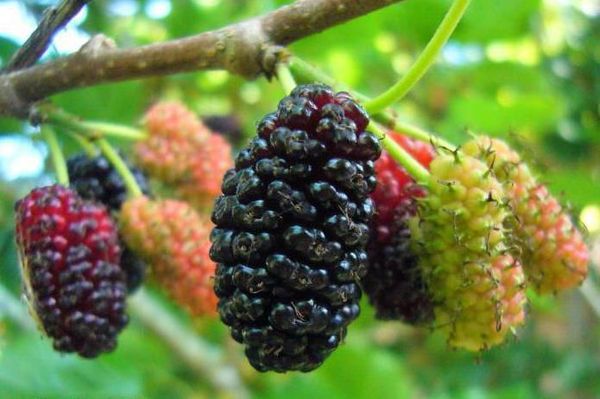
Famous for its largest fruits, measuring 5.5 cm in length, this variety was developed by breeders from Ukraine.
Mulberry Smuglyanka
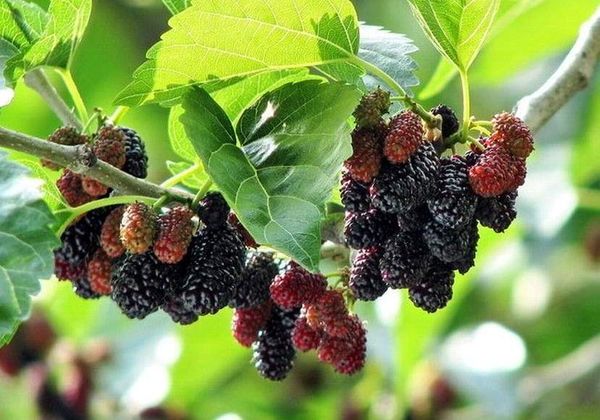
It has the same black berries as the Baroness, but the difference lies in the flavor. The Smuglyanka's fruits are juicy but not cloying, with a slightly tart taste.
Black species
The black mulberry tree is native to Iran. People have long appreciated the essential and undeniable virtues of its purple fruit. The flavor of these berries has proven to be richer than that of white mulberries. Every organ of this magical tree of life, as it was called in ancient times, is beautiful:
- Mulberry juice cleanses the blood;
- a decoction of young twigs helps with rheumatic pain;
- a decoction of leaves lowers blood sugar;
- the roots remove phlegm during a strong cough;
- the bark is an excellent remedy against worms;
- The wood is used in furniture production.
The black mulberry has dark brown bark, which is where its name comes from.
As is well known, fresh berries keep for several hours. They do not tolerate transportation or long-term storage. They can be used to make juices, compotes, jams, liqueurs, and even wine. Furthermore, the fruits possess several medicinal properties: they can normalize metabolism, are effective for gastritis and gastrointestinal problems, and are beneficial for heart disease. Juice is recommended for oral ulcers (such as stomatitis and tonsillitis).
Mulberry Black Prince
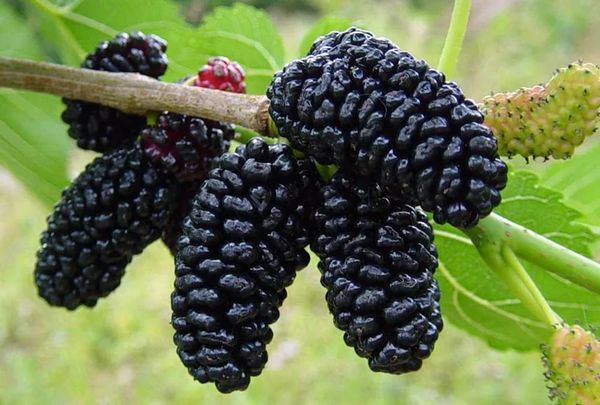
The Black Prince is a self-fertile, winter-hardy member of the black mulberry family. It's one of the few varieties that tolerates shipping well and can be stored for a long time without compromising flavor or quality. Its advantages are obvious:
- does not require special care;
- easily tolerates both severe frosts and drought;
- pleasant honey taste;
- large and juicy black fruits;
- can be stored for a long time.
Ukrainian-6
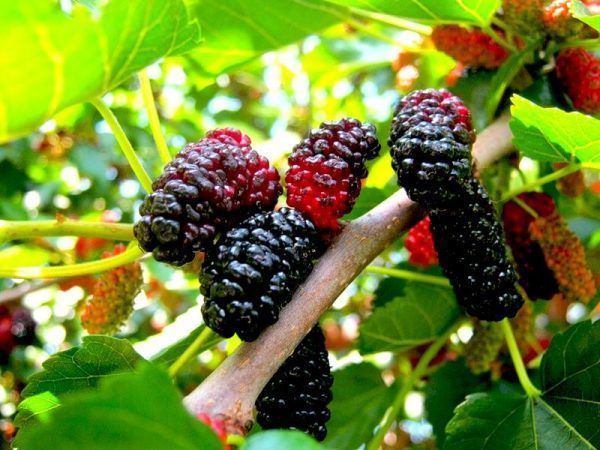
Another tree that keeps well and doesn't spoil during transportation. The tree not only produces delicious fruit, but is also prized as an ornamental tree, making it a unique addition to any garden.
Video: "What You Need to Know About Mulberries"
In this video, experts will tell you how to properly care for a mulberry tree.
Ornamental varieties
Breeders have managed to develop some varieties as ornamental cultivars.
Ornamental mulberry varieties are used for landscaping in parks, alleys, city squares, and landscape designs. Ornamental varieties include:
- Weeping white mulberry. It can grow up to 5 meters. Its long, thin branches droop to the ground, resembling a willow.
- Another very unusual variety of white mulberry is the large-leaved mulberry. Its name is entirely appropriate, as the leaves of this variety can grow up to 22 cm.
- There is a dwarf remontant mulberry. This variety was developed through selective breeding. It can be successfully grown in a large pot.
- Golden. The shoots of this mulberry are yellow.
Large-fruited varieties
The following varieties are classified as large-fruited:
- Shelly-150. It boasts the largest fruits and the highest yield. It also has the largest leaves, up to half a meter in size.
- Black Istanbul mulberry. The tree grows quite tall, up to 6–7 m. It bears fruit only in the fourth year, blooms in late spring (April), and is frost-resistant. The fruits are large, juicy, and black.
- The Black Baroness mulberry is an early variety with large berries, up to 3.5 cm long. More information about this variety is provided above.
- The next representative is the white mulberry (or Morus alba) with white-pink berries up to 4 cm long.
- The mulberry variety Plodovaya-4 tolerates transportation well, the berries are about 4 cm.
- We recommend planting the Khartut variety in dachas and garden plots outside the city. The tree consistently produces a high yield of very juicy and large berries (up to 5 cm long). The juice is similar in color and taste to Cahors wine.
Tip: Ripe mulberries fall off as soon as you touch them. Before harvesting, lay a large plastic sheet under the tree's crown. This will prevent the fallen berries from losing their attractive appearance, and ensure a full harvest.